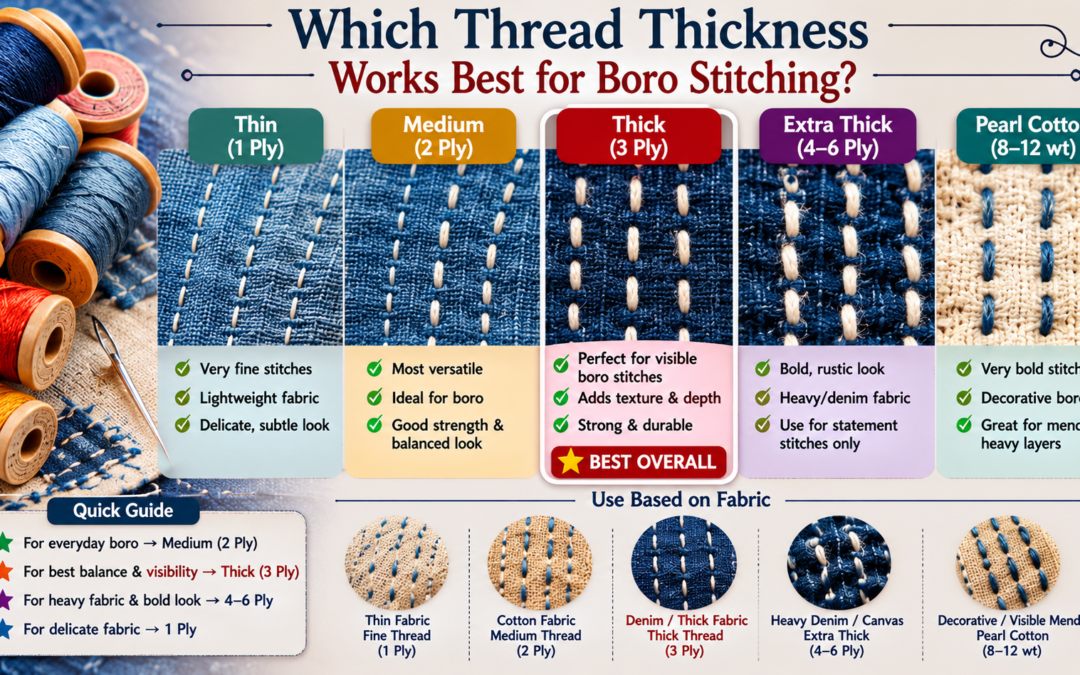
Medium-thickness cotton sashiko thread works best for most boro stitching because it balances durability, flexibility, visibility, and long-term fabric comfort. Thick thread performs better on denim and layered repairs, while thinner thread suits lightweight garments that require softer movement and less stitch tension. Choosing the wrong thread thickness often causes puckering, stiffness, weak repairs, or premature fabric stress.
Why Does Thread Thickness Matter in Boro Stitching?
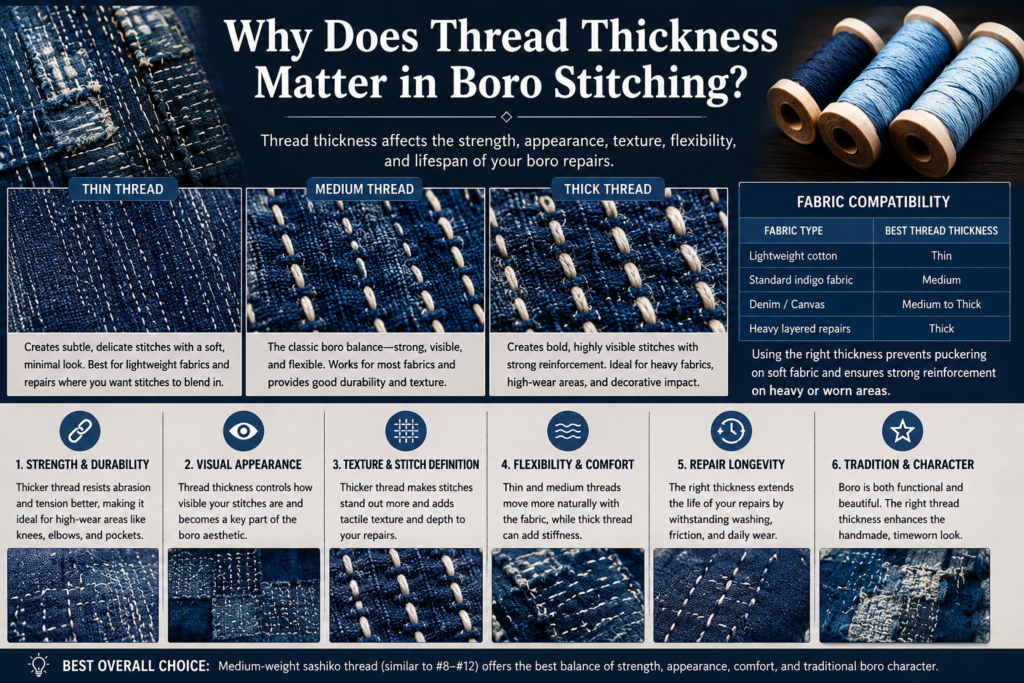
Thread thickness controls how a boro repair behaves after months or years of wear. In traditional Textile Arts boro stitching, the thread does much more than hold fabric together. It influences flexibility, abrasion resistance, stitch visibility, drape, comfort, and structural tension. Many beginners focus only on stitch patterns while ignoring how heavily the thread itself affects durability and fabric movement.
A thick thread creates stronger visual texture and heavier reinforcement. This is useful on rugged materials like denim, canvas, and work jackets. However, if the thread becomes too thick for the fabric, the repair may feel stiff or overly compressed. The needle holes also become larger, which can weaken delicate cloth over time. On softer garments, excessive thread thickness often causes wrinkling and uneven tension lines after washing.
Thin thread behaves differently. It moves naturally with lightweight fabric and produces softer, more subtle visible mending. This works well for shirts, linen garments, and softer cotton hoodies. The downside is reduced abrasion resistance in high-friction areas like knees, elbows, and pocket corners. Thin thread may gradually fray if the repair experiences heavy movement.
The best balance usually comes from medium-weight sashiko thread because it combines durability with comfort.
Key reasons thread thickness matters:
- Controls fabric flexibility
- Affects repair longevity
- Changes visual texture
- Influences washing durability
- Alters stitch visibility
- Impacts garment comfort
- Reduces or increases puckering
Real-world visible mending experience consistently shows that matching thread size to fabric weight produces longer-lasting repairs than simply using the thickest thread available.
What Thread Thickness Works Best for Most Boro Repairs?
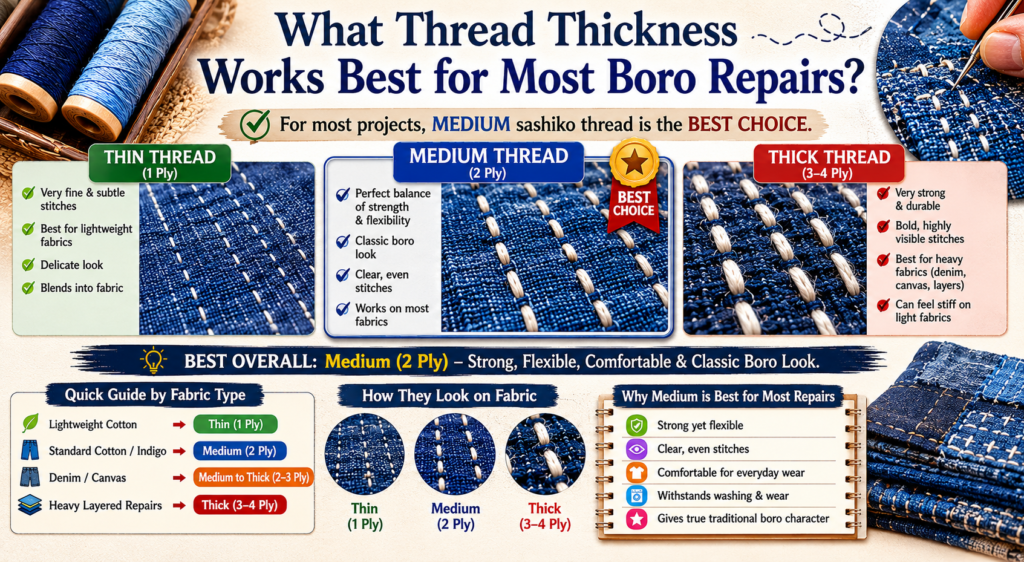
Medium-thickness sashiko thread works best for the majority of boro stitching projects because it provides balanced reinforcement without making the fabric feel rigid. Most experienced visible-mending artists prefer medium-weight thread because it performs well across many fabric types while remaining comfortable for long-term wear.
For beginners, medium thread is easier to control during hand stitching. Extremely thick thread may snag or pull unevenly through layered patches, while very thin thread can disappear visually and require denser stitching to achieve the same reinforcement strength. Medium-weight thread avoids both extremes.
The ideal range for most projects is usually:
- 20wt cotton sashiko thread
- 30wt visible mending thread
- Soft-twist medium embroidery cotton
This thickness works especially well on:
- Denim jackets
- Hoodies
- Canvas bags
- Work shirts
- Heavy cotton garments
- Layered patch repairs
Another advantage of medium-weight thread is reduced fabric stress. Thick thread creates more tension at every stitch hole. Medium thread distributes pressure more evenly and allows the repair to flex naturally with body movement. This matters significantly in wearable repairs because rigid stitching often leads to discomfort and eventual fabric tearing around the patch edges.
Many modern visible-mending artists also choose medium thread because it creates clear stitch definition without overwhelming the original garment texture. The repair remains visible but still integrated into the clothing naturally.
Medium-weight thread advantages:
- Balanced durability
- Better flexibility
- Easier stitch consistency
- Cleaner visual texture
- Reduced puckering risk
- Comfortable long-term wear
For most people starting boro stitching, medium sashiko thread remains the safest and most versatile choice.
What Do Different Boro Thread Weights Actually Mean?
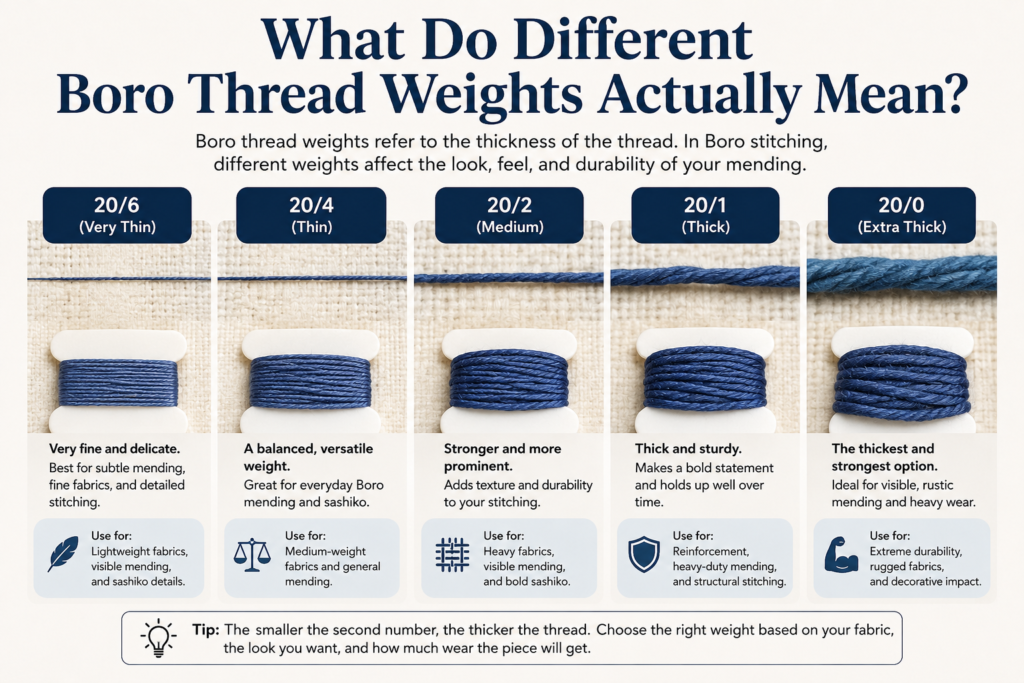
Many beginners hear terms like “20wt” or “30wt” without understanding how dramatically thread weight changes repair performance. In visible mending and Textile Arts boro stitching, thread weight affects flexibility, stitch visibility, abrasion resistance, and long-term comfort. Lower numbers usually indicate thicker thread, while higher numbers indicate finer thread.
A 12wt thread creates bold, rugged stitching that works well on heavyweight denim and canvas. Meanwhile, 30wt or 40wt thread behaves more softly and flexes naturally with lightweight garments. Most balanced boro repairs fall in the middle range because medium-weight thread creates visible texture without making the garment overly rigid. This is why many experienced sashiko repair artists avoid extreme thread sizes unless the fabric specifically requires them.
General boro thread weight guide:
- 12wt → Heavy canvas and rugged denim
- 20wt → Durable visible denim repairs
- 30wt → Balanced everyday boro stitching
- 40wt → Lightweight cotton and linen
- 50wt+ → Fine reinforcement and subtle stitching
Real-world testing shows that medium-weight thread usually survives repeated washing better because it balances durability with flexibility instead of forcing excessive tension into the fabric.
When Should You Use Thick Thread for Boro Stitching?
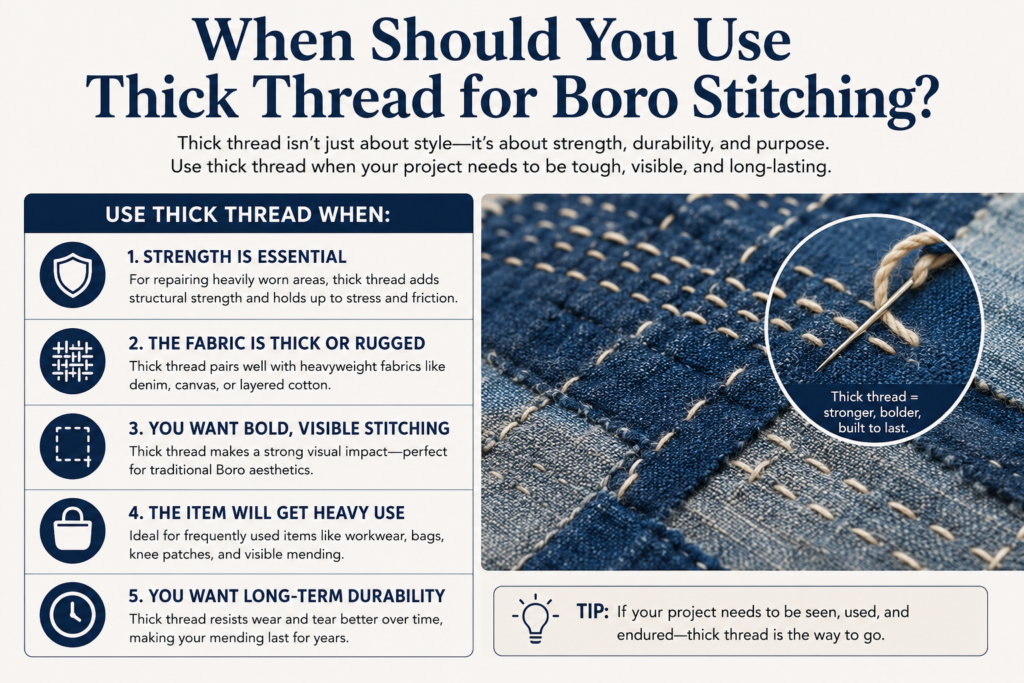
Thick thread works best when the repair area experiences heavy abrasion or when strong decorative texture is desired. In boro stitching, thick thread creates bold visible lines that emphasize the handmade nature of the repair. This is especially popular in modern visible mending inspired by Japanese workwear aesthetics.
Heavy thread performs extremely well on durable fabrics such as:
- Raw denim
- Canvas
- Duck cloth
- Heavy cotton jackets
- Utility pants
- Layered patchwork
These fabrics can tolerate larger needle holes and stronger stitch tension without becoming distorted. Thick sashiko thread also increases surface durability because the stitches contain more fiber material, helping them resist friction from repeated wear.
However, thick thread is not automatically better. Many failed repairs happen because people use oversized thread on soft or aging fabric. Thick thread creates concentrated stress points that may eventually tear weakened cloth around the stitch lines. The repair itself survives, but the surrounding fabric fails.
Another issue is stiffness. Excessively thick thread can make a flexible garment feel rigid and uncomfortable. This becomes especially noticeable around elbows, knees, cuffs, and shoulder seams where movement constantly bends the fabric.
Thick thread works best for:
- Decorative visible mending
- High-friction repairs
- Heavyweight denim
- Rugged workwear
- Multi-layer patching
- Large geometric sashiko patterns
Common thick-thread problems:
- Fabric puckering
- Reduced flexibility
- Large stitch holes
- Compressed patch layers
- Difficult needle movement
Experienced repair artists often increase stitch spacing slightly when using thick thread. This helps maintain flexibility while preventing excessive fabric compression.
How Does Stitch Spacing Change Thick and Thin Thread Performance?
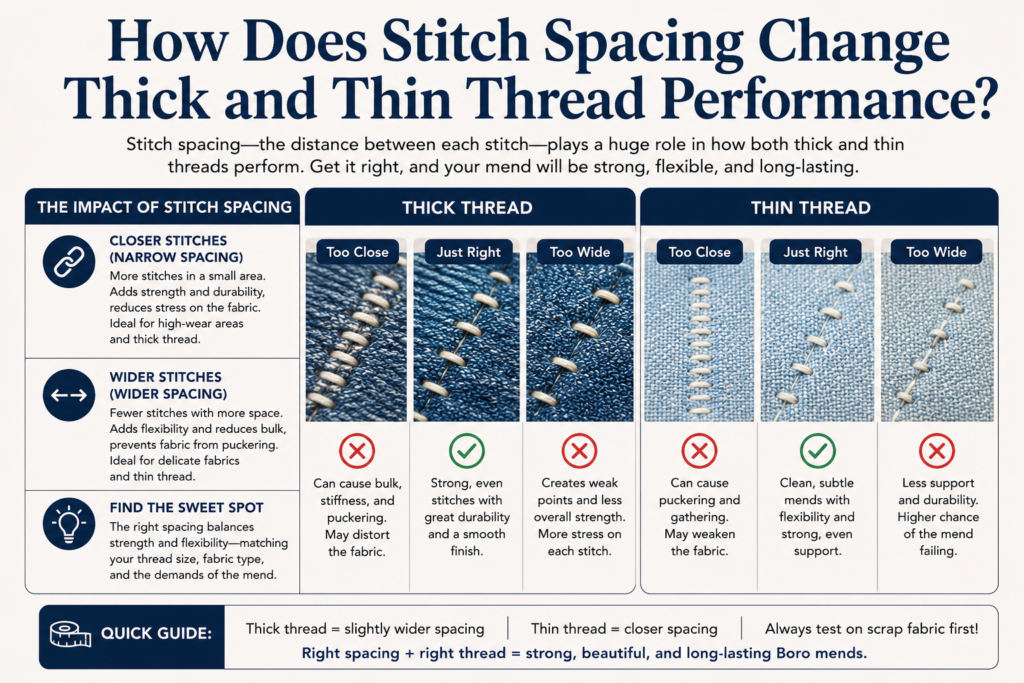
Thread thickness and stitch spacing work together. Even the best sashiko thread can create uncomfortable repairs if the stitch density is too tight. Thick thread placed too closely together often compresses the fabric and creates rigid panels that no longer move naturally with the garment.
Thin thread behaves differently because it creates less surface pressure. This allows denser stitching without making the fabric excessively stiff. However, widely spaced thin thread may fail to stabilize damaged areas properly, especially on high-friction denim repairs. Finding the correct balance between thread size and spacing is one of the most important visible-mending skills.
Common stitch density patterns:
- Thick thread + tight spacing → rigid fabric
- Thick thread + moderate spacing → durable flexibility
- Thin thread + dense spacing → soft reinforcement
- Thin thread + wide spacing → weaker stabilization
Experienced repair artists often widen stitch spacing slightly when using thick sashiko thread. This helps preserve flexibility while still creating strong visible reinforcement across the damaged fabric area.
When Is Thin Thread Better for Boro Stitching?
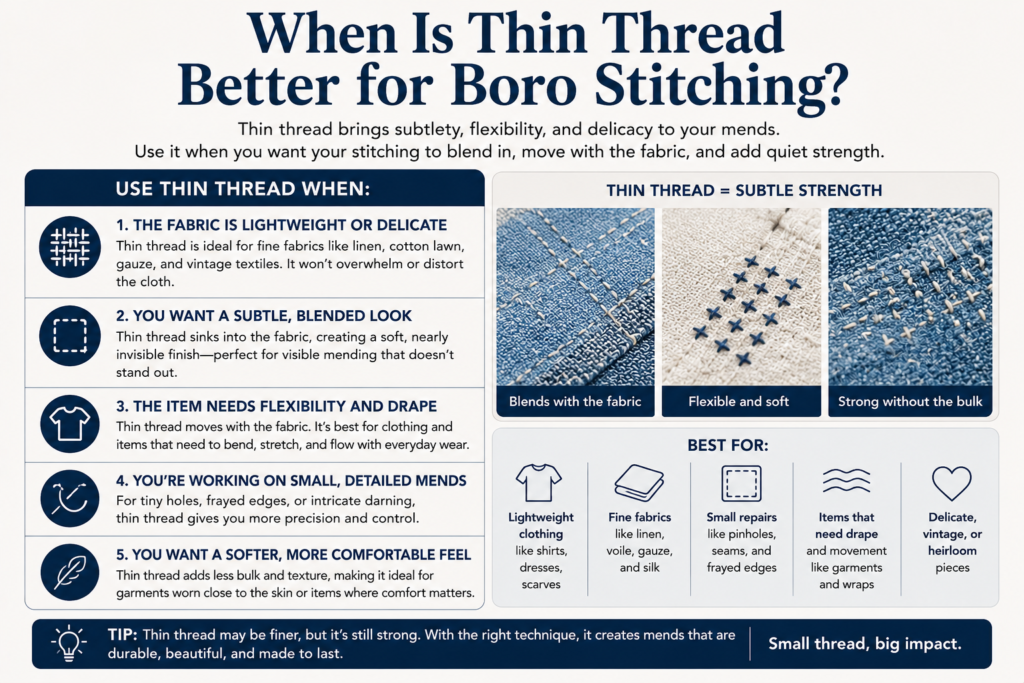
Thin thread works best on lightweight garments where softness, drape, and flexibility matter more than bold decorative texture. Traditional-style boro stitching was often practical and subtle, especially when repairing worn household textiles or repeatedly patched clothing. Thin thread supports this softer aesthetic while reducing tension on delicate fabric.
Lightweight garments benefit from finer thread because the repair moves more naturally with the cloth. Thick stitching can overpower thin fabric and create stiff areas that feel uncomfortable during wear. Thin thread helps preserve the original character of the garment instead of forcing heavy structural reinforcement onto fragile material.
Thin thread works especially well on:
- Linen shirts
- Lightweight cotton
- Soft hoodies
- Vintage garments
- Thin woven textiles
- Flexible layered patches
Another major advantage is reduced puckering. Thick thread pulls fabric inward aggressively during hand stitching. Thin thread distributes tension more gently, helping the repair remain flat after washing.
However, thin thread has limitations. It usually wears down faster in high-friction zones and may require additional stitching rows for durability. Repairs on knees or pocket corners may eventually fray if the thread is too fine for repeated abrasion.
Benefits of thin thread:
- Softer movement
- Better drape
- Less fabric stress
- Reduced stiffness
- Cleaner detail stitching
- More subtle visible mending
Thin-thread drawbacks:
- Lower abrasion resistance
- Less visible texture
- Faster wear in friction zones
- Reduced structural reinforcement
Some experienced visible-mending artists intentionally combine thin and medium thread in the same repair. Thin thread stabilizes delicate fabric while thicker accent stitching reinforces high-stress areas.
Which Thread Thickness Works Best for Different Fabrics?
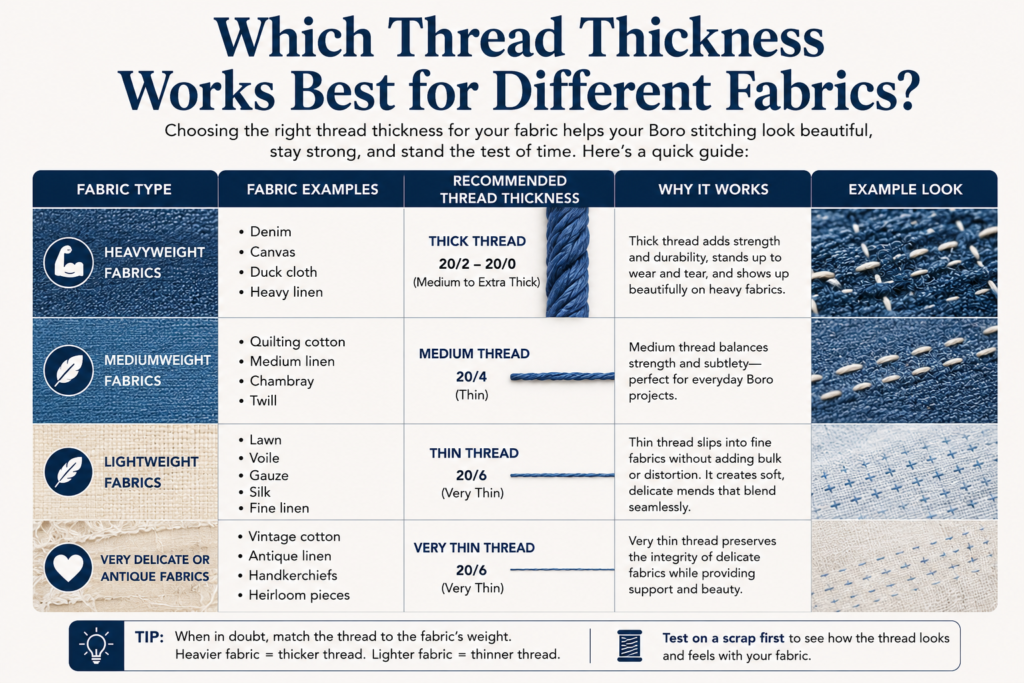
Different fabrics respond very differently to visible mending thread. Heavy denim can tolerate strong reinforcement and thick stitching, while delicate cotton may become distorted under the same tension. Matching thread thickness to fabric weight is one of the biggest differences between long-lasting repairs and repairs that eventually tear around the stitch lines.
Experienced boro artists usually adjust thread size based on flexibility, abrasion level, and fabric density rather than appearance alone. A repair that looks visually strong may still fail structurally if the fabric cannot handle the stitch pressure. Softer garments generally benefit from medium or fine thread because flexibility matters more than aggressive reinforcement.
Fabric and thread pairing guide:
- Raw denim → 20wt thick sashiko thread
- Canvas → Heavy visible mending thread
- Hoodie fleece → Medium 20–30wt thread
- Linen shirts → Fine soft-twist thread
- Vintage cotton → Thin flexible cotton thread
- Layered patchwork → Medium thread with wider spacing
Many advanced visible-mending artists intentionally use softer thread on older garments because aging fabric fibers often tear faster under rigid stitching pressure.
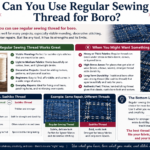
Is Sashiko Thread Better Than Regular Sewing Thread?
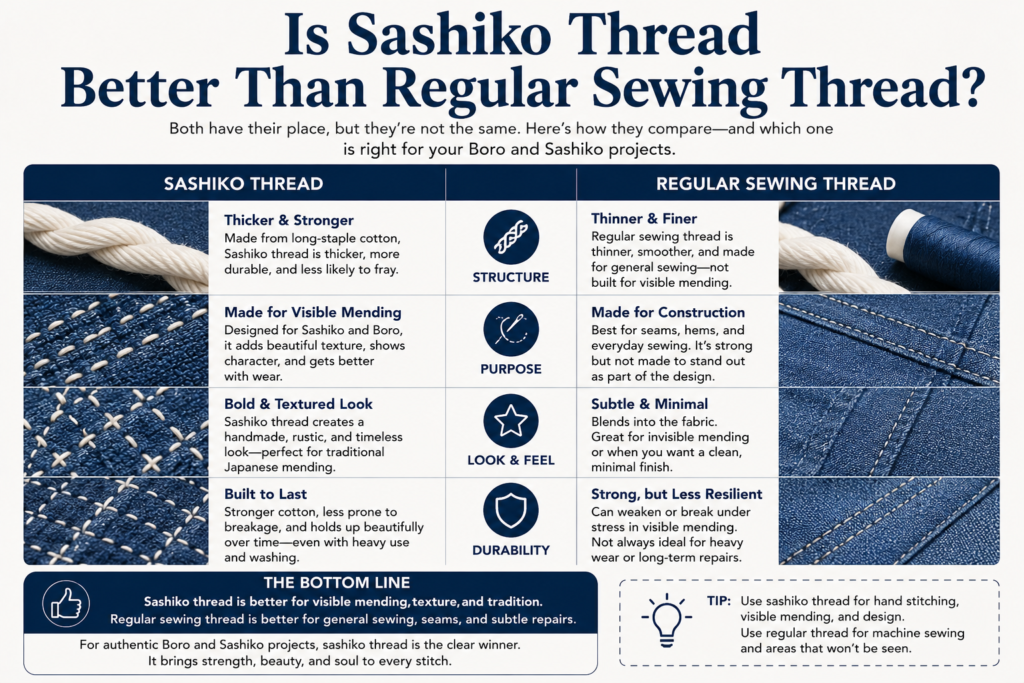
Yes, in most visible mending situations, Sashiko Thread performs better than regular sewing thread because it is specifically designed for decorative reinforcement stitching. Standard sewing thread is usually optimized for machine stitching, hidden seams, and fine garment construction rather than visible surface repair.
Sashiko thread is thicker, softer, and less tightly twisted. This creates fuller stitch texture and allows the repair to remain visually noticeable. In boro stitching, visibility is part of the repair aesthetic. The stitching itself becomes a design element rather than something hidden inside the fabric.
Regular polyester sewing thread often creates problems in hand-stitched repairs because:
- It feels slippery
- The stitches appear too thin
- Tension becomes uneven
- Surface texture disappears
- The repair lacks visual depth
Cotton sashiko thread interacts more naturally with woven fabric and tends to age more gracefully over time. The softer structure also reduces harsh cutting pressure against aging textile fibers.
However, regular sewing thread is not useless. Some repair artists still use it strategically:
- Hidden stabilization stitching
- Lightweight reinforcement
- Temporary patch placement
- Internal seam support
Why sashiko thread performs better:
- Stronger visual texture
- Better hand-sewing grip
- Traditional repair appearance
- Fuller stitch definition
- Better decorative contrast
- Softer interaction with fabric
For most beginners, medium-weight cotton sashiko thread remains the most forgiving and visually balanced option for boro-inspired visible mending.
What Needle Size Matches Different Boro Thread Thicknesses?
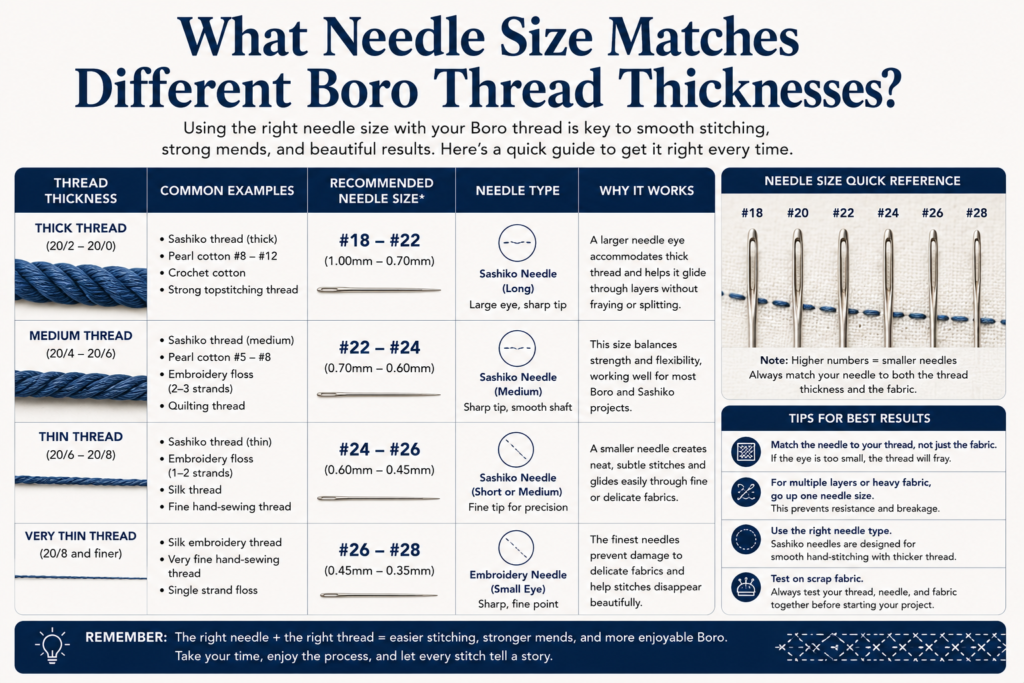
Thread thickness and needle size must work together. Even high-quality sashiko thread can damage fabric if paired with the wrong needle. Thick thread forced through a small needle eye creates friction, knotting, and uneven tension. On the other hand, oversized needles create large stitch holes that weaken delicate fabric over time.
Traditional Sashiko Thread repairs often use long sashiko needles because they allow smoother stitching through multiple fabric layers. Medium-weight thread usually pairs best with standard sashiko needles, while thicker thread may require larger embroidery or visible-mending needles. Lightweight garments need smaller needles to avoid enlarging stitch holes unnecessarily.
Needle matching guidelines:
- Thick thread → Large-eye sashiko or embroidery needle
- Medium thread → Standard sashiko needle
- Thin thread → Fine embroidery or sharp needle
- Denim repairs → Strong long sashiko needle
- Lightweight linen → Small sharp needle
One common beginner mistake is using thick thread with a tiny needle eye. This creates thread abrasion during stitching and may weaken the repair before the garment is even worn regularly.
Why Traditional Japanese Boro Repairs Often Used Softer Cotton Thread
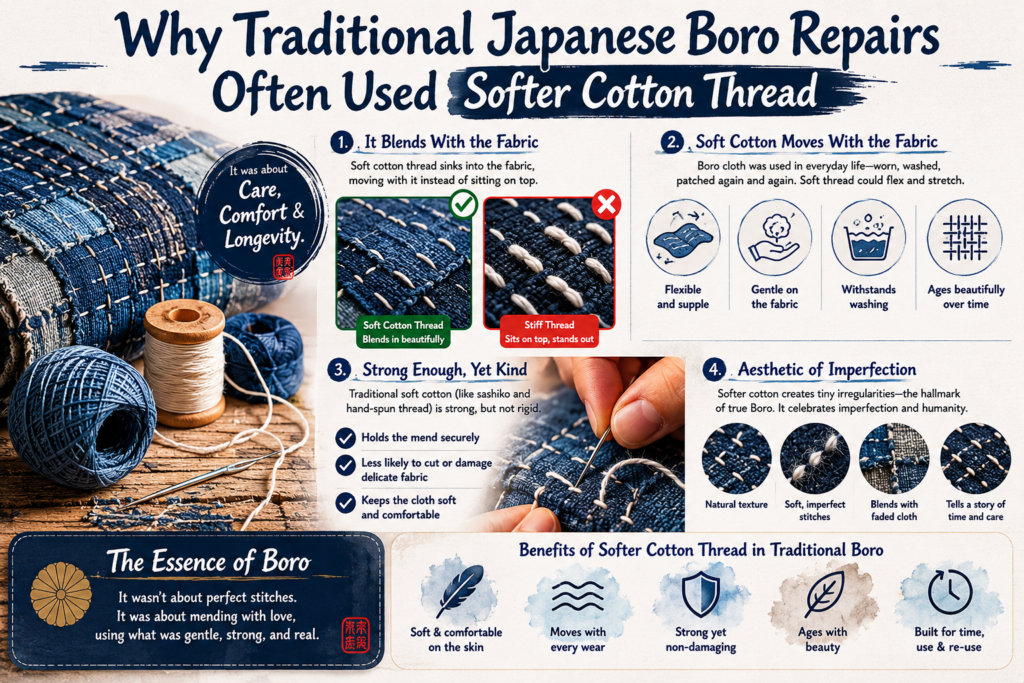
Traditional Japanese Textile Arts boro repairs were originally created from necessity rather than decoration. Rural families repeatedly repaired garments using whatever thread and fabric materials were available. Much of this thread was softer, uneven, hand-spun cotton rather than the tightly twisted modern thread commonly sold today.
Because the thread was softer, the repairs aged differently. The stitching gradually blended into the fabric instead of creating harsh rigid reinforcement. This allowed patched garments to remain wearable despite years of repeated repairs. Modern polyester sewing thread often behaves differently because it creates sharper tension and resists natural softening over time.
Traditional boro thread characteristics:
- Softer cotton texture
- Lower tension rigidity
- Natural aging appearance
- Flexible fabric movement
- Uneven handmade texture
- Reduced stitch harshness
Many modern visible-mending artists intentionally choose soft-twist cotton sashiko thread because it recreates the organic texture and flexibility seen in historical boro textiles.
Does Thread Thickness Affect Repair Durability?
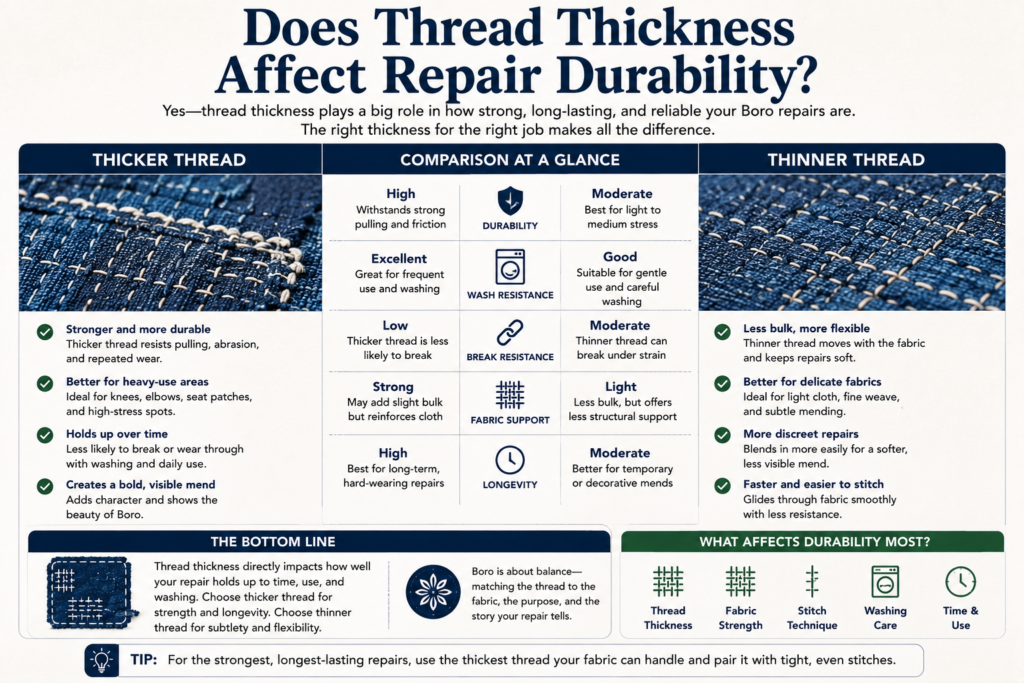
Thread thickness has a major impact on repair durability, but thickness alone does not guarantee a stronger repair. Many people assume the thickest thread automatically lasts longest. In reality, durability depends on balancing thread size with fabric condition, stitch spacing, movement stress, and long-term flexibility.
Thicker thread generally resists abrasion better because it contains more fiber material. This makes it highly effective in areas exposed to frequent rubbing, bending, or friction. Heavy denim repairs often benefit from thicker sashiko thread because the fabric itself can support stronger stitching tension.
However, excessively thick thread may weaken delicate fabric by enlarging stitch holes and concentrating stress around the repair area. Over time, the surrounding cloth may tear even if the thread remains intact. This is common in vintage garments or thin cotton fabric where the textile fibers have already weakened from age or repeated washing.
Medium-weight thread often creates the best balance between:
- Flexibility
- Structural support
- Washing durability
- Long-term comfort
- Reduced edge stress
Thread twist also matters significantly. Hard-twist thread may cut into soft fabric during repeated movement, while soft-twist cotton tends to flex more naturally with the garment.
Factors affecting durability:
- Thread thickness
- Fiber quality
- Stitch spacing
- Fabric weight
- Needle size
- Wash frequency
- Repair placement
Real-world visible mending experience shows that balanced stitching tension matters more than maximum thread thickness. Flexible repairs usually survive longer than rigid repairs because they move naturally with the fabric instead of resisting movement.
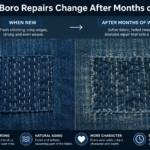
How Does Washing Change Boro Thread Thickness and Texture?
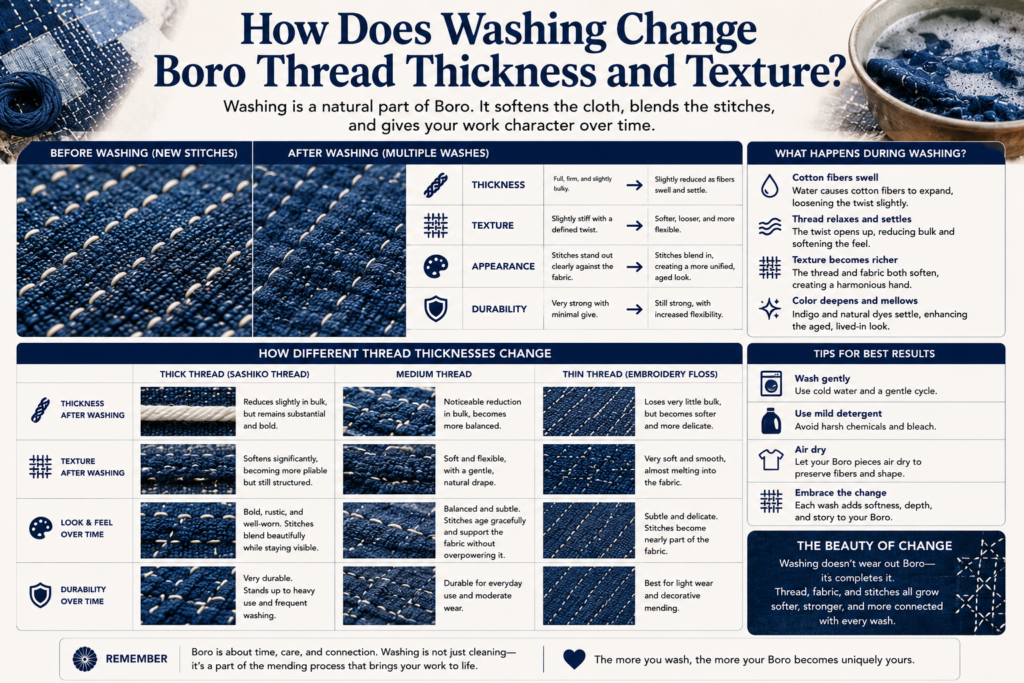
Washing changes how boro stitching behaves over time. Cotton sashiko thread absorbs moisture, expands slightly, and gradually softens with repeated wear. This is one reason traditional boro repairs often become more comfortable and visually integrated after months of use instead of appearing stiff forever.
Thicker cotton thread may initially feel rigid, especially on denim repairs. However, repeated washing usually relaxes the stitching and reduces surface stiffness. Thin thread behaves differently because it compresses less and may lose visibility faster after repeated laundering. Wash behavior also depends on thread twist. Hard-twist thread tends to stay rigid longer, while soft-twist cotton becomes more flexible much faster.
Washing effects on boro stitching:
- Cotton thread softens gradually
- Thick stitches flatten slightly over time
- Contrast stitching may fade naturally
- Tight stitches may shrink slightly
- Soft-twist thread relaxes faster
- Repeated washing reduces stiffness
Real-world visible mending experience shows that slightly looser stitching usually ages better after washing because the fabric retains flexibility instead of becoming compressed around the repair area.
What Mistakes Do Beginners Make With Thread Thickness?
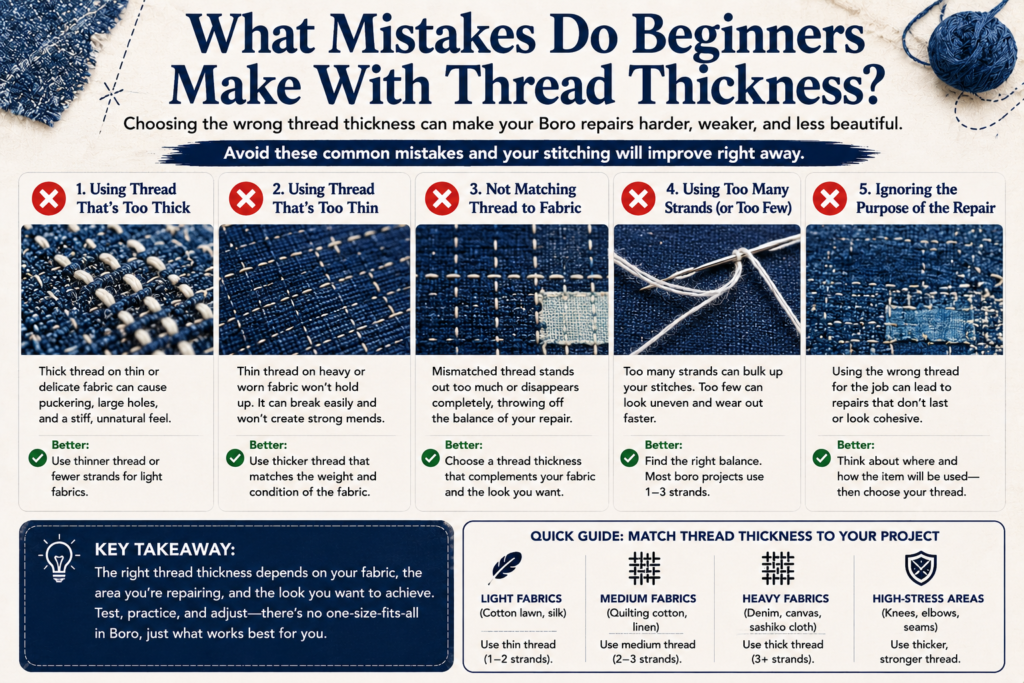
One of the biggest beginner mistakes in boro stitching is choosing thread based only on appearance instead of fabric compatibility. Many people immediately select extremely thick thread because they want bold visible stitches. While this may look attractive initially, oversized thread often creates long-term structural problems.
A common issue is excessive fabric tension. Thick thread pulled tightly through soft cloth compresses the material and creates puckering around the stitch lines. After washing, the repair may wrinkle unevenly or become stiff and uncomfortable.
Another mistake is ignoring fabric weight. Lightweight garments require softer, finer stitching. Using heavy sashiko thread on delicate cotton or linen frequently causes enlarged needle holes and edge tearing around the patch.
Beginners also commonly:
- Pull stitches too tightly
- Use oversized needles
- Overcrowd stitch rows
- Mix incompatible thread weights
- Ignore thread twist differences
- Use slippery polyester sewing thread
Embroidery floss can create problems too. Many beginners use all floss strands together, which produces bulky uneven stitching. Separating strands usually creates cleaner visible mending texture.
The safest approach for most beginners is starting with medium-weight cotton sashiko thread. This allows better tension control and works across multiple fabric types without creating excessive rigidity.
Beginner-friendly thread guidelines:
- Use medium-weight cotton thread
- Match thread to fabric weight
- Avoid over-tightening stitches
- Test stitch tension first
- Keep spacing consistent
- Use appropriate needle size
Experienced visible-mending artists usually prioritize flexibility and balanced reinforcement rather than dramatic oversized stitching
What Bad Thread Thickness Choices Usually Look Like
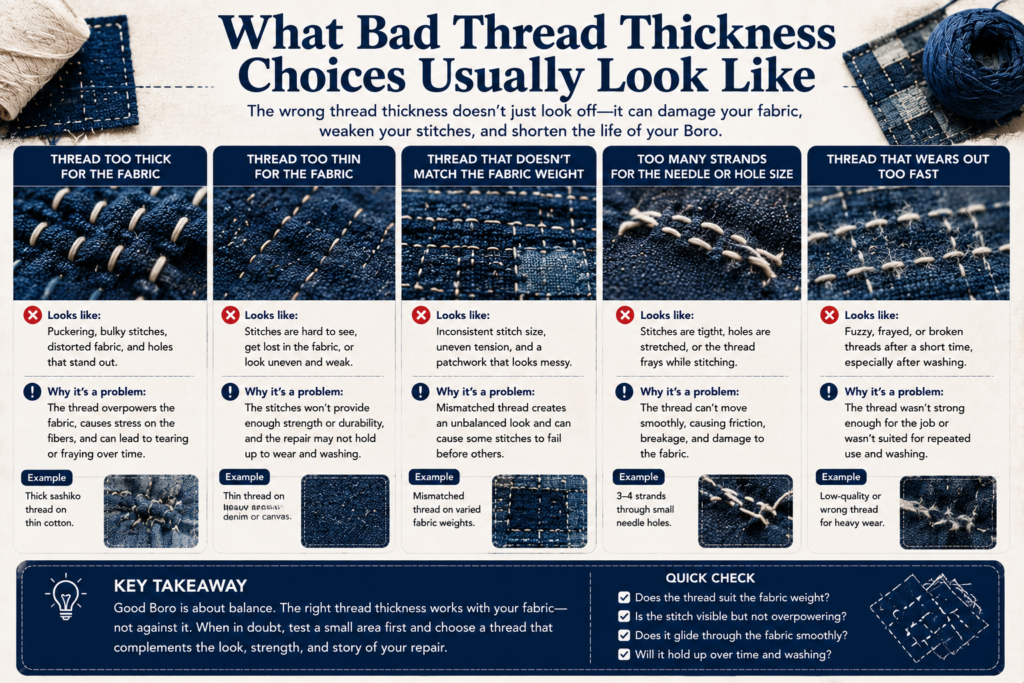
Poor thread selection usually becomes visible after the garment has been worn and washed repeatedly. Many failed boro repairs do not break immediately. Instead, the surrounding fabric slowly weakens because the thread tension and fabric flexibility were mismatched from the beginning.
One common failure pattern is heavy thread cutting into soft fabric near the stitch holes. Another is excessive puckering caused by tight stitching combined with oversized thread. Thin thread also creates problems when used on high-friction denim because the stitches gradually fray and lose reinforcement strength over time.
Common repair failure signs:
- Wrinkled patch edges
- Enlarged stitch holes
- Rigid uncomfortable fabric
- Fraying thread lines
- Torn fabric around stitches
- Floating loose patches
- Uneven tension ripples
Real-world visible mending repairs usually last longest when the stitching remains flexible instead of extremely tight. Balanced reinforcement distributes stress across the fabric more evenly and prevents concentrated pressure from damaging aging textile fibers.
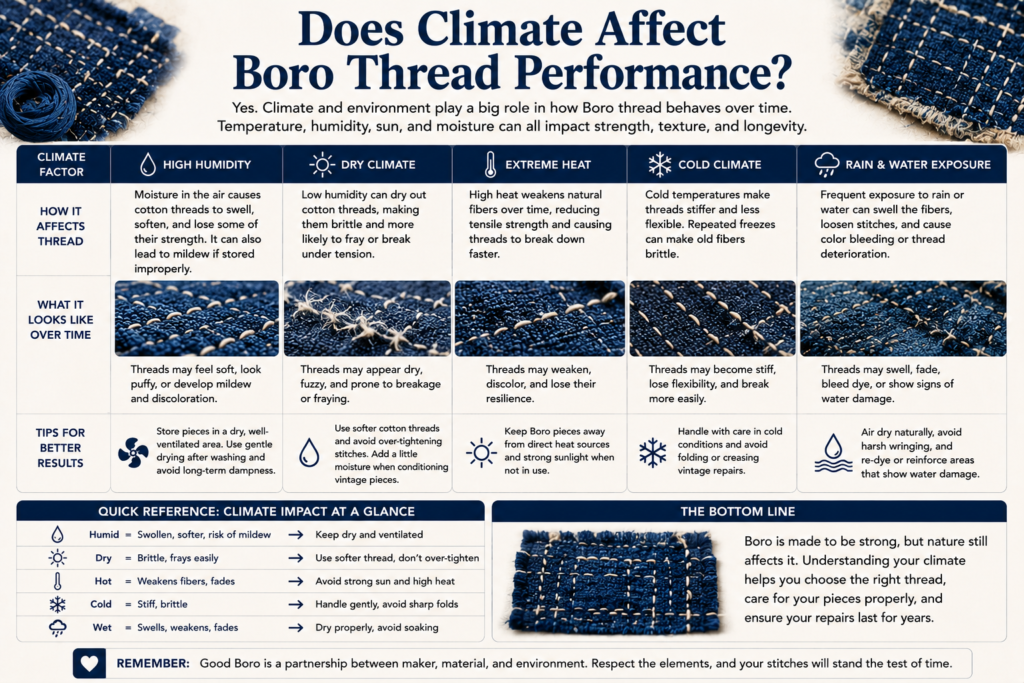
Does Climate Affect Boro Thread Performance?
Climate can change how visible mending thread behaves over time. Cotton sashiko thread absorbs moisture from the environment, which affects flexibility, softness, and long-term tension. In humid climates, cotton thread often relaxes faster and feels softer after repeated wear. In dry climates, thick thread may remain slightly stiffer for longer periods.
Frequent washing and heat exposure also influence thread aging. Garments worn in hot climates usually experience more sweat, friction, and laundering cycles, which gradually soften cotton stitching but may also accelerate fading. Cold or dry environments often preserve stitch visibility longer because the fabric experiences less moisture expansion.
Climate-related thread behavior:
- Humidity softens cotton thread
- Dry climates preserve stiffness longer
- Frequent washing reduces rigidity
- Heat accelerates thread aging
- Moisture changes stitch tension slightly
- Soft-twist thread adapts faster
Experienced visible-mending artists often choose softer medium-weight thread for garments expected to experience heavy washing or humid conditions because flexibility usually improves long-term durability.
FAQ Section
Which thread thickness is best for beginners in boro stitching?
Medium-weight sashiko thread is usually best because it balances durability, visibility, flexibility, and stitch control.
Is thick thread stronger for boro repairs?
Usually yes on heavyweight fabric, but overly thick thread may damage lightweight garments or create stiffness.
What thread works best for denim repairs?
Medium-to-thick cotton sashiko thread performs best because denim tolerates stronger reinforcement and larger stitch holes.
Can I use embroidery floss for boro stitching?
Yes, but separated strands usually work better than using all strands together.
Does thin thread wear out faster?
In high-friction areas, thin thread may fray faster than medium or thick thread.
Why does my boro stitching pucker?
Puckering usually comes from excessive tension, oversized thread, or overly dense stitch spacing.
Is cotton thread better than polyester for boro stitching?
Cotton usually produces softer texture and more traditional visible mending appearance.
Does thread thickness affect washing durability?
Yes. Balanced medium-weight thread often survives washing better than excessively thick rigid stitching.