by Humera Shahzaib | Jul 5, 2026 | Boro Stitching Learning
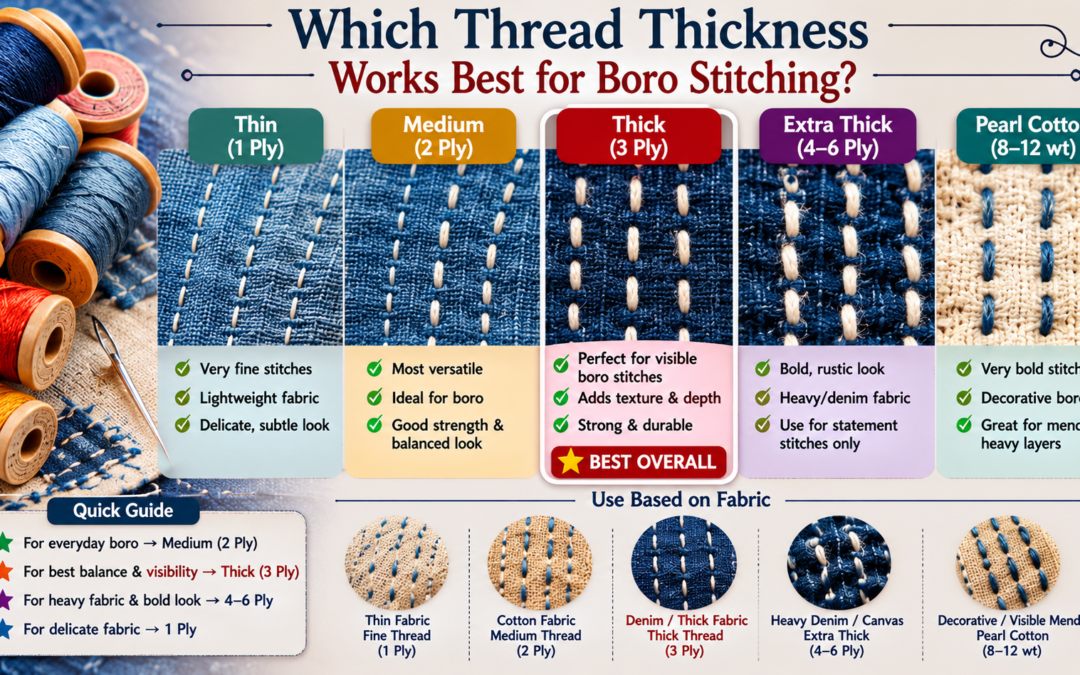
Medium-thickness cotton sashiko thread works best for most boro stitching because it balances durability, flexibility, visibility, and long-term fabric comfort. Thick thread performs better on denim and layered repairs, while thinner thread suits lightweight garments...
by Humera Shahzaib | May 27, 2026 | Boro Stitching Learning
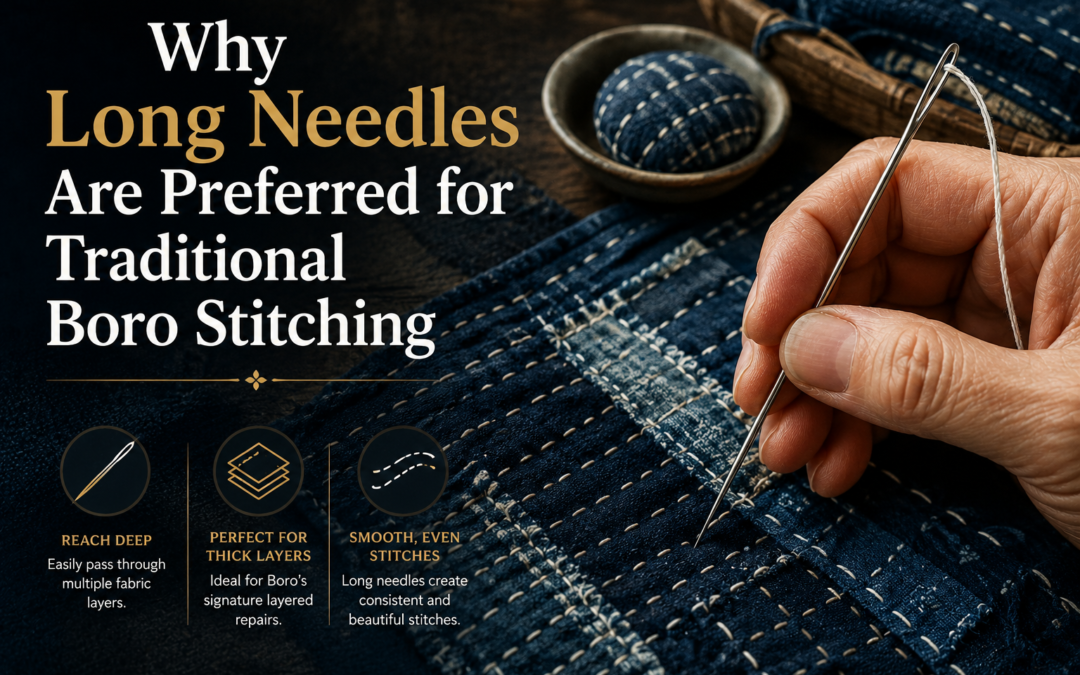
Traditional Boro stitching uses long needles because they improve running stitch rhythm, fabric control, layered repair efficiency, and hand comfort during repetitive sewing. Long sashiko needles allow artisans to load multiple stitches at once, maintain even spacing,...
by Humera Shahzaib | May 22, 2026 | Boro Stitching Learning
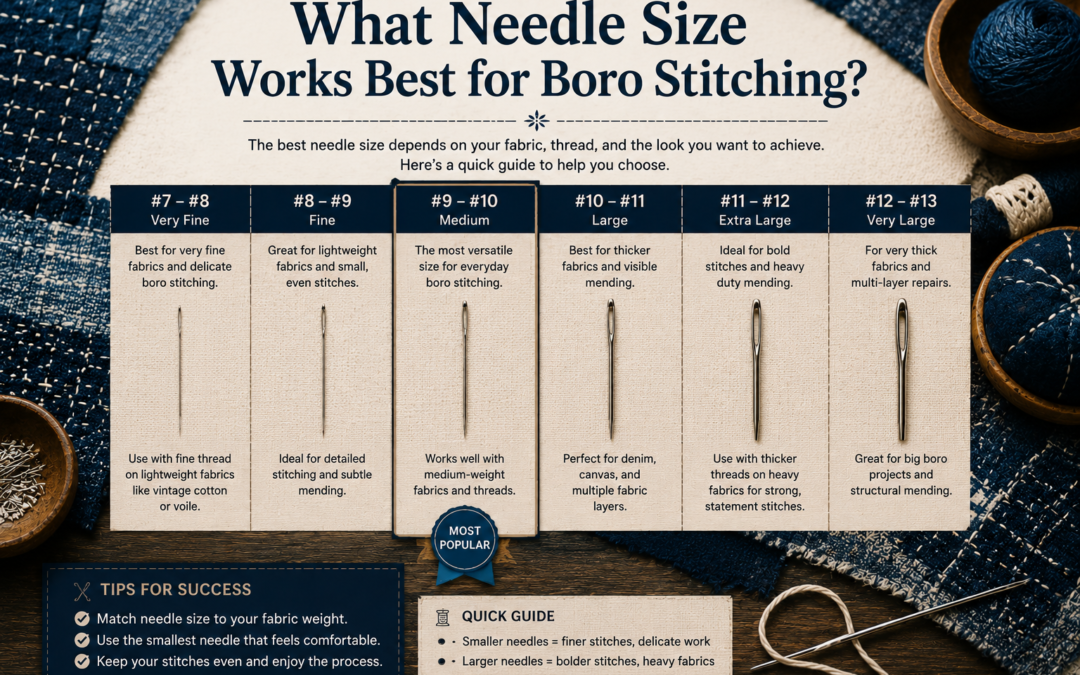
Traditional boro stitching works best with long sashiko-style needles that can pass through multiple fabric layers smoothly while maintaining even running stitches. Most experienced boro artists prefer needles between 48 mm and 65 mm because longer needles improve...
by Humera Shahzaib | May 20, 2026 | Boro Stitching Learning
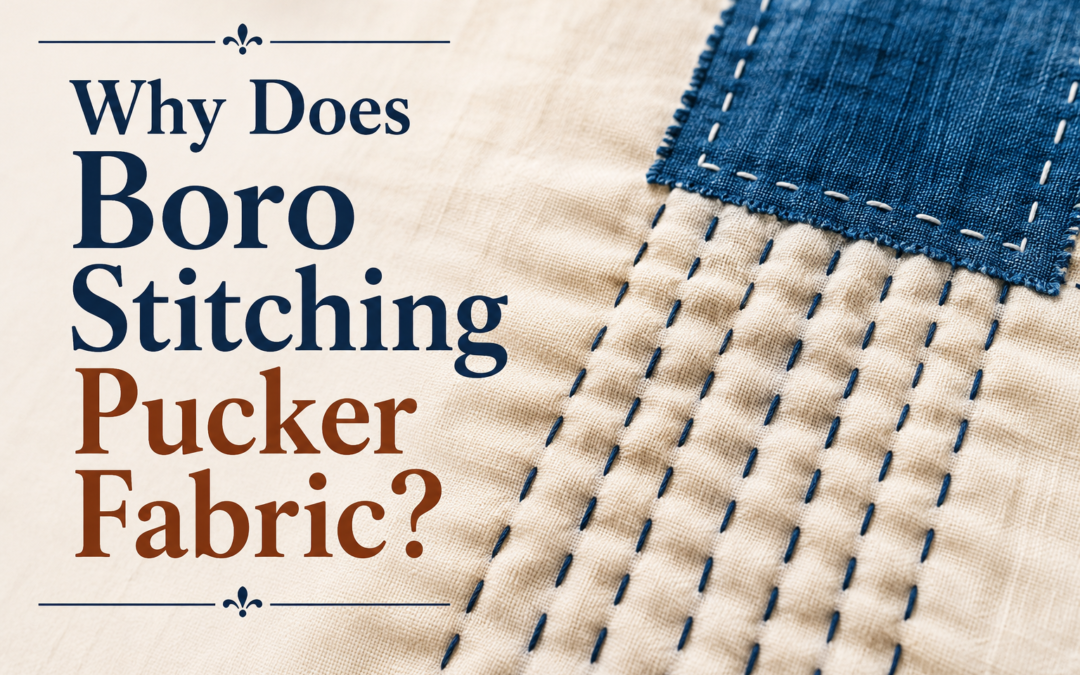
Boro stitching puckers fabric because repeated running stitches compress textile fibers and pull layered materials together. Mild puckering is often normal in traditional Japanese boro because handmade texture is part of the repair aesthetic. However, severe wrinkling...
by Humera Shahzaib | May 19, 2026 | Boro Stitching Learning
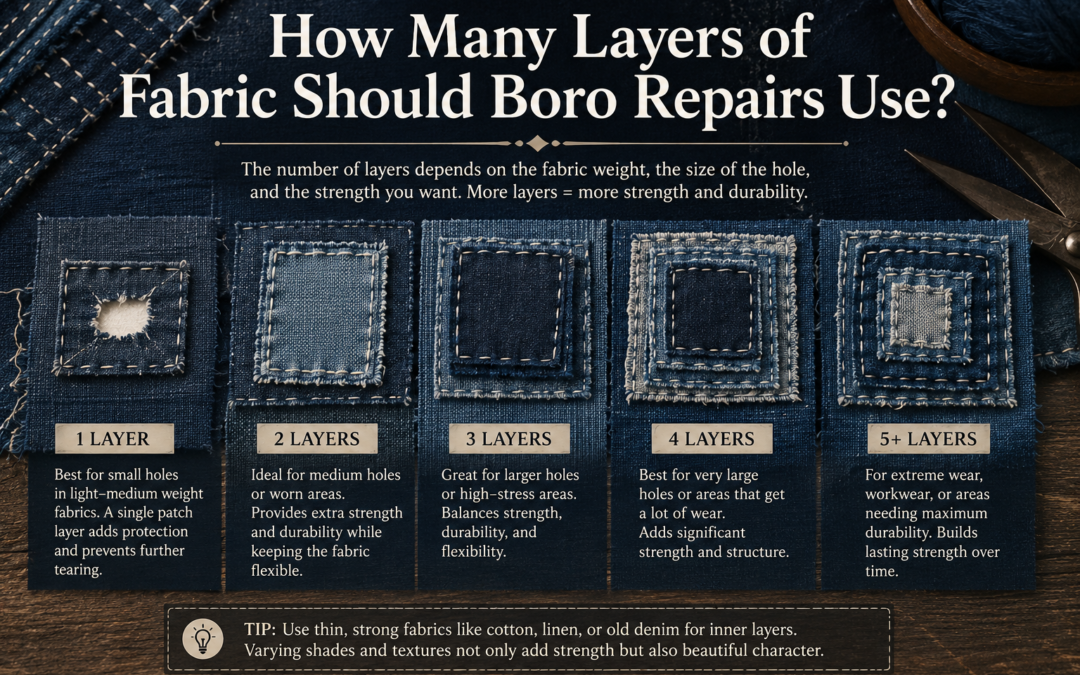
Boro repairs usually work best with 2 to 3 layers of fabric because this creates a balance between durability, flexibility, comfort, and long-term wearability. Thin fabrics often need additional support layers, while heavyweight materials like denim or canvas usually...
by Humera Shahzaib | May 19, 2026 | Boro Stitching Learning
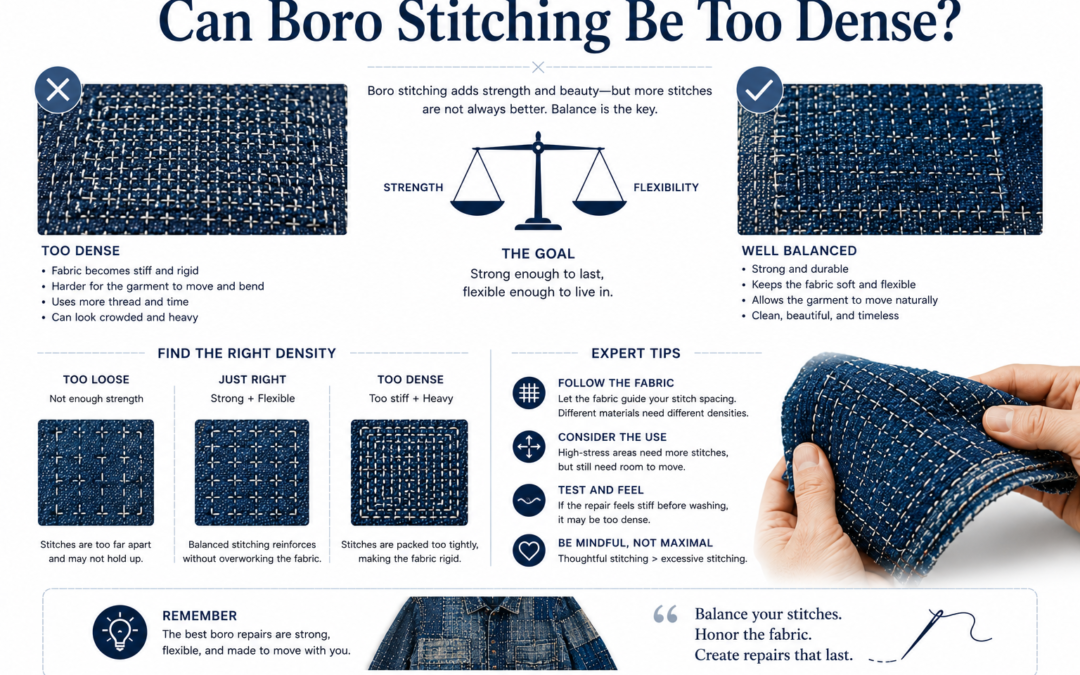
Boro stitching can absolutely become too dense when excessive stitching compresses the fabric, reduces flexibility, creates puckering, and limits the natural movement of the garment. Traditional Japanese boro repairs focused on balanced reinforcement rather than heavy...