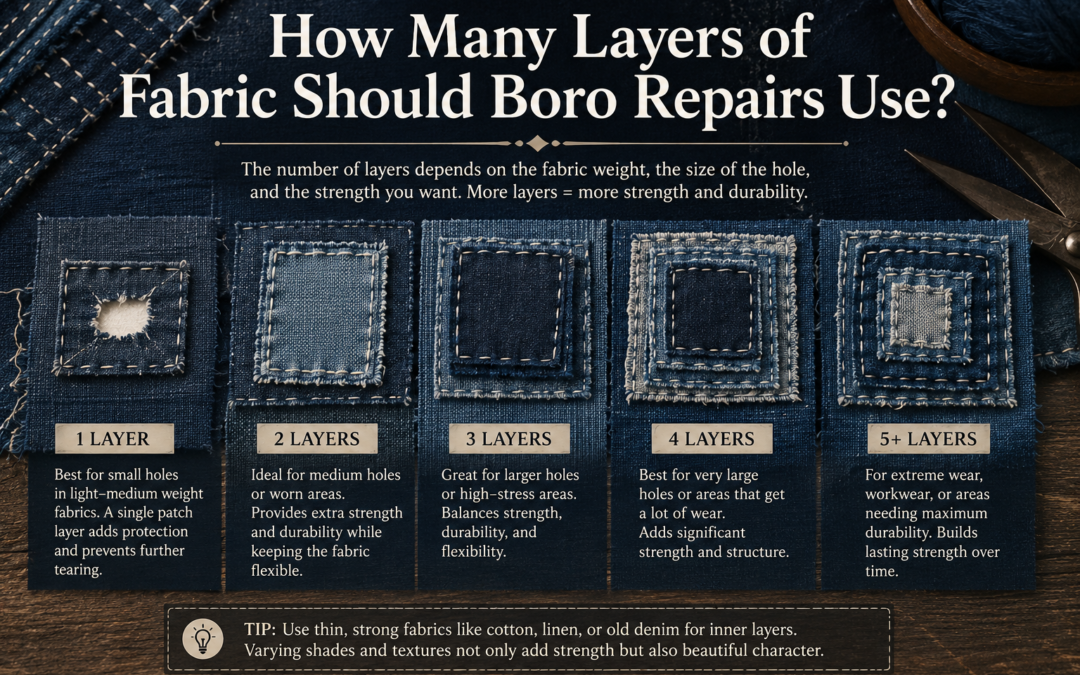
Boro repairs usually work best with 2 to 3 layers of fabric because this creates a balance between durability, flexibility, comfort, and long-term wearability. Thin fabrics often need additional support layers, while heavyweight materials like denim or canvas usually require fewer reinforcement layers. The ideal layering structure depends on fabric thickness, repair location, movement stress, and stitch density.
What Is the Best Number of Layers for Most Boro Repairs?
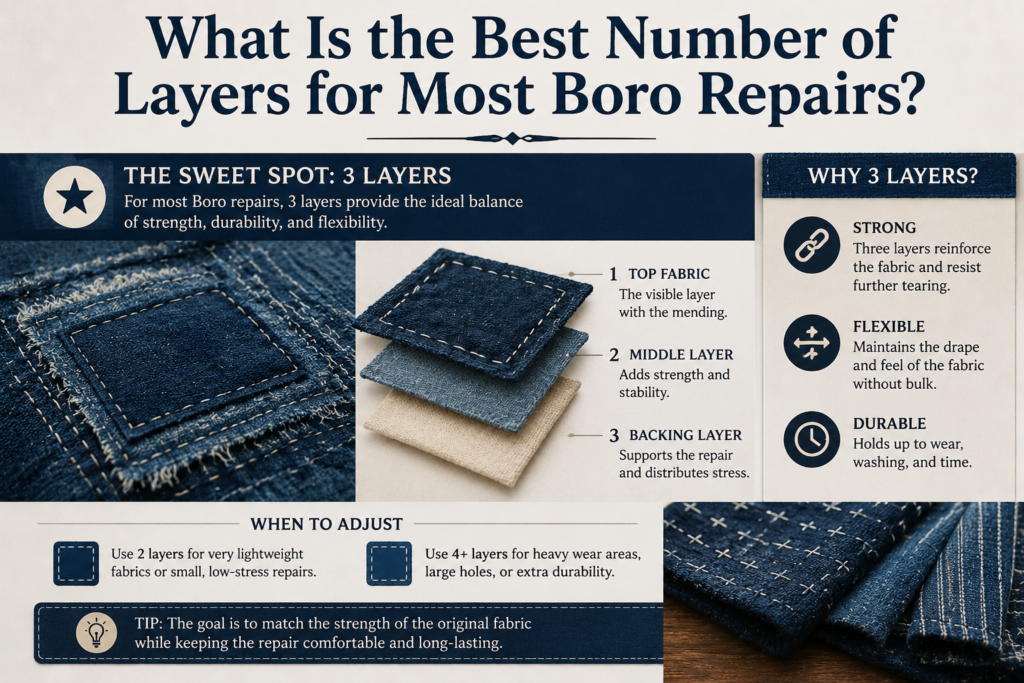
Most modern Boro repairs work best with a balanced structure that includes the original garment fabric, one reinforcement patch, and sometimes one additional backing layer. This creates enough structural support to stabilize damaged areas without making the repair feel overly stiff or bulky. In practical visible mending projects, durability comes from the relationship between fabric layers and stitch density rather than simply stacking large amounts of material together.
Beginners often assume stronger repairs require more layers, but excessive layering can create rigid sections that fold differently from the surrounding garment. Experienced Boro artists usually focus on maintaining flexibility because wearable comfort remains essential in modern clothing. A repair should reinforce weakened fabric while still allowing natural movement during walking, bending, or repeated daily use.
Historically, traditional Japanese Boro garments accumulated many layers over decades of repair work. However, those garments were designed for survival, insulation, and long-term textile preservation in rural environments. Modern visible mending typically prioritizes balance instead of maximum thickness.
Well-balanced Boro repairs usually provide:
- Better flexibility
- Reduced puckering
- Improved breathability
- More natural drape
- Stronger stitch stability
- Easier long-term maintenance
How Does Fabric Weight Change the Ideal Number of Boro Layers?
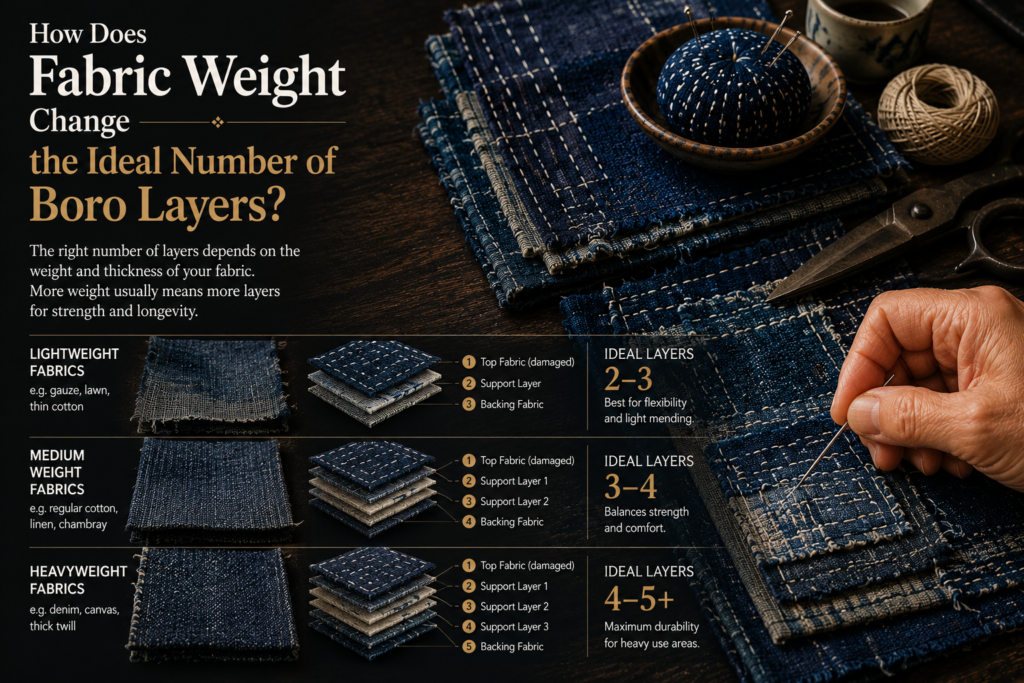
The best repair does not always use the most fabric. Instead, the strongest visible mending projects distribute stress evenly while maintaining comfort and visual harmony throughout the garment.
Fabric weight is one of the biggest factors that determines how many layers a Boro repair should use. Thin lightweight fabrics usually require more structural support because the surrounding fibers weaken faster under tension. Heavy fabrics like raw denim or canvas already provide substantial durability, so fewer reinforcement layers are normally needed.
Many beginners accidentally overbuild repairs because they focus only on visible holes instead of evaluating overall fabric strength. A thin cotton shirt with soft worn fibers may need three total layers for stability, while heavyweight workwear may only require one reinforcement patch combined with dense sashiko stitching.
The goal is balancing:
- flexibility
- durability
- breathability
- movement comfort
- stitch stability
General repair guidelines include:
| Fabric Type | Recommended Layers |
| Lightweight cotton | 3 |
| Linen | 2–3 |
| Medium denim | 2 |
| Heavy raw denim | 1–2 |
| Canvas | 1–2 |
| Wool | 2 |
Fabric texture also matters because loosely woven materials shift more during wear. Dense woven fabrics resist movement better and usually maintain stitch tension more effectively over time.
Real-world visible mending projects often fail because makers apply identical repair methods to completely different fabric weights. Successful Boro repairs adapt the reinforcement structure to the behavior of the original textile rather than following a single universal layering rule.
Why Do Thin Fabrics Need Additional Support Layers?
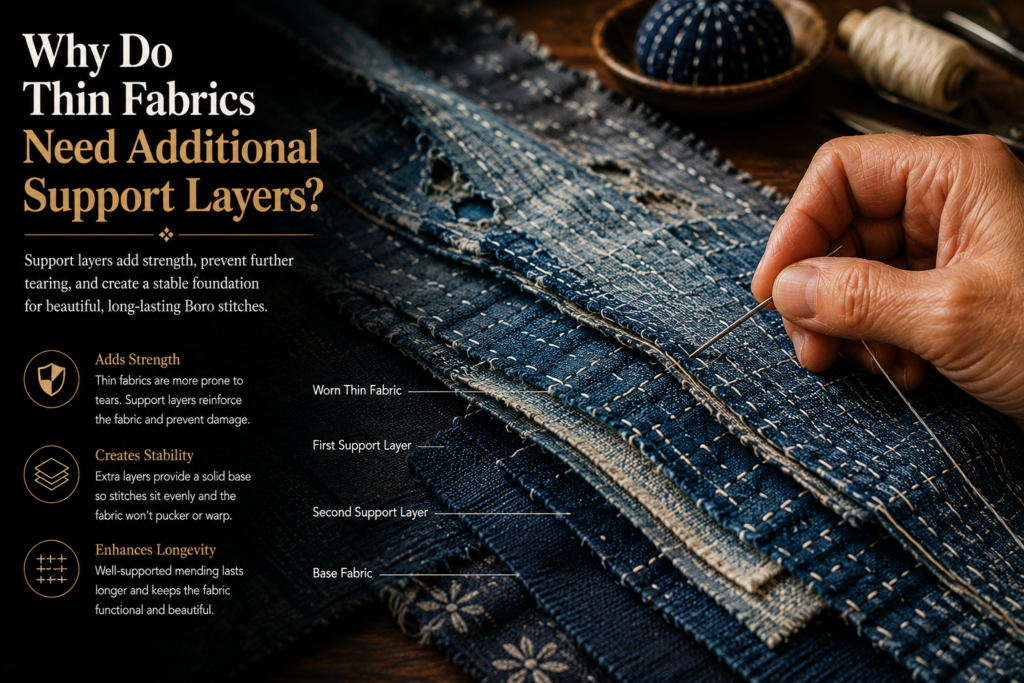
Thin fabrics usually require extra reinforcement because weakened fibers cannot always hold stitching securely over time. Lightweight cotton, soft linen, worn shirts, and aging denim often develop fragile areas where stitches can pull through the surrounding material after repeated movement and washing. Adding a support layer underneath helps distribute stress across a wider area instead of concentrating tension directly on damaged fibers.
In many visible mending projects, thin fabric repairs work best with a layered sandwich structure. This commonly includes the original garment fabric, a supportive backing fabric, and a visible outer patch layer. The backing layer acts like internal reinforcement that stabilizes weakened areas while helping the repair maintain flexibility.
Thin fabrics are especially vulnerable in high-movement zones such as:
- Shirt elbows
- Pocket corners
- Collar folds
- Inner thighs
- Sleeve cuffs
- Seat areas
Without sufficient support, decorative stitching alone may eventually distort the fabric or enlarge the tear during normal wear. The backing layer helps prevent excessive movement around the damaged section.
Real-world visible mending projects often show that lightweight shirts repaired with only a decorative patch tend to weaken faster than layered repairs with internal reinforcement. The repair may initially appear successful, but washing cycles and repeated movement eventually expose weaknesses in unsupported areas.
Support layers also improve:
- Stitch grip
- Fabric stability
- Repair longevity
- Shape retention
- Tear resistance
This is why experienced Boro makers carefully evaluate fabric weight before deciding how many layers the repair should use.
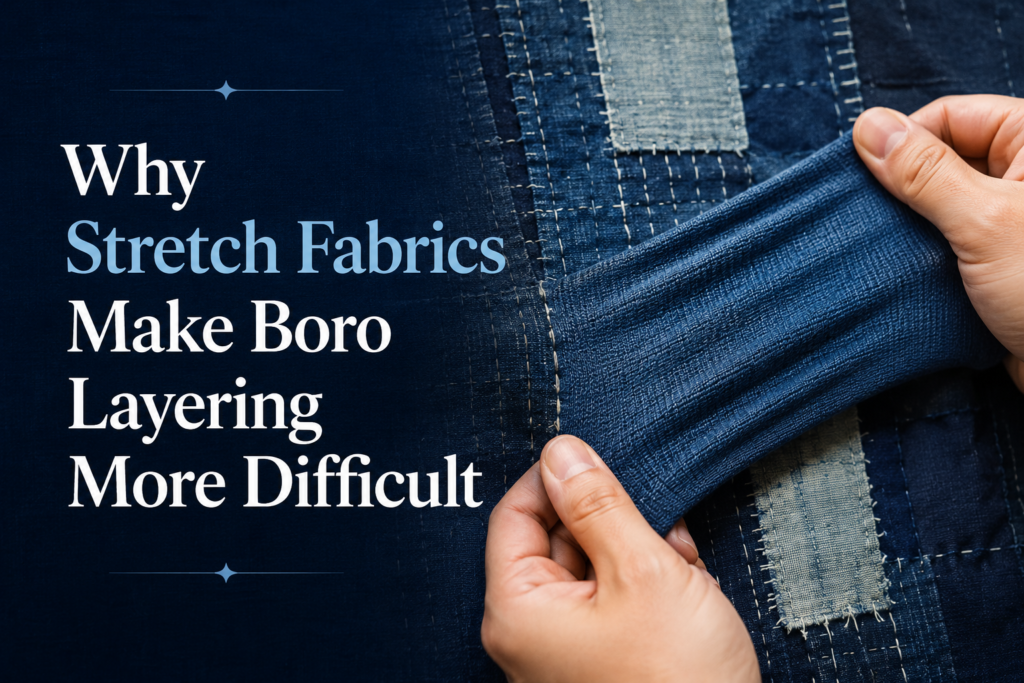
Why Stretch Fabrics Make Boro Layering More Difficult
Stretch fabrics create unique visible mending challenges because elastic fibers move differently from traditional woven cotton or linen textiles. Modern jeans, shirts, and jackets often contain elastane or synthetic stretch blends that continuously expand and contract during movement. This constant tension can distort repair layers if the stitching structure becomes too rigid.
Unlike traditional indigo cotton fabrics used in historical Boro, stretch materials require repairs that remain flexible under repeated stress. Excessively dense stitching or thick patch stacking may restrict movement and cause the surrounding fabric to warp unevenly.
Common stretch-fabric repair problems include:
- twisting repairs
- stitch snapping
- fabric puckering
- uneven tension
- distorted patch edges
- reduced flexibility
Lightweight reinforcement layers usually work better on stretch garments because they allow the repair area to move more naturally with the original fabric. Softer cotton backing materials also reduce stress concentration around stitch lines.
Experienced visible mending artists often:
- reduce stitch density slightly
- avoid excessive patch overlap
- use softer thread tension
- keep repairs more flexible
- avoid thick stacked denim layers
Stretch denim repairs especially benefit from controlled reinforcement instead of rigid structural layering. A repair that feels slightly softer often lasts longer because it moves with the garment rather than resisting it.
Modern stretch fabrics behave very differently from historical workwear textiles, which is why modern Boro layering decisions should adapt to contemporary clothing materials instead of copying traditional repair structures exactly.
Do Heavy Fabrics Require Fewer Boro Layers?
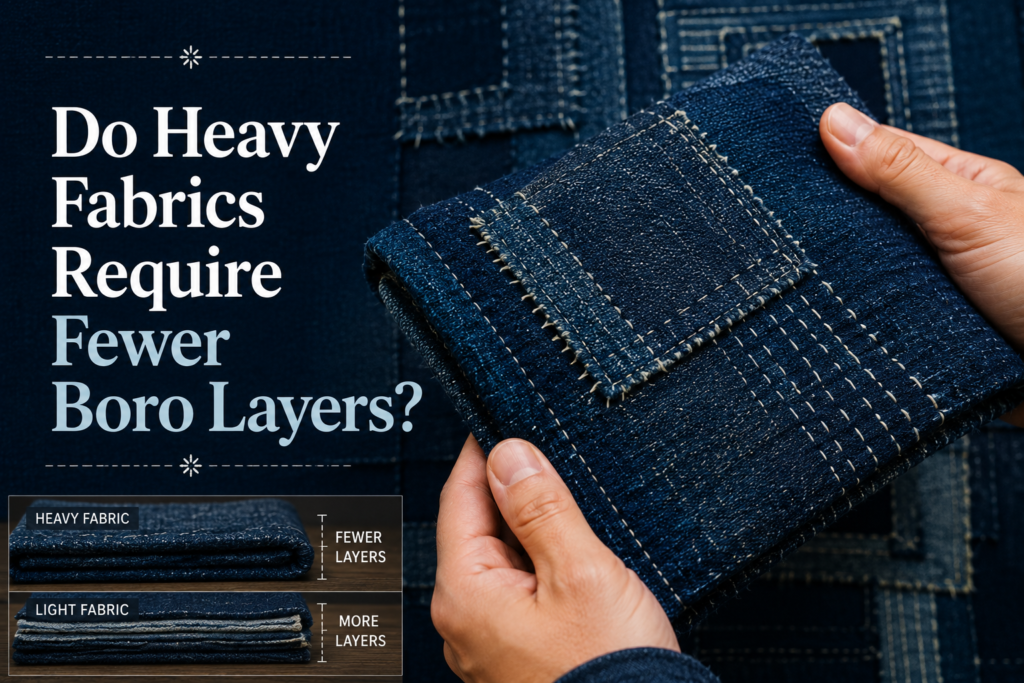
Yes, heavyweight fabrics like denim, canvas, duck cloth, and thick workwear materials usually require fewer reinforcement layers because the original fabric already provides substantial structural strength. In many denim repairs, a single backing layer combined with dense sashiko-style stitching creates enough support to stabilize damaged areas effectively.
Adding excessive layers to heavyweight garments can create uncomfortable rigid sections that behave differently from the surrounding fabric. Thick repair zones often develop pressure points during movement and may reduce overall flexibility. This is especially noticeable in jeans around the knees, inner thighs, and seat areas where repeated bending occurs throughout the day.
Experienced visible mending artists often prioritize stitch placement over fabric stacking when repairing heavy materials. Well-distributed stitching spreads stress efficiently without requiring multiple overlapping patches.
Heavyweight repairs commonly benefit from:
- Fewer fabric layers
- Denser stitching patterns
- Balanced reinforcement
- Reduced patch overlap
- Better flexibility retention
- Improved breathability
For example, many successful denim Boro repairs use:
- Original denim layer
- One backing reinforcement layer
- Decorative visible stitching
This structure keeps the repair strong while preserving comfort and natural garment movement. Excessive layering in thick fabrics may also increase needle resistance during sewing, making stitching more difficult and creating uneven tension across the repair area.
Another important factor is drape consistency. Thick repairs should move similarly to the surrounding fabric. When too many layers accumulate in one area, the garment can twist or fold unnaturally during wear.
Strong repairs are not necessarily thick repairs. In many cases, balanced reinforcement produces better long-term results than excessive material buildup.
How Does Repair Thickness Affect Wearability?

Repair thickness directly changes how a garment feels during movement, especially in high-flex areas like knees, elbows, hips, and underarms. Thick Boro repairs may initially appear durable, but excessive layering can reduce comfort over time if the repaired area becomes too rigid compared to the surrounding fabric.
Heavy reinforcement zones often fold differently during walking, bending, or sitting. This creates pressure points where the repair repeatedly pushes against the body or rubs against adjacent fabric. In some cases, thick layered repairs may even increase stress around the repair edges because the surrounding fabric remains softer and more flexible.
Common comfort problems caused by over-layering include:
- reduced knee flexibility
- stiff elbow movement
- heavy thigh friction
- trapped body heat
- awkward garment drape
- uncomfortable seated movement
Winter workwear may tolerate slightly heavier repairs because insulation improves warmth, but lightweight summer garments usually benefit from breathable flexible reinforcement structures.
Experienced Boro makers often test repairs by physically bending and folding the fabric before finishing the stitching. If the repair feels noticeably harder than the surrounding garment, the layering may already be excessive.
The best visible mending projects strengthen damaged fabric while still preserving:
- natural movement
- comfort
- drape
- flexibility
- airflow
- long-term wearability
A repair should support the garment rather than changing how the garment behaves during daily use.
Can Too Many Fabric Layers Ruin a Boro Repair?
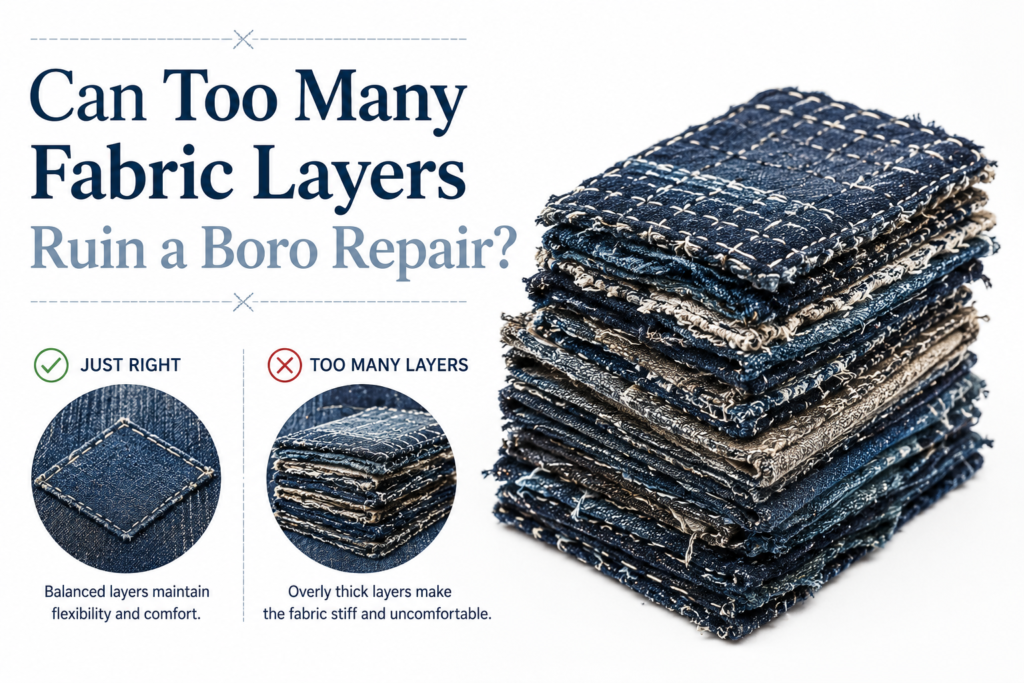
Yes, excessive layering is one of the most common beginner mistakes in Boro visible mending. Many people assume that adding more fabric automatically creates stronger repairs, but too many overlapping layers often create stiffness, distortion, and uneven tension throughout the garment.
Overbuilt repairs can feel uncomfortable because thick layered sections no longer move naturally with the surrounding fabric. This is especially problematic in clothing areas that experience regular movement, including knees, elbows, hips, and underarms. When thick repair zones repeatedly fold during wear, the stitches may experience additional strain instead of reducing it.
Too many fabric layers can create:
- Fabric puckering
- Needle resistance
- Uneven drape
- Reduced flexibility
- Excessive heat retention
- Bulky repair sections
- Faster thread abrasion
Layer thickness also changes how stitches interact with the fabric. Dense stacked materials may cause thread tension to pull unevenly across the repair, creating visible distortion or twisting. In some cases, thick repairs become more vulnerable to edge fraying because the layers rub against ach other during movement.
Traditional Japanese Boro garments often accumulated many repair layers naturally over decades of use. However, those garments evolved through continuous repair cycles rather than intentional overbuilding during a single sewing session. Modern visible mending projects should avoid artificially recreating extreme layering unless historical authenticity is the primary goal.
Signs that a repair uses too many layers include:
- Hard raised repair sections
- Awkward folding
- Twisting fabric
- Heavy puckering
- Restricted movement
- Difficult needle penetration
Good Boro repairs should feel integrated into the garment rather than attached on top of it like rigid armor.
Which Threads Work Best for Multi-Layer Boro Repairs?
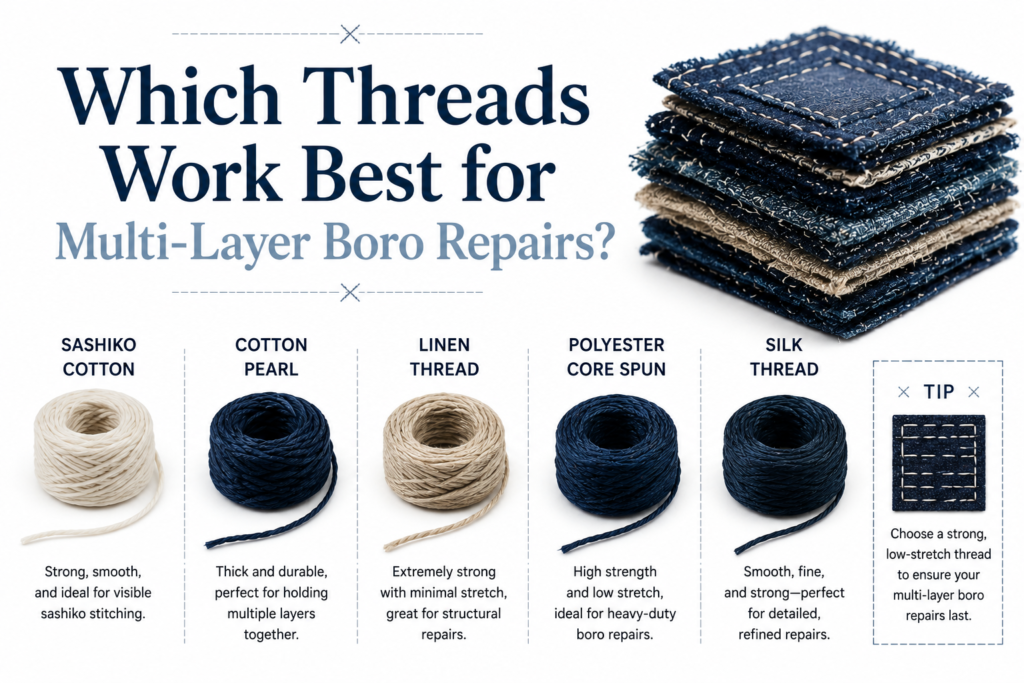
Thread selection plays a major role in how layered Boro repairs behave over time. Different thread types create different levels of flexibility, abrasion resistance, and surface tension across the repair area. In many cases, thread choice influences durability just as much as fabric layering itself.
Traditional sashiko stitching commonly uses soft cotton thread because it flexes naturally with fabric movement and distributes tension more evenly across layered repairs. Softer thread structures help prevent excessive stiffness while maintaining visible stitch texture.
Different thread types behave differently:
| Thread Type | Repair Behavior |
| Cotton sashiko thread | Flexible and breathable |
| Embroidery thread | Decorative but softer durability |
| Polyester thread | Strong but may cut fragile fabric |
| Thick utility thread | High durability but more rigidity |
Dense thread coverage can sometimes replace additional fabric layers because the stitching itself reinforces weak fibers. However, overly thick thread combined with heavy layering may create rigid repairs that lose flexibility.
Experienced visible mending artists often choose thread based on:
- fabric thickness
- garment movement
- repair stress level
- wash frequency
- desired softness
- decorative appearance
Vintage fabrics especially benefit from softer cotton thread because synthetic thread may create uneven tension against weakened fibers. The goal is keeping the repair stable without introducing excessive stiffness or abrasion around the patch edges.
Balanced thread behavior helps layered repairs remain durable while still preserving the relaxed textured appearance associated with traditional Boro stitching.
How Did Traditional Japanese Boro Use Multiple Fabric Layers?
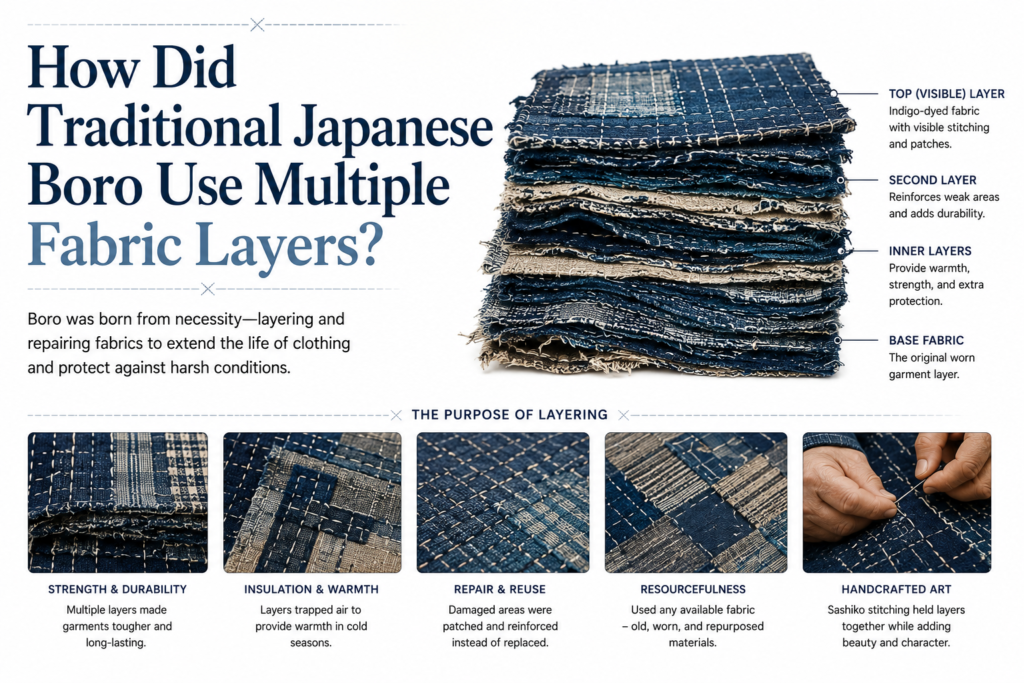
Traditional Japanese Boro developed from necessity rather than decoration. Rural families repeatedly repaired clothing using small scraps of available fabric because textiles were extremely valuable and difficult to replace. Over many years, garments accumulated reinforcement patches, visible stitching, and overlapping repair sections that extended the life of workwear far beyond its original condition.
Refer to our expert historical guide on Japanese Boro Stitching to know the origin and necessary situations that gave birth to Boro in Japan in its Edo Period.
Historical Boro garments commonly used:
- Indigo cotton scraps
- Handwoven fabric remnants
- Layered reinforcement patches
- Repeated sashiko stitching
- Recycled textile fragments
These layered structures helped improve warmth, durability, and insulation during harsh winters. Multiple layers were especially important in farming communities where clothing experienced constant physical stress from outdoor labor.
Unlike modern decorative visible mending, traditional Boro evolved slowly over time. Families repaired garments whenever new holes appeared, meaning many jackets and work pants gradually accumulated dozens of overlapping layers through years of continuous use. This produced the iconic textured appearance now associated with Japanese Boro aesthetics.
Historical layering served several practical purposes:
- Preventing fabric waste
- Preserving valuable textiles
- Increasing cold-weather insulation
- Extending workwear lifespan
- Reinforcing high-friction areas
Modern Boro-inspired repairs often imitate the appearance of historical garments but use fewer layers to maintain comfort and flexibility. Contemporary visible mending usually prioritizes wearability because modern fabrics, indoor environments, and washing habits differ significantly from historical rural conditions.
Understanding this distinction helps modern makers avoid unnecessary overbuilding while still appreciating the cultural origins of traditional layered Boro repair techniques.
Can Washing Shrink or Distort Layered Boro Repairs?
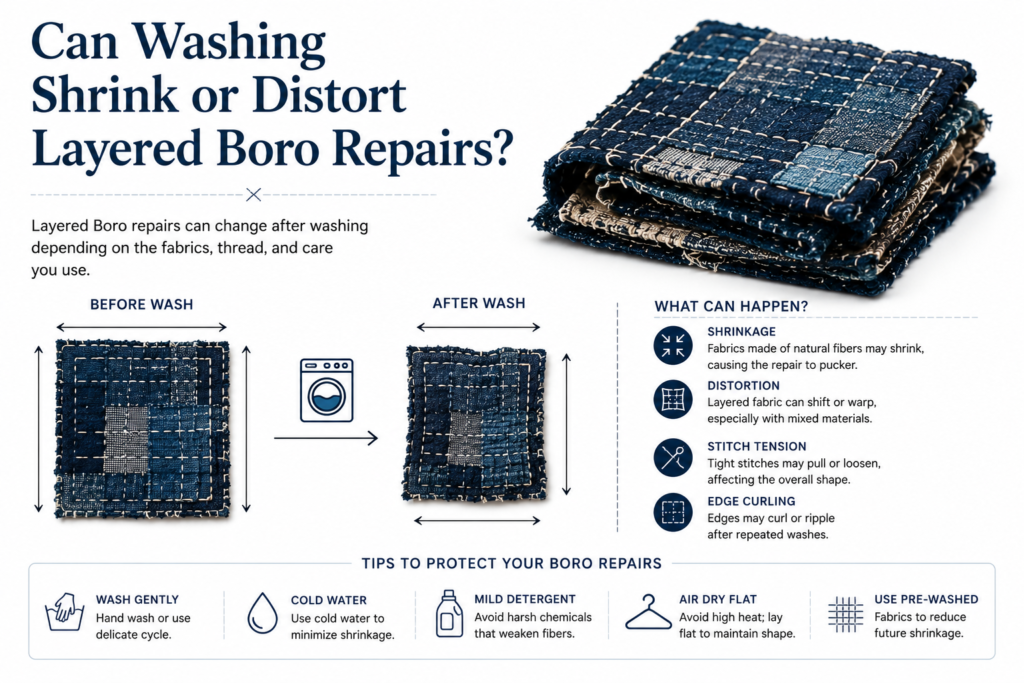
Washing behavior significantly affects how layered Boro repairs perform over time. Different fabrics shrink, stretch, and dry at different rates, which can create distortion if repair materials are not properly balanced before stitching.
One of the most common visible mending problems occurs when patch fabric shrinks differently from the original garment. This mismatch may create twisting, puckering, or uneven tension after repeated washing cycles. Thick repairs also retain moisture longer, which changes how the fabric settles during drying.
Common washing-related repair problems include:
- shrinkage mismatch
- edge curling
- puckering
- uneven drying
- stitch tightening
- fabric warping
Prewashing patch fabrics before sewing helps reduce future distortion because the material shrinks before becoming permanently attached to the garment. This is especially important when combining vintage fabric scraps with modern textiles.
Experienced Boro makers usually recommend:
- cold water washing
- gentle detergents
- air drying
- avoiding aggressive heat
- minimizing heavy machine agitation
Heavy denim repairs may tighten slightly after washing because dense fibers contract during drying. Lightweight fabrics can also wrinkle unevenly if layered repairs become too rigid.
Balanced reinforcement structures usually survive washing better because they distribute stress more evenly throughout the repair area. Repairs that already feel excessively stiff before washing often become even more rigid afterward.
Understanding washing behavior helps visible mending projects remain durable and visually balanced long after the original repair work is completed.
Does Stitch Density Matter More Than Layer Count?
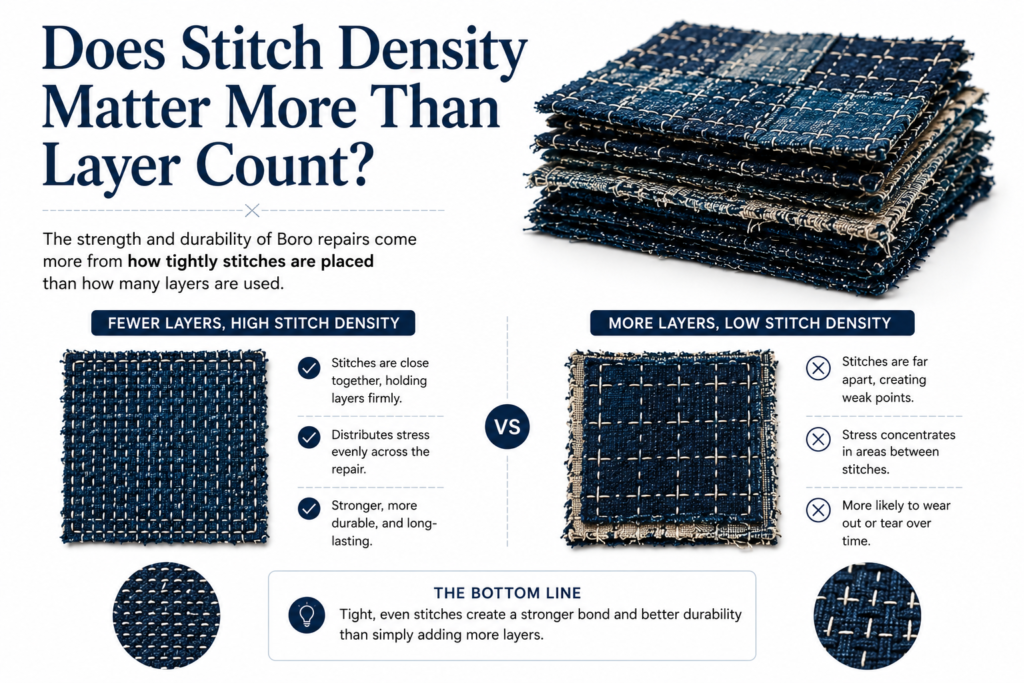
In many Boro repairs, stitch density contributes more to long-term durability than simply adding extra fabric layers. Well-distributed stitching stabilizes weak fibers, reinforces patch edges, and spreads tension across a larger surface area. This often allows lighter repairs to remain strong without excessive material buildup.
A carefully stitched two-layer repair may outperform a poorly stitched five-layer repair because structural stability depends heavily on how stress moves through the repair area. Dense sashiko-style stitching creates interconnected reinforcement patterns that hold damaged fibers together more effectively than loose decorative stitching alone.
Experienced visible mending artists balance:
- Fabric thickness
- Stitch spacing
- Thread tension
- Patch placement
- Grain direction
- Reinforcement zones
instead of relying entirely on fabric stacking.
Dense stitching helps:
- Reduce tear expansion
- Stabilize weak fibers
- Improve patch integration
- Distribute movement stress
- Strengthen repair edges
However, stitch density must also remain balanced. Excessively tight stitching can create puckering or restrict flexibility if the thread pulls too aggressively across the fabric surface. Good repairs combine moderate layering with even stitch distribution rather than depending on a single factor.
For high-stress garment areas like knees or elbows, balanced stitching often improves repair longevity more efficiently than adding additional thick layers. Decorative visible mending projects may also use lighter layering structures because dense stitching already provides sufficient visual and structural impact.
The strongest Boro repairs usually result from harmony between fabric choice and stitch placement rather than maximum thickness alone.
If you still have any doubts on if boro stitching can too dense, don’t you worry because we have got an entire expert guide to settle your matters.
Should Boro Reinforcement Go Inside or Outside the Garment?
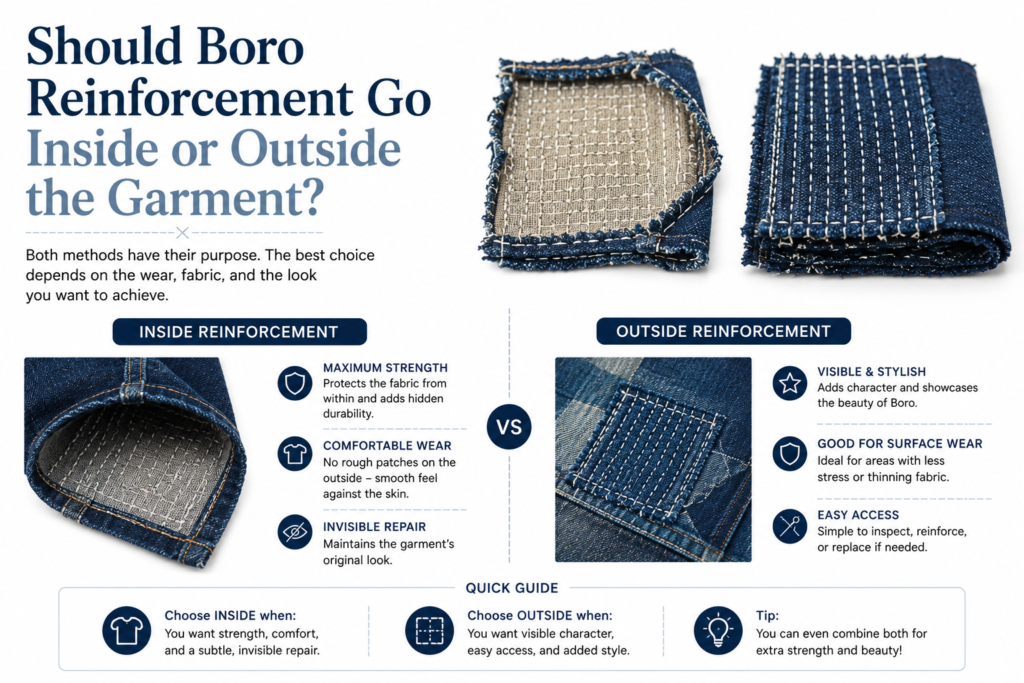
Patch placement changes both the appearance and structural behavior of a Boro repair. Some repairs focus primarily on reinforcement, while others emphasize visible decorative mending. The best placement strategy depends on the garment condition, tear severity, and desired visual style.
Internal reinforcement patches are commonly used when:
- structural support matters most
- the outer surface should remain smoother
- flexibility is important
- fabric is thin or fragile
External patches are more common in decorative visible mending because they highlight the layered stitched aesthetic associated with traditional Boro repair culture.
Different placement strategies serve different goals:
| Placement Style | Best Purpose |
| Internal patch | Structural reinforcement |
| External patch | Decorative visible repair |
| Sandwich layering | Severe tears and holes |
Sandwich layering places reinforcement both inside and outside the damaged area. This structure helps stabilize severe fabric damage while distributing stress across multiple surfaces.
Experienced Boro artists also consider:
- movement stress
- fabric thickness
- garment flexibility
- stitch visibility
- comfort against skin
- long-term washing behavior
Heavy external patches may feel uncomfortable in high-contact body areas like knees or elbows, which is why many structural repairs hide reinforcement internally while keeping decorative stitching visible on the outer surface.
Good patch placement creates repairs that feel natural while still preserving the handmade layered appearance that defines visible mending aesthetics.
Which Garment Areas Need Extra Reinforcement Layers?
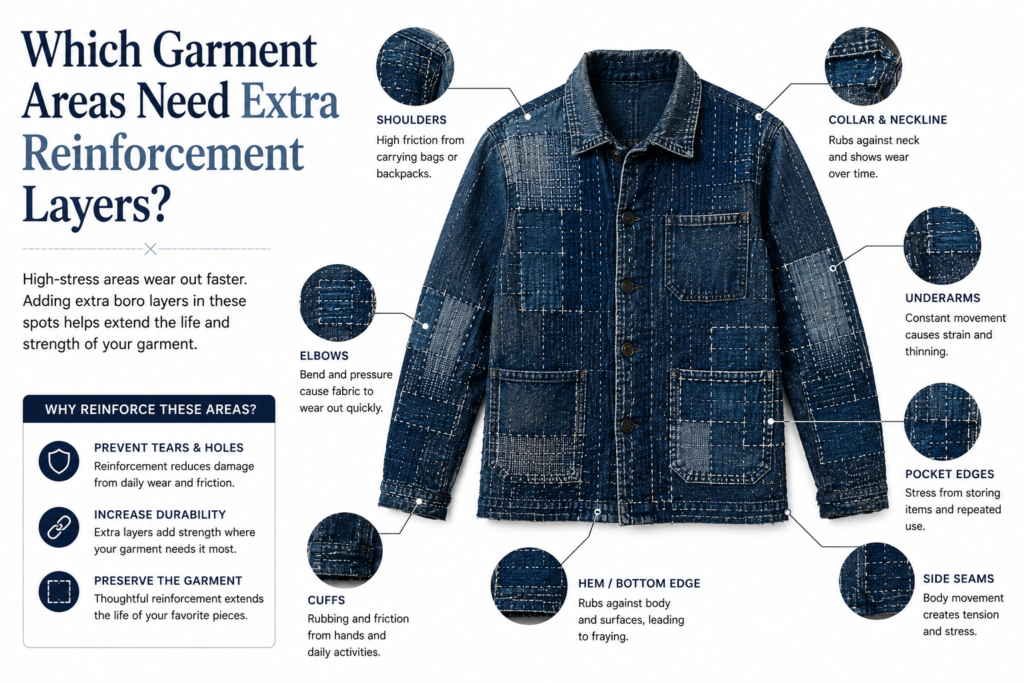
Different parts of a garment experience different levels of stress, friction, and movement. High-wear areas often require additional support layers because they endure repeated bending, stretching, and abrasion during everyday use. Strategic reinforcement helps prevent repairs from failing prematurely.
The highest-stress garment areas usually include:
- Jean knees
- Inner thighs
- Elbows
- Pocket corners
- Seat areas
- Jacket cuffs
- Bag strap contact points
These locations experience constant tension during walking, sitting, lifting, and repeated movement. Thin decorative repairs may not survive long in these zones without backing support.
Lower-stress areas often require lighter reinforcement because they experience less movement and friction. Decorative shoulder patches, aesthetic visible mending details, and small surface repairs may only need minimal layering combined with balanced stitching.
Experienced Boro makers evaluate:
- Movement intensity
- Friction frequency
- Fabric thickness
- Stretch behavior
- Wash exposure
before deciding how many layers a repair should use.
For example:
- Heavy friction zones → 3-layer reinforcement
- Moderate wear zones → 2 layers
- Decorative repairs → 1 visible patch layer
This targeted approach improves comfort while still protecting vulnerable fabric areas.
Another important factor is flexibility. High-movement zones should remain comfortable during bending and stretching. Excessively rigid repairs in knees or elbows can create discomfort and place additional stress on surrounding fabric.
Good visible mending does not apply the same repair structure everywhere. Instead, successful Boro repairs adapt layering strategies to the needs of each specific garment section.
How Do Experts Keep Boro Repairs Flexible and Comfortable?
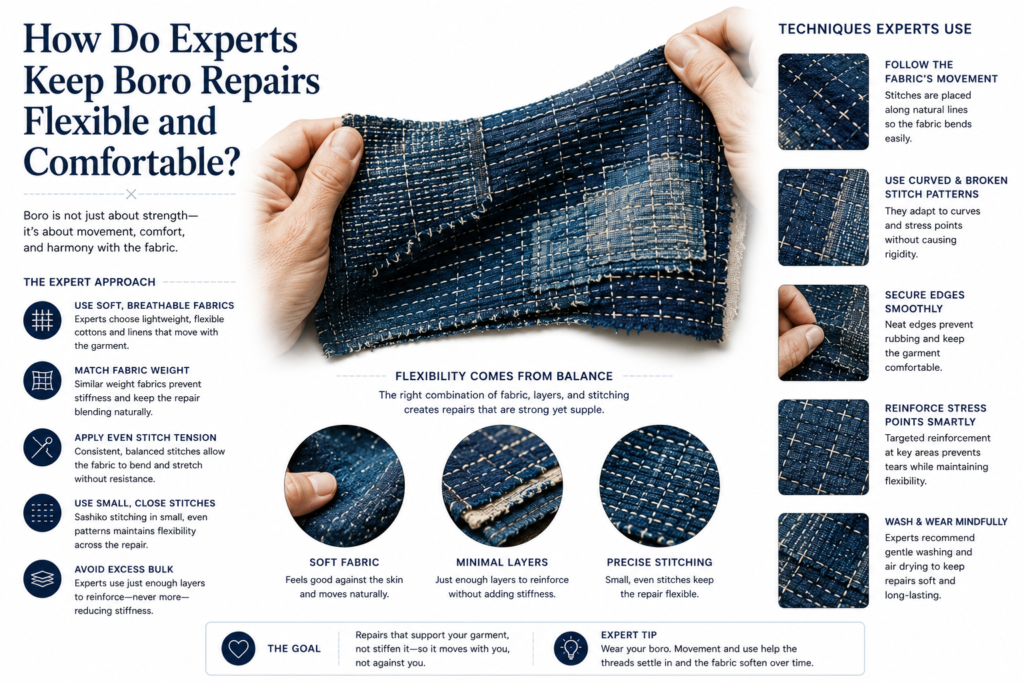
Experienced Boro artists understand that wearable comfort is just as important as durability. The goal of visible mending is not to create thick armored patches but to extend the life of fabric while preserving natural movement and garment balance.
Experts usually focus on controlled reinforcement rather than excessive layering. Lightweight backing fabrics, balanced stitch spacing, and strategic patch placement all help repairs remain flexible even after repeated washing and wear
Professional visible mending techniques often include:
- Thin reinforcement fabric
- Even stitch tension
- Controlled patch overlap
- Balanced thread spacing
- Grain direction alignment
- Flexible edge transitions
Grain direction plays a major role in flexibility. When fabric grain alignment conflicts between layers, the repair may twist or pull unevenly during movement. Aligning the grain helps the repair move naturally with the surrounding garment.
Experts also avoid concentrating all reinforcement in one dense block. Instead, they spread support gradually across the damaged area. This prevents abrupt stiffness transitions between repaired and unrepaired sections.
Comfort-focused Boro repairs improve:
- Garment drape
- Long-term wearability
- Breathability
- Movement range
- Stitch lifespan
- Visual balance
Modern visible mending often favors moderate reinforcement because most people wear repaired garments in everyday environments rather than harsh rural working conditions. This changes how layering decisions should be approached today.
Strong repairs should feel integrated into the garment instead of creating heavy isolated repair zones that restrict movement or alter the overall shape of the clothing.
Simple Beginner Formula for Choosing Boro Layers
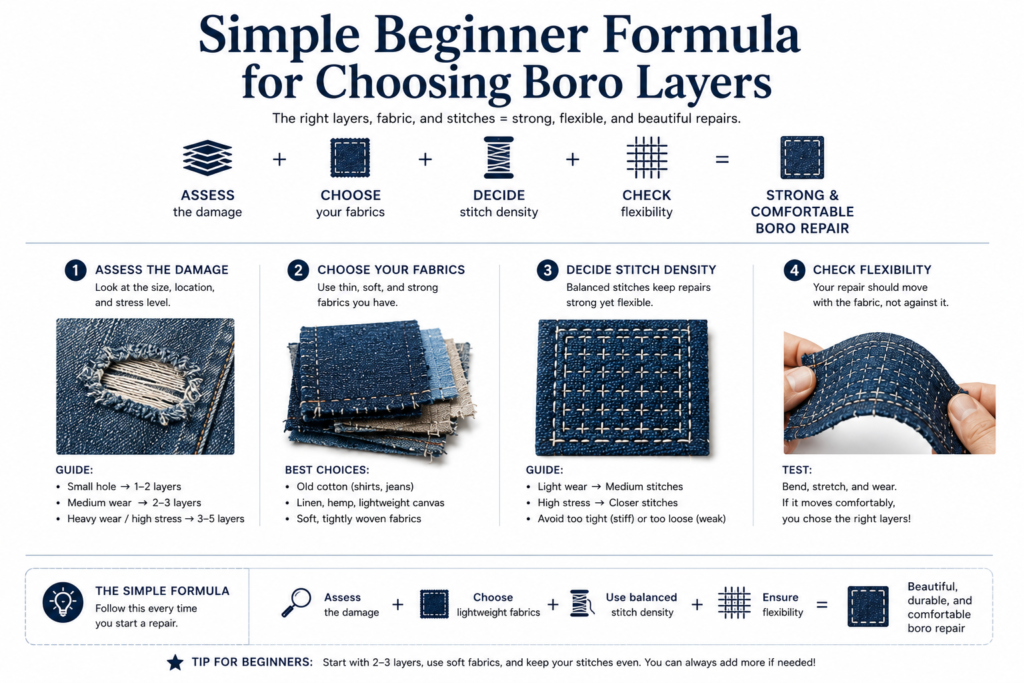
Many beginners struggle to decide how much reinforcement a repair actually needs. A simple layering formula helps prevent both under-reinforcement and excessive patch stacking. The goal is matching the repair structure to fabric behavior and movement stress instead of applying the same method everywhere.
A practical beginner framework includes:
- Thin fabric + high stress = 3 layers
- Thick fabric + low stress = 1–2 layers
- Decorative repair = lighter layering
- Structural repair = backing support required
- Stretch fabric = softer flexible reinforcement
- Heavy denim = fewer layers with stronger stitching
This simplified system works because visible mending success depends on balancing:
- durability
- flexibility
- comfort
- stitch stability
- movement behavior
Beginners often focus too heavily on visible damage while ignoring how the surrounding fabric behaves during wear. A repair on soft lightweight cotton needs a different reinforcement strategy than a repair on rigid workwear denim.
Good Boro layering decisions should consider:
- fabric thickness
- friction level
- bending movement
- wash frequency
- patch flexibility
- stitch density
Experienced Boro artists gradually adjust these variables based on real garment behavior over time. Visible mending improves significantly once makers understand that the strongest repair is usually the repair that moves naturally with the fabric instead of resisting it.
This approach creates repairs that remain wearable, breathable, durable, and visually balanced How Long Do Layered Boro Repairs Usually Last
The lifespan of a Boro repair depends on fabric quality, stitch density, movement stress, washing habits, and how well the reinforcement structure matches the garment’s actual wear conditions. Some decorative repairs may last only months, while heavily reinforced denim repairs can survive for many years with proper maintenance.
High-friction areas naturally wear faster because repeated movement places constant stress on both stitches and surrounding fabric fibers. Thin lightweight fabrics also deteriorate more quickly than heavyweight denim or canvas materials.
Average repair lifespan expectations include:
| Repair Type | Estimated Lifespan |
| Decorative repair | 6–24 months |
| Moderate wear repair | 1–3 years |
| Heavy denim reinforcement | 2–5 years |
Several factors influence durability:
- wash frequency
- stitch tension
- thread quality
- friction intensity
- fabric age
- moisture exposure
- repair flexibility
Repairs that remain flexible usually last longer because they move naturally with the garment instead of resisting body movement. Extremely rigid repairs often transfer stress toward surrounding fabric, which may eventually create new tears near the patch edges.
Experienced visible mending artists frequently inspect older repairs and add reinforcement stitching before major damage reappears. Traditional Boro clothing evolved through continuous maintenance rather than single permanent repairs.
Long-lasting visible mending depends less on excessive fabric layering and more on understanding how tension, movement, and textile behavior interact during real-world wear over time.
long after the stitching is complete.
Final Thoughts on How Many Layers Boro Repairs Should Use
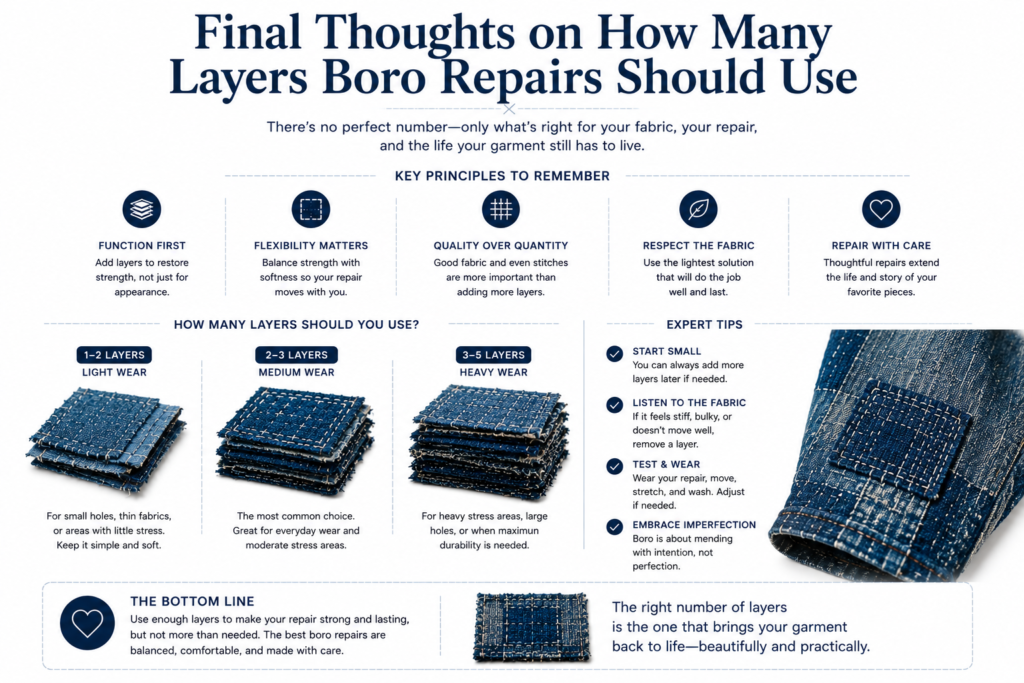
Most successful Boro repairs use 2 to 3 total fabric layers because this creates the best balance between durability, flexibility, comfort, and long-term wearability. Thin fabrics often need extra support layers, while heavyweight materials like denim usually require fewer reinforcement patches combined with strong stitching.
The ideal repair structure depends on:
- Fabric thickness
- Movement stress
- Garment type
- Stitch density
- Desired flexibility
- Wear frequency
Modern visible mending works best when repairs feel integrated into the garment rather than excessively thick or rigid. Strategic reinforcement almost always performs better than unnecessary material buildup.
Traditional Japanese Boro garments sometimes accumulated many layers naturally over decades of repeated repair, but modern wearable clothing usually benefits from lighter and more balanced repair methods. Good visible mending preserves both structural strength and everyday comfort.
The strongest Boro repairs are rarely the thickest repairs. Instead, the best results come from understanding how fabric layers, stitching patterns, movement stress, and flexibility work together to create long-lasting reinforcement that still feels natural during wear.
FAQ Section
Is 2 layers enough for Boro repairs?
Yes. Most modern Boro repairs use 2 layers successfully, especially on medium or heavyweight fabrics like denim or canvas.
Can Boro repairs use 4 layers?
They can, but excessive thickness may reduce flexibility and create bulky repairs.
Do thin shirts need backing fabric?
Usually yes. Lightweight fabrics often benefit from an inner support layer to reduce tearing stress.
Does more stitching reduce the need for extra fabric?
Often yes. Dense reinforcement stitching can stabilize repairs without excessive patch stacking.
Why do layered repairs pucker sometimes?
Uneven tension, excessive thickness, and misaligned fabric grain can all create puckering.
Are historical Boro garments heavily layered?
Many traditional garments accumulated numerous repair layers over decades of repeated use.
Which areas need the strongest Boro reinforcement?
Knees, elbows, inner thighs, seat areas, and pocket corners usually require stronger support.
Can decorative Boro use fewer layers?
Yes. Decorative visible mending often prioritizes flexibility and aesthetics over heavy structural reinforcement.