by Humera Shahzaib | Jul 13, 2026 | Boro Supplies
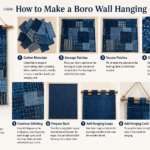
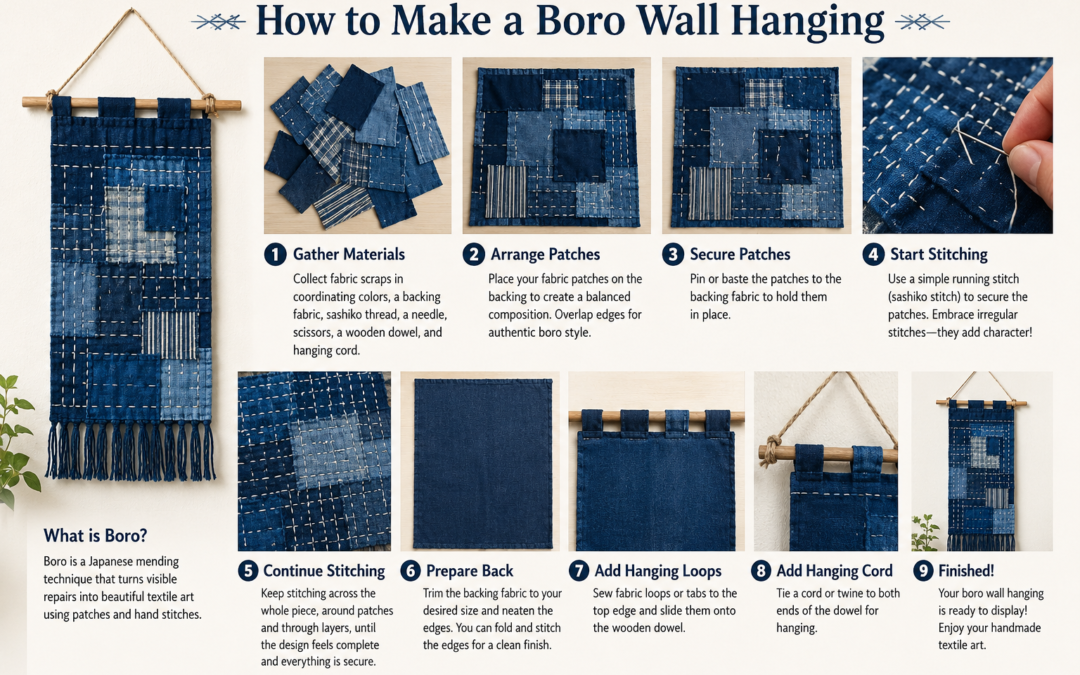
Traditional-inspired Boro textile art wall hangings combine layered patchwork, visible sashiko stitching, and recycled indigo fabrics to create textured handmade textile art. Unlike mass-produced wall decor, boro wall hangings emphasize visible repair, aging texture,...
by Humera Shahzaib | Jul 8, 2026 | Boro Clothing
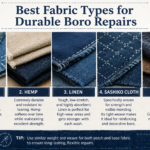
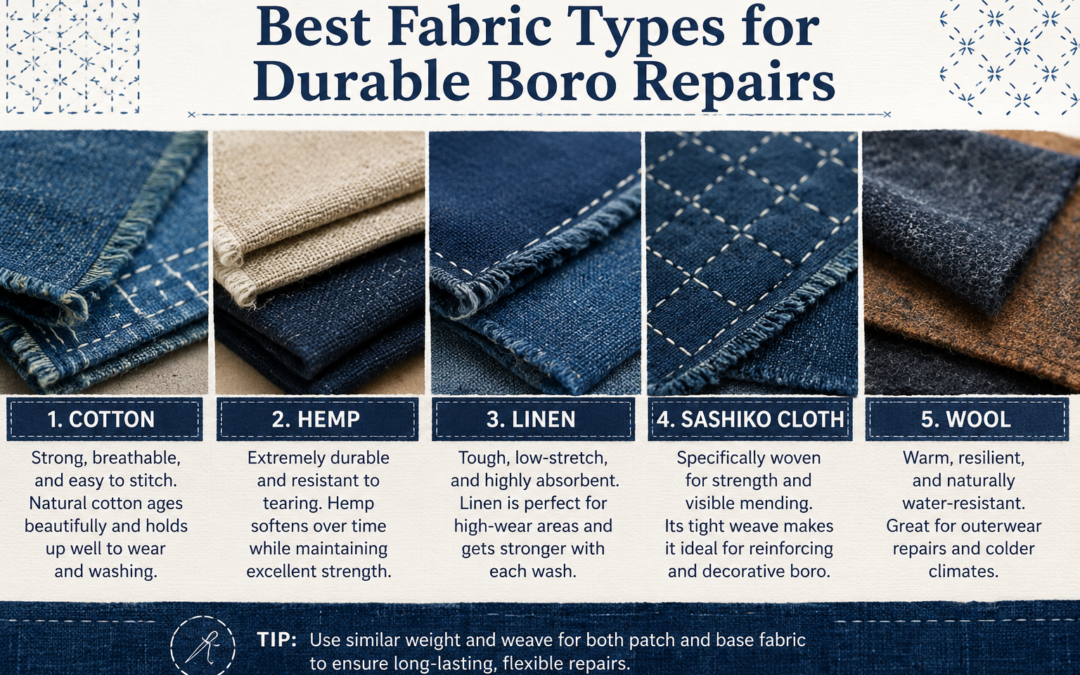
Boro repairs last longest when the fabric, stitching, and reinforcement layers work together naturally. Traditional Japanese boro techniques relied on durable woven textiles that could survive repeated wear, washing, and visible patch layering over many years. Today,...
by Humera Shahzaib | Jul 8, 2026 | Boro Projects
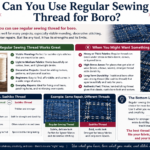
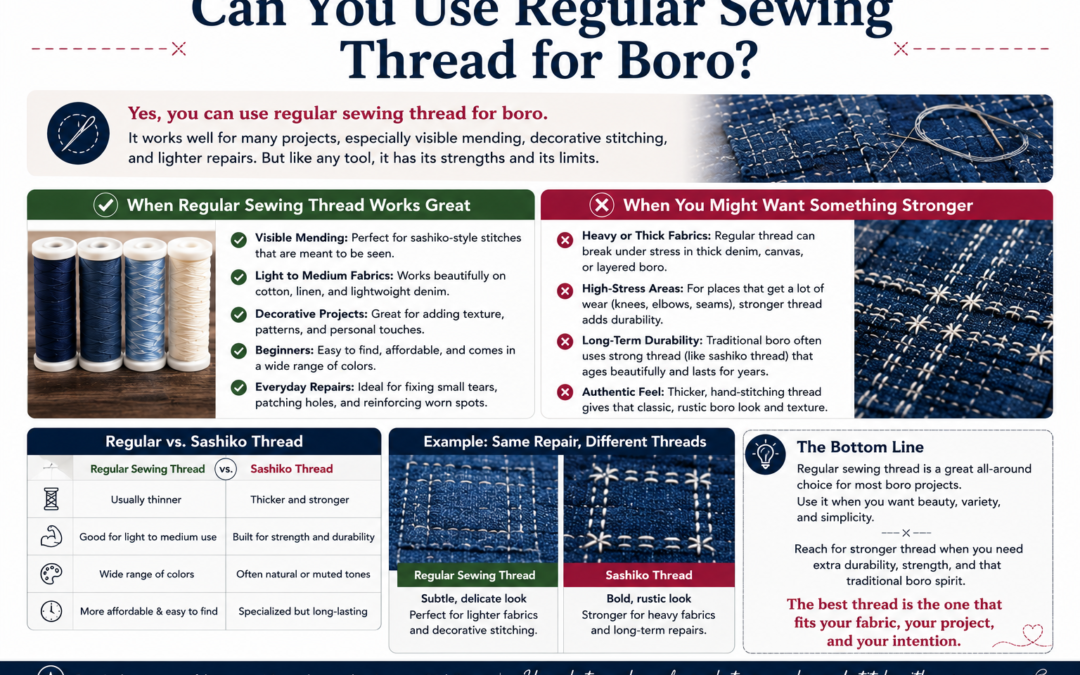
Regular sewing thread can absolutely be used for boro stitching, especially for beginners, lightweight garments, and decorative visible mending. However, the final appearance, durability, stitch texture, and repair lifespan depend heavily on the type of thread, fabric...
by Humera Shahzaib | Jul 5, 2026 | Boro Clothing
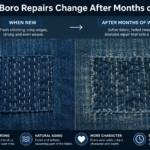
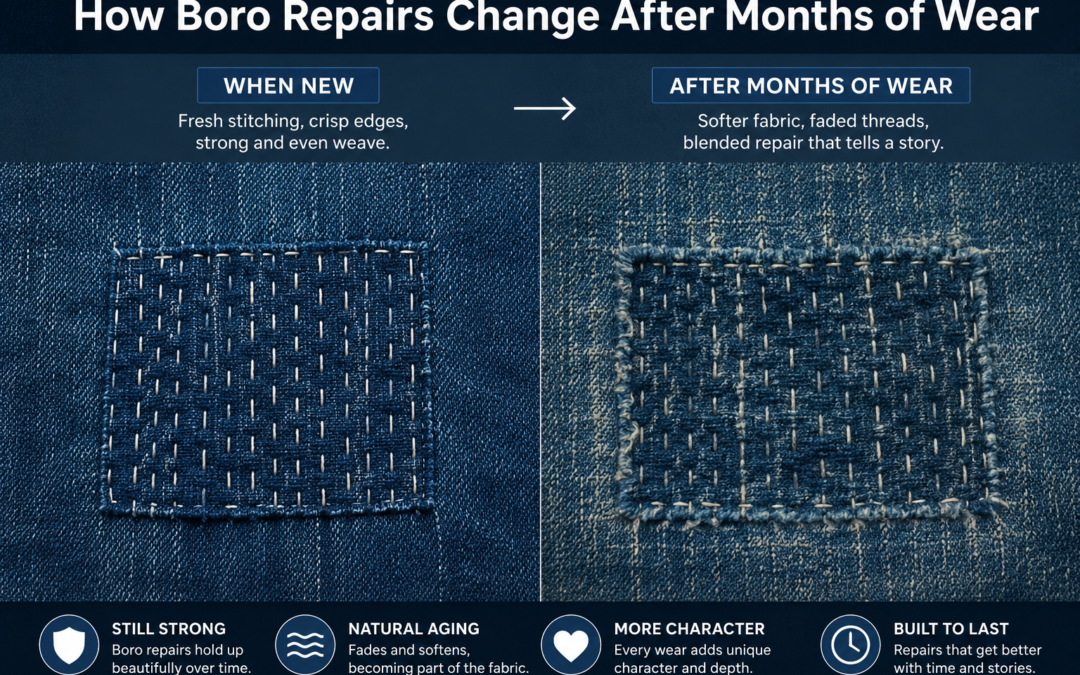
Boro repairs are designed to evolve instead of remaining perfectly clean or invisible forever. After months of wear, repaired garments begin showing softer texture, faded indigo tones, compressed stitching, and layered fabric character that reflects real-world use....
by Humera Shahzaib | Jul 5, 2026 | Boro Stitching Learning
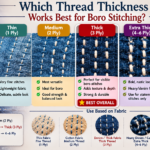
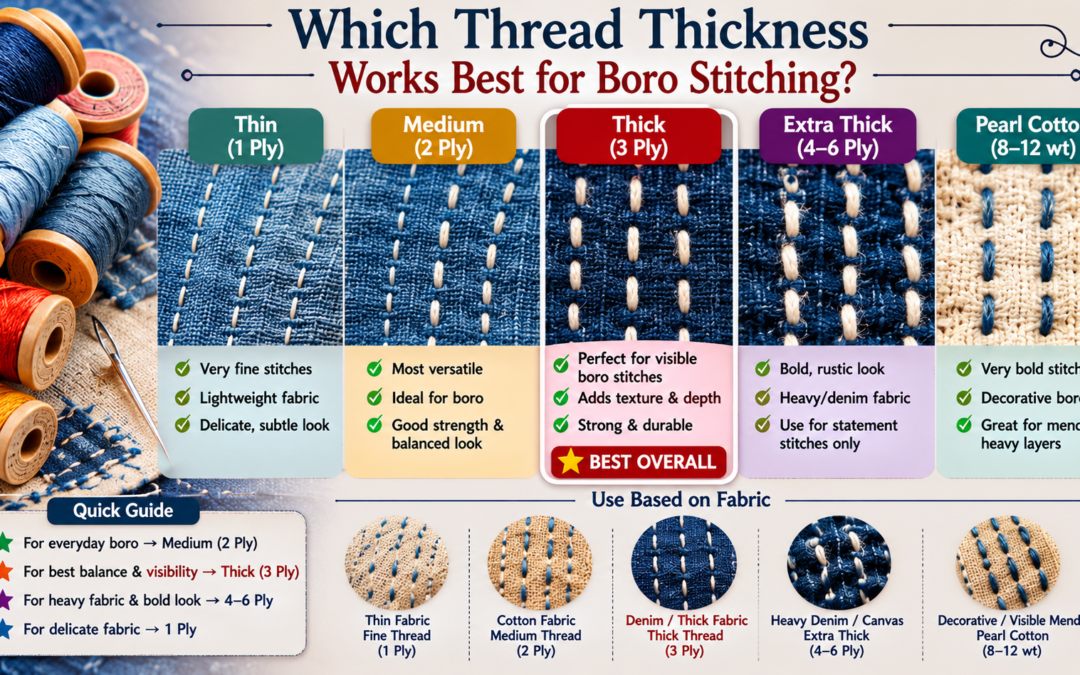
Medium-thickness cotton sashiko thread works best for most boro stitching because it balances durability, flexibility, visibility, and long-term fabric comfort. Thick thread performs better on denim and layered repairs, while thinner thread suits lightweight garments...