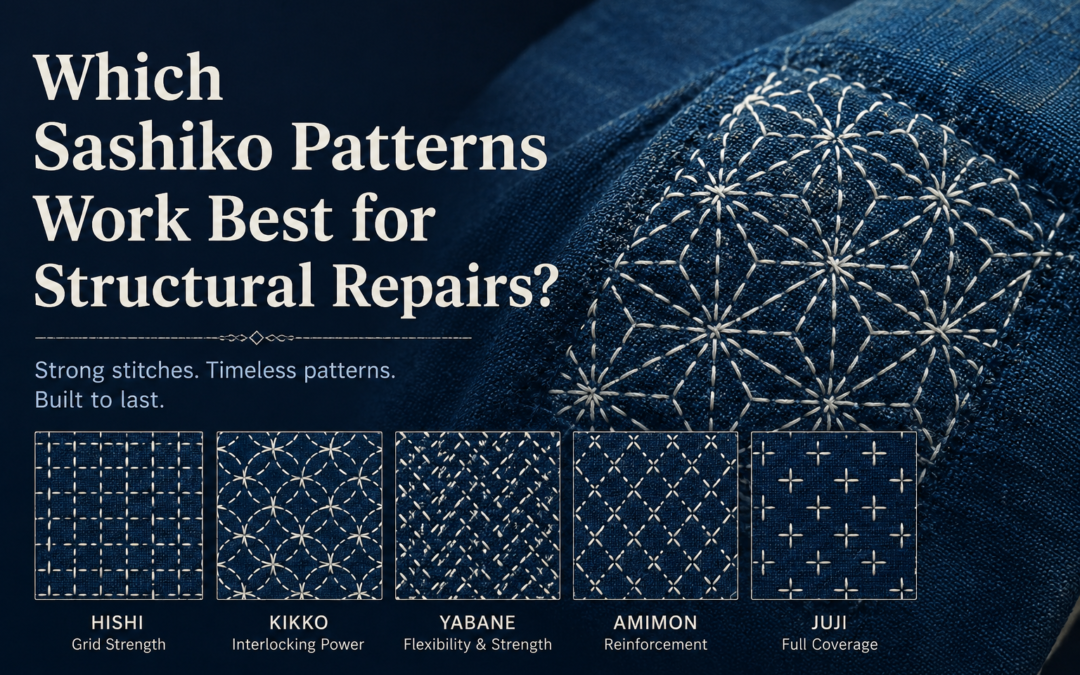
Traditional sashiko patterns used for structural repairs are designed to strengthen worn fabric, stabilize layered patches, and improve long-term durability in heavily used garments. Patterns such as hitomezashi, kikko, asanoha, and straight running stitch grids work especially well because they distribute tension evenly across damaged areas instead of concentrating stress in one fragile point. Dive into this 5-Minute Read for an in-depth expert analysis on : “Which Sashiko Patterns Work Best for Structural Repairs?” along with various solutions given for the small issue and hurdles that associated with the question.
Historically, sashiko was never only decorative. Rural Japanese workers used these stitching methods to extend the lifespan of indigo garments, farming jackets, aprons, fishing clothing, and heavily repaired boro textiles. The strongest repair-focused patterns balanced flexibility, reinforcement, and stitch efficiency so garments could survive repeated wear, washing, moisture exposure, and physical movement for years.
Modern visible mending still follows many of the same principles. Structural sashiko repairs perform best when the pattern supports natural fabric movement while securing weak fibers and layered patches together. Decorative complexity alone does not guarantee durability. In many cases, simple repetitive reinforcement grids outperform highly artistic motifs because they provide more balanced support.
The most effective repair-oriented sashiko patterns usually offer:
- Multi-directional reinforcement
- Balanced stitch spacing
- Strong patch anchoring
- Long-term flexibility
- Reduced tearing expansion
- Even tension distribution
- Better wash durability
Today, visible mending artists, denim repair specialists, and boro practitioners continue using these traditional reinforcement systems because they combine beauty with genuine structural performance.
Why Structural Sashiko Patterns Matter in Boro Repairs
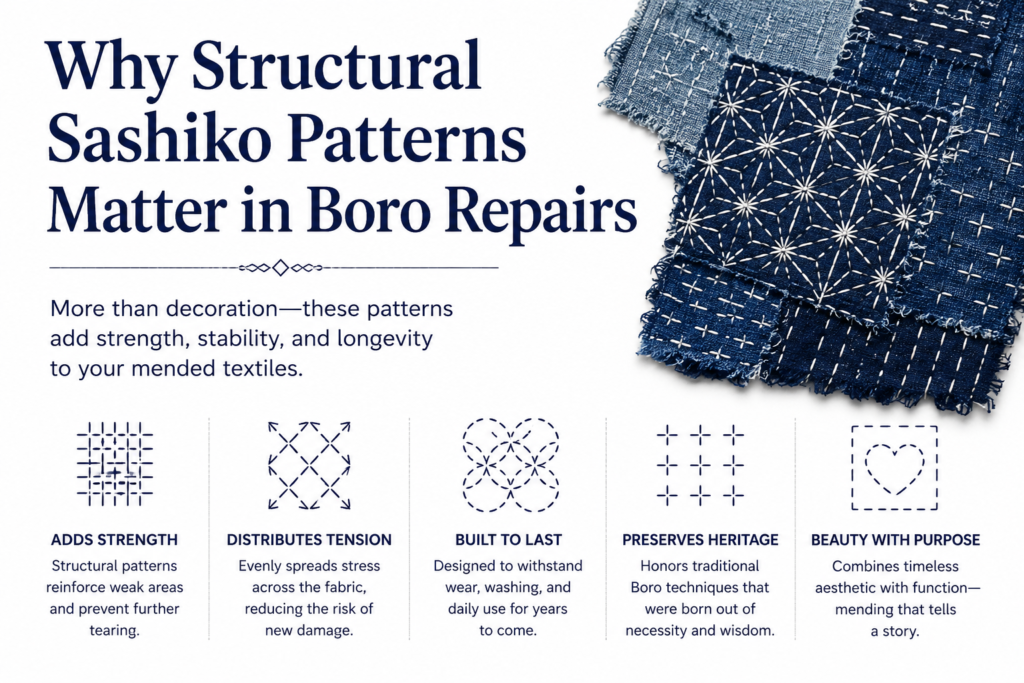
Structural sashiko patterns matter because damaged fabric cannot survive long-term use without balanced reinforcement. In traditional boro textiles, stitching was not added only for decoration. It functioned as a practical engineering system that stabilized weak cloth, prevented tears from spreading, and connected multiple repair layers into a single durable textile surface.
To know more about Traditional Japanese Boro Stitching and its vast cultural and historical background, look no further than our expert guide on the matter.
Many old Japanese garments experienced repeated stress around elbows, knees, cuffs, pockets, shoulders, and seams. Without structural stitch reinforcement, patched areas could easily separate after additional wear. Repetitive sashiko stitch systems solved this problem by spreading force across larger fabric areas rather than allowing stress to remain concentrated around one damaged section.
Modern repair-focused sashiko still follows this same logic.
Strong structural patterns improve repair longevity because they:
- Secure patch edges tightly
- Reduce strain on weakened fabric
- Improve layered fabric stability
- Support movement during wear
- Prevent distortion around tears
- Help distribute repeated friction
Simple reinforcement layouts are often more durable than extremely decorative patterns because the stitching remains flexible instead of becoming overly rigid. This flexibility matters heavily in clothing repairs where knees, sleeves, or shoulders bend constantly during movement.
Structural sashiko becomes especially important for:
- Denim restoration
- Vintage textile preservation
- Thin fabric reinforcement
- Multi-layer boro stitching
- Workwear repair
- Visible mending projects
The strongest repairs are usually the ones that combine stitch efficiency with long-term wearability rather than focusing entirely on visual complexity.
How Stitch Direction Affects Structural Repair Strength
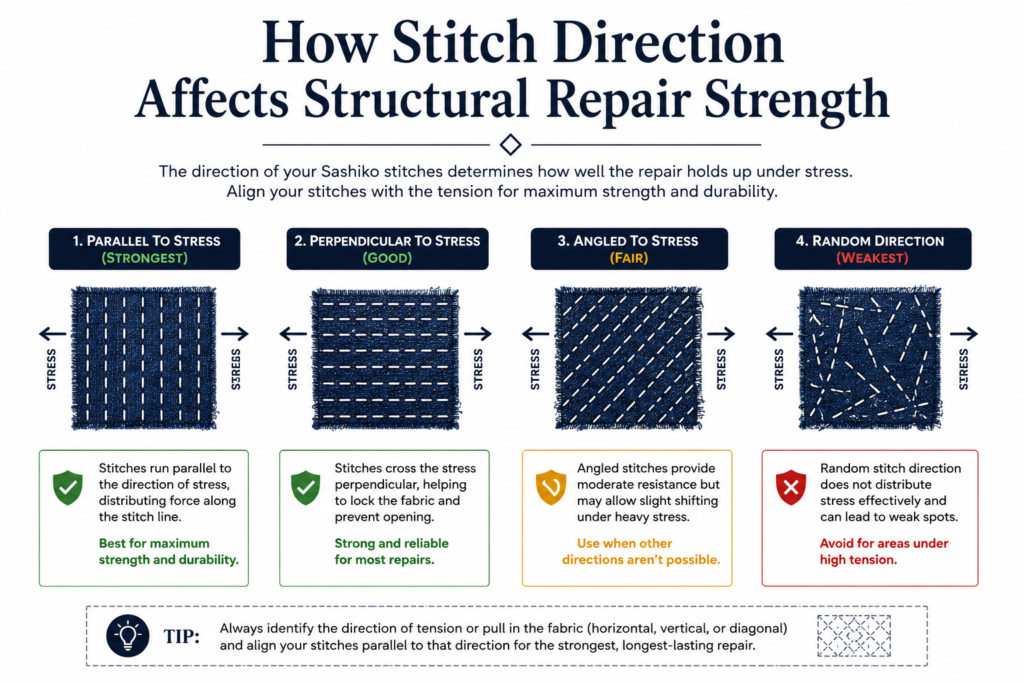
The direction of sashiko stitches changes how force travels across repaired fabric. Structural repairs become stronger when stitch orientation follows natural stress pathways instead of fighting against them. Horizontal, vertical, diagonal, and cross-grain stitch layouts all behave differently depending on garment movement, fabric weight, and the location of the repair.
For example, knee repairs experience repeated bending pressure, while elbows experience twisting movement. Straight horizontal reinforcement may work well on flat stress zones, but diagonal or geometric reinforcement patterns often perform better in areas exposed to multi-directional movement. Traditional Japanese repair methods naturally evolved around this principle, even before textile mechanics were formally understood.
Directional reinforcement affects:
- Tear resistance
- Flexibility
- Fabric distortion
- Patch stability
- Long-term durability
- Wash performance
Diagonal reinforcement patterns such as kikko often improve movement flexibility because tension spreads across multiple angles instead of remaining concentrated in parallel stitch rows. Cross-grain reinforcement also helps stabilize fragile fabric that has become stretched or uneven through years of wear.
Poor stitch direction can create new stress points beside the repair itself. This is one reason some visible mending projects fail after only a few months of use. Balanced reinforcement should support natural fabric movement rather than locking the cloth into rigid tension zones.
For high-friction garments, stitch orientation often matters as much as pattern selection itself.
How Hitomezashi Strengthens Weak Fabric Areas
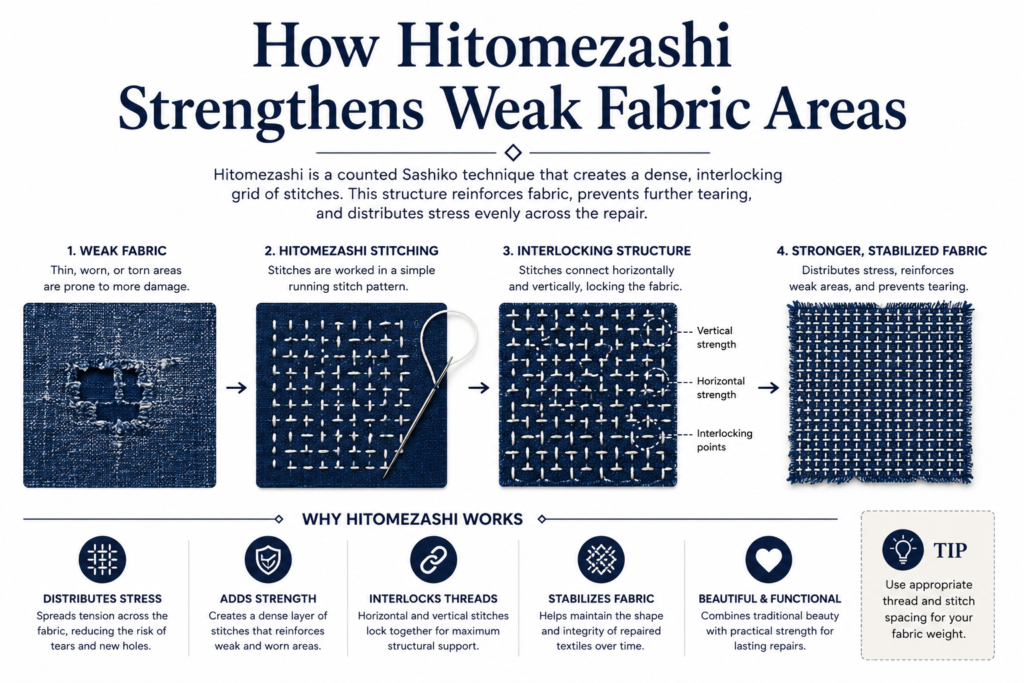
Hitomezashi sashiko strengthens weak fabric through dense geometric stitch intersections that stabilize damaged fibers and lock multiple layers together. Unlike decorative flowing patterns, hitomezashi creates repetitive reinforcement grids capable of supporting stress from several directions simultaneously.
This pattern is particularly effective on fragile textiles because it reduces unsupported fabric space between stitches. When old fabric begins thinning, small reinforcement intervals help stop tearing progression while improving patch stability. Historical Japanese workwear often relied on dense repetitive stitching methods similar to hitomezashi because they survived repeated physical labor more effectively than loose decorative stitching.
Hitomezashi performs well on:
- Thin vintage indigo cloth
- Elbow repairs
- Knee reinforcement
- Jacket sleeves
- Bag corners
- Lightweight cotton
- Layered patchwork repairs
One major advantage of hitomezashi is its ability to anchor patches evenly. Instead of relying on a few long tension lines, the pattern creates many small stabilization points across the repair surface.
Important structural benefits include:
- Better force distribution
- Reduced patch lifting
- Improved fabric integration
- Strong edge reinforcement
- Excellent wash durability
- High resistance to tear expansion
However, overly dense hitomezashi stitching can sometimes reduce flexibility if spacing becomes too tight. Thin fabric may also pucker when thread tension is excessive. Balanced spacing and controlled stitch tension are critical for maintaining comfort and long-term durability.
For repair-focused visible mending, hitomezashi remains one of the most reliable traditional sashiko patterns because it successfully combines strength, structure, and visual rhythm.
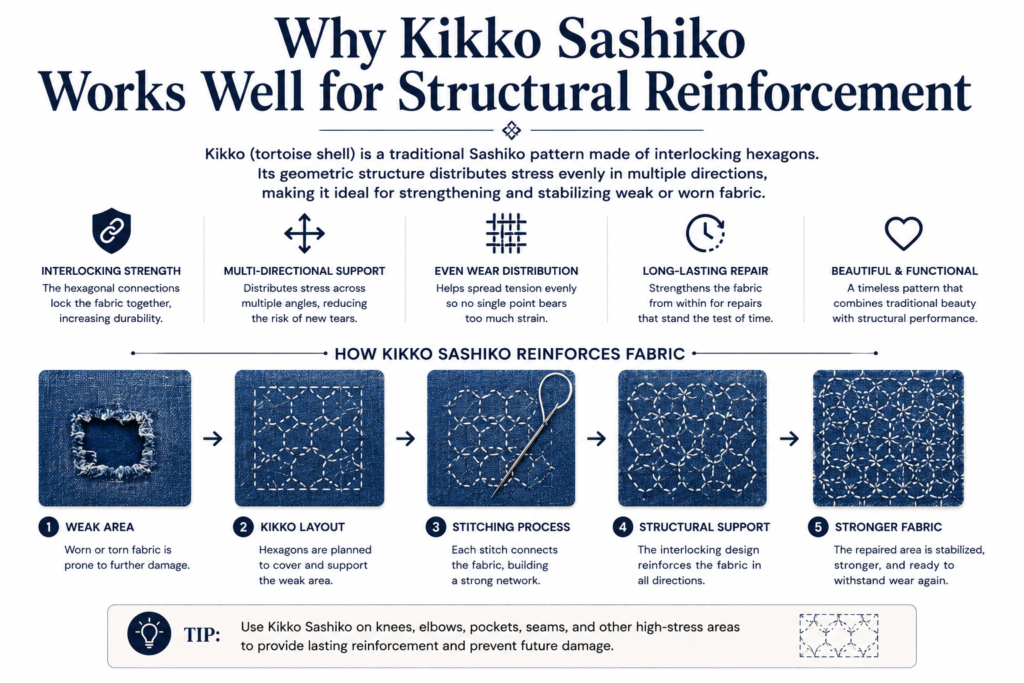
Why Kikko Sashiko Works Well for Structural Reinforcement
Kikko sashiko works well for structural reinforcement because its interconnected hexagonal geometry distributes stress evenly across multiple stitch directions. Inspired by turtle shell shapes associated with durability and longevity in Japanese culture, kikko patterns create flexible reinforcement systems that support movement while stabilizing damaged fabric.
Unlike straight reinforcement rows that primarily distribute force linearly, kikko patterns spread tension outward through connected geometric sections. This makes them especially effective for repair zones exposed to multi-directional stress, such as knees, elbows, and shoulder areas.
Kikko reinforcement is commonly used for:
- Medium-weight denim repairs
- Workwear reinforcement
- Decorative structural mending
- Tote bag strengthening
- Layered patch integration
- Flexible movement zones
One reason kikko performs so well structurally is because the repeating hexagonal system supports movement without concentrating stress around isolated stitch intersections.
Major advantages include:
- Balanced multi-directional support
- Better flexibility during wear
- Strong patch integration
- Reduced tearing spread
- Improved movement resistance
- Decorative visual symmetry
Kikko also offers a useful balance between decorative aesthetics and functional reinforcement. Many visible mending artists prefer it because the geometric structure creates visually striking repairs while still providing genuine fabric stabilization.
However, kikko can become time-consuming on large repair surfaces. Complex layouts may also challenge beginners who struggle with maintaining even stitch spacing across connected geometric sections. In extremely damaged areas, simpler running stitch grids may still provide faster and more practical reinforcement.
Even so, kikko remains one of the strongest traditional sashiko patterns for combining beauty with long-term structural durability.
Why Traditional Japanese Workers Preferred Simple Repair Patterns
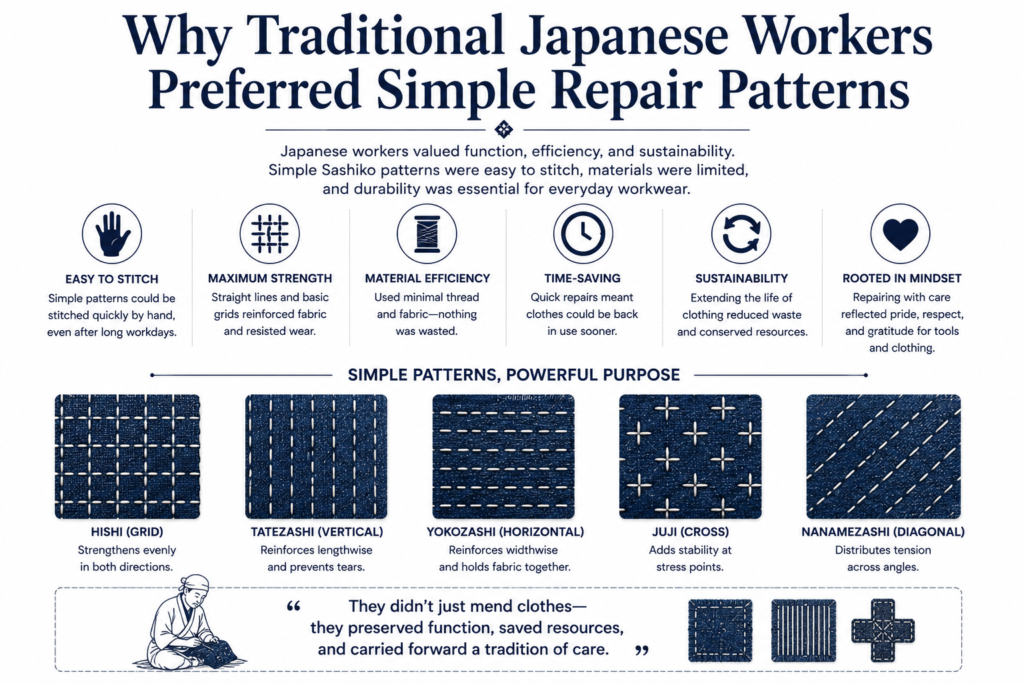
Traditional Japanese workers often preferred simple sashiko repair patterns because they were faster to stitch, easier to maintain, and more practical for garments exposed to daily physical labor. Structural efficiency mattered far more than decorative complexity in historical boro repair culture.
Farmers, fishermen, laborers, and rural families repeatedly repaired clothing because fabric was expensive and difficult to replace. Running stitch grids and simple reinforcement layouts allowed garments to survive years of wear while remaining flexible enough for daily movement.
Practical repair logic focused on:
- Extending garment lifespan
- Conserving thread
- Reinforcing weak zones quickly
- Allowing future repairs
- Maintaining comfort during labor
- Strengthening layered fabric patches
Decorative sashiko patterns became more common later as textile traditions evolved artistically. Earlier repair-focused garments often prioritized durability above visual symmetry.
Simple reinforcement stitching worked especially well because it:
- Reduced stitching time
- Prevented excessive fabric stiffness
- Simplified future patching
- Improved wash durability
- Used thread efficiently
- Stabilized large repair zones
Many surviving historical boro garments show repeated layers of practical reinforcement stitched gradually over decades rather than completed as single decorative compositions.
Understanding this historical repair mindset helps modern visible mending artists make stronger structural decisions instead of focusing entirely on aesthetics.
Does Asanoha Provide Good Structural Stability?
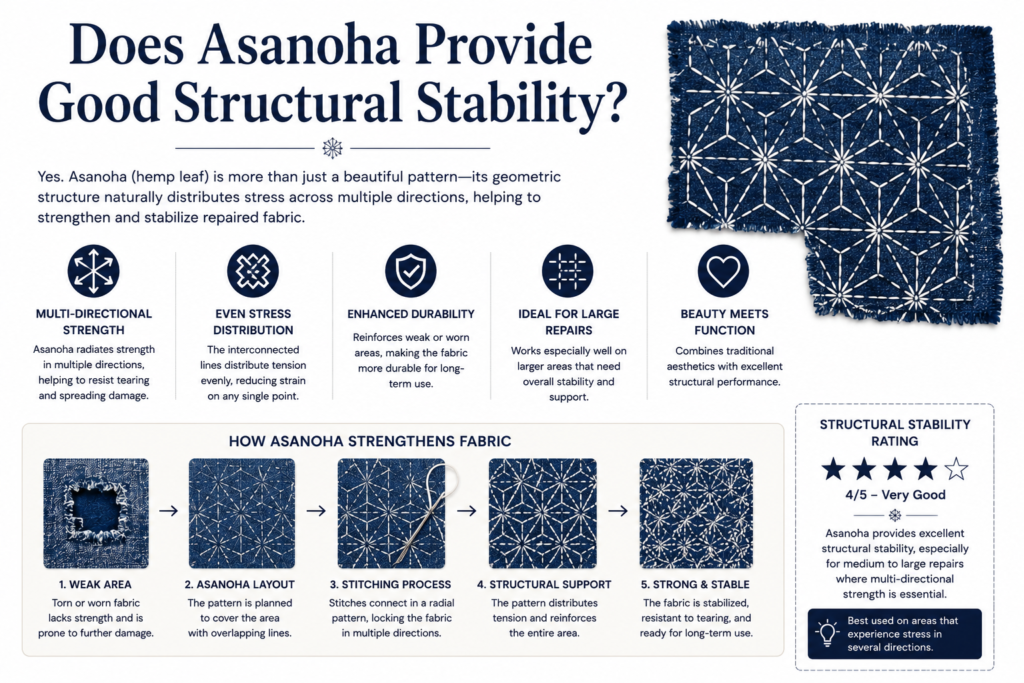
Asanoha sashiko provides moderate structural stability while maintaining flexibility and elegant visual balance. Inspired by hemp leaf geometry, this traditional pattern spreads tension outward from central intersections, helping reinforce repaired fabric without creating excessive stiffnessHistorically, hemp represented durability, strength, and rapid growth in Japanese culture, which made asanoha an appropriate motif for clothing and textile reinforcement. Although the pattern is visually decorative, it still performs effectively when stitched with balanced spacing and moderate density.
Asanoha works particularly well on:
- Medium-stress repair areas
- Decorative reinforcement zones
- Lightweight jackets
- Shirt repairs
- Visible mending projects
- Layer transition sections
The radiating geometry helps maintain movement flexibility, which becomes important in garments exposed to bending and repeated wear.
Key structural strengths include:
- Balanced directional support
- Good flexibility retention
- Attractive geometric reinforcement
- Stable stitch distribution
- Comfortable fabric movement
- Reduced rigidness compared to dense grids
However, asanoha is usually not the strongest option for extremely high-friction areas like knees or heavily worn denim workwear. Dense running stitch grids and hitomezashi patterns often outperform it in severe repair situations because they provide tighter reinforcement coverage.
Asanoha performs best when users want both:
- Functional reinforcement
- Traditional decorative aesthetics
For many visible mending artists, this balance makes the pattern especially valuable. It allows garments to maintain authentic handcrafted beauty while still benefiting from structural stabilization.
When paired with proper thread weight and patch layering, asanoha becomes a highly versatile reinforcement pattern for modern boro-inspired textile repairs.
Which Sashiko Patterns Work Best for Thin Fabric Repairs?
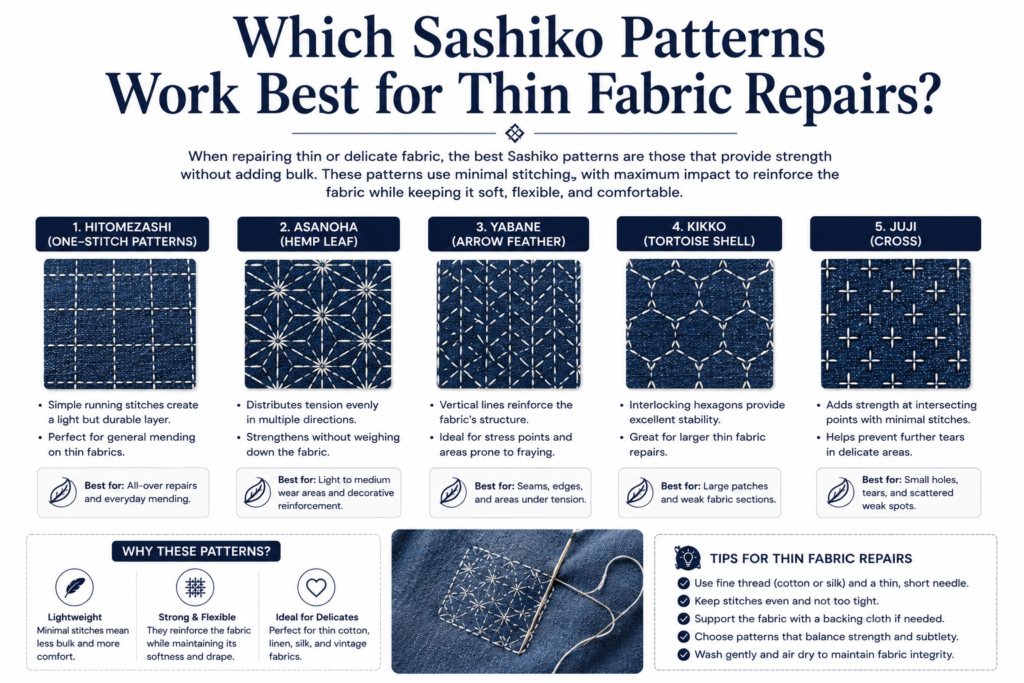
Thin fabric repairs require sashiko patterns that stabilize weakened fibers without creating excessive needle stress or rigid reinforcement zones. Dense but evenly spaced patterns such as hitomezashi, small running stitch grids, and lightweight geometric reinforcement layouts usually perform best on delicate textiles.
Fagile fabric behaves differently from heavy denim or thick indigo cotton. Excessively dense stitching can damage weakened fibers by introducing too many needle holes into already compromised cloth. Thin fabric also puckers more easily when stitch tension becomes uneven.
Effective thin-fabric reinforcement focuses on:
- Balanced flexibility
- Gentle stitch spacing
- Lightweight thread integration
- Even tension distribution
- Soft support layering
The safest patterns for delicate repairs include:
- Small running stitch grids
- Lightweight hitomezashi
- Medium-density asanoha
- Soft geometric reinforcement systems
These patterns reduce unsupported weak areas without over-stiffening the textile.
Important thin-fabric repair practices include:
- Using smaller stitches
- Avoiding excessive thread tension
- Adding support backing fabric
- Preventing stitch overcrowding
- Reinforcing edges carefully
Thin vintage textiles especially benefit from softer stabilization methods because aggressive reinforcement may accelerate tearing around stitch holes.
One common beginner mistake is assuming more stitching automatically creates stronger repairs. In reality, fragile cloth needs balanced reinforcement that works with the remaining fabric strength rather than overwhelming it.
Successful thin-fabric sashiko repairs usually feel:
- Flexible
- Light
- Evenly stabilized
- Comfortable during movement
When performed properly, structural sashiko can dramatically extend the lifespan of delicate textiles while preserving their natural drape and softness.
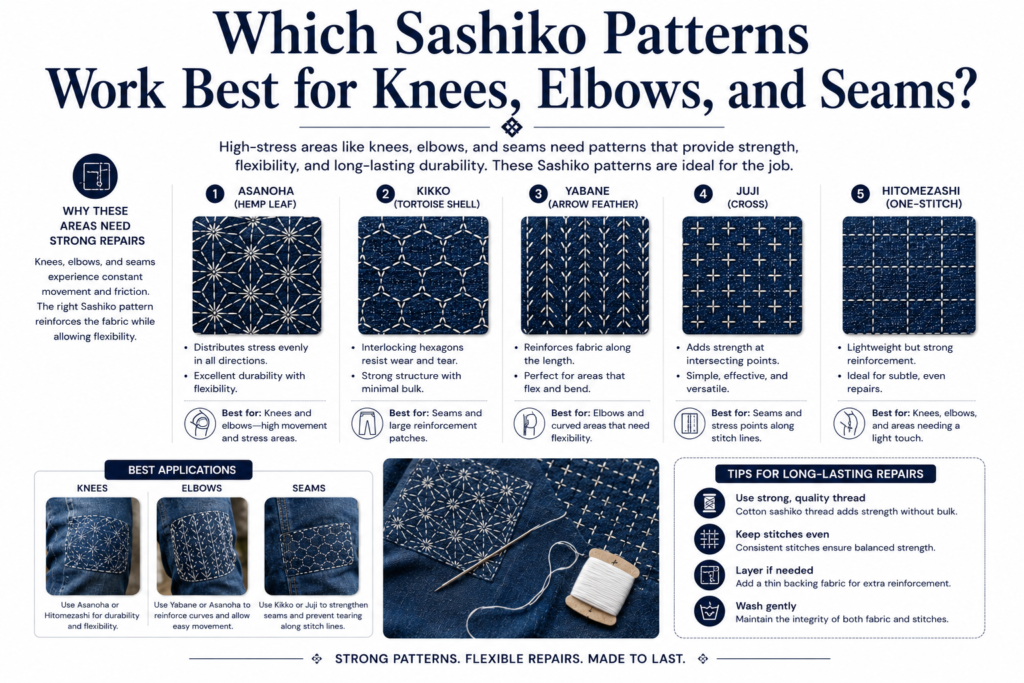
Which Sashiko Patterns Work Best for Knees, Elbows, and Seams?
Different garment zones experience different forms of stress, which means the best sashiko pattern often changes depending on the repair location. Structural reinforcement works best when the stitching pattern matches the movement behavior and friction level of the damaged area.
Knees and elbows constantly bend during movement, so they require flexible reinforcement patterns capable of distributing tension without becoming rigid. Cuffs and seams experience concentrated friction, which makes dense reinforcement stitching more effective. Large flat repair areas often benefit from simpler running stitch grids because they remain flexible while stabilizing broad sections of weakened fabric.
Best Structural Pattern by Garment Zone
| Garment Area | Best Pattern Type | Reason |
| Knees | Running stitch grid | Flexibility during bending |
| Elbows | Kikko | Multi-direction stress control |
| Cuffs | Hitomezashi | Dense edge stabilization |
| Seams | Parallel reinforcement rows | Prevents seam spreading |
| Jacket shoulders | Asanoha | Balanced flexibility |
| Seat repairs | Large running rows | Friction resistance |
Traditional Japanese workers often repaired the same garment repeatedly over many years. Repair patterns were selected based on how each area wore down over time rather than purely decorative preference.
Important factors when selecting repair patterns include:
- Movement frequency
- Friction intensity
- Fabric thickness
- Existing damage level
- Flexibility requirements
- Future repair accessibility
Matching stitch structure to garment behavior dramatically improves repair longevity.
Why Running Stitch Grids Remain the Most Reliable Reinforcement Method
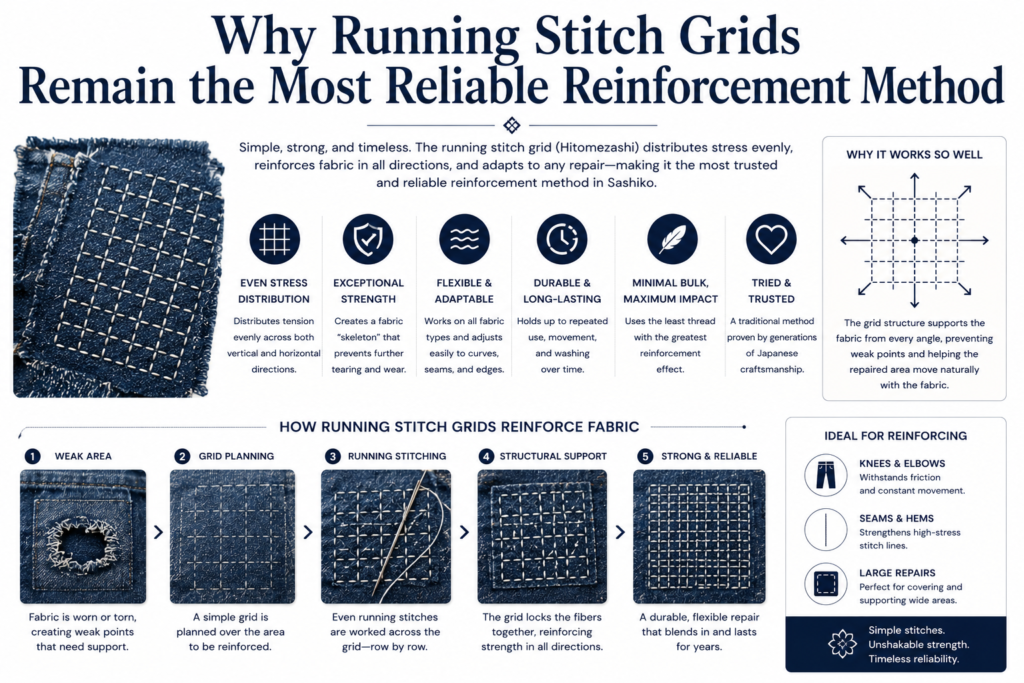
Straight running stitch grids remain one of the most reliable reinforcement methods because they distribute tension evenly while preserving flexibility across repaired fabric. Historically, many authentic boro garments relied more heavily on simple repetitive reinforcement rows than highly decorative patterns
Simple running stitch reinforcement works because repeated parallel tension lines reduce localized strain around tears and patch edges. The stitching secures multiple fabric layers together while allowing garments to continue bending naturally during movement.
These reinforcement systems were especially common in:
- Farming garments
- Fishing jackets
- Work aprons
- Utility bags
- Patched trousers
- Layered household textiles
Straight running stitch patterns perform extremely well because they are:
- Flexible
- Easy to maintain
- Fast to stitch
- Structurally balanced
- Easy to repair later
- Suitable for large damaged areas
Unlike dense decorative motifs, running stitch grids rarely create stiff reinforcement zones that interfere with comfort.
Important structural advantages include:
- Better movement flexibility
- Reduced fabric distortion
- Easier long-term maintenance
- Strong patch stabilization
- Balanced wear distribution
- Lower risk of thread stress concentration
Even modern visible mending artists continue using simple running stitch systems because they provide dependable durability with relatively low complexity.
In many situations, simple reinforcement grids outperform elaborate geometric patterns because they focus entirely on structural performance rather than visual intricacy. This practical efficiency explains why running stitch reinforcement became foundational within traditional boro repair culture.
Can Dense Sashiko Stitching Weaken Fabric Over Time?
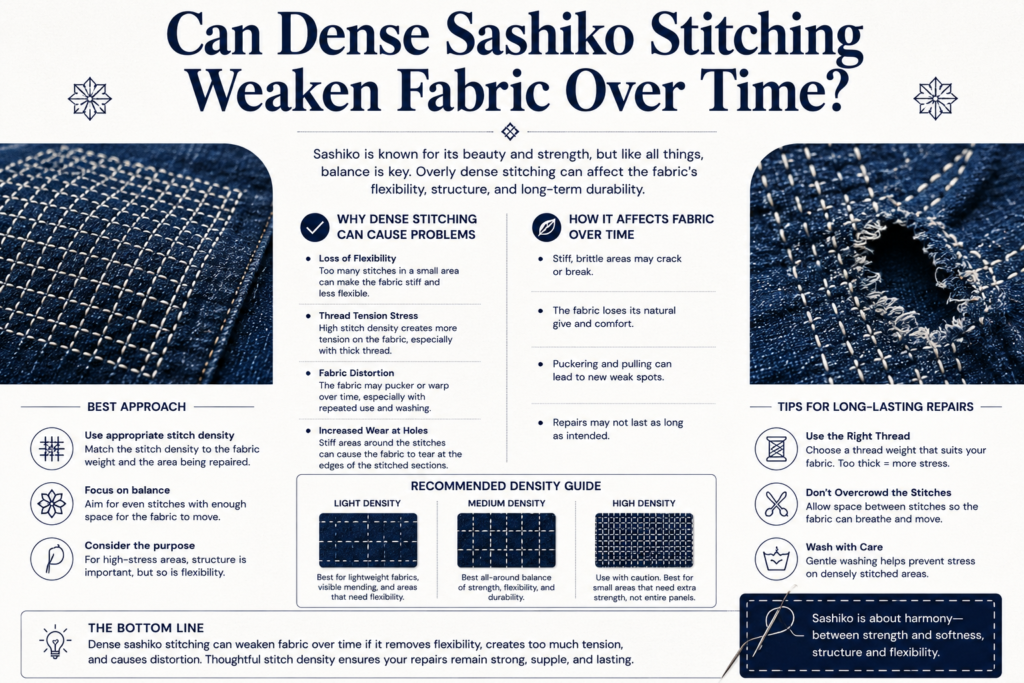
Dense sashiko stitching can strengthen fabric initially, but excessive stitch density may eventually weaken delicate textiles by creating too many needle perforations and rigid tension zones. Structural reinforcement works best when stitch spacing balances durability with flexibility rather than maximizing stitch quantity alone.
Many beginners assume smaller stitches and tighter spacing automatically produce stronger repairs. In reality, fragile fabric can deteriorate faster when too many stitch holes weaken remaining fibers. Extremely dense reinforcement may also reduce garment flexibility, causing stress to shift toward the edges of the repair instead of distributing evenly across the fabric.
Overly dense stitching may lead to:
- Fabric puckering
- Reduced movement flexibility
- Increased edge tension
- Needle hole fatigue
- Uneven washing shrinkage
- Patch distortion over time
Traditional sashiko artisans often adjusted stitch density depending on fabric thickness and garment function. Heavy indigo workwear tolerated denser reinforcement than lightweight cotton or worn vintage cloth.
Balanced reinforcement usually performs better because it allows repaired fabric to:
- Bend naturally
- Absorb movement stress
- Maintain drape
- Resist cracking around stitches
- Survive repeated washing
For most structural repairs, moderate stitch density combined with proper thread tension creates stronger long-term durability than extremely compact stitching.
The goal of sashiko repair is not maximum stitch quantity. The goal is stable reinforcement that ages naturally with the fabric itselfor heavy-use repairs, simple sashiko often remains the strongest solution.
Why Some Sashiko Repairs Fail After Washing
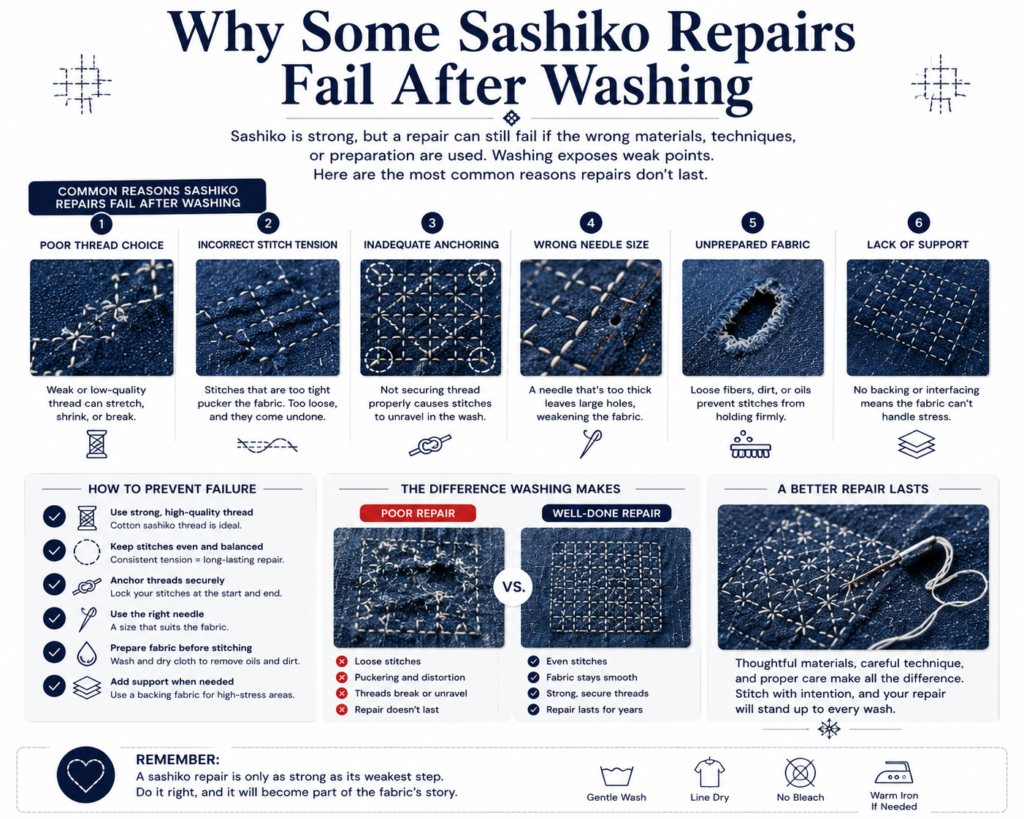
Sashiko repairs sometimes fail after washing because uneven tension, poor patch anchoring, shrinking differences, and excessive stitch rigidity place additional stress on weakened fabric. Structural repairs succeed long-term when the stitching, thread, and fabric layers respond similarly during movement and moisture exposure.Many repair failures happen because the reinforcement becomes stronger or stiffer than the surrounding textile. During washing and drying, fragile fabric may shrink differently from tightly stitched repair sections, creating distortion around patch edges or concentrated stress near stitch lines.
Common causes of repair failure include:
- Uneven stitch tension
- Weak thread anchoring
- Excessive stitch density
- Unsupported patch edges
- Thick thread on thin fabric
- Shrinkage differences between fabric layers
Repairs may also fail when movement zones become too rigid. Knees, elbows, and seat areas require flexible reinforcement capable of bending naturally during wear.
Signs of structural repair stress include:
- Wrinkling beside repairs
- Fabric tearing near stitches
- Distorted patch edges
- Thread abrasion
- Excessive puckering
- Hardened repair surfaces
Traditional sashiko repairs lasted longer because stitch density, thread weight, and fabric layering were usually balanced carefully according to the garment’s function.
Successful long-term sashiko reinforcement depends on:
- Flexible stitching
- Consistent spacing
- Balanced thread tension
- Proper patch integration
- Compatible fabric layering
The best structural repairs behave like part of the original garment rather than a rigid surface attached to it.
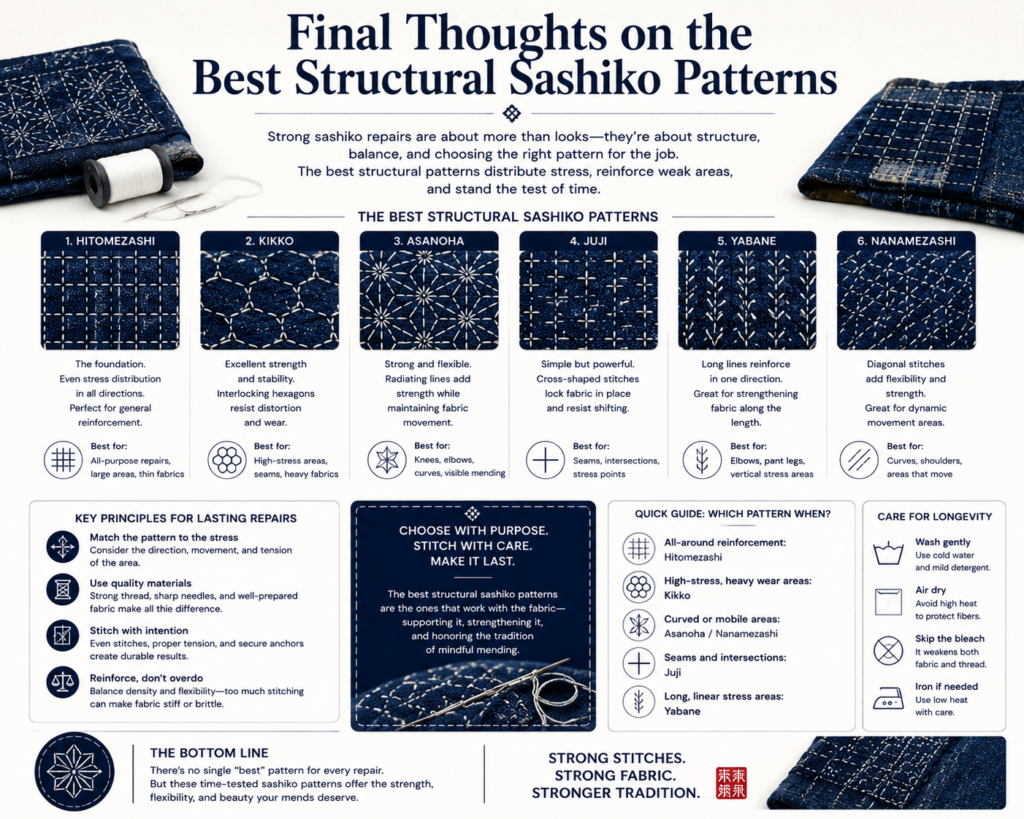
Final Thoughts on the Best Structural Sashiko Patterns
The best sashiko patterns for structural repairs are the ones that successfully balance reinforcement, flexibility, durability, and long-term fabric stability. Traditional patterns such as hitomezashi, kikko, asanoha, and simple running stitch grids continue performing well because they distribute tension evenly while helping repaired textiles maintain natural movement.
Historically, sashiko existed as a survival-focused repair system before becoming recognized as decorative textile art. Japanese workers relied on repetitive geometric reinforcement methods to preserve garments through years of physical labor, repeated patching, and continuous wear. Those same structural principles remain effective today in modern visible mending and boro-inspired repair work.
Strong structural sashiko repairs usually prioritize:
- Balanced stitch spacing
- Layer integration
- Movement flexibility
- Even tension distribution
- Reinforcement efficiency
- Long-term wear durability
Decorative complexity alone does not guarantee stronger repairs. In many cases, simpler reinforcement grids outperform elaborate motifs because they maintain flexibility while reducing concentrated stress points.
Modern repair-focused sashiko succeeds when the stitching behaves like structural support rather than surface decoration alone. The strongest repairs allow garments to continue aging naturally while remaining wearable and stable over time.
Whether repairing denim, vintage indigo textiles, lightweight cotton, or layered boro patchwork, choosing the correct reinforcement pattern dramatically improves repair longevity and fabric performance.
For most structural repair projects:
- Running stitch grids offer maximum practicality
- Hitomezashi provides dense stabilization
- Kikko balances beauty and strength
- Asanoha supports flexible decorative reinforcement
The best sashiko repairs are ultimately the ones that keep textiles functional, comfortable, and st
FAQs
Which sashiko pattern is strongest for repairs?
Dense running stitch grids and hitomezashi patterns are usually strongest because they distribute tension evenly across repaired fabric.
Is kikko good for denim repairs?
Yes. Kikko works very well on denim because the hexagonal structure supports multi-direction movement and reinforcement.
Can decorative sashiko patterns still be durable?
Yes, but only when stitch spacing, tension, and fabric compatibility are properly balanced.
Which sashiko pattern works best for thin fabric?
Small-grid running stitch patterns and lightweight hitomezashi usually work best for delicate fabric repairs.
Why are straight running stitches common in boro?
Straight running stitches provide flexibility, easy reinforcement, and long-term repair durability across layered fabric.
Does stitch density improve sashiko strength?
Moderate density improves reinforcement, but excessive density can weaken fabric by creating too many needle holes.
What thread works best for structural sashiko?
Medium-weight cotton sashiko thread usually provides the best balance between durability and flexibility.
Are traditional sashiko patterns functional or decorative?
Historically, most sashiko patterns were originally functional reinforcement systems before becoming decorative textile art.