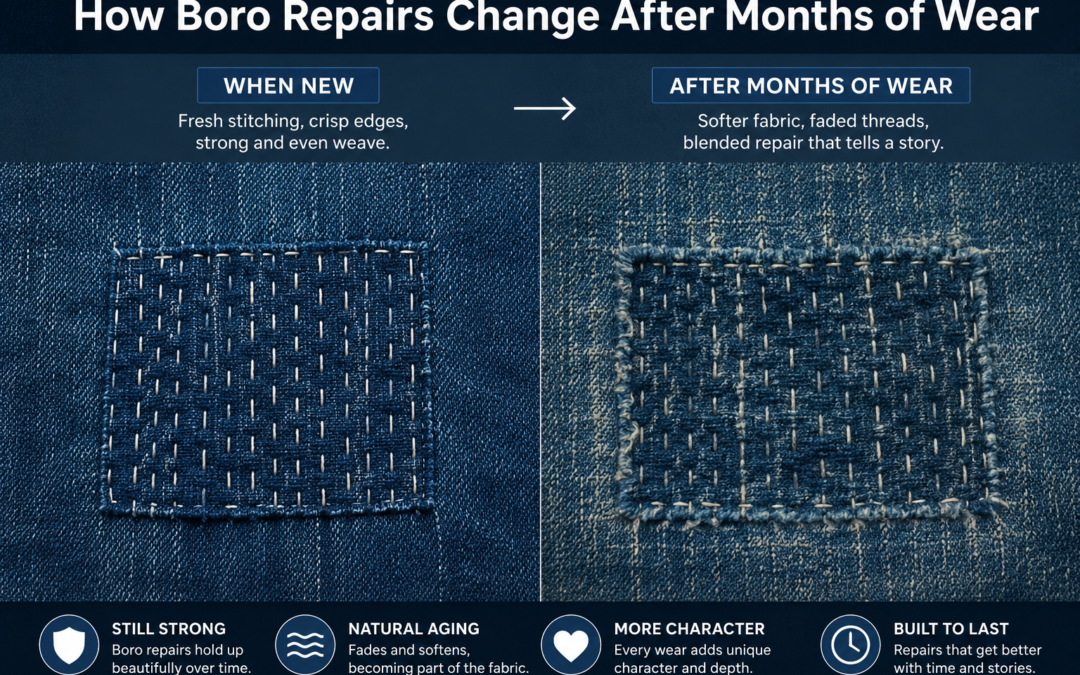
Boro repairs are designed to evolve instead of remaining perfectly clean or invisible forever. After months of wear, repaired garments begin showing softer texture, faded indigo tones, compressed stitching, and layered fabric character that reflects real-world use. Traditional Japanese boro clothing was repeatedly repaired across many years, so visible aging is not considered damage. It is part of the repair’s identity. Over time, movement, washing, sunlight, friction, and moisture all influence how sashiko stitching and patch layers behave. Good repairs gradually blend into the garment while still remaining structurally strong. Understanding these changes helps people maintain repaired clothing correctly and recognize the difference between healthy aging and actual repair failure.
Why Do Boro Repairs Change Visually Over Time?
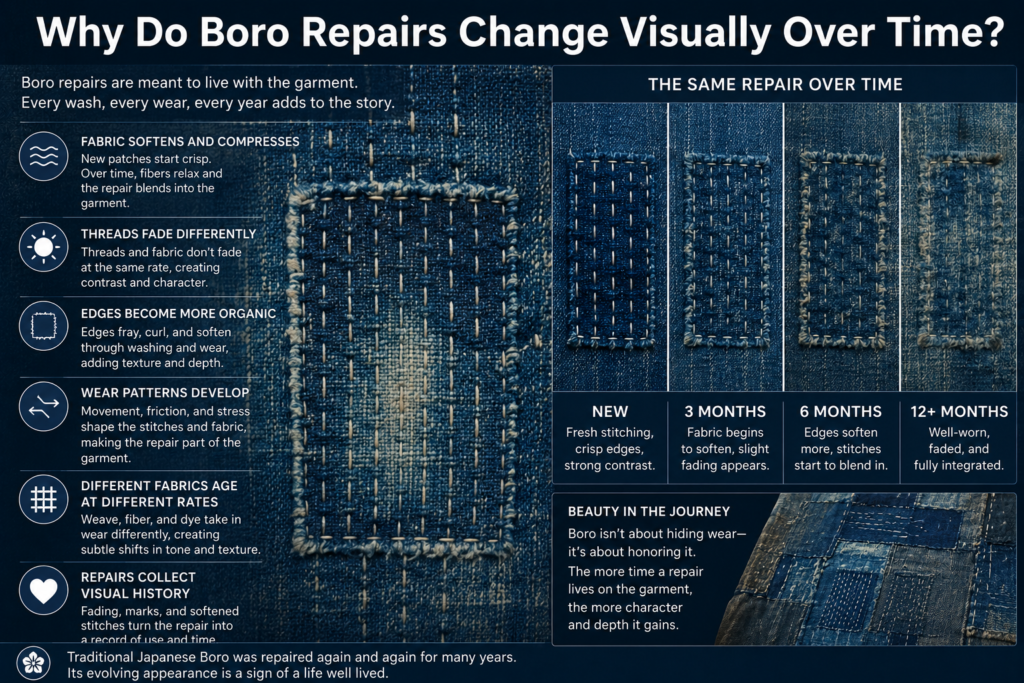
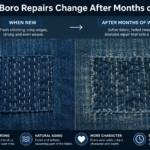
Boro repairs change visually because fabric fibers, stitching tension, and indigo dye all react differently to friction and repeated movement. A fresh repair often appears stiff and highly visible because the patch fabric has not yet compressed into the surrounding textile. After several months, the repaired area usually looks flatter, softer, and more integrated with the original garment. Traditional Japanese workwear experienced constant physical stress from farming, fishing, and labor, so repairs naturally evolved through use rather than staying pristine.
Over time, indigo fades unevenly across different fabrics. Stitching also settles deeper into the material, creating a more natural texture. Areas near elbows, knees, cuffs, and pocket corners typically age fastest because they experience continuous movement. This gradual transformation is one reason collectors admire vintage boro textiles so heavily. The repair tells a visible story about how the garment has been worn.
Common visual changes include:
- Indigo fading around stitch lines
- Softer patch edges
- Flattened sashiko texture
- Minor thread fuzzing
- Increased wrinkling
- Better color blending
- Compression of layered fabric
- Reduced stiffness after washing
The most successful boro repairs do not remain visually separate from the garment. Instead, they slowly become part of the clothing’s overall texture and character.
How Boro Repairs Change Month by Month
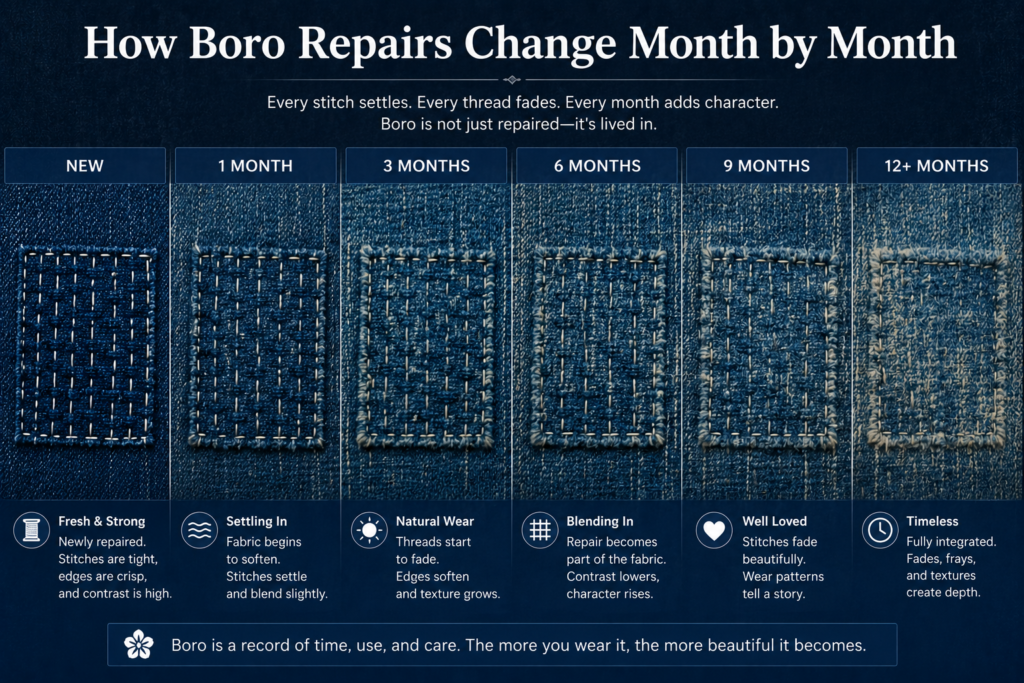
Fresh boro repairs rarely look the same after several months of real-world use. Stitching tension relaxes gradually, fabric layers compress together, and indigo tones begin blending through friction and washing. Understanding this timeline helps people recognize which changes are normal and which may indicate structural problems. Traditional Japanese workwear evolved continuously because garments were worn daily under demanding physical conditions. Modern visible mending follows many of the same aging patterns, especially on denim and heavy cotton fabrics.
Typical boro repair timeline:
| Timeframe | Common Changes |
| Week 1–2 | Repairs feel stiff and visually separate |
| Month 1 | Slight softening around stitch lines |
| Month 3 | Indigo fading begins blending patches |
| Month 6 | Wrinkling and texture integration increase |
| Year 1+ | Repair becomes fully integrated into garment |
Most repairs become significantly more comfortable after several weeks because the patch fabric begins flexing naturally with body movement. Denim repairs usually show visible fading progression faster than tightly woven canvas because indigo abrasion occurs more rapidly on softer fabrics.
Common long-term aging signs include:
- Softer stitching texture
- Increased thread fuzzing
- Flattened patch edges
- Better color blending
- Natural wrinkling
- Reduced stiffness
- Layer compression
- Smoother movement around joints
Properly aging repairs evolve slowly instead of failing suddenly.
Why Do Boro Repairs Become Softer After Months of Wear?
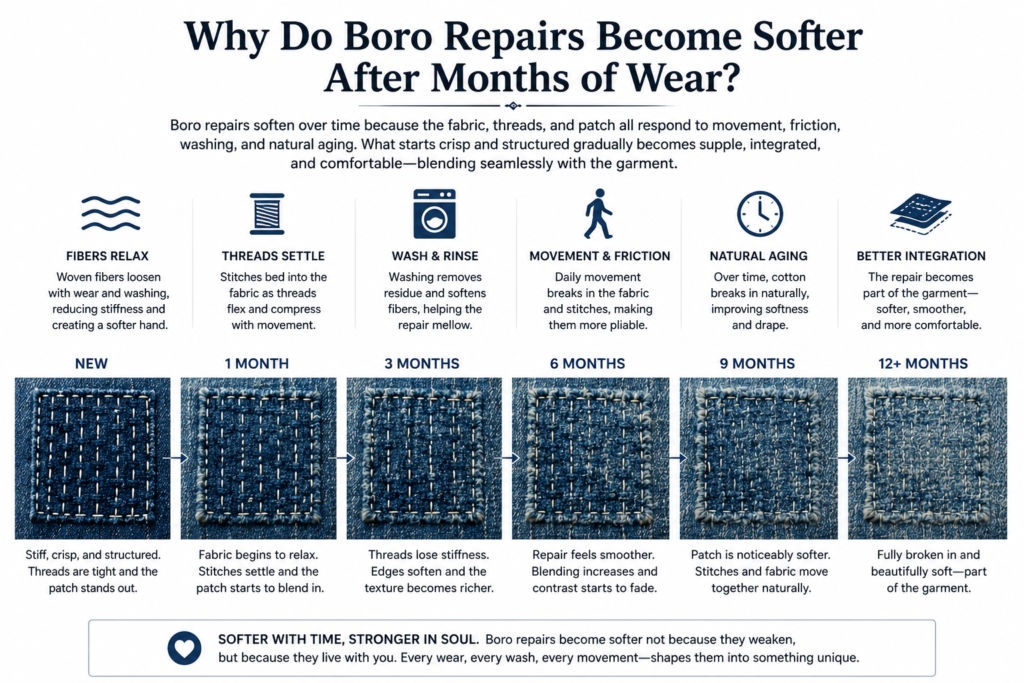
Most boro repairs soften naturally because cotton fibers relax through repeated bending, moisture exposure, and washing cycles. Fresh sashiko stitching can initially feel rigid because thread tension remains tight and patch layers are still compressed from sewing. However, daily wear gradually loosens the textile structure and allows the repair to move more naturally with the garment.
This softening process is especially noticeable on denim jackets and jeans. Areas that bend repeatedly, such as elbows and knees, become flexible much faster than flat sections of fabric. Heat from the body and humidity from regular wear also help cotton fibers relax over time. Machine washing further accelerates softening by compressing layers together and reducing stiffness in both the thread and patch fabric.
Softness is usually considered a positive sign because it improves comfort while helping the repair visually integrate with surrounding material. However, excessive softness can occasionally indicate thinning fabric or weakening cotton fibers.
Factors that soften boro repairs include:
- Repeated movement and flexing
- Moisture and humidity
- Friction during wear
- Washing cycles
- Fabric compression
- Fiber relaxation
- Body heat
- Daily abrasion
Traditional Japanese garments often became extremely soft after years of continuous use because they contained many overlapping layers of worn cotton fabric. Modern visible mending follows the same aging process, although newer textiles sometimes soften differently depending on synthetic fiber content.
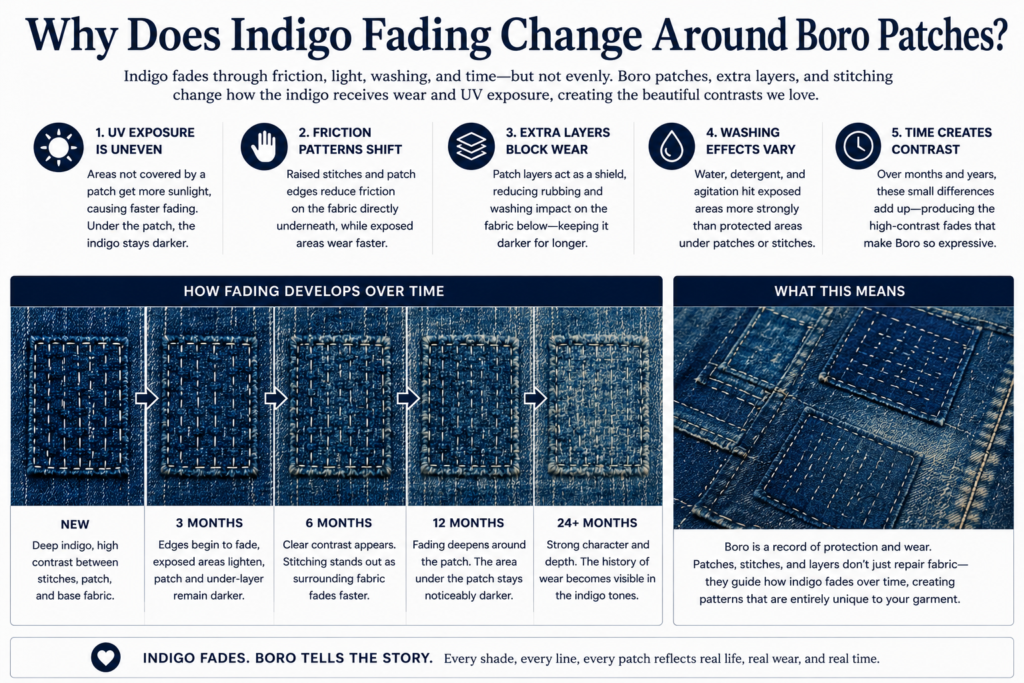
Why Does Indigo Fading Change Around Boro Patches?
Indigo fading behaves differently across repaired garments because patch fabrics rarely match the original textile perfectly. Even when both materials are indigo dyed, they may have different dye saturation levels, fabric weights, or weaving patterns. As the garment ages, these differences become increasingly visible.
High-friction areas fade first because movement continuously removes surface dye. Elbows, knees, pocket openings, and cuffs usually develop lighter tones earlier than less stressed areas. Stitch lines can also remain darker longer because raised thread protects underlying fabric from abrasion. This creates the beautiful contrast patterns often associated with vintage Japanese workwear.
Sunlight exposure changes fading behavior even further. Areas exposed to direct UV light bleach faster than hidden sections. Over time, repaired garments develop unique tonal variations that cannot be artificially replicated easily.
Common indigo fading behaviors include:
- Dark patches becoming lighter
- Stitch lines remaining darker
- Uneven fading between fabrics
- High-fariction whitening
- Sun-bleached ashoulders and knees
- Patch edge contrast
- Abrasion around seams
- Vertical fade streaks
Many collectors value old boro garments specifically because these fading variations create visual depth. Instead of hiding repair work, boro emphasizes the natural evolution of repaired fabric through age and wear.
Which Fabrics Age Best With Boro Repairs?
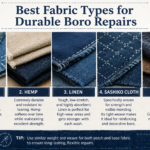
Different fabrics respond to boro repairs very differently over time. Some textiles soften beautifully and develop strong visual texture, while others distort, wrinkle excessively, or wear out too quickly. Fabric weight, weave density, and fiber composition all influence how repaired garments age after repeated wear and washing.
Heavy cotton denim is one of the most popular materials for visible mending because indigo fading creates dramatic contrast around stitch lines and patch edges. Linen softens faster than denim but may wrinkle more aggressively. Canvas retains structure well but can remain stiff longer if thick patch layers are used.
Fabric aging comparison:
| Fabric Type | Aging Behavior |
| Denim | Strong fading contrast and soft texture |
| Canvas | Excellent durability with slower softening |
| Linen | Fast softening with heavy wrinkling |
| Flannel | Surface fuzzing and gentle compression |
| Lightweight cotton | Flexible but less durable |
| Hemp blends | Strong fibers with textured aging |
Matching patch weight to the original garment usually produces the most balanced long-term results. Extremely heavy patches on lightweight fabric may create stress concentration and puckering near stitch lines.
Fabrics that age especially well with boro include:
- Indigo denim
- Cotton canvas
- Japanese workwear cotton
- Medium-weight linen
- Soft flannel
- Vintage chore jackets
Synthetic fabrics often age less attractively because they resist natural fading and fiber softening compared to traditional cotton textiles.
Is Wrinkling Around Boro Repairs Normal?
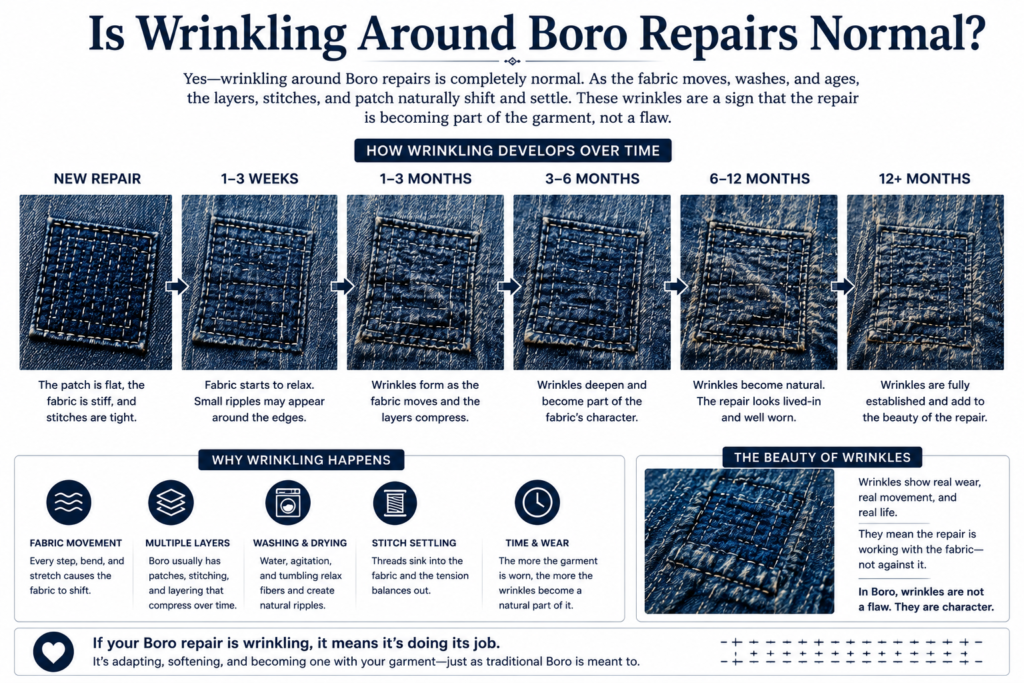
Yes, wrinkling and puckering are completely normal around most boro repairs. These texture changes happen because multiple layers of fabric stretch and shrink differently during wear and washing. Hand stitching also creates uneven tension across the garment, especially if the patch fabric is thicker than the original textile.
Slight wrinkling often improves the visual depth of repaired garments. Vintage Japanese boro clothing commonly displays heavy texture variation because layers were added repeatedly over many years. However, extreme puckering may suggest excessive stitch tension or incompatible patch material.
Wrinkles usually develop fastest around movement-heavy areas like elbows and knees. When the garment bends repeatedly, fabric compresses unevenly and creates natural folds around the stitching. Washing and drying further exaggerate these effects.
Wrinkling increases when:
- Stitch tension is too tight
- Thick patches are used
- Fabric layers shrink differently
- Repairs sit near joints
- Cotton absorbs moisture
- Garments are machine dried
- Heavy movement occurs daily
- Fabric grain directions conflict
Minor wrinkling is generally considered part of authentic visible mending aesthetics. In fact, many modern artists intentionally create textured surfaces because perfectly flat repairs often appear machine-made and less organic.
How Does Washing Affect Boro Repairs Over Time?
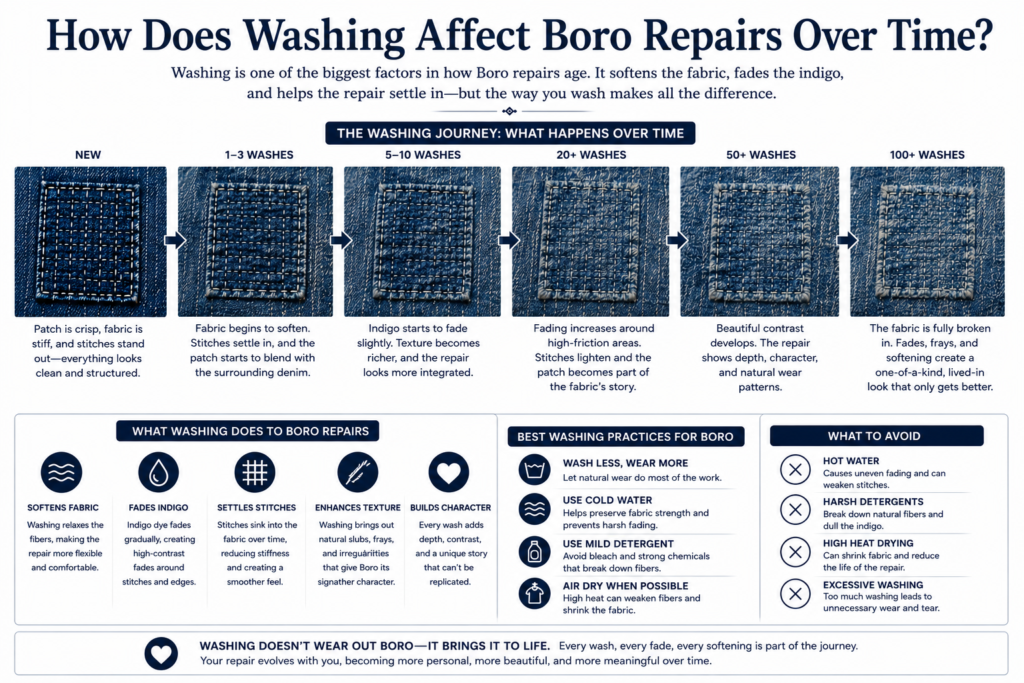
Washing changes boro repairs significantly because water, agitation, and heat all influence fabric structure and thread tension. Gentle washing usually improves the appearance of repaired garments by softening stiff areas and helping patches settle naturally into the textile. However, aggressive washing can weaken cotton fibers over time.
Washing frequency also affects how quickly repaired garments evolve visually and structurally. Overwashing accelerates indigo fading and thread abrasion, while insufficient washing may trap dirt particles that gradually weaken fibers through friction. Traditional workwear was often washed less aggressively than modern clothing, especially heavy indigo garments.
Suggested washing frequency:
| Garment Type | Suggested Washing Interval |
| Heavy denim jeans | Every 20–40 wears |
| Work jackets | Monthly or as needed |
| Lightweight shirts | Every few wears |
| Heavy chore coats | Spot clean frequently |
| Hand-repaired vintage textiles | Minimal washing |
Cold water and air drying usually preserve repair strength best over long periods.
Cold water is generally safest for indigo garments because it reduces dye bleeding and minimizes shrinkage. Air drying is also preferred because high dryer heat stresses thread tension and may distort patch edges. Traditional Japanese garments were often hand washed, which helped preserve stitching integrity for longer periods.
Repeated washing gradually produces the fuzzy, softened texture associated with aged boro textiles. While some people worry about fading, controlled fading actually contributes to the beauty of visible mending.
Washing may cause:
- Thread fuzzing
- Indigo bleeding
- Patch softening
- Edge curling
- Slight shrinkage
- Fabric compression
- Increased flexibility
- Stitch relaxation
Machine washing is not automatically harmful, but delicate cycles extend repair lifespan more effectively than aggressive hot washes. The goal is to clean the garment without overstressing already weakened fabric zones.
Why Do Sashiko Threads Become Fuzzy?
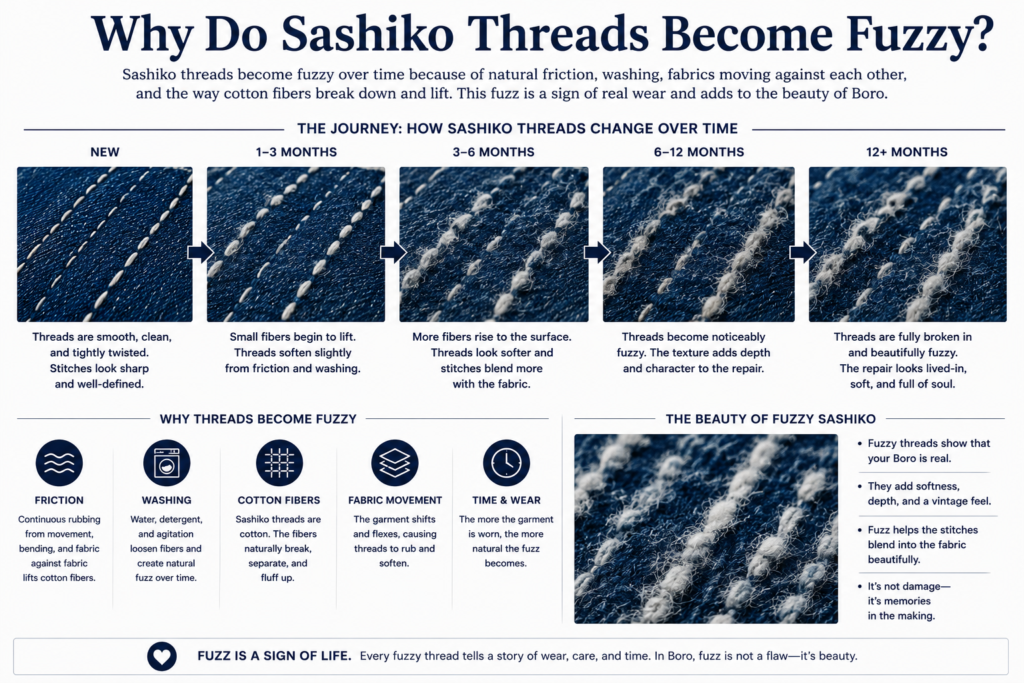
Sashiko thread becomes fuzzy because cotton fibers slowly separate through friction and abrasion. This process happens naturally as repaired clothing rubs against skin, furniture, bags, and surrounding fabric. Washing also roughens thread surfaces slightly over time.
Minor fuzzing is considered normal and often desirable in traditional boro aesthetics. Many vintage Japanese textiles display soft halos around stitching because the thread aged naturally over decades. Modern synthetic threads resist fuzzing better, but they usually lack the visual warmth and softness associated with authentic cotton sashiko thread.
Fuzz develops faster in high-contact areas such as knees, cuffs, and elbows. Heavy workwear also accelerates fiber wear because constant movement creates repeated surface abrasion.
Thread fuzzing increases because of:
- Repeated friction
- Frequent washing
- Dry cotton fibers
- Surface abrasion
- Heavy movement
- Rough fabric textures
- High-contact repair zones
- Daily garment compression
Excessive fraying, however, may indicate low-quality thread or overly loose stitching. Healthy fuzzing should appear soft and gradual rather than chaotic or broken.
How Long Does It Take for Boro Repairs to Look Naturally Aged?
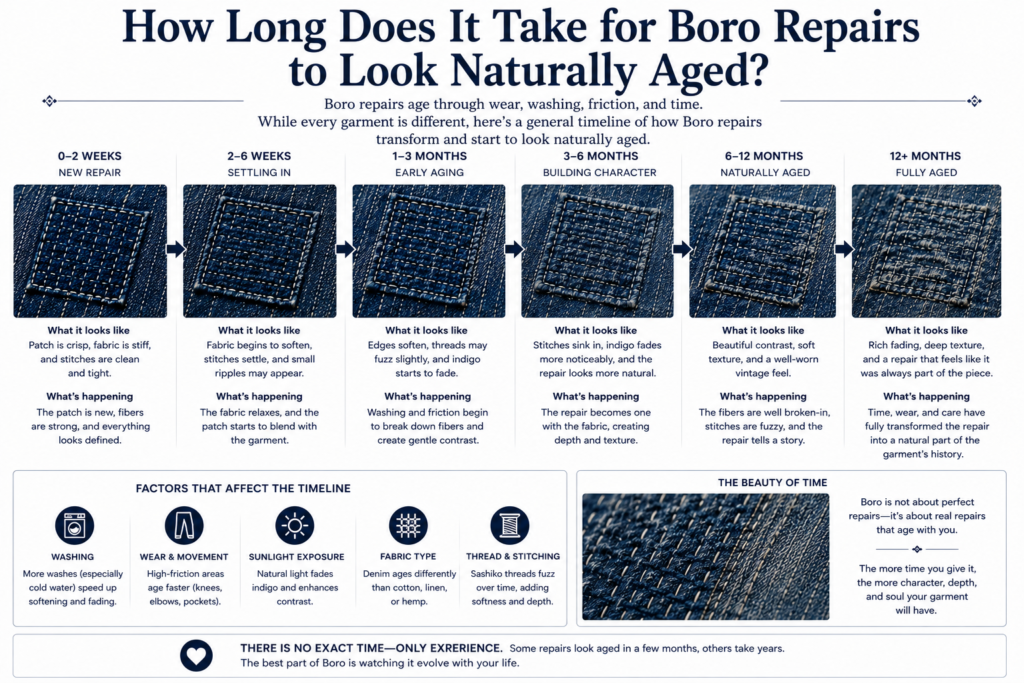
Most boro repairs begin showing visible aging after several weeks of consistent wear. However, the speed of change depends heavily on fabric type, washing frequency, climate, and movement intensity. Repairs on heavy denim usually evolve faster visually because indigo abrasion creates strong contrast around stitch lines.
In real-world wear testing, elbow repairs on medium-weight denim jackets often soften noticeably after roughly 30–40 hours of movement. Cotton sashiko thread may begin developing slight fuzzing after 10–15 washes, especially on high-friction areas like cuffs and knees.
Approximate aging progression:
| Repair Feature | Typical Timeframe |
| Initial softening | 2–4 weeks |
| Minor thread fuzzing | 10–15 washes |
| Visible fading integration | 2–6 months |
| Significant texture blending | 6–12 months |
| Full patch integration | 1+ year |
Hot climates usually accelerate softening because humidity and sweat relax cotton fibers more quickly.
Factors that speed up repair aging include:
- Frequent movement
- Warm humidity
- Machine washing
- Heavy abrasion
- Soft cotton fabric
- Daily wear
- Repeated bending
Repairs used occasionally may remain visually “new” much longer than heavily worn workwear.
Can Boro Repairs Become Stronger After Wearing In?
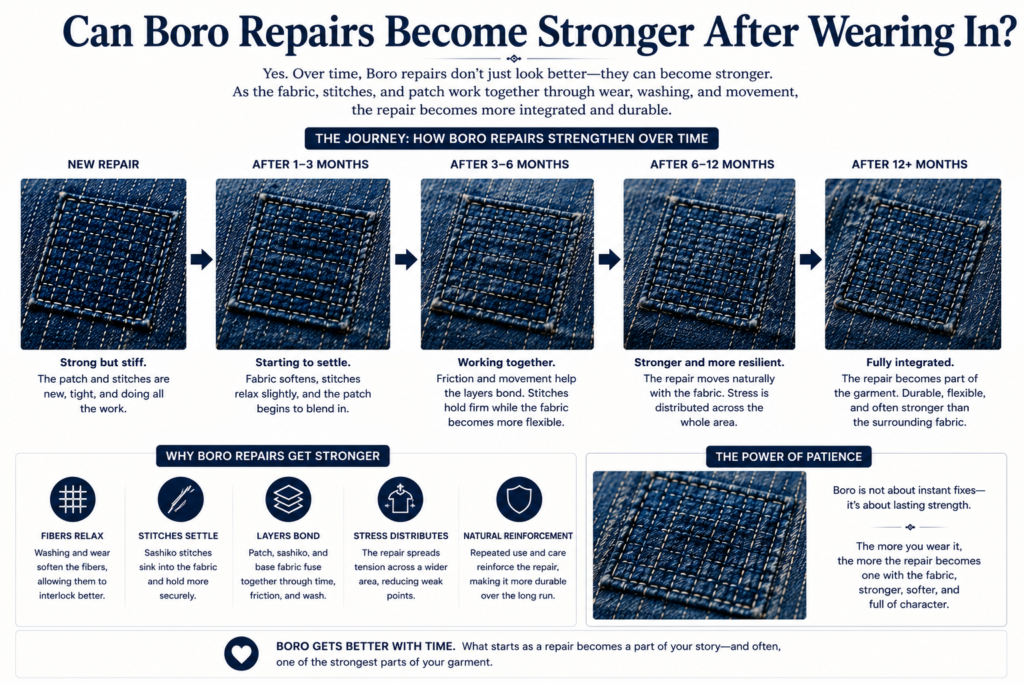
Some boro repairs actually become structurally more stable after several months because the layered fabrics compress together and distribute stress more evenly. Fresh repairs may initially feel bulky or disconnected, but repeated movement helps the patch integrate with the original garment.
Well-designed repairs use balanced stitch spacing and flexible fabric layers to spread tension across a larger area. Rounded patch corners also reduce stress concentration compared to sharp square edges. Over time, this creates a reinforced textile zone that behaves more naturally during movement.
However, repaired areas can still transfer stress into nearby weakened fabric. A strong patch attached to thin surrounding denim may eventually cause new tearing around the repair perimeter.
Strong long-term repairs usually include:
- Multiple stitch directions
- Rounded patch edges
- Balanced thread tension
- Flexible cotton fabric
- Reinforcement beyond the hole
- Medium stitch density
- Layered fabric structure
- Strong anchoring stitches
Traditional boro garments survived for decades partly because repairs were continuously maintained. Instead of treating mending as a one-time fix, people reinforced weak areas repeatedly as the garment evolved.
Signs a Boro Repair Is Failing Instead of Aging Naturally
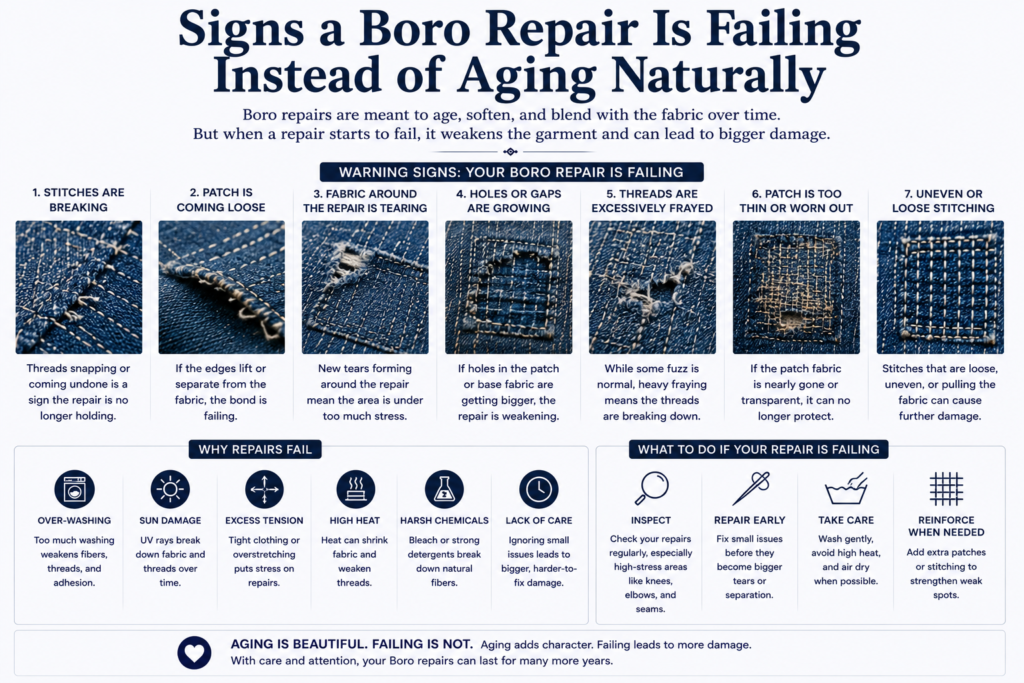
Healthy boro repairs gradually soften and integrate into the garment over time. Failing repairs behave differently. Instead of showing smooth wear progression, damaged repairs develop broken stitches, tearing fabric, or severe distortion around the patch area. Recognizing these warning signs early helps prevent larger structural failures later.
One of the most common problems occurs when surrounding fabric becomes weaker than the repair itself. Strong stitching attached to thin worn denim may eventually cause tearing beside the patch rather than through it. Excessively tight stitching can also create stress concentration that weakens nearby fibers.
Warning signs of repair failure include:
- Broken or snapped stitches
- Enlarging stitch holes
- Tearing beside the patch
- Patch edge separation
- Severe bunching
- Hard stiff fabric zones
- Distorted garment shape
- Rapid hole expansion
Healthy aging usually looks gradual and balanced. Repairs should remain flexible enough to move naturally with the garment. If the repaired area becomes rigid or sharply folded, the fabric layers may be under excessive tension.
Healthy aging signs include:
- Softened thread texture
- Stable patch attachment
- Controlled fading
- Flexible movement
- Minor fuzzing
- Gradual compression
Small maintenance repairs performed early often extend garment lifespan dramatically.
Which Areas of Repaired Clothing Age the Fastest?
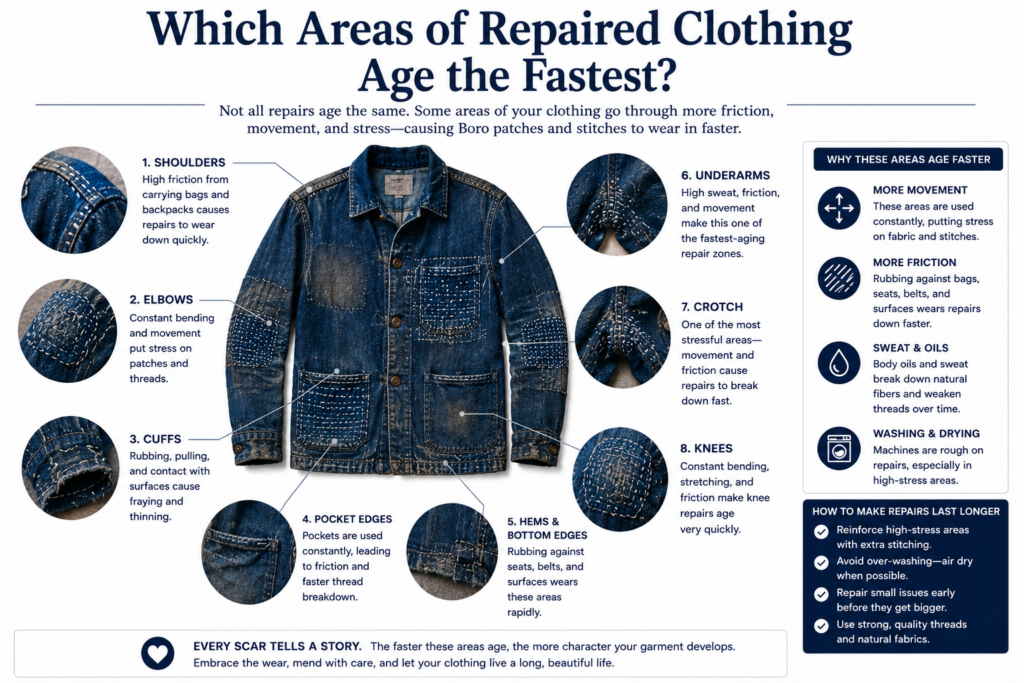
Certain areas of repaired garments age much faster because they experience constant friction, compression, and stretching. Knees, elbows, pocket corners, inner thighs, and cuffs usually show wear progression first. These areas bend repeatedly and absorb the highest mechanical stress during movement.
Inner thighs on denim are especially vulnerable because continuous rubbing weakens cotton fibers quickly. Elbows wrinkle heavily because the fabric folds during arm movement. Pocket corners experience concentrated pulling force from hands and carried objects.
Understanding these stress zones helps people place patches more effectively and plan preventative repairs before holes become severe.
Fast-aging repair zones include:
- Knees
- Elbows
- Pocket corners
- Inner thighs
- Seat area
- Cuffs
- Hem edges
- Shoulder seams
Traditional Japanese workers often layered multiple repairs directly over these zones because they understood where garments failed repeatedly. Modern visible mending follows many of the same practical principles today.
Do Old Boro Repairs Require Maintenance?
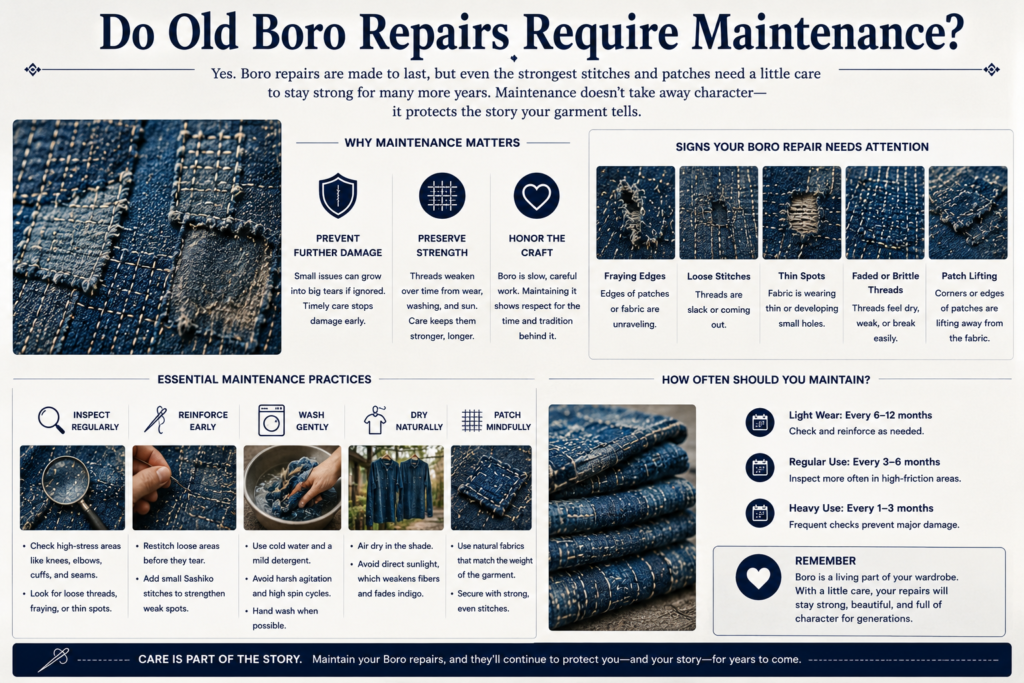
Yes, old boro repairs usually require occasional maintenance because fabric continues aging even after being patched. Traditional Japanese garments were repeatedly repaired across many years rather than fixed once and forgotten. This ongoing maintenance created the layered appearance associated with historic boro textiles.
Small repairs help prevent larger structural failures later. Reinforcing weak thread sections early is easier than rebuilding a completely damaged area after tearing spreads. Maintenance also extends garment lifespan dramatically.
Some vintage boro garments contain dozens of overlapping patches added across generations. This accumulation reflects long-term care rather than neglect.
Common maintenance methods include:
- Adding extra stitching
- Reinforcing patch edges
- Covering new holes
- Replacing weakened patches
- Trimming damaged threads
- Strengthening nearby fabric
- Restitching loose areas
- Adding secondary support layers
Visible mending works best when treated as a continuing process instead of a permanent invisible fix. The garment evolves over time, and the repairs evolve with it.
How to Help Boro Repairs Age More Beautifully
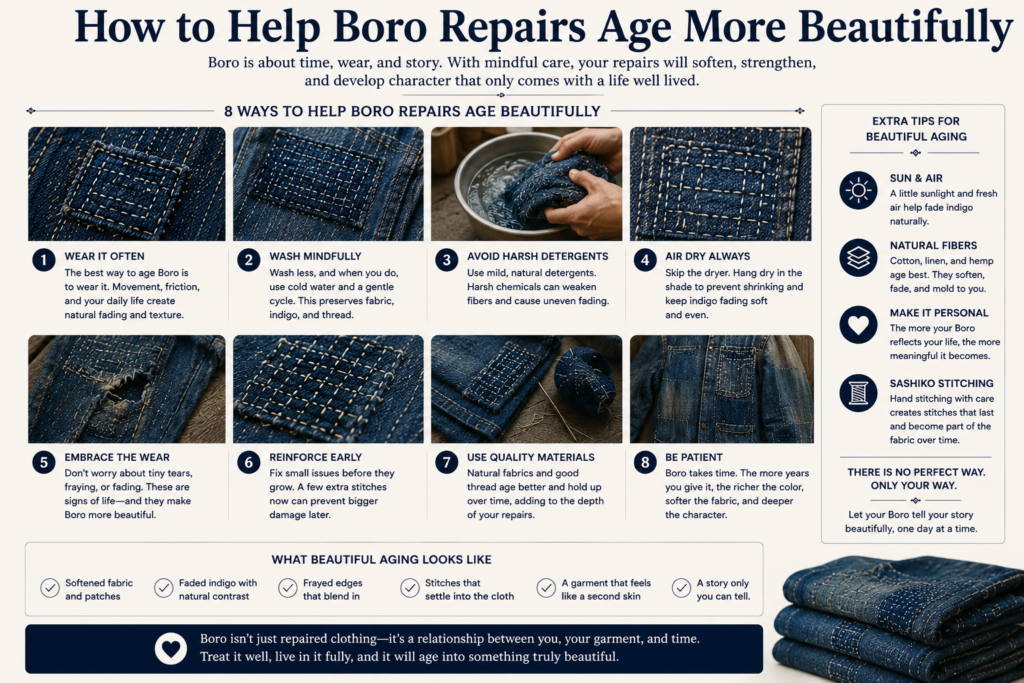
The way a repaired garment is maintained strongly affects how attractive the repair becomes over time. Good aging usually results from balanced fabric movement, controlled washing, and flexible stitching rather than extremely rigid reinforcement. Traditional boro textiles aged gradually because they were repaired continuously and treated carefully between repairs.
Choosing patch fabric similar in weight and softness to the original garment often creates the smoothest long-term texture integration. Rounded patch corners also reduce stress concentration and prevent sharp folding during movement.
Ways to improve long-term aging include:
- Use soft cotton patch fabric
- Avoid excessive stitch tension
- Wash in cold water
- Air dry when possible
- Match fabric weights carefully
- Reinforce stress zones early
- Avoid thick overlapping layers
- Repair small holes before expansion
Repairs that age naturally usually remain flexible and visually balanced rather than stiff or distorted.
Why Traditional Japanese Boro Appreciated Aging Instead of Perfection
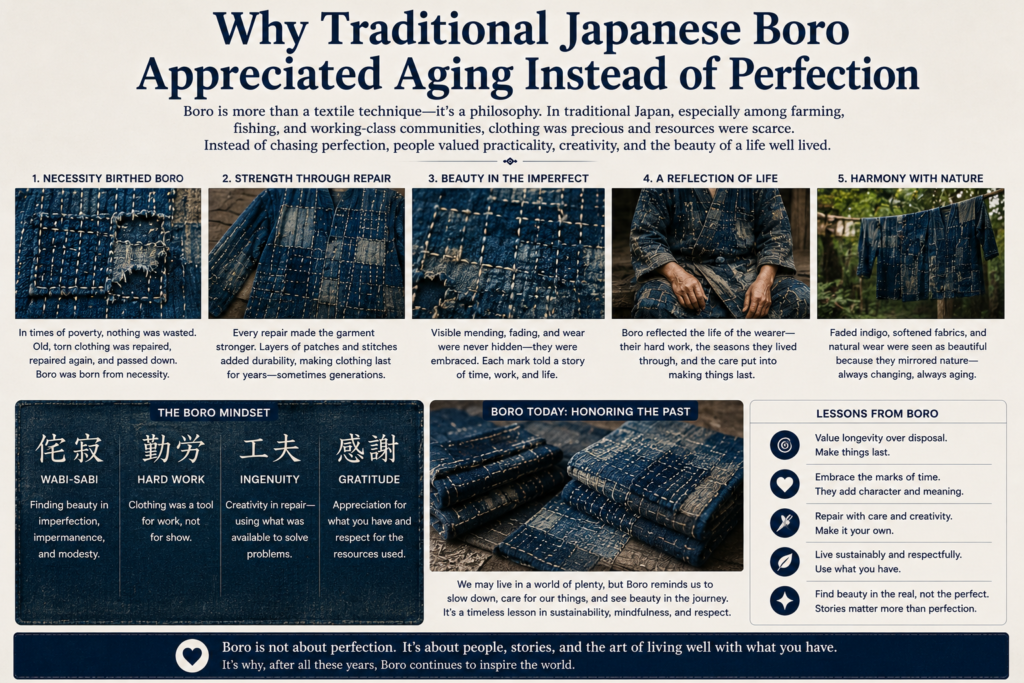
Traditional Japanese boro clothing was never intended to remain visually perfect. Rural families repaired garments repeatedly because fabric was valuable and difficult to replace. Over time, repairs became symbols of resourcefulness, endurance, and textile preservation rather than signs of damage.
This philosophy connects closely to Mottainai, which encourages respect for useful objects instead of unnecessary disposal. Boro aesthetics also overlap with Wabi-Sabi, where imperfection and visible aging are appreciated as part of an object’s natural life cycle.
Instead of hiding repairs, boro celebrated them openly. Each patch represented continued use and adaptation. As garments softened and faded over years of labor, they gained visual depth that reflected lived experience.
Traditional boro values included:
- Textile preservation
- Respect for materials
- Functional repair
- Visible craftsmanship
- Long-term durability
- Multi-generational clothing use
- Acceptance of imperfection
- Practical sustainability
Modern visible mending continues many of these ideas today, especially among people interested in slow fashion and sustainable clothing repair.
Conclusion
- Boro repairs are meant to change with wear. Over months and years, stitching softens, indigo fades, threads fuzz slightly, and layered fabrics compress into a more natural structure. These changes are not flaws. They are evidence that the garment is continuing to live and function.
- Traditional Japanese boro textiles survived because repairs adapted continuously to stress, washing, and movement. Modern visible mending follows the same philosophy. A successful repair does not remain untouched forever. It gradually integrates into the clothing while preserving strength, comfort, and visual character.
- People who understand how boro evolves can maintain repaired garments more effectively and appreciate the beauty of authentic textile aging rather than expecting perfect permanence.
FAQ
How long do boro repairs last?
Well-made repairs can last for years depending on fabric quality, wear intensity, and maintenance frequency.
Is fading normal around boro patches?
Yes. Different fabrics fade at different speeds, especially with indigo dye.
Why does sashiko stitching become fuzzy?
Cotton thread naturally frays slightly from friction and washing.
Are wrinkles around patches bad?
Minor wrinkling is normal and often improves visual texture.
Can machine washing damage boro repairs?
Aggressive hot washing can weaken repairs, but gentle cold washing is usually safe.
Why do repaired knees wear faster?
Knees bend constantly, creating heavy friction and fabric stress.
Should old repairs be restitched?
Loose or weakened areas should be reinforced before damage spreads.
Why do vintage boro garments look heavily layered?
Traditional garments were repaired repeatedly over many decades.