Boro repairs last longest when the fabric, stitching, and reinforcement layers work together naturally. Traditional Japanese boro techniques relied on durable woven textiles that could survive repeated wear, washing, and visible patch layering over many years. Today, modern visible mending still depends heavily on choosing the correct fabric type before stitching begins. Even beautiful sashiko stitching can fail quickly if the underlying fabric stretches too much, frays aggressively, or cannot handle repeated stress around the repair area.
The strongest boro fabrics usually share several characteristics:
- tightly woven construction
- natural fiber composition
- medium-to-heavy weight
- good abrasion resistance
- stable structure during washing
Modern visible mending has expanded beyond traditional indigo cotton, but natural woven fabrics still dominate the best long-term repairs. Denim, canvas, cotton twill, sashiko cloth, and linen blends consistently outperform slippery synthetic fabrics because they age more predictably and hold reinforcement stitches securely.
This guide explains which fabrics perform best for durable boro repairs, how different materials behave over time, and which mistakes commonly shorten repair lifespan. It also covers beginner-friendly options, traditional Japanese repair fabrics, and fabric combinations that create stronger visible mending results.
Why Does Fabric Choice Matter in Boro Repairs?
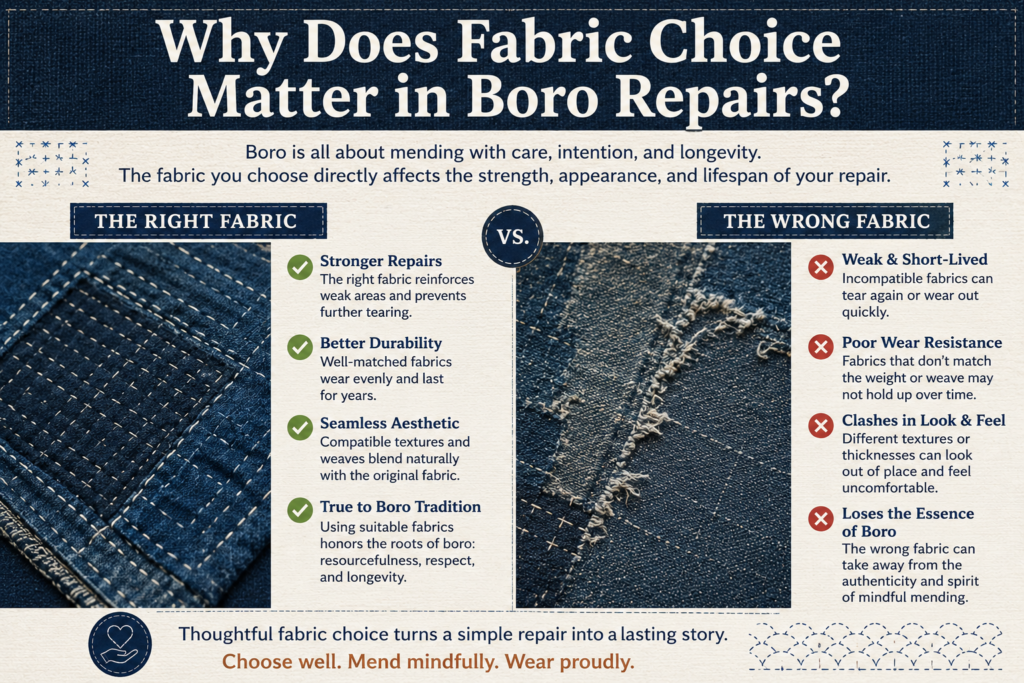
Fabric selection determines whether a boro repair survives years of wear or begins failing after only a few washes. Many beginners focus heavily on thread thickness or decorative stitch patterns while overlooking the structural behavior of the underlying fabric. In reality, the fabric controls how tension spreads across the repaired area. If the base fabric stretches excessively or weakens around the stitches, even strong sashiko thread cannot fully prevent tearing.
Traditional Japanese boro repairs worked because the fabrics were naturally durable and became softer over time instead of breaking apart unpredictably. Old indigo cotton garments developed flexible wear patterns that allowed repeated patching without creating stiff stress zones. Modern synthetic fabrics often behave differently because they may stretch unevenly, resist needle penetration, or distort during washing.
The relationship between flexibility and reinforcement is especially important. A repair that becomes too rigid often fails near the patch edge because movement concentrates around the transition point. Strong repairs feel integrated into the garment rather than sitting on top like hard reinforcement armor.
Important factors affecting boro durability include:
- fabric weave density
- thickness compatibility
- abrasion resistance
- stitch retention strength
- shrinkage behavior
- flexibility after washing
- fraying tendencies
- long-term aging characteristics
The best fabrics distribute stress evenly while remaining comfortable enough for regular wear. This balance explains why tightly woven natural fabrics remain the preferred choice for traditional and modern visible mending.
What Fabric Types Last Longest in Boro Stitching?
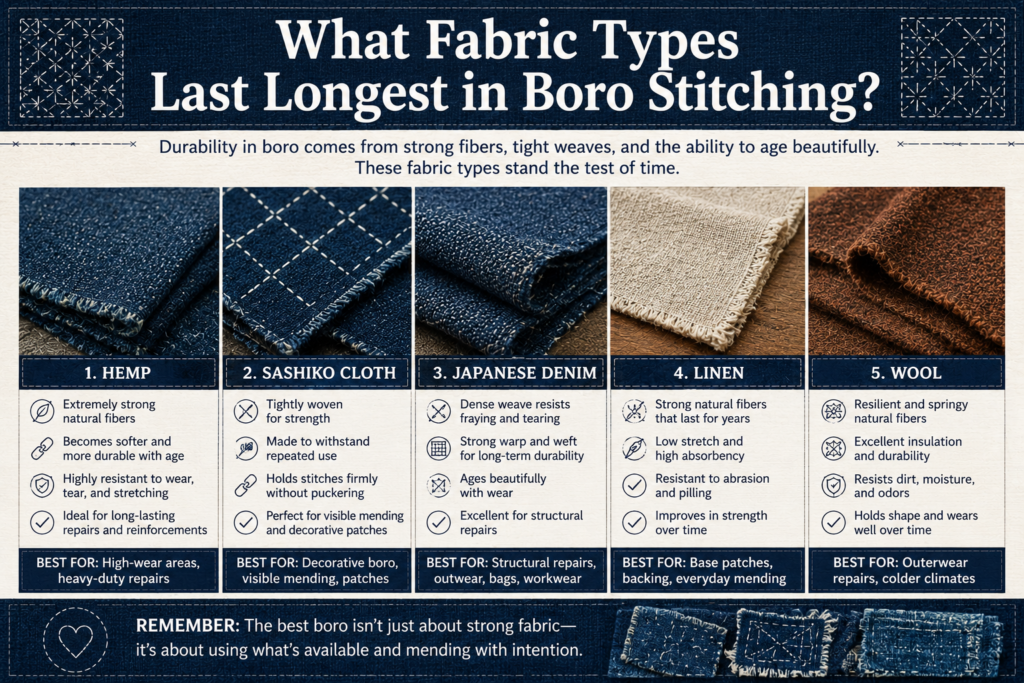
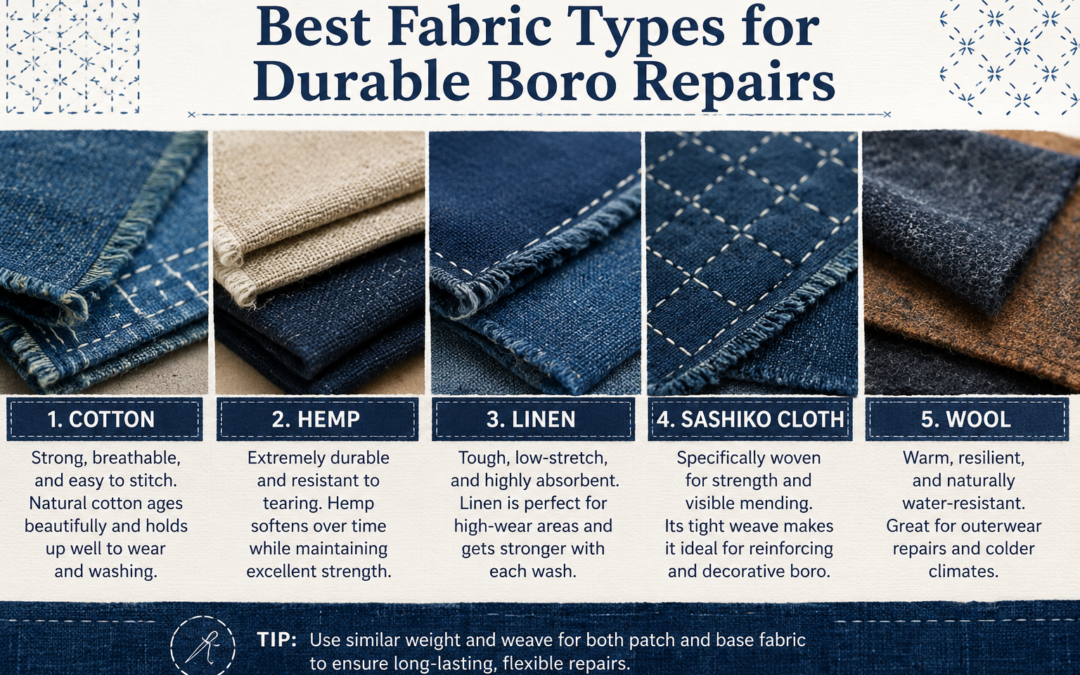
Some fabrics naturally perform better under repeated stitching, movement, and washing. Durable boro repairs usually rely on woven natural fibers because they provide stable structure while remaining flexible enough for layered patchwork. The strongest fabrics resist tearing around stitch holes and soften gradually with age instead of becoming brittle.
Denim remains one of the most trusted fabrics for long-term visible mending because its twill weave distributes tension evenly across repaired areas. Canvas also performs extremely well in high-abrasion situations, especially on workwear and bags. Indigo cotton fabrics continue to dominate traditional-style repairs because they combine flexibility with excellent aging behavior.
Lighter fabrics can still work effectively if the repair area does not experience heavy stress. Linen blends, cotton twill, and sashiko cloth often provide enough durability for shirts, aprons, and lightweight jackets. However, fabric compatibility matters more than simply choosing the thickest possible material.
The most durable boro fabrics usually include:
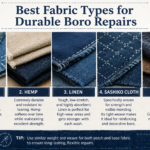
- midweight denim
- cotton canvas
- indigo cotton
- sashiko fabric
- cotton twill
- hemp blends
- medium-weight linen blends
Several traits consistently appear in high-performing repair fabrics:
| Trait | Why It Matters |
| Tight weave | Prevents tearing around stitches |
| Natural fibers | Age more predictably |
| Midweight structure | Balances durability and flexibility |
| Good abrasion resistance | Improves lifespan |
| Moderate softness | Reduces stress concentration |
Very thin fabrics often fail because repeated stitching weakens the weave too quickly. Extremely heavy fabrics may become difficult to wear comfortably after multiple layered repairs. Most successful boro work sits in the middle range where reinforcement and flexibility stay balanced together.
Which Fabric Works Best for Different Types of Boro Repairs?
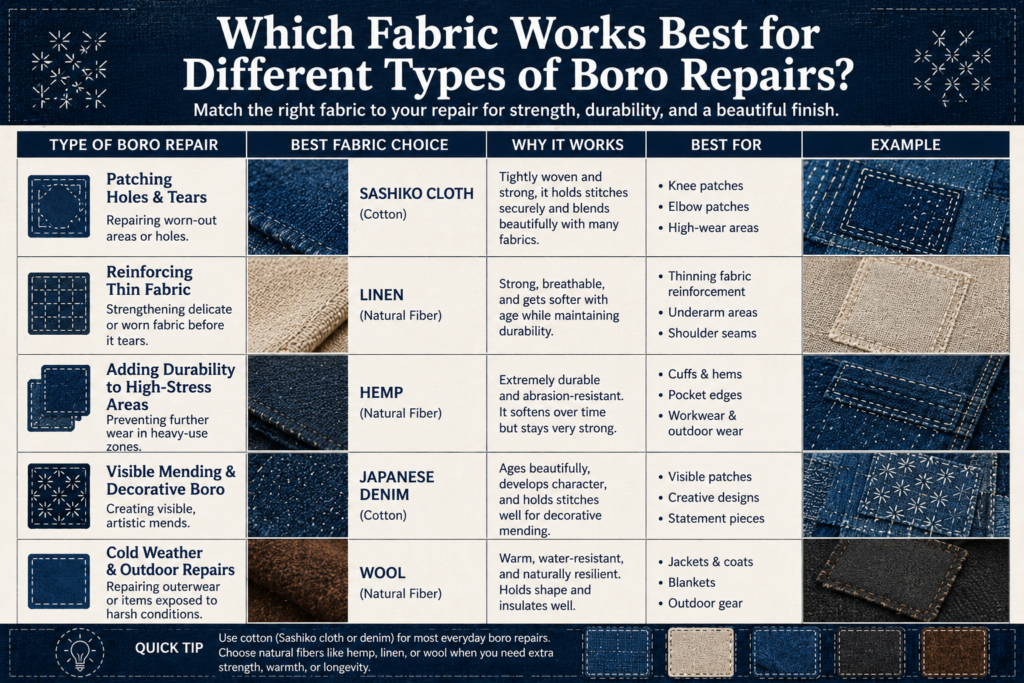
Different repair situations place stress on fabric in different ways. A knee blowout experiences constant bending and abrasion, while a shirt tear mainly needs flexibility and lightweight reinforcement. Matching the repair fabric to the damage type usually improves repair lifespan more than simply choosing the thickest possible patch.
Using overly heavy fabric on lightweight garments often creates stiffness and tearing around the repair edge. On the other hand, weak patch fabric may wear through too quickly in high-friction areas.
| Repair Area | Best Fabric Type |
| Jeans knees | Midweight denim |
| Jacket elbows | Cotton twill |
| Tote bag corners | Canvas |
| Shirt tears | Linen blend |
| Decorative visible mending | Indigo cotton |
| Heavy workwear | Canvas or denim |
| Lightweight garments | Soft cotton or linen |
For most wearable repairs, medium-weight woven fabrics create the best balance between reinforcement, flexibility, and long-term comfort.
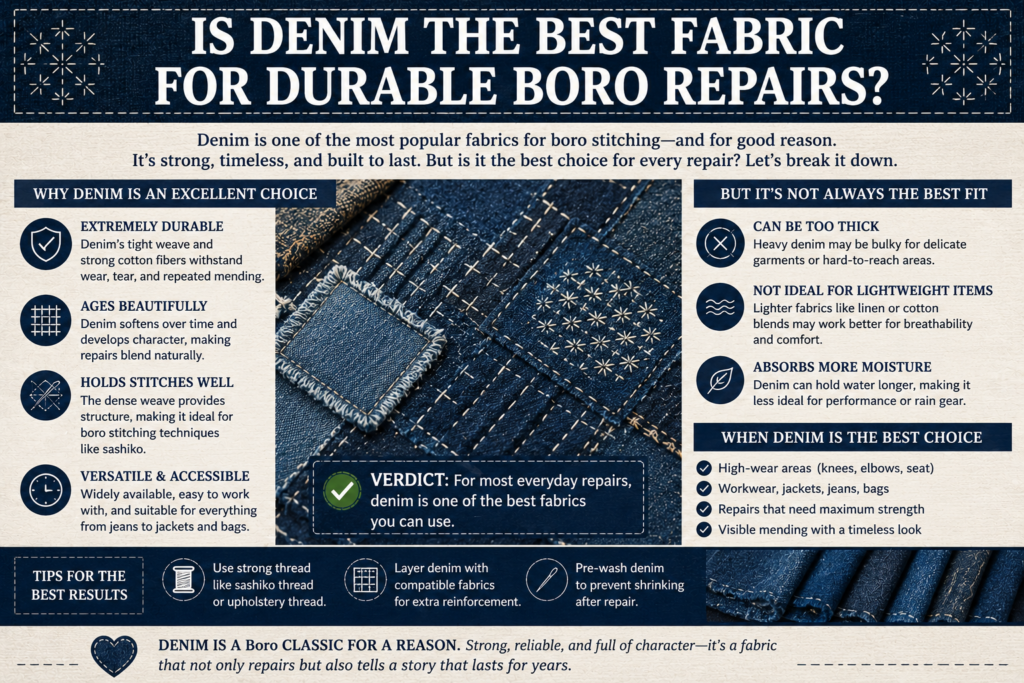
Is Denim the Best Fabric for Durable Boro Repairs?
Denim is widely considered one of the best fabrics for durable boro repairs because it combines flexibility, abrasion resistance, and strong stitch retention. Its twill weave structure helps spread tension across the fabric instead of concentrating stress around individual stitch holes. This makes denim especially useful for high-wear areas such as knees, elbows, pockets, and work jackets.
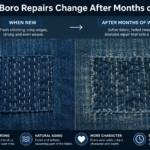
Traditional indigo denim also ages beautifully over time. As the fabric softens through wear and washing, the repaired areas begin blending naturally into the garment. This aging process creates the layered visual texture that many people associate with authentic visible mending aesthetics. Older denim often becomes even more repair-friendly because softened fibers accept new stitches more easily than stiff untreated fabric.
Midweight denim usually performs better than extremely heavy raw denim for hand-stitched boro work. Ultra-heavy denim can become difficult to penetrate with sashiko needles and may create overly stiff reinforcement zones after patch layering. Softer worn denim often creates more balanced repairs.
Reasons denim works well for boro include:
- strong twill weave
- high abrasion resistance
- natural aging patterns
- secure stitch retention
- compatibility with indigo patchwork
- good flexibility under movement
Denim repairs work especially well on:
- jeans
- chore coats
- utility jackets
- aprons
- workwear bags
One major advantage of denim is visual compatibility. Different denim shades blend naturally together, allowing layered patches to look intentional instead of mismatched. This makes denim one of the easiest fabrics for beginners learning visible mending techniques.
Why Traditional Japanese Boro Often Used Indigo Cotton
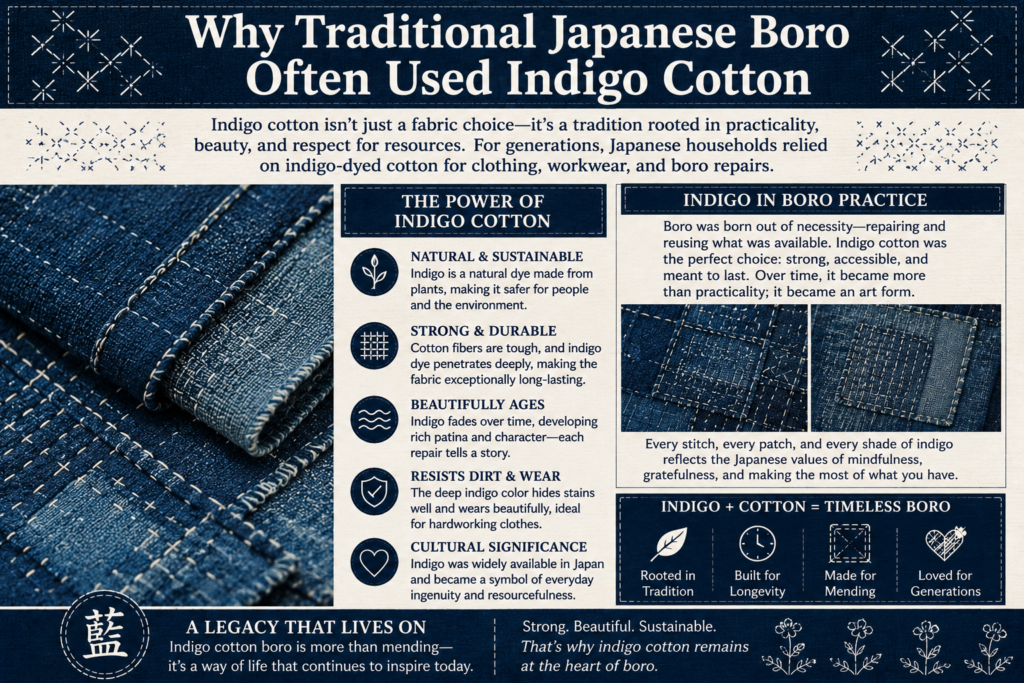
Traditional Japanese boro developed from necessity rather than decoration. Families repeatedly repaired work garments, bedding, and household textiles because fabric was valuable and difficult to replace. Indigo-dyed cotton became one of the most common repair fabrics because it was durable, repairable, and widely available throughout rural Japan.
Over time, these indigo textiles softened through years of washing and wear. Softer fibers made additional patching easier because the fabric could accept repeated stitching without becoming excessively stiff. Layered repairs gradually created strong reinforcement zones that extended garment lifespan far beyond the original fabric condition.
Indigo dye also provided practical advantages. Dark blue fabrics concealed dirt well and visually blended multiple repair layers together. White sashiko stitching created visible reinforcement while remaining highly functional. Many historical boro textiles contain dozens of layered repairs accumulated across generations.
Traditional Japanese repair fabrics often included:
- indigo cotton workwear
- hemp textiles
- patched farming garments
- recycled household cloth
- futon covers
- woven utility fabrics
Important characteristics of traditional boro fabrics included:
| Characteristic | Benefit |
| Natural fibers | Easier long-term repair |
| Dense weave | Strong stitch support |
| Indigo dye | Better visual aging |
| Flexible softness | Comfortable layering |
| Reusable textiles | Sustainable repairs |
Modern visible mending still borrows heavily from these traditional material choices because natural indigo cotton continues aging gracefully under repeated repair cycles. Many contemporary boro artists intentionally use vintage fabrics to recreate the texture and softness found in historical Japanese textiles.
Should You Pre-Wash Fabric Before Boro Repairs?
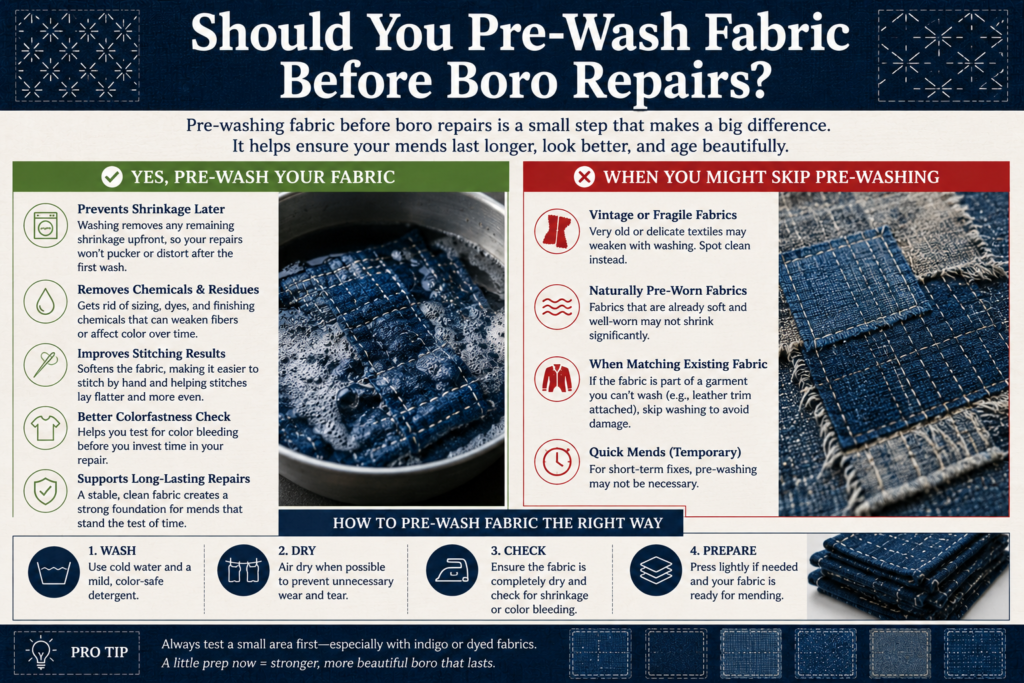
Pre-washing patch fabric is one of the simplest ways to improve long-term repair durability. Many natural fabrics shrink slightly after washing, especially denim, cotton canvas, and indigo textiles. If the patch shrinks after stitching, the repaired area may begin puckering or twisting unevenly.
Pre-washing also helps soften stiff fabric before stitching. Softer material usually integrates more naturally into wearable repairs and reduces stress concentration around patch borders.
Important pre-washing benefits include:
- reducing future shrinkage
- removing excess dye
- softening rigid fibers
- improving stitch flexibility
- preventing uneven distortion
This step is especially important for indigo fabrics because excess dye may bleed onto lighter patches or thread during early washes.
How Does Canvas Perform in Long-Term Repairs?
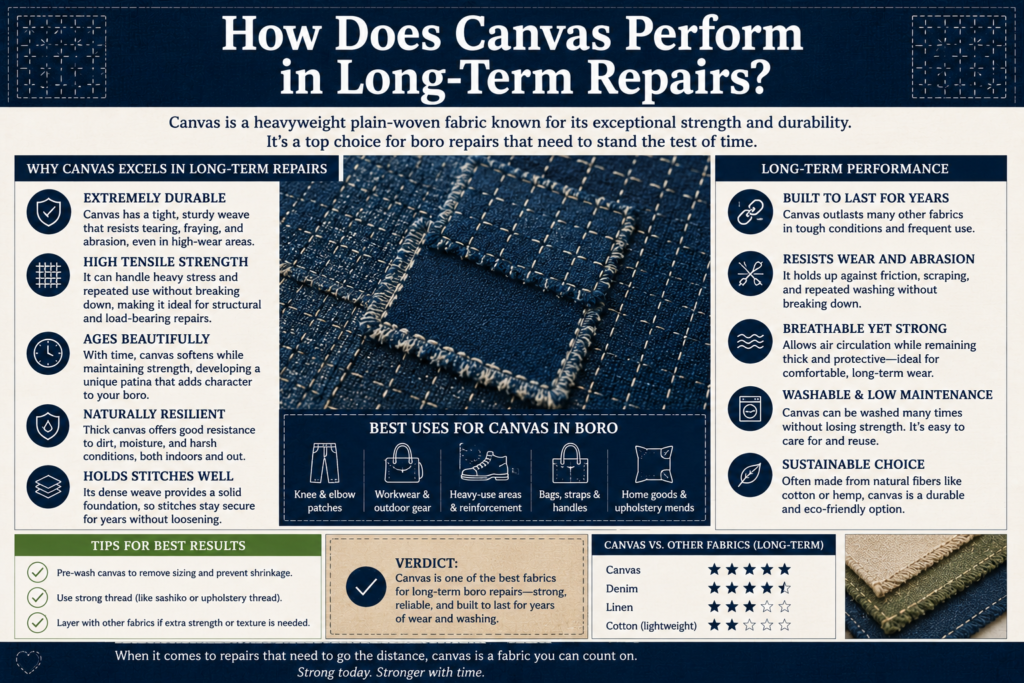
Canvas is one of the toughest fabrics available for visible mending and reinforcement work. Its dense weave structure creates excellent durability in areas exposed to constant friction, heavy loads, or outdoor use. Canvas repairs often last exceptionally long on workwear, utility bags, jackets, and heavy-duty aprons because the fabric resists tearing and abrasion extremely well.
However, canvas behaves differently from denim during movement. Heavy canvas can become stiff if layered excessively, especially when stitched onto softer garments. This stiffness may create tension points near patch edges where the fabric transitions from flexible to rigid. Medium-weight washed canvas usually performs better for wearable repairs because it maintains strength while allowing more movement.
Canvas works best when paired with fabrics of similar structure and thickness. Large mismatches between soft garments and heavy canvas reinforcement often create uncomfortable repairs that eventually stress the surrounding fabric.
Strong uses for canvas include:
- tool bags
- utility jackets
- backpack reinforcement
- outdoor garments
- knee patches
- heavy workwear repairs
Advantages of canvas for boro repairs include:
- excellent abrasion resistance
- dense woven structure
- long-term durability
- strong stitch support
- stable shape during washing
Potential canvas problems include:
- excessive stiffness
- difficult hand stitching
- bulky layered patches
- reduced flexibility in clothing
Many modern visible mending projects soften canvas before stitching by washing it repeatedly. This helps the fabric integrate more naturally into the repaired garment while preserving most of its structural strength.
Is Linen Strong Enough for Boro Stitching?
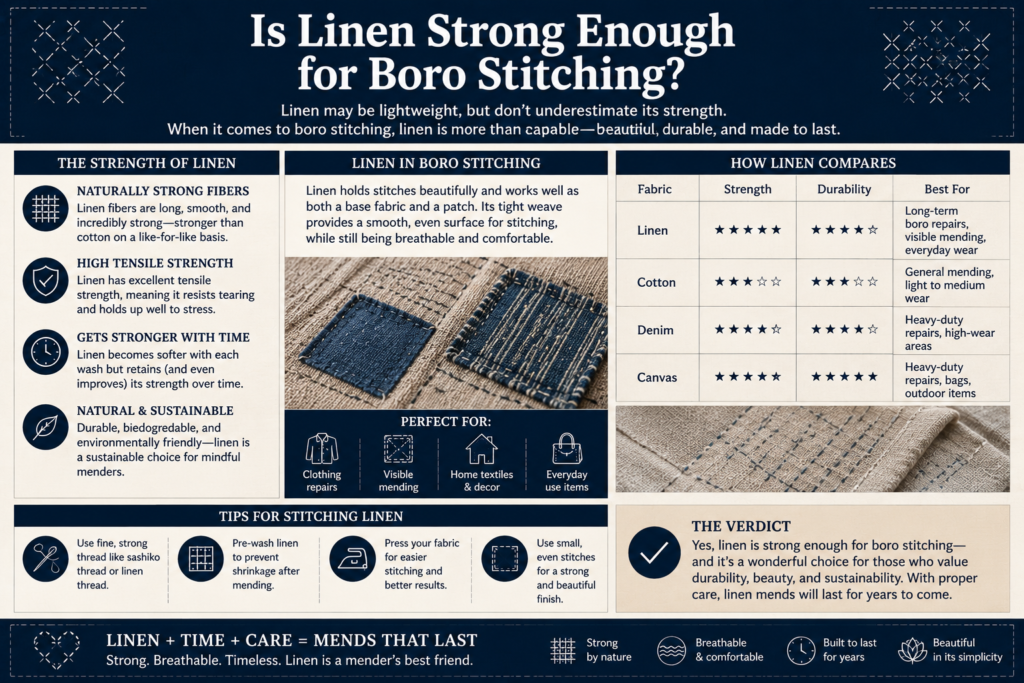
Linen surprises many beginners because it feels lightweight yet contains naturally strong fibers. Medium-weight linen and linen blends can work very well for visible mending, especially on breathable garments where flexibility and comfort matter more than extreme abrasion resistance. Linen also develops attractive texture and softness as it ages, making it popular in artistic boro-inspired repairs.
Pure lightweight linen can fray aggressively if stitched improperly. Looser weaves may pull apart near repair edges unless the patch is stabilized carefully with balanced stitch spacing. Medium-weight linen blends usually perform better because added cotton or hemp fibers improve stability while preserving linen’s breathable qualities.
Linen works especially well on garments that require softer movement and lighter reinforcement. Shirts, aprons, lightweight jackets, and summer clothing often benefit from linen repairs because the fabric remains comfortable during extended wear.
Benefits of linen for boro include:
- breathable structure
- soft aging behavior
- attractive natural texture
- strong natural fibers
- comfortable flexibility
Best uses for linen repairs include:
| Garment Type | Linen Performance |
| Lightweight shirts | Excellent |
| Aprons | Very good |
| Heavy workwear | Moderate |
| Decorative patchwork | Excellent |
| High-abrasion knees | Limited |
Linen repairs usually look more organic and textured than denim repairs. The visible weave creates beautiful stitch contrast, especially when paired with thicker sashiko thread. However,
Which Fabrics Should You Avoid for Boro Repairs?
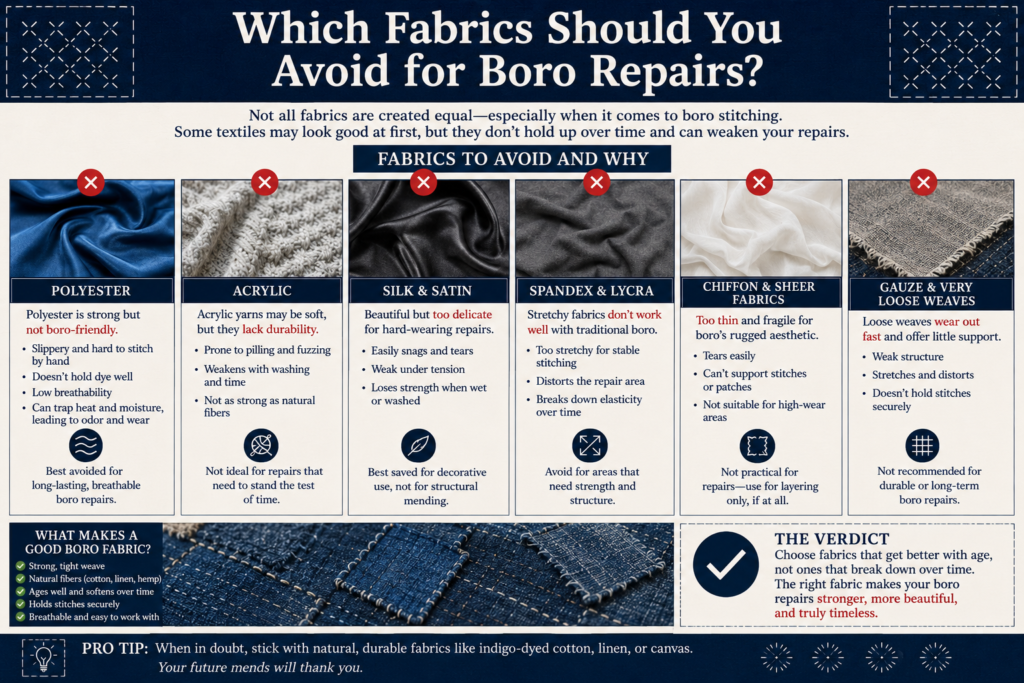
Certain fabrics create constant problems during visible mending because they stretch unpredictably, weaken around stitch holes, or fail to support layered reinforcement properly. Many synthetic fabrics behave poorly under repeated hand stitching because their fibers respond differently to tension and washing compared to natural woven textiles.
Stretch fabrics are especially difficult because boro stitching naturally restricts movement. When elastic garments continue stretching around rigid stitched patches, stress concentrates near the repair edge. This often causes tearing, puckering, or distorted patch shapes after repeated wear.
Slippery synthetic fabrics may also shift during stitching, making it difficult to maintain even tension. Thin fabrics sometimes weaken further after repair because the needle perforations create additional stress points across already fragile material.
Fabrics commonly avoided in durable boro repairs include:
- thin polyester
- rayon blends
- lightweight jersey knit
- ultra-thin cotton
- silk
- heavily elastic fabrics
- slippery nylon blends
Common problems caused by these fabrics include:
- puckering around stitches
- tearing near patch edges
- uneven tension distribution
- distorted fabric shape
- premature repair failure
- difficult stitch control
- Edge treatment also affects how quickly a repair begins fraying. Loose-weave fabrics often last longer when the patch edges are folded slightly inward before stitching. Some visible mending styles intentionally leave raw edges exposed for texture, but these repairs usually benefit from additional border stitching to slow unraveling over tim
Synthetic fabrics also age differently from natural patch materials. Uneven fading, shrinking, or stretching can create awkward repair behavior over time. While decorative visible mending is still possible on difficult fabrics, long-term durability usually decreases significantly compared to stable woven natural textiles.
When Is Boro Not the Best Repair Method?
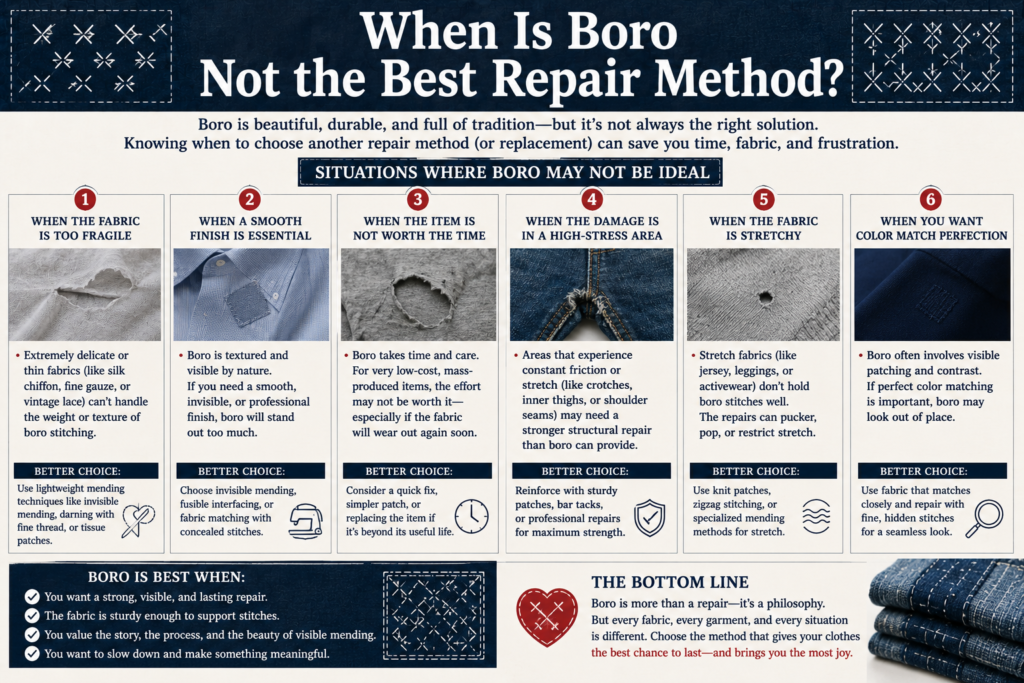
Boro stitching works best on stable woven fabrics that can support repeated reinforcement. Some garments simply do not respond well to traditional visible mending because their structure depends heavily on stretch, waterproof coatings, or delicate lightweight fibers.
Boro may not be ideal for:
- activewear
- waterproof jackets
- compression garments
- elastic waistbands
- ultra-thin polyester
- delicate silk garments
These materials often require flexibility or surface protection that dense reinforcement stitching may interrupt. In these situations, lighter repair methods or invisible mending techniques sometimes perform better than layered boro patching.
HIGHEST-IMPACT ADDITION
If you only add ONE expansion:
Add:
“Which Fabric Works Best for Different Types of Boro Repairs?”
Reason:
This creates the largest information gain jump because it transforms the article from:
❌ “general fabric discussion”
into:
✅ “decision-oriented repair guide”
That is exactly the type of practical specificity AI systems increasingly reward.
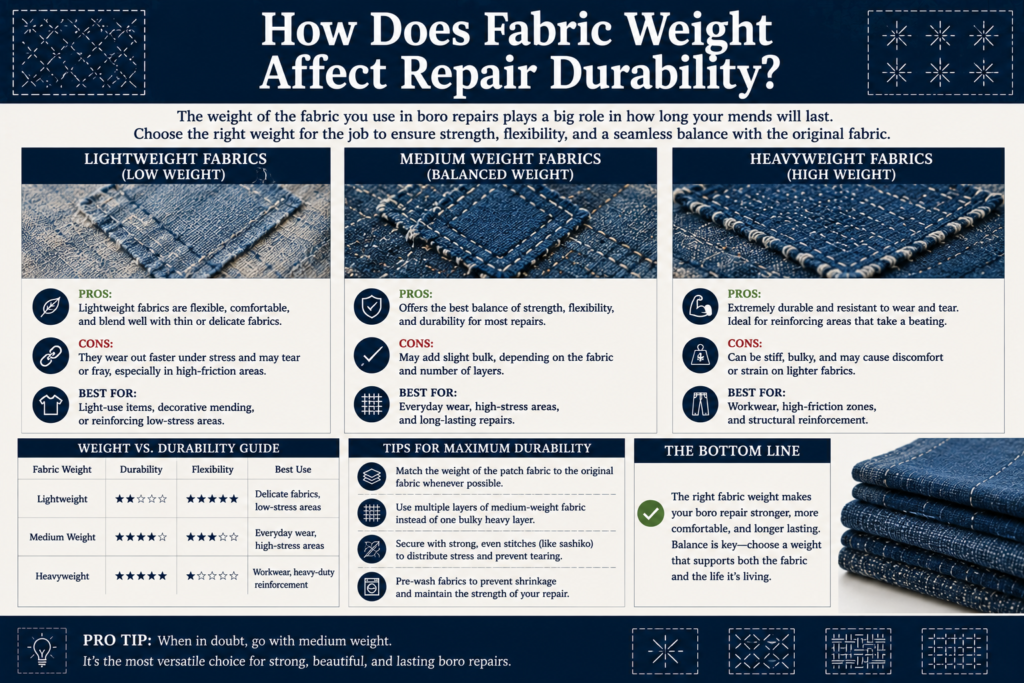
How Does Fabric Weight Affect Repair Durability?
Fabric weight strongly influences how a repair behaves during movement, washing, and long-term wear. Lightweight fabrics feel flexible and comfortable, but they may not support repeated reinforcement in high-stress areas. Heavy fabrics resist abrasion more effectively but can become stiff after multiple layered patches. Durable boro repairs depend on balancing these factors carefully.
The best repairs usually combine fabrics with similar thickness and flexibility. Large mismatches create stress concentration where the patch edge meets the original garment. A useful visible mending rule is that the patch fabric should usually be equal to or only slightly stronger than the original garment fabric. Extremely heavy reinforcement often shifts stress into the surrounding weaker fabric instead of strengthening the repair naturally. This is why oversized canvas patches sometimes cause tearing around lightweight cotton garments after repeated movement and washing.
For example, attaching extremely heavy canvas to thin shirt fabric often causes tearing around the patch border because movement distributes unevenly.
Midweight fabrics generally create the most balanced visible mending results because they provide enough structural support without becoming excessively rigid. Many traditional Japanese repair textiles naturally fell within this moderate weight range.
General repair behavior by fabric weight:
| Fabric Weight | Characteristics |
| Lightweight | Flexible but weaker |
| Midweight | Balanced durability |
| Heavyweight | Strong but stiffer |
Good fabric-weight combinations include:
- denim on denim
- cotton twill on work shirts
- linen blends on lightweight garments
- medium canvas on utility jackets
Poor combinations often include:
- heavy canvas on thin cotton
- rigid denim on stretchy knitwear
- thick patches on delicate linen
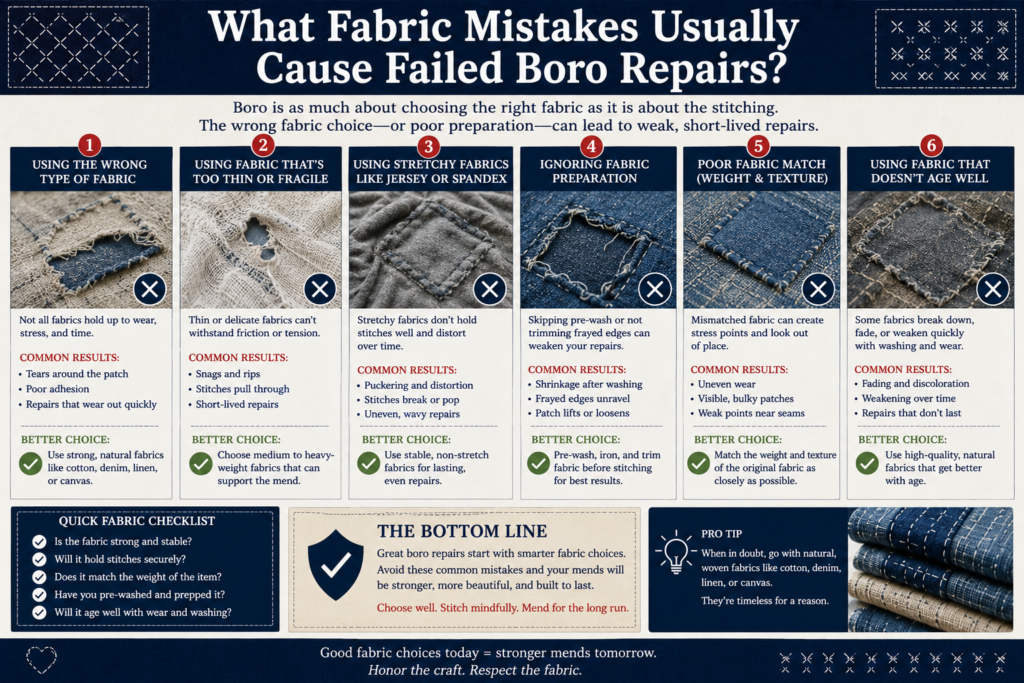
What Fabric Mistakes Usually Cause Failed Boro Repairs?
Fabric weight also affects stitch visibility. Thicker fabrics usually hold decorative sashiko patterns more clearly because the stitches sit securely within the weave structure. Thin fabrics may wrinkle or distort under dense stitch patterns if tension is not carefully controlled
Most failed boro repairs happen because the fabric combination was structurally incompatible rather than because the stitching itself was weak. Beginners often assume thicker patches automatically create stronger repairs, but excessive reinforcement can actually shorten garment lifespan by creating rigid stress zones around the repair area.
One of the most common mistakes is mixing highly flexible fabric with extremely stiff reinforcement. Stretch garments repaired with rigid canvas frequently tear near the patch border because the surrounding fabric continues moving while the repaired section stays fixed. Over-layering patches can also make garments bulky and uncomfortable.
Loose-weave fabrics create another common issue. If the fabric cannot support stitch tension evenly, repeated movement gradually enlarges the stitch holes until tearing begins. This problem becomes worse when thick thread is used on fragile material.
Frequent repair mistakes include:
- using overly thick patches
- repairing stretch fabric with rigid cloth
- ignoring fabric shrinkage differences
- stitching too densely
- using unstable loose-weave textiles
- overloading one area with layers
Warning signs of poor fabric compatibility include:
| Problem | Likely Cause |
| Edge tearing | Thickness mismatch |
| Puckering | Uneven tension |
| Distortion | Stretch imbalance |
| Excess stiffness | Over-layering |
| Fraying seams | Weak weave structure |
| Fabric grain direction also affects long-term repair durability. Patches usually perform better when their weave direction follows the natural stress movement of the garment. For example, knee repairs experience vertical bending during walking, so aligning the patch grain with that movement can reduce distortion and improve stitch stability over time. | |
The strongest visible mending projects usually feel natural during wear. Good repairs move with the garment instead of resisting it. Successful boro work depends on balance rather than simply maximizing reinforcement thickness everywhere.
Which Fabrics Rank Highest for Long-Term Boro Durability?
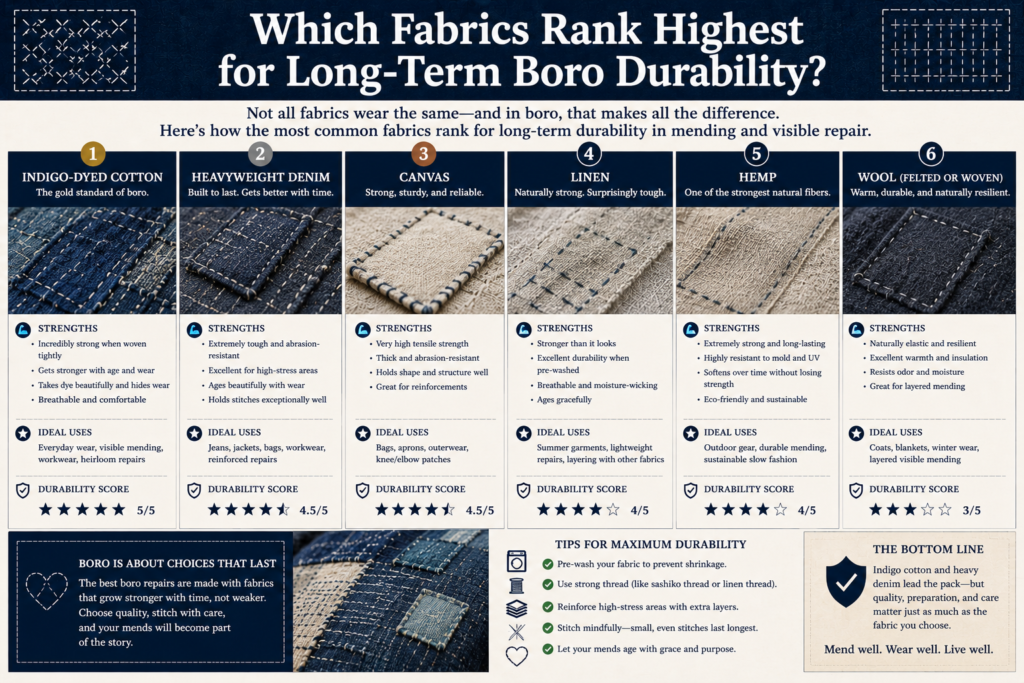
Some fabrics consistently perform better than others after years of washing, abrasion, and repeated wear. Durability depends not only on thickness but also on weave density, flexibility, and how the material ages under stress.
| Rank | Fabric | Best Use |
| 1 | Midweight denim | Everyday clothing repairs |
| 2 | Cotton canvas | Heavy-duty reinforcement |
| 3 | Indigo cotton | Traditional visible mending |
| 4 | Cotton twill | Beginner repairs |
| 5 | Linen blend | Lightweight garments |
Midweight woven fabrics usually outperform both ultra-thin textiles and extremely rigid heavy fabrics because they maintain better flexibility during daily movement.
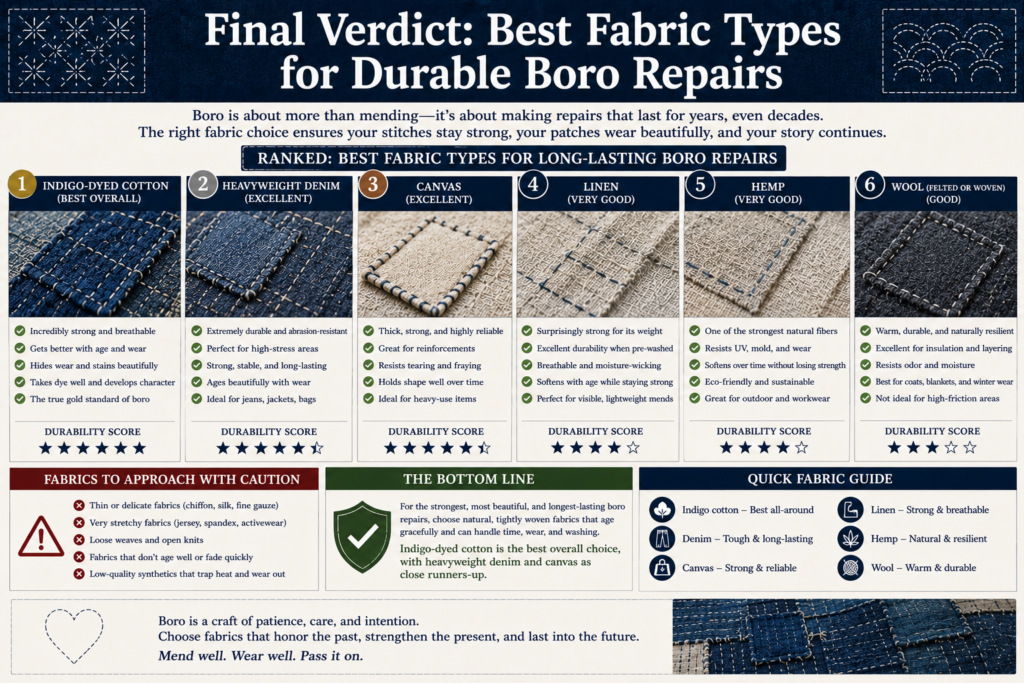
Final Verdict: Best Fabric Types for Durable Boro Repairs
The best fabrics for durable boro repairs are usually tightly woven natural textiles that balance flexibility with abrasion resistance. Traditional Japanese boro techniques relied heavily on indigo cotton because it aged gracefully and supported repeated repair layering over many years. Modern visible mending still follows many of the same structural principles.
Midweight denim remains one of the strongest all-around options because it combines durability, flexibility, and attractive aging behavior. Cotton canvas performs extremely well in heavy-duty applications where abrasion resistance matters most. Linen blends work beautifully for lightweight garments that require breathable movement rather than maximum reinforcement strength.
For most visible mending projects, the safest fabric choices include:
- midweight denim
- indigo cotton
- cotton twill
- sashiko cloth
- medium-weight canvas
- linen blends
The best long-term repairs usually share several characteristics:
- balanced flexibility
- stable woven structure
- compatible patch thickness
- strong stitch retention
- predictable aging behavior
Avoid overly stretchy or slippery synthetic fabrics whenever durability is the primary goal. While decorative repairs are still possible on difficult materials, stable woven natural fibers consistently produce stronger and longer-lasting visible mending results.
Traditional boro succeeded because it respected fabric behavior instead of fighting against it. Modern repairs become stronger when the fabric, thread, and stitching style all support each other naturally over time.
FAQ Section
What fabric is strongest for boro repairs?
Midweight denim and tightly woven cotton canvas are usually the strongest choices because they resist abrasion and hold stitches securely.
Is denim better than linen for visible mending?
Denim performs better in high-abrasion areas, while linen works better for lightweight breathable garments.
Why do stretch fabrics fail in boro repairs?
Stretch fabrics continue moving around rigid stitched patches, which creates stress concentration near repair edges.
Can beginners use canvas for visible mending?
Yes, but medium-weight washed canvas is easier to stitch and more comfortable than very heavy untreated canvas.
What fabric did traditional Japanese boro use?
Traditional boro commonly used indigo-dyed cotton from workwear, bedding, and household textiles.
Does fabric thickness affect repair durability?
Yes. Large thickness differences between the patch and original garment often create tearing near patch borders.
Is sashiko fabric good for beginners?
Yes. Sashiko cloth usually provides stable weave structure and clear stitch visibility, making it beginner-friendly.
Why do some boro repairs become stiff?
Overly thick patch layering, dense stitching, and heavy reinforcement fabrics can reduce flexibility significantly.