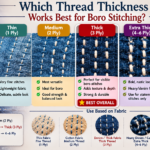
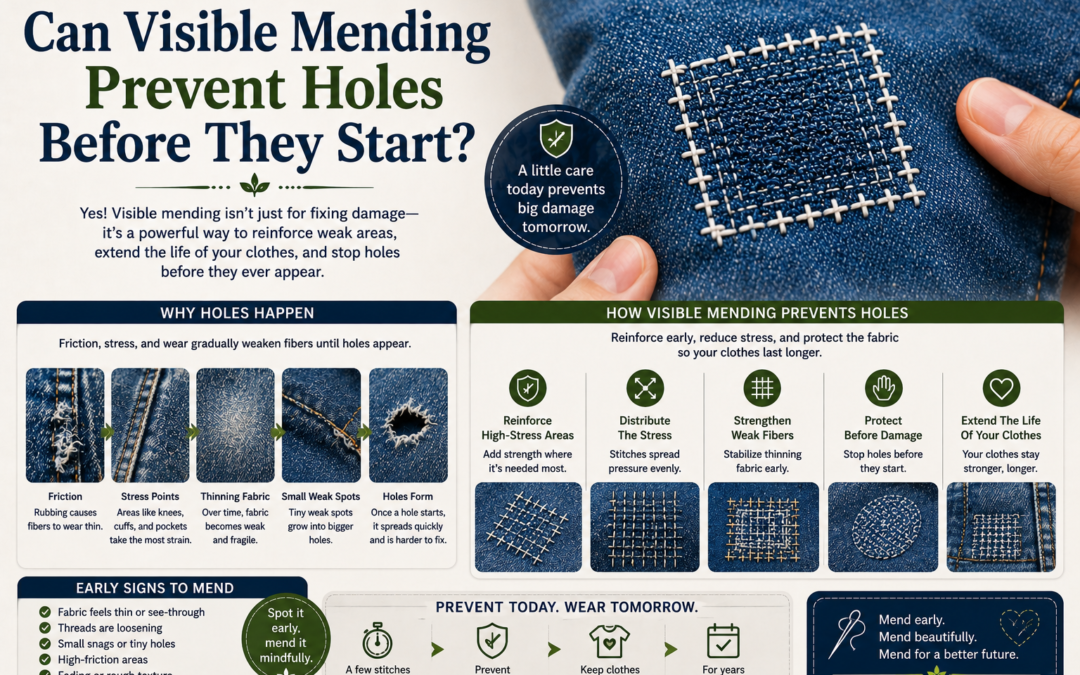
Visible mending can prevent holes before they start by reinforcing weak fabric areas before fibers completely fail. Traditional Japanese boro stitching and sashiko reinforcement techniques strengthen thinning fabric through layered stitching, stress distribution, and controlled reinforcement. Instead of waiting for damage to become severe, preventive visible mending helps garments survive much longer while reducing textile waste and preserving structural integrity.
Visible mending works especially well on denim, cotton, linen, canvas, and workwear because these fabrics usually weaken gradually rather than tearing instantly. Reinforcing high-friction areas early slows abrasion, stabilizes fibers, and prevents small weak spots from expanding into large holes. This preventive approach reflects traditional Japanese repair philosophy, where garments were continuously maintained instead of discarded after visible damage appeared.
Key benefits of preventive visible mending include:
- Extending garment lifespan
- Reducing fabric stress
- Preventing tearing progression
- Supporting sustainable fashion
- Reducing replacement costs
- Preserving vintage textiles
- Creating visually unique clothing
Modern visible mending is no longer only about repair. It has become part of slow fashion, textile preservation, and practical garment maintenance. Preventive reinforcement especially appeals to people who value durable clothing, handmade craftsmanship, and environmentally responsible fashion habits.
Why Does Preventive Visible Mending Work Before Holes Appear?
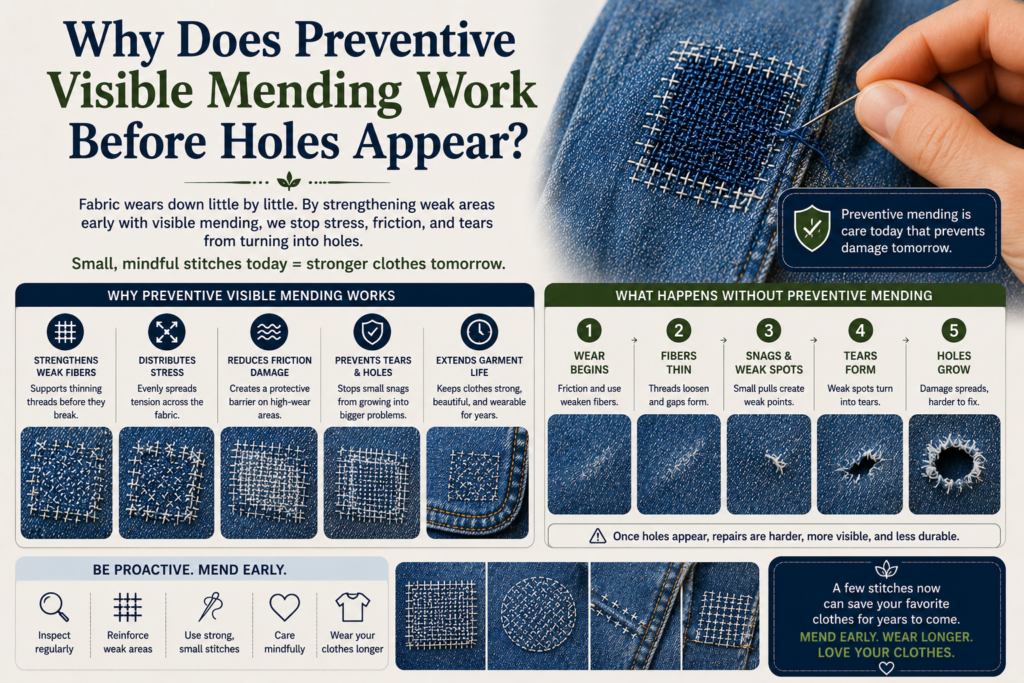
Preventive visible mending works because most fabric damage develops slowly through repeated abrasion, friction, stretching, compression, and washing cycles. Fibers usually weaken long before a visible hole appears. Reinforcement stitching interrupts this deterioration process early by stabilizing stressed areas before structural collapse begins.
High-friction clothing zones constantly experience micro-damage. Every movement slightly weakens fibers in areas such as knees, elbows, pockets, and inner thighs. Over time, fibers separate, soften, and thin until the weave can no longer support itself. Preventive visible mending strengthens these vulnerable areas before failure becomes severe.
Traditional Japanese boro garments survived for decades because people repaired weak spots continuously rather than waiting for complete tears. This maintenance philosophy distributed stress across multiple fabric layers and stitch pathways, greatly increasing durability.
Signs that fabric needs preventive reinforcement include:
- Shiny worn surfaces
- Thinning fabric texture
- Loose fibers
- Color fading in stress zones
- Soft or weak spots
- Distorted fabric weave
- Small seam separations
- Light visible through fabric
Preventive mending is often structurally stronger than emergency repair because intact fabric remains easier to stabilize. Once holes fully open, surrounding fibers usually become distorted and weakened beyond the visible damage itself.
This early-intervention strategy works especially well on natural fibers because cotton, linen, wool, and denim remain highly repairable even after moderate wear begins. Small sashiko reinforcement grids or lightweight support patches can sometimes extend garment life by years before major damage occurs.
Decision clarity matters because preventive reinforcement is usually easier, cleaner, and longer-lasting than repairing catastrophic fabric failure later.
How Do Fabric Fibers Gradually Fail Before Holes Appear?
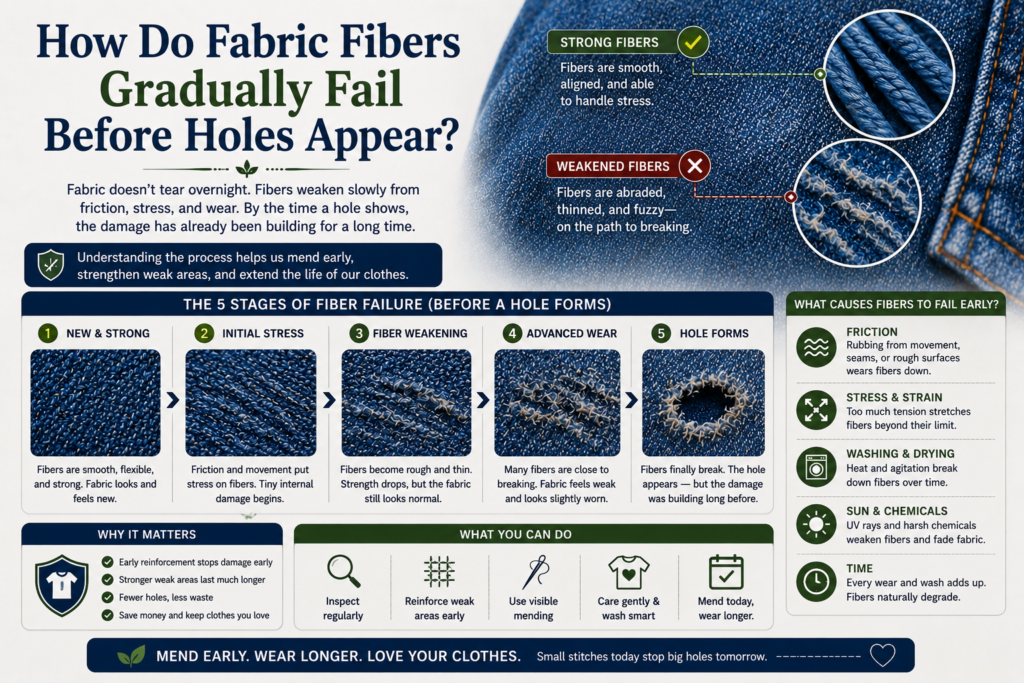
Most fabric holes do not appear suddenly. Fibers usually weaken through thousands of tiny abrasion cycles before structural failure becomes visible. Every movement, wash cycle, stretch, fold, and friction point slowly damages the fabric weave until threads can no longer distribute tension evenly. This process is called fabric fatigue, and it is one of the main reasons high-friction clothing zones eventually develop holes.
Natural fibers such as cotton, linen, and wool gradually lose strength as surface fibers break apart from repeated rubbing and compression. Areas exposed to body movement — especially knees, elbows, inner thighs, and pocket corners — experience continuous stress concentration. Moisture, sweat, detergent residue, and heat exposure can accelerate weakening further by making fibers more brittle over time. Once enough warp and weft threads begin separating, the surrounding weave destabilizes rapidly.
Common causes of gradual fiber failure include:
- Repeated abrasion
- Stretching stress
- Bending fatigue
- Moisture exposure
- Fabric compression
- Heat damage
- Aggressive washing
- Poor seam distribution
Preventive visible mending interrupts this structural breakdown before complete separation occurs. Reinforcement stitching redistributes tension across multiple thread pathways, slowing further wear and helping the fabric maintain stability much longer.
Which Clothing Areas Should Be Reinforced First?
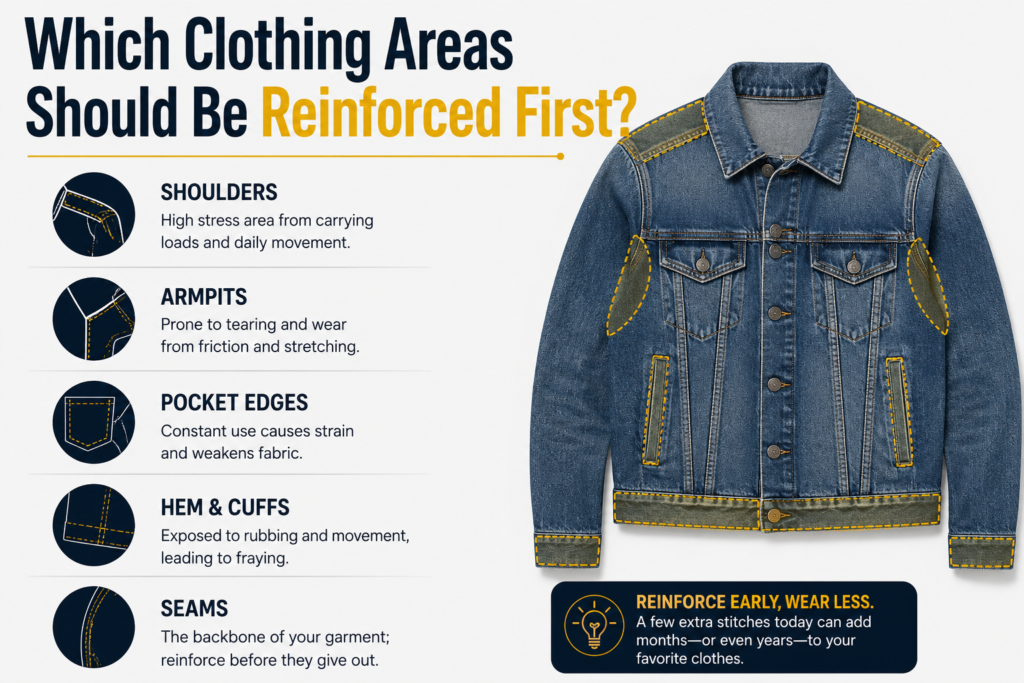
Certain garment areas experience predictable stress patterns that make them highly vulnerable to holes. Preventive visible mending focuses on these zones first because repeated movement, friction, and pressure gradually weaken fibers over time. Understanding wear patterns helps identify where reinforcement will provide the greatest durability improvement.
The most common high-friction areas include:
- Jean inner thighs
- Knees
- Elbows
- Pocket corners
- Shirt cuffs
- Collar folds
- Seat areas
- Underarm seams
- Sock heels
- Backpack shoulder points
Each zone wears differently depending on movement patterns and garment use. Cyclists often destroy denim inner thighs quickly, while desk workers may notice elbow wear first. Physical laborers frequently see knee and cuff deterioration because repeated bending creates concentrated abrasion in those areas.
Preventive visible mending works best when reinforcement matches actual garment stress. Lightweight sashiko grids work well for moderate wear, while heavily stressed zones may require patch layering beneath reinforcement stitches. Flexible reinforcement is especially important in movement-heavy areas because rigid stitching can sometimes create new stress points.
Helpful reinforcement approaches include:
- Parallel running stitches for cuffs
- Crosshatch sashiko for knees
- Layered patches for thighs
- Edge reinforcement near pockets
- Flexible darning for knitwear
- Reinforced seam stitching
Fabric weight also matters heavily. Thin shirts may only need soft reinforcement stitching, while denim often benefits from multiple support layers. Matching reinforcement density to fabric thickness prevents distortion and improves repair longevity.
Preventive reinforcement becomes most effective when applied early. Once fabric begins visibly fraying or tearing, surrounding fibers may already be compromised. Reinforcing garments during the thinning stage provides far better structural stability.
How Can You Detect Fabric Weakness Before a Hole Forms?
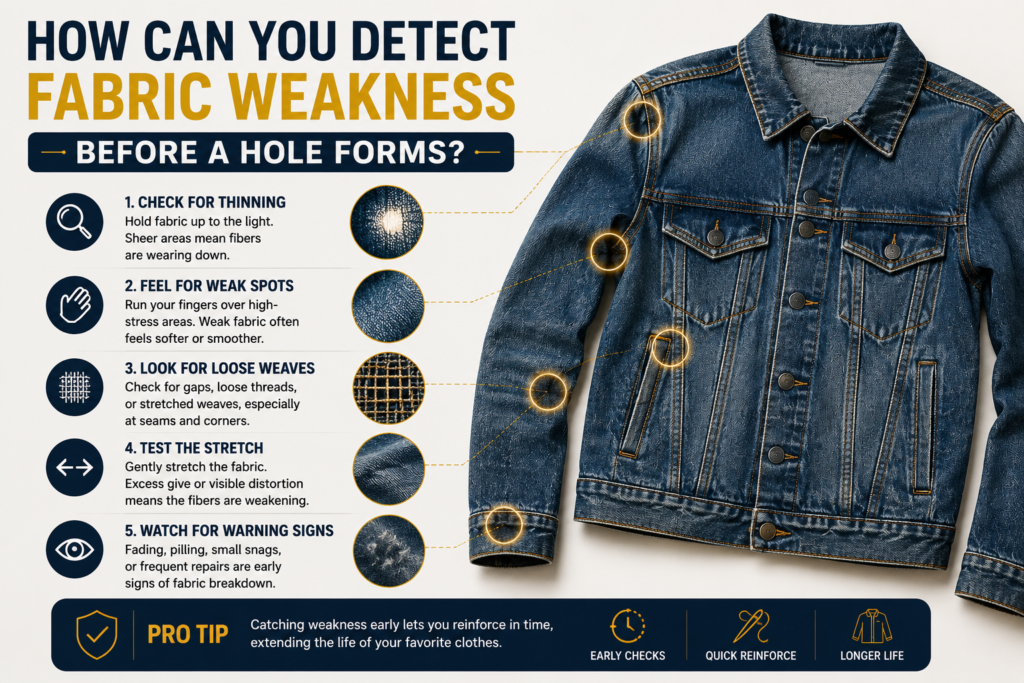
Early detection is one of the most important parts of preventive visible mending because weak fabric usually shows warning signs long before visible tearing begins. Identifying these subtle changes early allows reinforcement stitching to stabilize fibers before surrounding fabric becomes structurally compromised.
One of the easiest detection methods is the light test. Holding fabric toward a bright light often reveals thinning zones where fibers have become sparse. Stretch testing also helps identify weak areas because damaged fabric usually distorts more easily than healthy material. Texture changes are another important signal. Fabric that feels unusually soft, fuzzy, shiny, or thin compared to surrounding areas often indicates friction damage already underway.
Common early warning signs include:
- Visible thinning under light
- Loose surface fibers
- Soft or weak texture
- Fading in stress zones
- Distorted weave structure
- Small thread separations
- Seam pulling
- Uneven fabric tension
High-friction garments should be inspected regularly, especially denim jeans, workwear, jackets, and tote bags. Detecting weakness early dramatically improves repair durability because stitches can anchor into stable fibers before major fraying develops.
Decision clarity matters because preventive reinforcement applied during the thinning stage is often significantly stronger than repairing fully opened holes later.
How Does Sashiko Stitching Strengthen Weak Fabric?
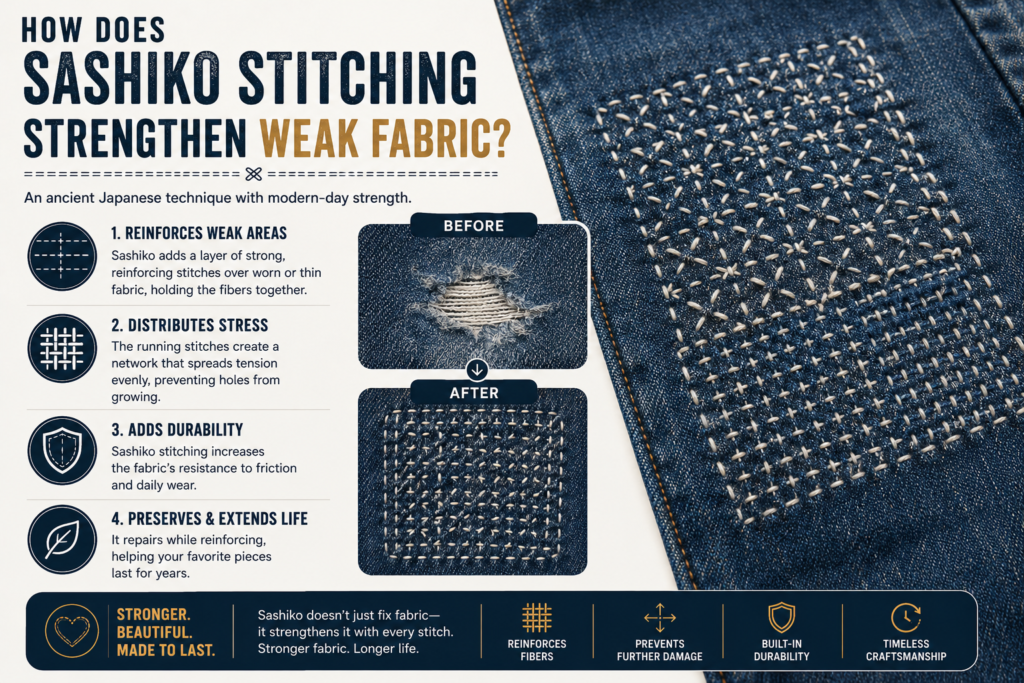
Sashiko stitching strengthens weak fabric by distributing stress across multiple thread pathways rather than allowing tension to remain concentrated in isolated fibers. The running stitch structure creates a secondary support network that stabilizes worn areas while limiting further abrasion and stretching.
Traditional sashiko developed as a practical reinforcement method in Japan long before it became associated with decorative textile art. Farmers, laborers, and fishermen used repetitive stitch grids to strengthen heavily worn clothing because replacing garments frequently was financially impossible. These repairs improved structural durability while preserving valuable textiles.
Sashiko works structurally in several important ways:
- Stabilizes thinning weave structures
- Reduces fabric movement
- Limits fiber separation
- Prevents edge fraying
- Distributes pressure evenly
- Controls stress concentration
- Holds layered fabrics together
Preventive sashiko works especially well because weakened fabric still retains most of its original structure before holes appear. Reinforcement stitches integrate naturally into stable fabric instead of trying to reconnect torn or distorted edges later.
Some of the most effective preventive sashiko patterns include:
- Straight running grids
- Kikko hexagon reinforcement
- Crosshatch stitch patterns
- Parallel support rows
- Diamond stabilization grids
Dense stitching increases strength but excessive density can reduce flexibility. Balanced spacing matters more than decorative complexity. Garments must still move naturally without creating stiff stress points around the repair area.
Thread choice also affects durability significantly. Cotton sashiko thread provides excellent reinforcement for natural fiber garments because it remains durable while still allowing moderate flexibility. Extremely thin threads may fail quickly, while overly thick thread can damage lightweight fabrics.
Preventive sashiko succeeds best when stitches follow natural stress directions instead of fighting garment movement. Proper reinforcement supports the fabric’s behavior rather than restricting it unnaturally.
When Is the Best Time to Reinforce Fabric?
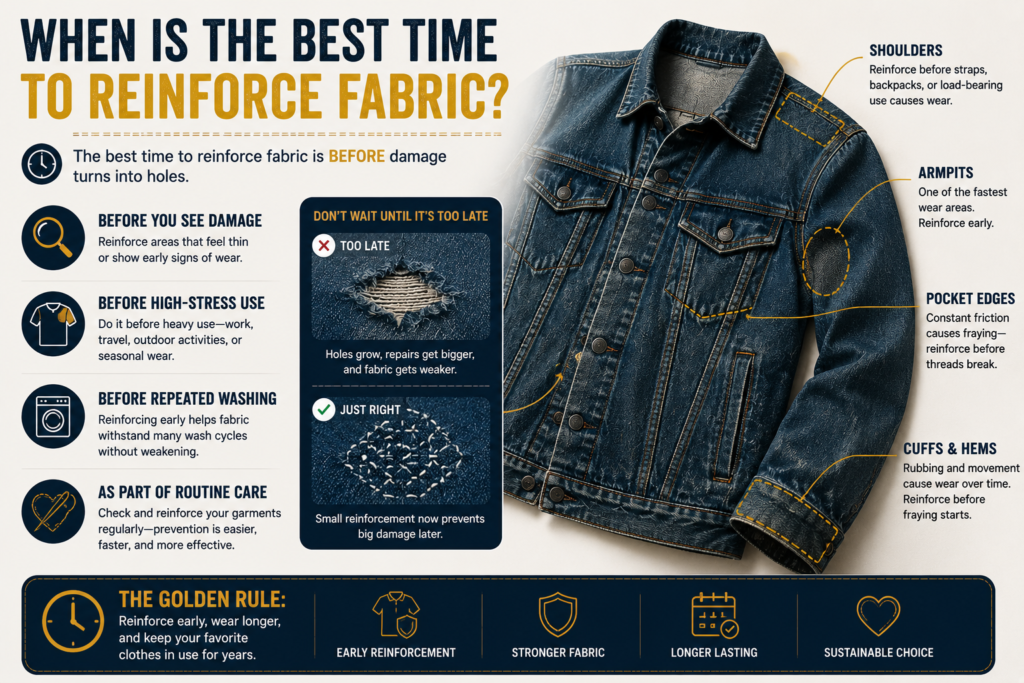
The best time to reinforce fabric is during the early thinning stage before complete fiber separation begins. Preventive visible mending works most effectively when the surrounding weave still retains structural integrity because stitches can distribute tension evenly across healthy fibers instead of anchoring into unstable damaged edges.
Many people wait until holes fully appear before repairing garments, but this usually reduces long-term durability. Once fabric tears open, nearby fibers often weaken rapidly because the surrounding weave must carry additional stress. Early reinforcement prevents this chain reaction from spreading across larger areas.
Different wear stages benefit from different repair approaches:
| Wear Stage | Recommended Reinforcement |
| Slight thinning | Light sashiko stitching |
| Soft friction zones | Flexible reinforcement grid |
| Visible thread separation | Backing patch support |
| Small tears forming | Structural stabilization |
| Large hole development | Full repair patching |
The timing window matters heavily in high-friction zones such as inner thighs, knees, cuffs, and elbows. Reinforcing these areas early often prevents emergency repairs later. Even small sashiko grids can dramatically slow abrasion progression when applied before severe weakening occurs.
Preventive visible mending succeeds because it transforms repair into continuous maintenance rather than waiting for catastrophic fabric failure.
Can Preventive Visible Mending Really Extend Garment Lifespan?
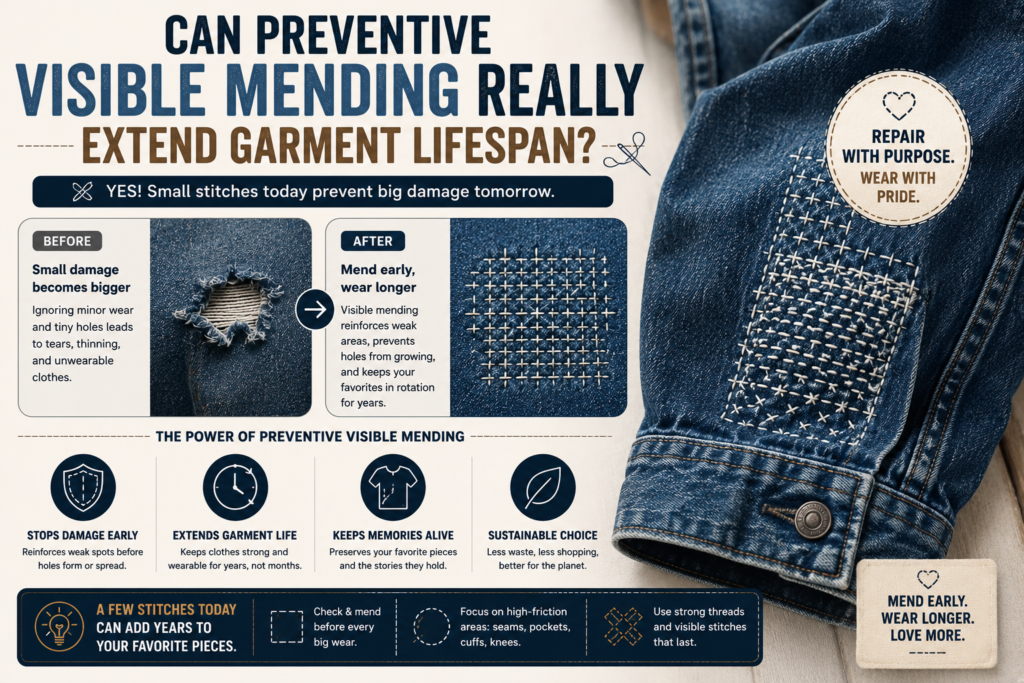
Yes, preventive visible mending can dramatically extend garment lifespan because it interrupts the progressive damage cycle before structural failure accelerates. Most clothing holes expand rapidly once fibers begin separating. Reinforcing weak spots early prevents this chain reaction from spreading across larger fabric areas.
Small reinforcements often create major long-term durability improvements. A lightly reinforced denim thigh area may survive years longer than untreated fabric exposed to constant abrasion. Similarly, strengthening pocket corners early can stop stress from tearing the surrounding material later.
Preventive reinforcement works especially well because:
- Fabric remains structurally stable
- Surrounding fibers stay intact
- Stitch tension distributes evenly
- Edges have not frayed heavily
- Weave alignment remains preserved
- Stress concentration becomes reduced
Traditional boro garments demonstrate this principle clearly. Many surviving examples accumulated decades of layered reinforcement because owners continuously repaired small weak areas before catastrophic damage occurred. These garments became stronger through maintenance rather than weaker through neglect.
Several factors influence repair longevity:
| Factor | Lifespan Impact |
| Early reinforcement | Very high |
| Gentle washing | High |
| Strong thread choice | High |
| Flexible stitch spacing | Moderate |
| Proper patch support | High |
| Fabric quality | Very high |
Preventive visible mending also creates emotional durability. People often keep repaired garments longer because the reinforcement adds visible history, individuality, and craftsmanship. Clothing becomes personally meaningful rather than disposable.
Long-term maintenance still matters. Reinforced areas may eventually need secondary stitching or patch replacement after years of wear. Preventive mending works best as an ongoing maintenance habit rather than a permanent one-time solution.
This approach aligns closely with sustainable clothing culture because extending garment lifespan directly reduces textile waste, overconsumption, and manufacturing demand.
Why Is Preventive Mending Better Than Emergency Fabric Repair?
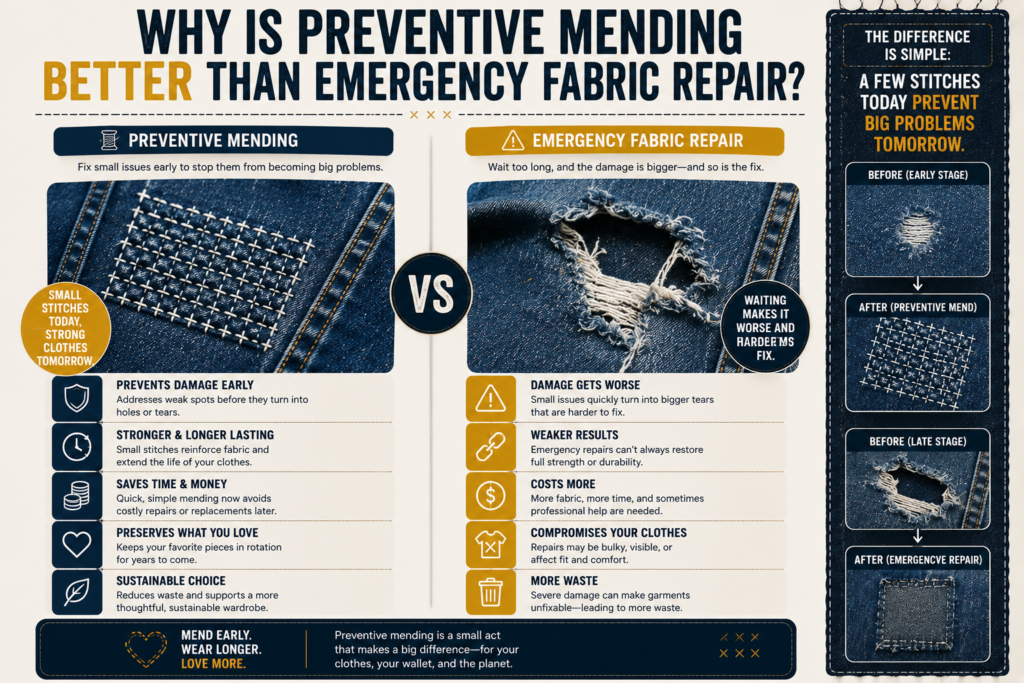
Preventive mending is usually more durable than emergency repair because stable fabric is easier to reinforce than severely damaged cloth. Once holes fully develop, surrounding fibers often become stretched, distorted, frayed, or weakened beyond the visible tear itself. Repairing this compromised structure becomes much more difficult.
Emergency repairs face several structural disadvantages:
- Torn edges continue fraying
- Stress concentrates unevenly
- Weak surrounding fibers fail later
- Fabric weave becomes distorted
- Holes stretch during movement
- Stitch anchoring weakens
Preventive visible mending avoids these problems by reinforcing garments while the original structure still remains mostly intact. Stitches anchor securely into healthy fibers instead of relying on unstable edges.
This difference becomes especially important with lightweight fabrics. Thin cotton shirts and soft linen garments often deteriorate rapidly once holes appear because neighboring fibers immediately begin carrying additional tension. Early reinforcement slows this progressive weakening process.
Preventive repairs also integrate more naturally into garment aesthetics. Small reinforcement grids appear intentional and balanced, while emergency repairs sometimes look bulky or visually disconnected from the original fabric.
Major preventive advantages include:
- Smaller repair zones
- Better structural stability
- Cleaner stitch alignment
- Reduced fabric distortion
- Longer-lasting reinforcement
- Easier maintenance
- Lower repair complexity
Preventive mending also reduces the need for aggressive patching later. Large emergency patches can restrict movement or create uneven fabric tension if surrounding areas are already weak.
Many traditional textile cultures understood this principle intuitively. Garments were maintained continuously because small repairs required fewer resources than rebuilding severely damaged clothing later. Modern visible mending follows this same practical philosophy.
Preventive reinforcement ultimately preserves more original fabric while producing stronger and more comfortable long-term results.
Which Fabrics Benefit Most From Preventive Visible Mending?
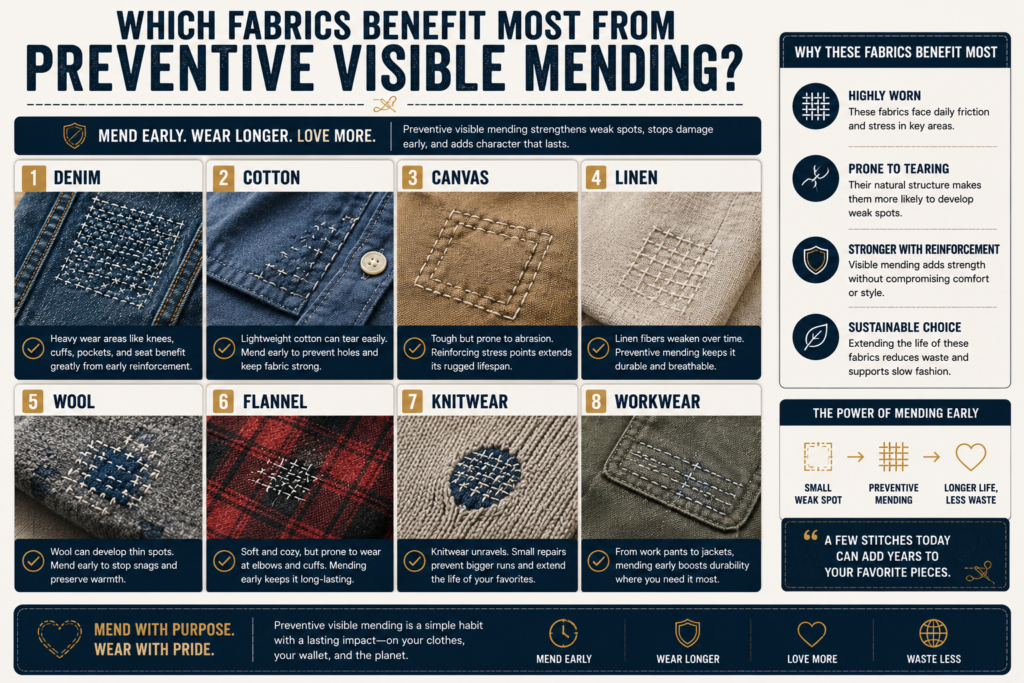
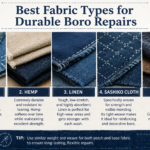
Natural fiber fabrics benefit most from preventive visible mending because they weaken gradually while remaining structurally repairable for long periods. Cotton, denim, linen, wool, hemp, and canvas respond especially well to reinforcement stitching because their fibers tolerate layered stitching and patch integration effectively.
Denim remains one of the best preventive mending fabrics because its twill weave develops predictable abrasion zones that are easy to identify early. Jeans often show thinning inner thighs, knees, and pocket corners long before full holes appear, making them excellent candidates for preventive sashiko reinforcement.
Highly repairable fabrics include:
- Denim
- Canvas
- Cotton twill
- Linen
- Wool
- Hemp blends
- Heavy flannel
Heavyweight fabrics generally tolerate dense reinforcement better than lightweight materials. Thick denim and canvas can support layered patches and repeated stitch grids without becoming unstable. Thin fabrics require gentler reinforcement to avoid distortion.
Lightweight garments may need:
- Softer thread tension
- Wider stitch spacing
- Lightweight backing fabric
- Flexible reinforcement zones
- Smaller stitch density
Synthetic stretch fabrics present additional challenges because elastic movement constantly changes tension direction. Athletic fabrics and polyester blends often fail differently than woven natural fibers, making long-term reinforcement more difficult.
Preventive visible mending succeeds best when repair materials behave similarly to the original fabric. Heavy patches on thin cloth can create imbalance, while weak thread on heavyweight denim may fail prematurely.
Fabric age also matters. Vintage textiles often respond beautifully to preventive reinforcement because older natural fibers usually soften gradually while retaining repairability. Many antique garments survived precisely because owners continuously reinforced them throughout their usable life.
Understanding fabric behavior helps visible mending become both structurally effective and visually harmonious.
Which Threads Work Best for Preventive Visible Mending?
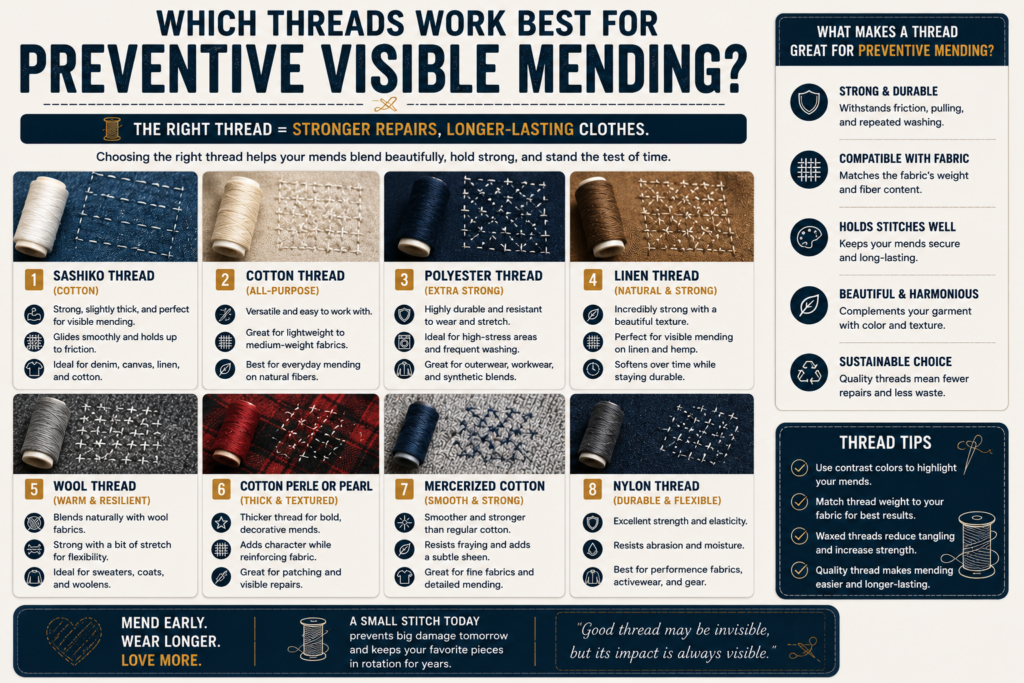
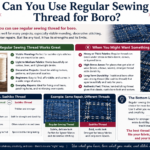
Thread choice strongly affects reinforcement durability because different fibers behave differently under friction, tension, and repeated washing. Strong thread improves structural stability, while poor thread selection can cause preventive visible mending to fail prematurely even when stitching technique is correct.
Traditional sashiko thread remains one of the best options for preventive reinforcement because it combines durability with moderate flexibility. Cotton sashiko thread grips woven fabric well without cutting aggressively into surrounding fibers. Linen thread also provides excellent strength, especially for heavyweight garments such as denim, canvas, and workwear.
Popular reinforcement thread options include:
- Cotton sashiko thread
- Pearl cotton
- Linen thread
- Embroidery floss
- Upholstery thread
- Polyester repair thread
Each thread type has advantages and limitations. Polyester thread offers high abrasion resistance but may feel too rigid for lightweight fabrics. Embroidery floss works well for decorative repairs but sometimes wears faster in heavy-friction zones. Thick thread increases durability but can distort thin fabric if tension becomes excessive.
Matching thread weight to fabric weight is extremely important. Lightweight shirts need softer reinforcement, while denim and canvas tolerate denser stitching much better. Consistent thread tension also improves long-term flexibility and reduces stress concentration around repaired areas.
The best preventive visible mending balances strength, flexibility, and fabric compatibility rather than simply using the thickest available thread.
Do Needle Types Affect Reinforcement Strength?
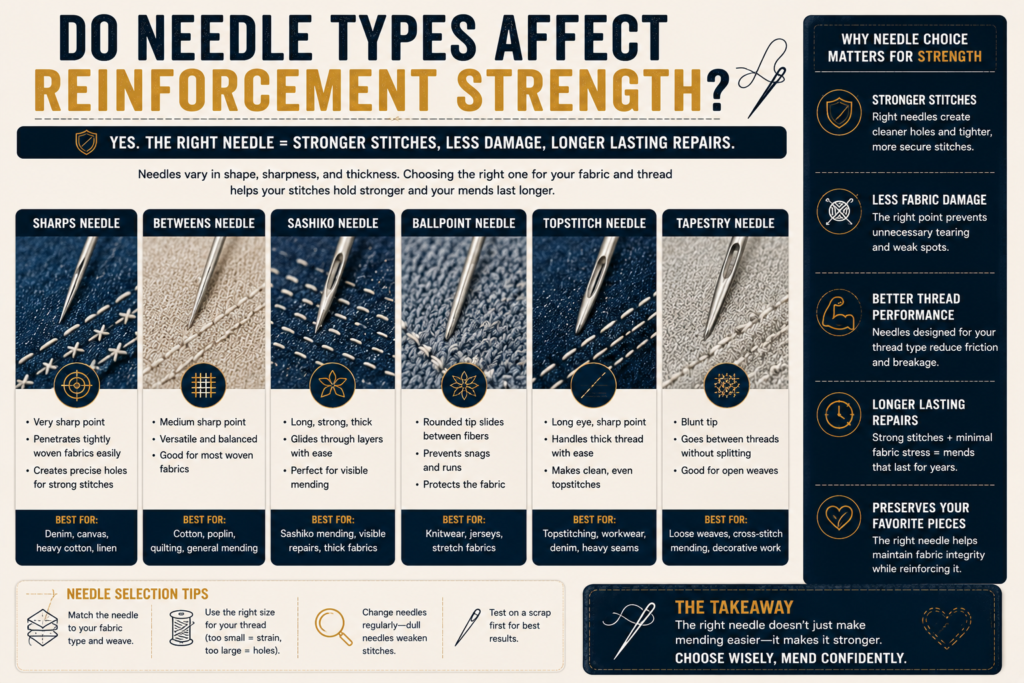
Needle selection affects reinforcement quality more than many beginners realize because different needle shapes, lengths, and thicknesses change how stitches interact with fabric fibers. Proper needle choice improves stitch consistency, reduces unnecessary fabric damage, and helps reinforcement remain structurally stable during long-term wear.
Traditional sashiko needles are especially effective for preventive visible mending because they are longer and slightly stronger than standard embroidery needles. Their length allows multiple running stitches to load onto the needle at once, improving stitch rhythm and helping tension remain more even across reinforcement grids.
Useful needle types for preventive visible mending include:
- Sashiko needles
- Embroidery needles
- Sharps
- Milliner needles
- Darning needles
Thin fabrics usually require finer needles because oversized punctures can weaken delicate material further. Heavy denim and canvas benefit from stronger needles that pass cleanly through dense layers without bending excessively.
Needle sharpness also matters significantly. Dull needles drag fibers apart rather than sliding smoothly between threads, which can increase wear around reinforcement areas. Smooth needle movement helps preserve the original weave structure while allowing stitches to stabilize weakened fabric effectively.
The best needle choice depends on:
- Fabric thickness
- Thread weight
- Stitch density
- Patch layering
- Flexibility requirements
Balanced needle and thread combinations improve both durability and comfort in preventive visible mending projects.
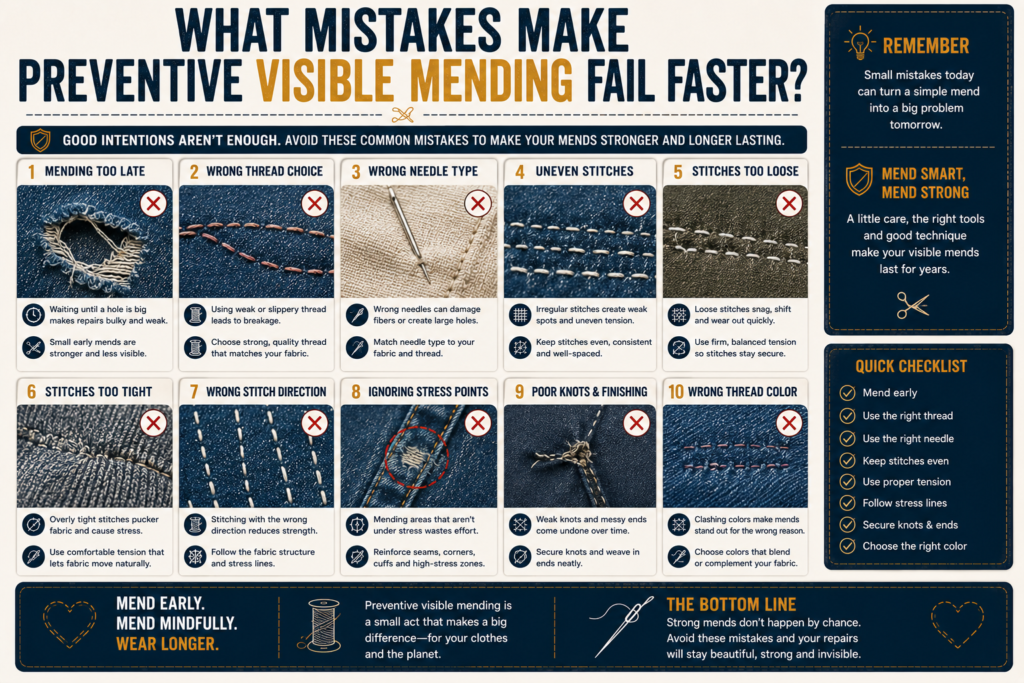
What Mistakes Make Preventive Visible Mending Fail Faster?
Preventive visible mending can fail prematurely when reinforcement creates additional stress instead of stabilizing fabric naturally. Many beginners unintentionally weaken garments further by using improper stitch density, incorrect patch materials, or excessive thread tension.
One of the most common mistakes is over-stitching. Extremely dense reinforcement may look durable initially, but rigid stitch grids can restrict fabric flexibility and create stress concentration around repair edges. This problem becomes especially noticeable in movement-heavy areas such as knees, elbows, and inner thighs.
Other common reinforcement mistakes include:
- Excessively tight stitching
- Thick patches on thin fabric
- Poor fabric grain alignment
- Weak thread selection
- Uneven tension distribution
- Oversized repair zones
- Stiff reinforcement layouts
Patch weight compatibility is also important. Lightweight shirts reinforced with heavy denim patches often distort during movement because the fabrics behave differently under stress. Similarly, weak embroidery floss may fail quickly in high-abrasion denim repairs.
Good preventive visible mending should support natural garment movement instead of fighting against it. Flexible reinforcement generally lasts longer because it distributes stress more evenly across the surrounding weave.
Real-world durability often depends more on balanced structural support than decorative complexity. Simple reinforcement with proper tension and compatible materials usually outperforms visually elaborate but mechanically unstable stitching.
How Does Preventive Visible Mending Support Sustainable Fashion?
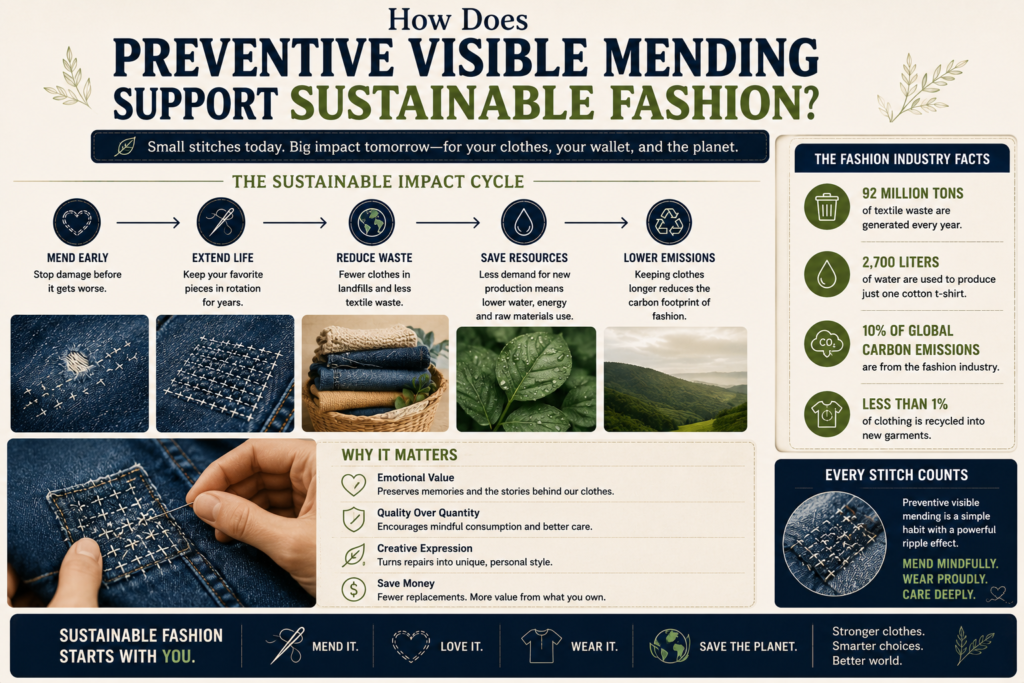
Preventive visible mending strongly supports sustainable fashion because it extends garment lifespan while reducing replacement frequency and textile waste. Instead of treating clothing damage as a reason for disposal, preventive repair encourages maintenance, preservation, and long-term garment use.
Fast fashion systems depend heavily on short clothing lifespans. Many garments are discarded after minor damage even though most weakening could have been reinforced much earlier. Preventive visible mending directly challenges this disposable consumption cycle.
Sustainability benefits include:
- Reduced textile waste
- Lower manufacturing demand
- Longer clothing lifespan
- Reduced resource consumption
- Lower replacement spending
- Preservation of craftsmanship
- Better appreciation of materials
Visible mending also changes how people emotionally relate to clothing. Repaired garments often become more meaningful because visible stitching reflects care, history, and personal effort. This emotional durability reduces impulsive replacement behavior.
Traditional Japanese boro culture reflected extreme textile conservation. Clothing was repeatedly layered, repaired, and reinforced over generations because fabric production required significant labor and resources. Modern sustainable fashion increasingly recognizes the wisdom behind these maintenance-centered practices.
Preventive reinforcement additionally encourages better purchasing habits.
People who maintain clothing carefully often begin prioritizing:
- Durable materials
- Repairable fabrics
- Quality construction
- Timeless designs
- Natural fibers
- Long-term usability
Visible mending also increases awareness of garment construction and wear patterns. Understanding why fabric fails helps consumers make smarter decisions about care, washing, storage, and reinforcement timing.
As sustainability concerns continue growing globally, preventive visible mending offers a practical solution that combines environmental responsibility with artistic textile preservation.
How Can Beginners Start Preventive Visible Mending Successfully?
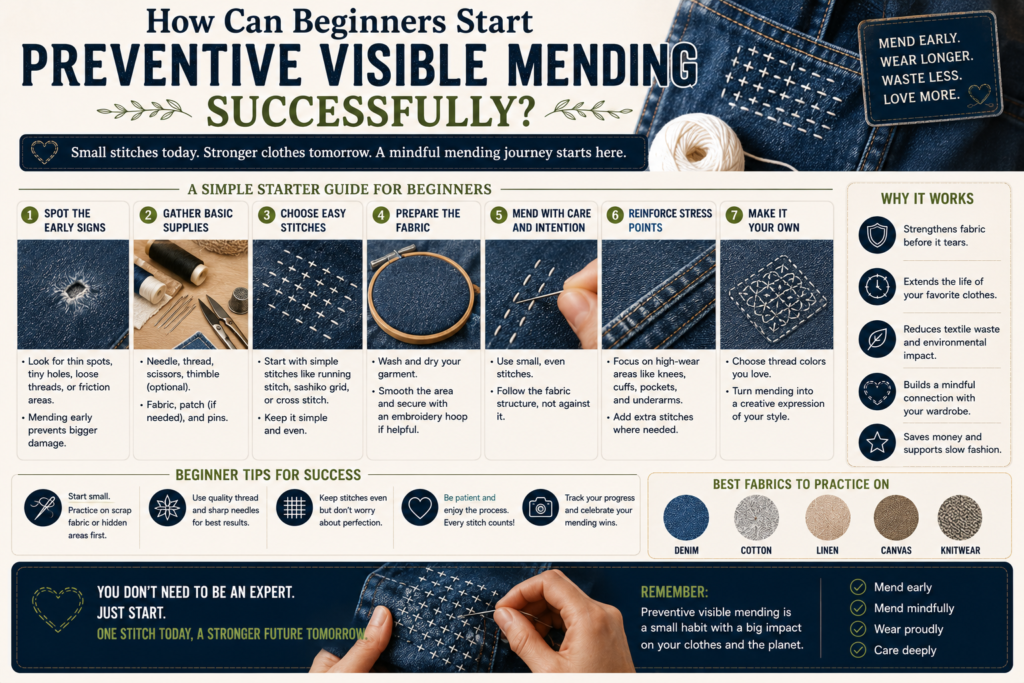
Beginners should start preventive visible mending by learning to identify early signs of fabric weakness before holes fully develop. Observation matters more than advanced stitching skill during the beginning stages. Simple reinforcement techniques often outperform overly decorative but structurally weak repairs.
A beginner-friendly process includes:
- Inspect frequently worn garments
- Identify thinning or soft areas
- Reinforce stress zones early
- Use strong cotton thread
- Start with simple running stitches
- Add backing fabric if needed
- Wash repaired garments gently
The easiest beginner projects include:
- Denim knees
- Shirt elbows
- Tote bag corners
- Pocket edges
- Jacket cuffs
Essential beginner tools include:
- Sashiko needles
- Cotton sashiko thread
- Fabric scraps
- Small scissors
- Chalk marker
- Thimble
Beginners often worry too much about decorative perfection. Structural consistency matters far more than perfectly symmetrical stitching during early learning. Slight irregularities rarely affect repair durability.
Choosing appropriate reinforcement density is important. Dense stitching strengthens heavily worn zones but can make lightweight fabric stiff. Softer reinforcement works better for flexible garments such as shirts and knitwear.
Thread tension should remain balanced. Overly tight stitches may pucker fabric and create new stress points, while loose stitches fail to stabilize weakened fibers effectively.
Studying real garment wear patterns helps beginners improve quickly. Over time, it becomes easier to predict where clothing will fail and reinforce those areas proactively.
Preventive visible mending gradually develops into a maintenance habit rather than a repair emergency. This mindset shift transforms clothing care into a long-term sustainable practice focused on preservation instead of disposal.
What Are the Best Areas to Reinforce Before Holes Start?
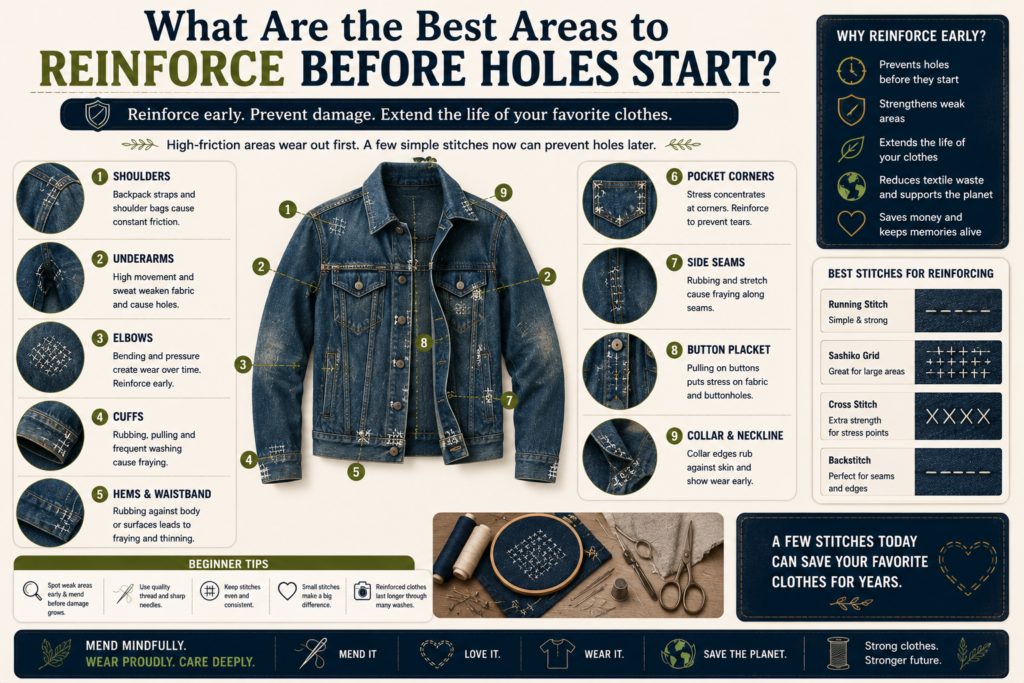
Some garment zones consistently develop damage faster because they experience continuous friction, pressure, and bending during daily wear. Reinforcing these high-risk areas early provides the greatest long-term durability improvement while reducing the likelihood of emergency repairs later.
Inner thighs remain one of the most common failure points in denim because repeated leg movement creates constant abrasion that gradually weakens the weave. Elbows and cuffs also deteriorate quickly due to repetitive folding and surface friction. Reinforcing these zones before visible tearing begins can dramatically extend garment lifespan.
The highest-priority reinforcement areas include:
- Jean inner thighs
- Knees
- Elbows
- Pocket corners
- Collar folds
- Shirt cuffs
- Seat areas
- Tote bag straps
Different garments produce different wear patterns depending on movement habits and fabric weight. Heavy workwear usually develops stress around seams and knees, while lightweight shirts often weaken at elbows and collar folds first.
Preventive visible mending works best when reinforcement targets predictable friction zones rather than waiting for random damage to appear. Small sashiko grids or lightweight support patches applied early often prevent severe tearing entirely.
Understanding garment stress patterns helps transform visible mending from reactive repair into proactive textile maintenance focused on long-term durability
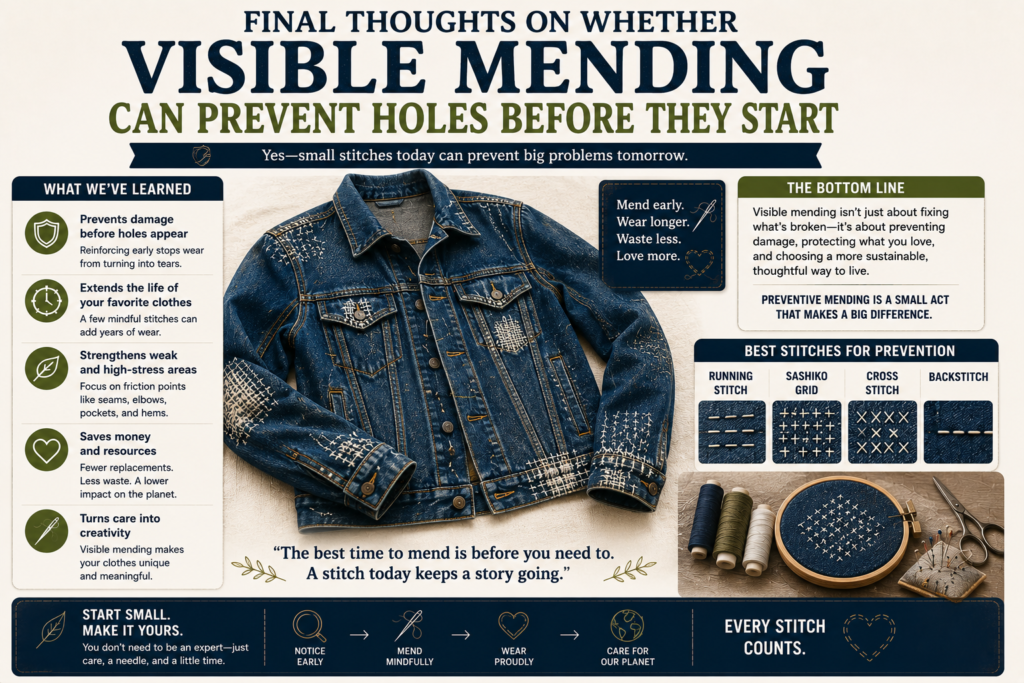
Final Thoughts on Whether Visible Mending Can Prevent Holes Before They Start
Visible mending can absolutely prevent holes before they start when reinforcement is applied early to weak or high-friction fabric areas. Preventive sashiko stitching, layered patch reinforcement, and structural support techniques slow abrasion, stabilize fibers, and distribute stress more evenly across garments before catastrophic damage develops.
The most successful preventive repairs happen during the thinning stage rather than after full tearing occurs. Reinforcing vulnerable zones early creates stronger, cleaner, and longer-lasting repairs while preserving more of the original fabric structure.
Preventive visible mending offers benefits far beyond simple repair. It supports sustainable fashion, reduces textile waste, lowers replacement costs, and reconnects people with traditional garment maintenance skills. Clothing becomes more durable, personal, and meaningful through visible reinforcement.
Traditional Japanese boro practices demonstrated that garments could survive decades through continuous care and layered repair. Modern visible mending continues this philosophy by transforming maintenance into both practical craftsmanship and artistic textile preservation.
For people interested in sustainability, slow fashion, or durable clothing care, preventive visible mending provides one of the most effective ways to extend garment lifespan before holes ever begin.
FAQ Section
Can visible mending stop holes from forming?
Yes. Reinforcing thinning fabric early can slow abrasion, stabilize fibers, and prevent weak spots from developing into full holes.
What areas should be reinforced first?
Inner thighs, knees, elbows, cuffs, pocket corners, and seat areas usually wear out fastest and benefit most from preventive reinforcement.
Is sashiko good for preventive mending?
Yes. Sashiko stitching distributes stress across fabric evenly, helping prevent tearing and fiber separation in high-friction zones.
Does preventive mending work on thin fabrics?
Yes, but lightweight fabrics often need backing patches or softer stitching tension for proper structural support.
Can beginners do preventive visible mending?
Absolutely. Basic running stitches and small reinforcement patches are beginner-friendly and highly effective.
Which fabrics respond best to preventive visible mending?
Denim, cotton, canvas, linen, wool, and hemp fabrics usually respond best because they remain structurally repairable after wear begins.
Does preventive visible mending make clothes last longer?
Yes. Early reinforcement can extend garment lifespan significantly by slowing progressive damage and reducing structural stress.