Japanese boro clothing is one of the most respected textile traditions to survive into modern fashion. Rooted in centuries of necessity in Japan, boro transformed worn garments into layered, durable, and deeply personal pieces through repeated patching and reinforcement. Today, boro clothing is no longer just about survival. It has become a symbol of sustainability, craftsmanship, and slow fashion.
In denim culture, boro and indigo are naturally connected. Both celebrate aging, wear patterns, and repair as part of a garment’s life story. Whether it is a pair of heavily repaired jeans or a hand-stitched indigo jacket, boro turns damage into design. This guide explains the history, philosophy, styling, and practical repair methods behind Japanese boro clothing and denim.
What Is Japanese Boro Clothing?
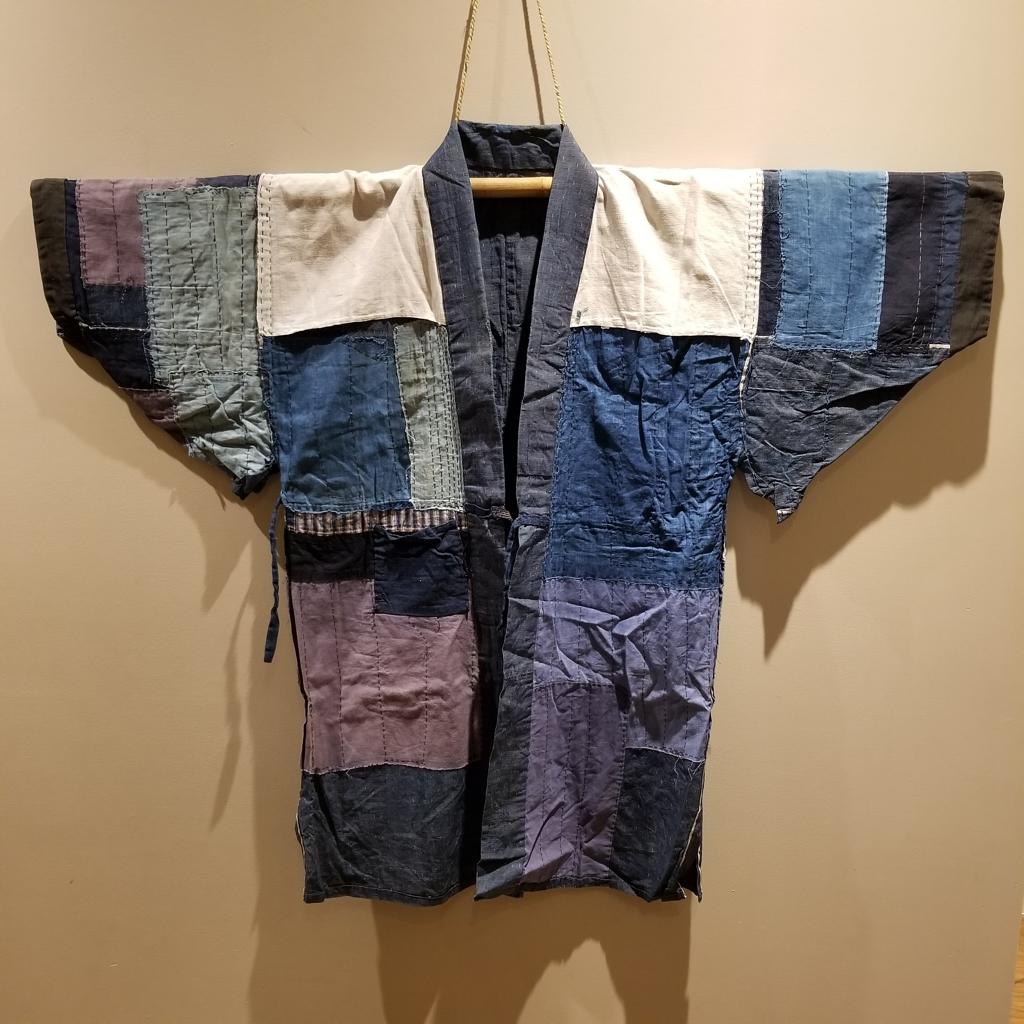
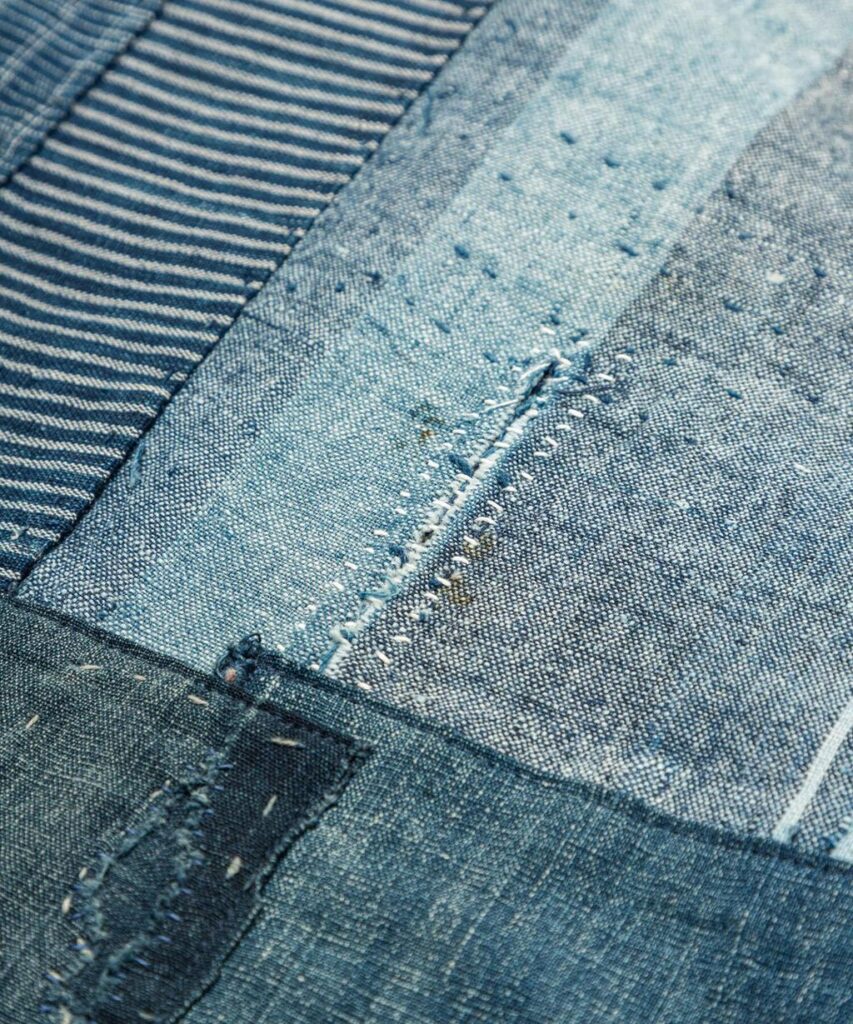
Japanese boro clothing refers to garments repaired and reinforced through layered fabric patches and visible stitching. The word “boro” translates loosely to “ragged” or “tattered,” but in textile history, it means much more. It represents preservation. It is a philosophy of extending life rather than replacing what is worn.
Historically, boro emerged from necessity. Rural families in Japan could not afford new fabric, so clothing was repaired repeatedly over generations. Old cotton scraps, often dyed with indigo, were stitched over weak areas. This created layered garments with remarkable strength and visual character. Over time, these repairs formed unique patterns that became the garment’s identity.
Modern boro clothing combines this heritage with fashion. What was once a survival method is now appreciated as wearable art.
Key characteristics of boro clothing:
- Layered patchwork construction
- Visible hand stitching
- Heavy use of indigo fabrics
- Structural reinforcement
- Unique aging patterns
Today, boro clothing appears in jackets, jeans, shirts, and bags. The beauty lies in its imperfections. No two pieces are ever identical.
The History of Boro in Japanese Workwear
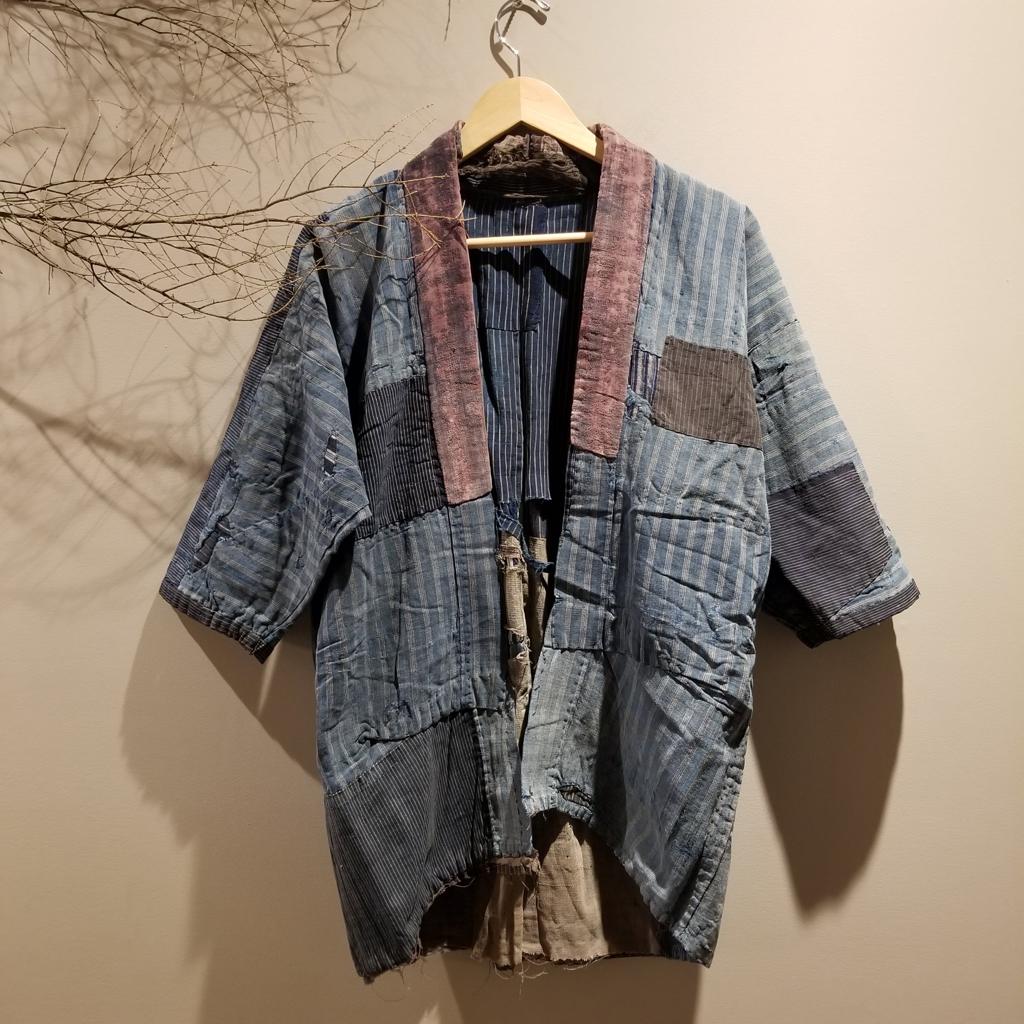
The roots of boro clothing go back to the Edo period, when cotton was scarce and expensive. Rural communities had limited access to textiles, especially in northern Japan. Clothing became a long-term investment, and repairing it was a necessity.
Farmers, fishermen, and laborers relied heavily on durable garments. These clothes faced constant stress from physical work and harsh weather. Instead of discarding damaged pieces, they added fabric patches to reinforce weak areas. This repeated repair cycle created strong, practical garments.
Indigo dye became common because it was affordable and had antibacterial properties. Indigo-dyed cotton was easier to maintain and layered well with older fabrics. Over time, boro garments evolved into thick, patchworked workwear that could last decades.
Historical roles of boro:
- Farmer jackets
- Fishing coats
- Work aprons
- Bedding textiles
- Family heirloom garments
Many authentic antique boro textiles today show generations of repair. Each patch tells part of the garment’s history. That human connection is part of why boro remains culturally powerful.
If you build an interest along the way and want to know the true history of Japanese Boro Stitching, refer to our expert guide detailing every last historical and modern significance of boro, which started in Japan’s Edo Period.
Why Denim and Boro Naturally Work Together
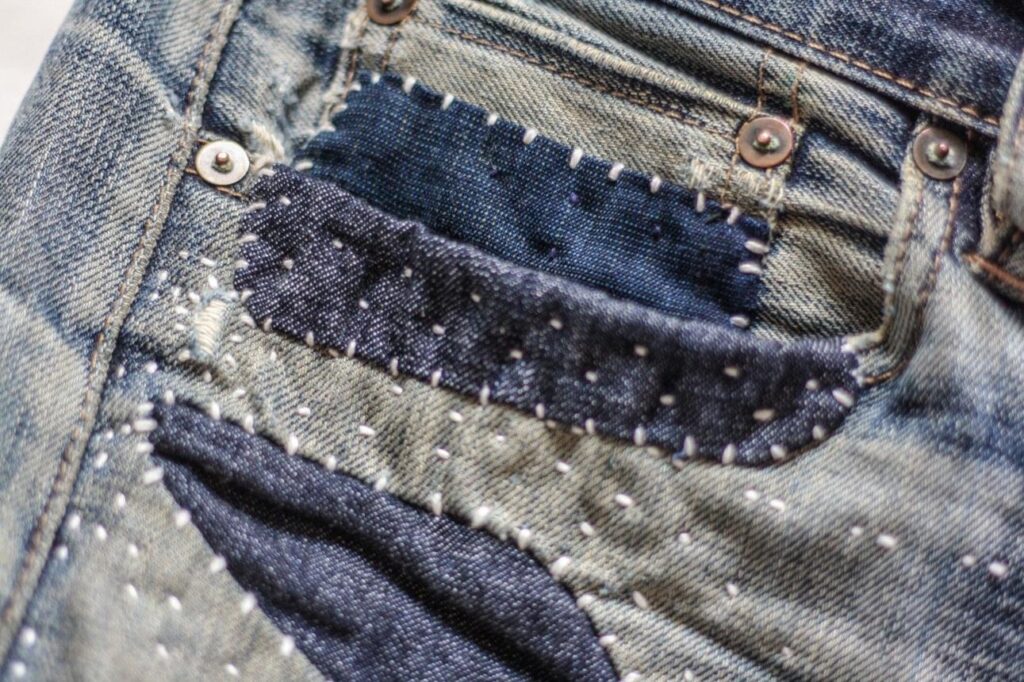
Denim and boro share the same philosophy: durability through wear. Both become better with age, and both tell a visual story through fading, stress, and repair. That is why boro denim has become so popular in heritage fashion communities.
Denim naturally weakens in high-friction areas. Knees, thighs, pockets, and crotch seams often fail first. Boro repair strengthens these areas using patch layering and stitching. Instead of hiding damage, it highlights it.
Indigo denim and indigo patch fabric also blend visually. As they age together, the repair becomes integrated into the garment’s identity.
Why denim works with boro:
- Similar cotton construction
- Indigo compatibility
- Strong stitch holding
- Easy patch integration
- Better aging aesthetics
Raw denim especially benefits from boro repair because it develops unique fade patterns around stitched areas. The repaired sections often become the most visually interesting parts of the jeans.
This is why denim enthusiasts often prefer repair over replacement. Every repair adds value.
Best Fabrics for Japanese Boro Clothing Repairs
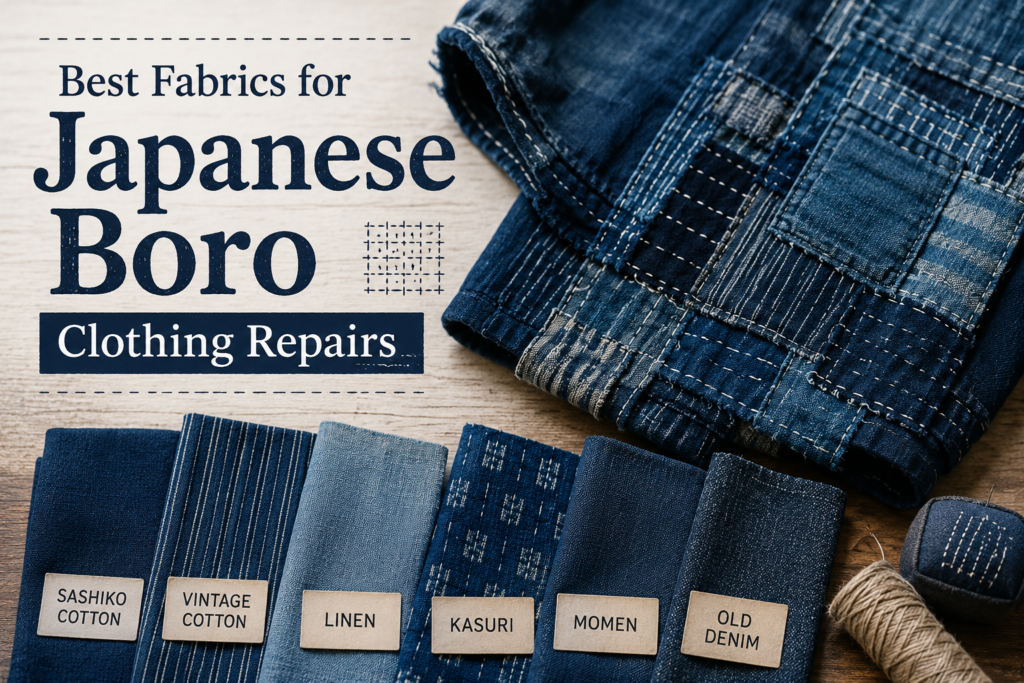
Not all fabrics perform equally in boro repairs. Traditional boro relied heavily on cotton because it was durable, breathable, and easy to stitch by hand. Today, choosing the right repair fabric affects both strength and aging behavior. The closer the patch fabric matches the original garment’s weight and flexibility, the stronger and more natural the repair becomes over time.
For denim repairs, old denim remains the best option because it shares similar wear patterns and tension behavior. Linen works well for lighter garments because it is strong and flexible. Hemp is highly durable and historically accurate in some Japanese textile traditions. Indigo-dyed fabrics are especially valued because they fade naturally with the garment, making repairs blend better over time.
Best fabrics for boro repair:
- old denim
- cotton canvas
- linen
- hemp
- indigo-dyed cotton
Avoid synthetic fabrics because they wear differently and often weaken stitch durability
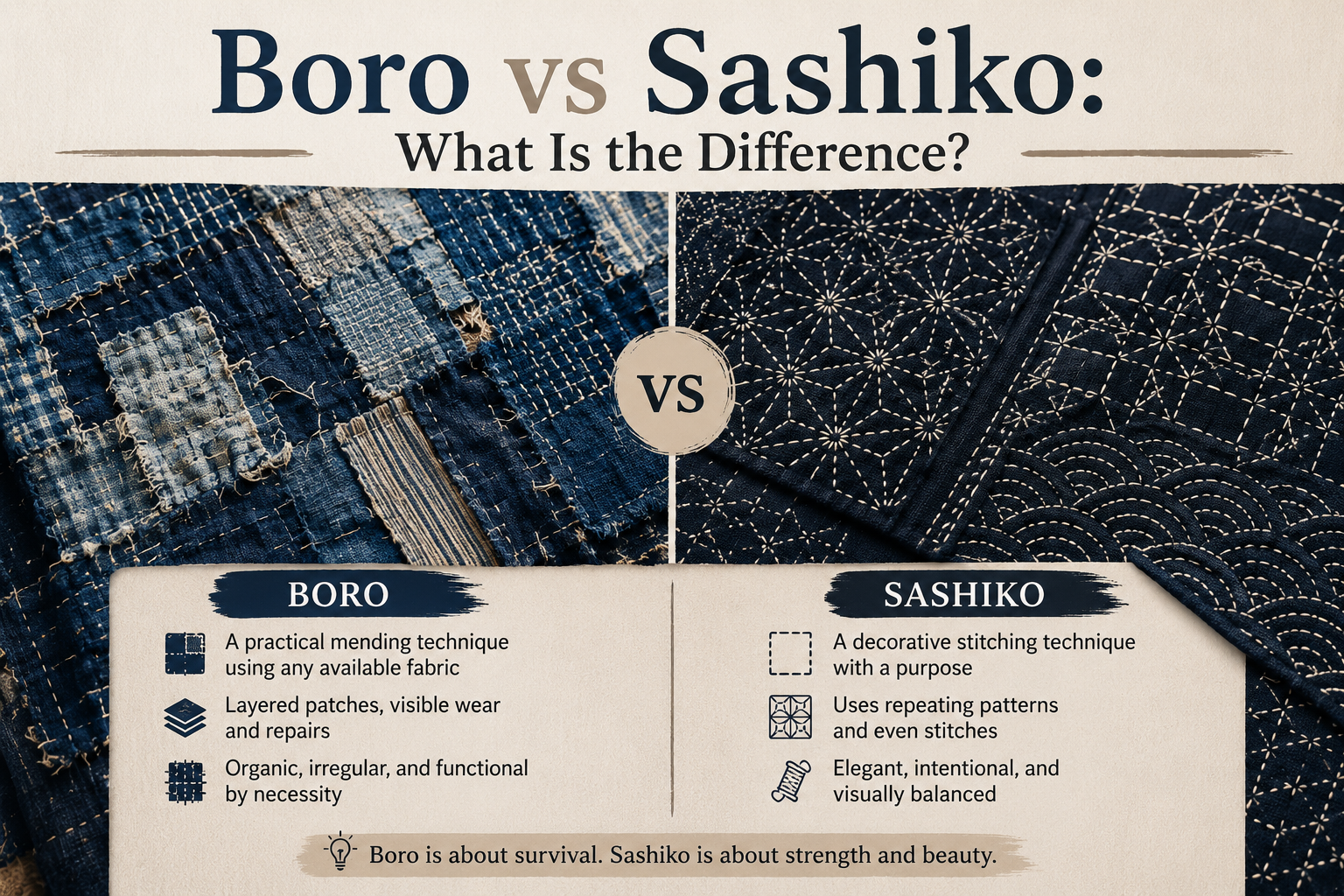
Boro vs Sashiko: What Is the Difference?
Many people confuse boro with Sashiko, but they are not the same thing. They work together, but their roles are different.
Boro is the overall repair philosophy. It involves layering fabric patches to strengthen or preserve a garment. Sashiko is the stitching method often used to secure those patches.
Have a read of our expertly analyzed Boro vs Sashiko Comparison for some rich historical and technical knowledge.
Think of it this way:
Boro = structure
Sashiko = stitching system
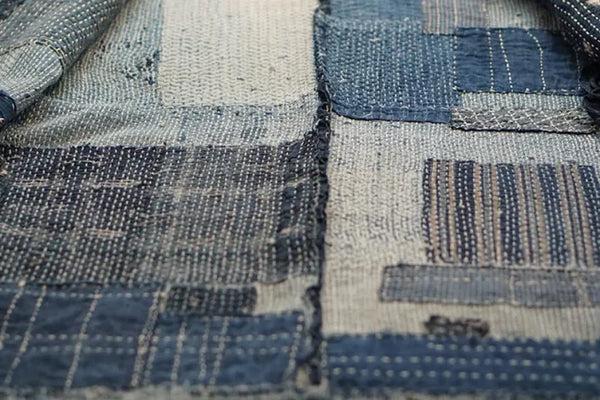
Sashiko uses repetitive running stitches in geometric patterns. These stitches distribute tension evenly across the repair area. This makes the garment stronger.
Main differences:
- Boro focuses on patching
- Sashiko focuses on stitching
- Boro is broader in purpose
- Sashiko is technical in execution
- Boro can exist without decorative patterns
Modern fashion often uses sashiko patterns for decoration, but traditional sashiko was practical. It reinforced fabric and prevented tearing.
Understanding this difference helps you build authentic repairs instead of just decorative stitching.
How Boro Denim Repair Works
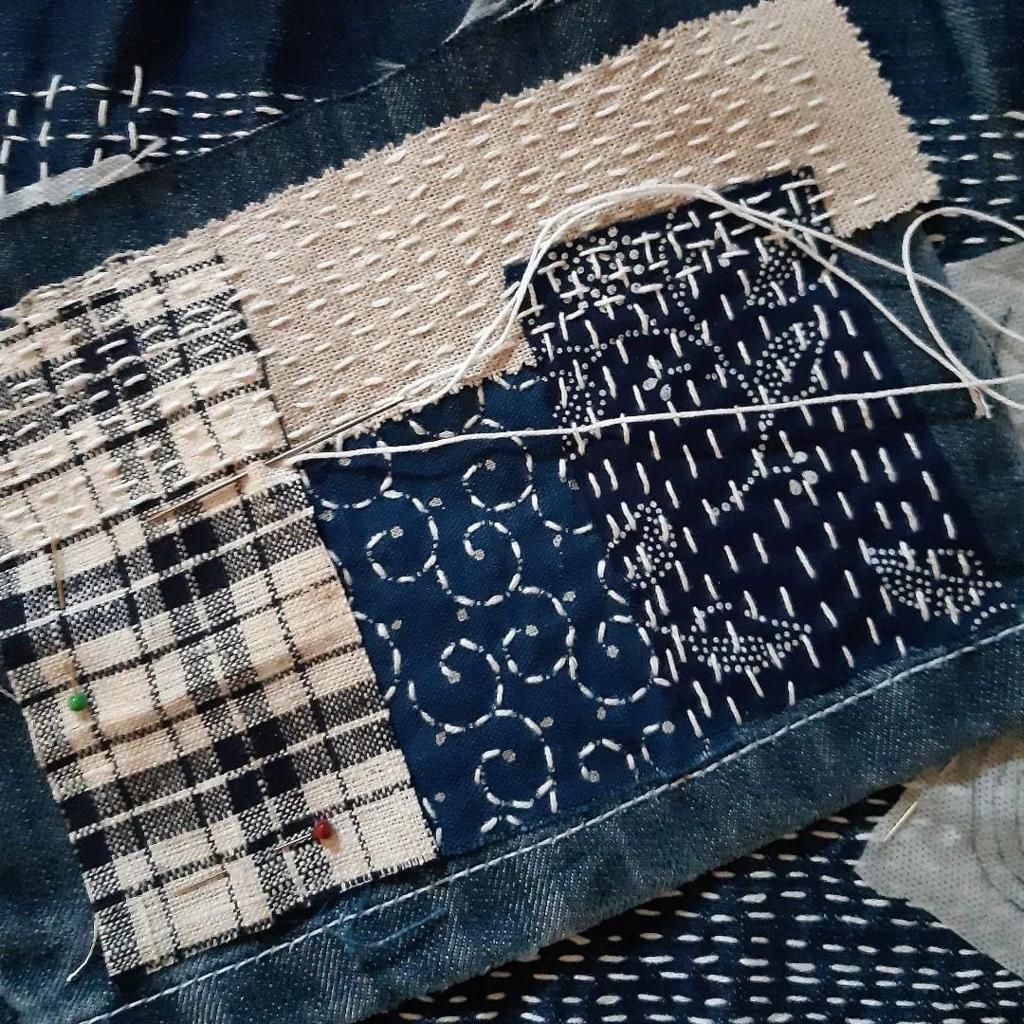
Boro denim repair begins by identifying structural damage. The goal is reinforcement, not cosmetic repair. Weak denim fibers must be supported with stronger fabric behind or over the damaged area.
First, inspect the damage. Blowouts around knees and crotch zones need wider patch coverage because stress extends beyond visible tears. Small holes may need only internal reinforcement.
Next, select a patch fabric. Old denim works best because it matches flexibility and durability. Indigo cotton or linen can also work.
Repair process:
- Clean the damaged area
- Cut patch larger than damage
- Position patch under or over hole
- Pin securely
- Stitch with running stitch
- Reinforce edges
The stitching pattern matters. Dense rows improve durability, while wider spacing allows flexibility.
The best boro repairs are balanced. Too much stitching stiffens denim. Too little stitching weakens the patch.
Good repair improves both structure and appearance. Over time, repaired areas fade differently and create beautiful wear contrast.
Traditional Boro Stitch Patterns and Their Functions
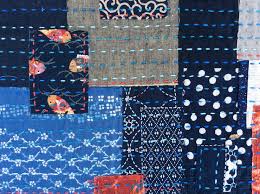
Boro stitching is often mistaken as random hand sewing, but traditional repairs follow practical patterns designed to distribute tension. The most common is the running stitch, which allows flexibility while holding patch layers securely. This stitch adapts well to denim because it moves with the fabric instead of resisting movement.
Some repairs use grid-based reinforcement, where horizontal and vertical stitching create structural stability. This is especially useful in high-stress areas like knees and crotch zones. Layered stitch mapping helps prevent patch shifting after repeated wear and washing.
Common boro stitch patterns:
- straight running stitch
- cross-grid stitching
- layered reinforcement rows
- edge-locking stitches
- directional tension stitching
Choosing the right stitch pattern depends on the damage zone and how much movement the garment experiences.
Best Clothing Pieces for Boro Style
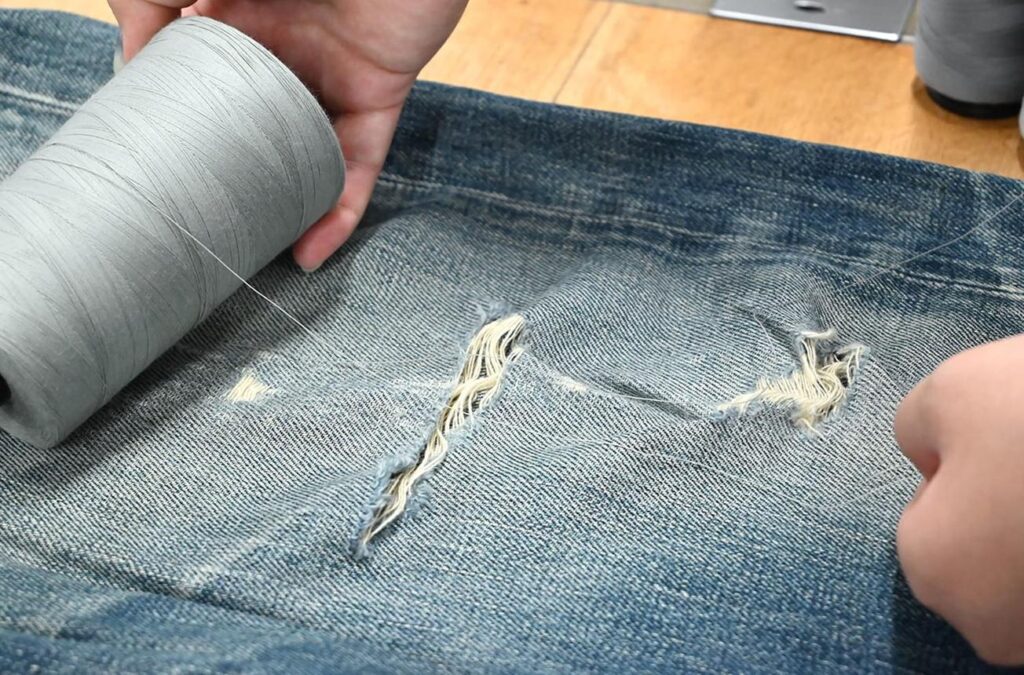
Boro works especially well on garments exposed to regular wear. Some clothing pieces naturally suit patching and visible repair better than others.
Boro jackets are among the most iconic examples. They offer large surface areas for patch layering and visible stitching. Boro jeans are equally popular because denim develops beautiful contrast around repaired zones.
Shirts can also use lighter boro techniques. Small patch areas around elbows or shoulders add detail without overwhelming the garment.
Popular boro clothing types:
- Denim jackets
- Workwear jackets
- Jeans
- Shirts
- Tote bags
- Aprons
Accessories like bags and aprons also work well because they handle stress and naturally wear over time.
The best boro pieces are functional. High-use garments develop natural repair opportunities, which makes the aesthetic more authentic.
That practical foundation is what separates real boro style from manufactured fashion imitation.
How to Style Japanese Boro Clothing
Styling boro clothing requires balance. Boro garments already carry heavy visual texture, so surrounding pieces should support rather than compete.
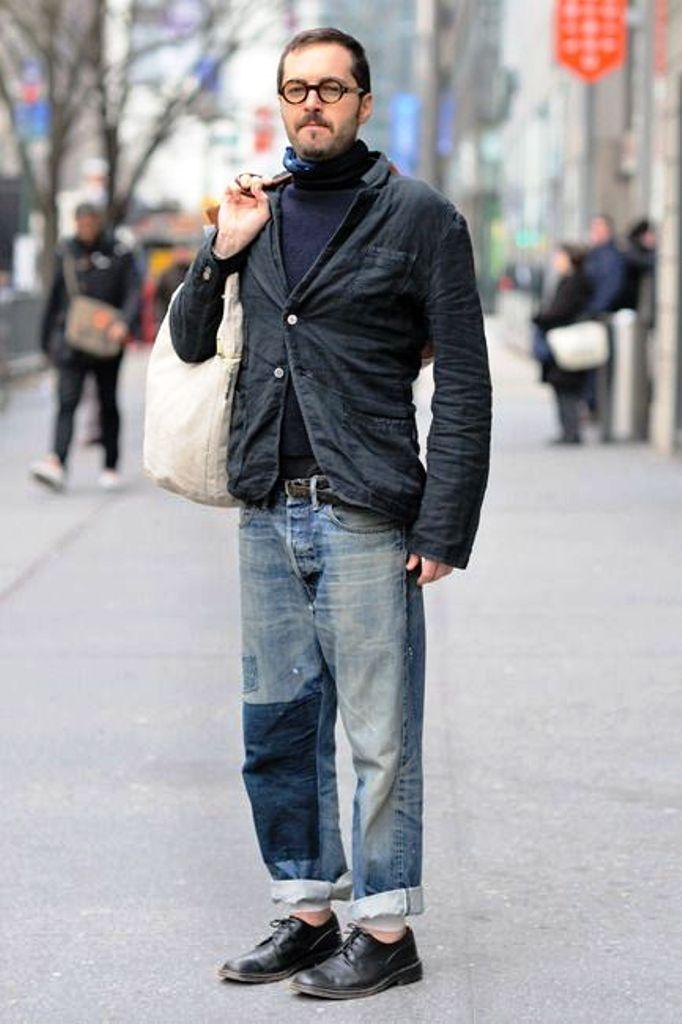
Minimal styling works best. Pair a boro jacket with plain denim or neutral trousers. Let the repaired garment remain the focal point.
Boots and workwear-inspired footwear naturally complement boro aesthetics. Leather ages similarly to denim, creating visual harmony.
Styling ideas:
- Boro jacket + white tee
- Boro jeans + boots
- Indigo shirt + raw denim
- Neutral trousers + boro vest
- Layered workwear outfit
Streetwear also embraces boro styling. Oversized silhouettes, layered textures, and visible repair align with modern fashion trends.
The key is authenticity. Boro looks strongest when worn naturally, not over-styled.
Wear patterns, fades, and texture should speak for themselves.
Modern Brands Inspired by Japanese Boro Clothing
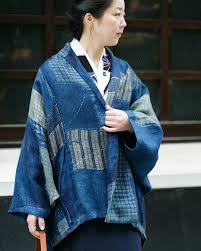
Several modern brands have helped bring boro aesthetics into global fashion. These brands respect traditional Japanese repair philosophy while adapting it for modern silhouettes and wearable design. Their influence has introduced boro to denim collectors, workwear enthusiasts, and streetwear communities.
Kapital is widely recognized for heavily patched indigo garments inspired by antique boro textiles. Visvim blends luxury craftsmanship with repair aesthetics. FDMTL focuses heavily on patchwork denim construction.
Popular boro-inspired brands:
- Kapital
- Visvim
- FDMTL
- Blue Blue Japan
- Kuon
Studying these brands helps beginners understand how traditional boro translates into modern fashion.
Is Boro Clothing Sustainable Fashion?
Boro is one of the oldest forms of sustainable fashion. Long before sustainability became a marketing term, boro represented textile preservation through repair.
Fast fashion depends on disposal. Boro depends on maintenance. That difference matters.
Repairing garments reduces textile waste, lowers replacement demand, and increases garment lifespan. Instead of discarding jeans after damage, boro repair extends their usefulness.
Sustainability benefits:
- Less textile waste
- Lower production demand
- Longer garment life
- Reduced landfill impact
- Stronger consumer connection
Boro also changes how people value clothing. Repaired garments become personal. They carry visible history.
This emotional durability reduces impulse replacement. People keep repaired garments longer.
That is one reason younger generations interested in slow fashion and visible mending are adopting boro methods again.
How to Start Making Your Own Boro Denim
Starting your own boro denim project is simpler than many people think. You do not need expensive tools. Traditional boro began with basic materials.
Start with damaged denim. High-wear jeans are ideal for learning. Choose patch fabric similar in weight to the denim itself.
Basic tools:
- Hand-sewing needle
- Strong cotton thread
- Patch fabric
- Fabric scissors
- Pins
Begin with small repairs. Practice on knee tears or pocket edges before moving to large blowouts.
Beginner tips:
- Keep stitch spacing even
- Use strong thread tension
- Avoid oversized patches
- Reinforce beyond the tear
- Wash after repair to settle stitches
The goal is not perfection. Slight irregularity is part of boro’s beauty.
Over time, your technique improves, and your repairs become stronger and more expressive.
How to Wash and Maintain Boro Denim Clothing
Boro denim requires different care than untouched denim because stitched repairs create multiple fabric tension points. Washing too aggressively can weaken thread tension or cause patch edges to lift. Proper maintenance keeps both the repair and the garment stable.
Hand washing is often the safest option for heavily repaired garments because it reduces stress on stitched areas. If machine washing is necessary, turning denim inside out and using cold water helps protect the repair structure. Air drying is strongly recommended because high heat can shrink patch fabric unevenly.
Maintenance rules:
- wash inside out
- use cold water
- avoid harsh spin cycles
- air dry only
- inspect stitches after washing
Regular inspection helps catch loose threads before they become structural failures.
Common Boro Repair Mistakes Beginners Make
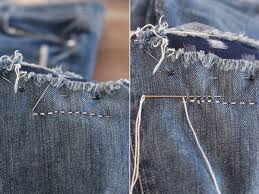
Beginners often focus too much on appearance and ignore structural function. Traditional boro is repair-first. If the patch does not reinforce the damaged area correctly, the repair may fail quickly under stress.
One common mistake is using fabric that is too light. Thin patches wear faster than the original garment. Another is stitching too close together, which can stiffen denim and reduce comfort. Small patches are also risky because damage usually extends beyond visible holes.
Common mistakes:
- weak patch fabric
- patch too small
- uneven stitch spacing
- poor thread tension
- ignoring surrounding wear zones
Strong boro repairs balance durability, flexibility, and wear compatibility
Why Authentic Japanese Boro Clothing Costs More
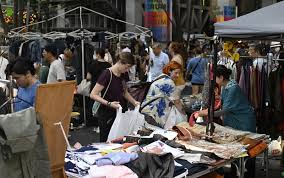
Authentic boro clothing costs more because it represents labor-intensive craftsmanship. Unlike mass-produced distressed clothing, boro garments involve hand repair, fabric selection, patch placement, and stitching that often takes hours or days to complete.
Vintage boro pieces can cost even more because they contain historical textile layers that cannot be reproduced authentically. The age of the fabric, indigo fading, and visible repair history add collector value. Every repair carries labor and story, which increases both artistic and practical worth.
Cost factors include:
- hand stitching time
- vintage fabric sourcing
- repair complexity
- garment rarity
- collector demand
What looks simple from a distance often contains hundreds of stitches and years of wear history.
How to Spot Authentic Boro Clothing
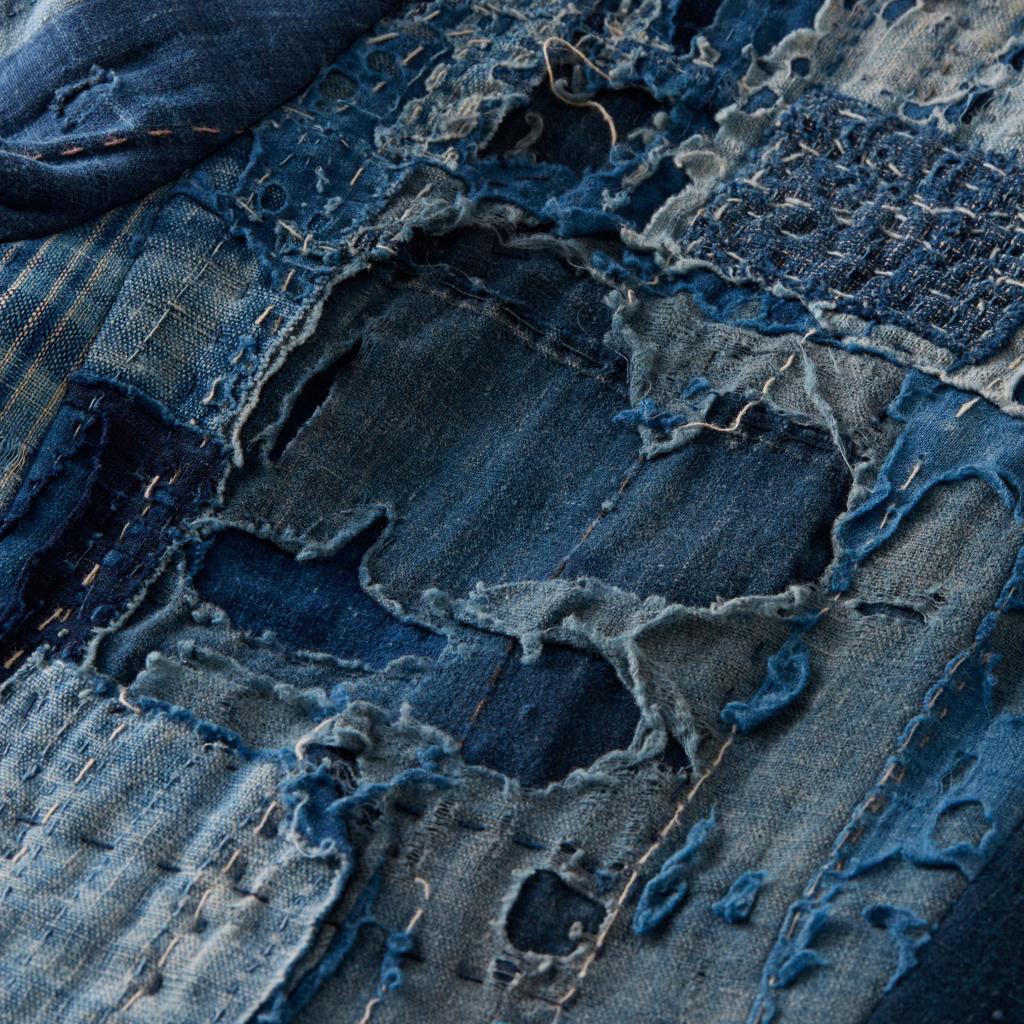
Authentic boro clothing has qualities that machine-made fashion struggles to replicate. Real boro repairs evolve naturally through use.
Look closely at stitch consistency. Traditional hand stitching often shows small irregularities. That human variation is important.
Fabric layering also matters. Authentic boro uses practical patch placement based on wear patterns, not decorative symmetry.
Signs of authenticity:
- Uneven hand stitching
- Natural fading patterns
- Functional patch placement
- Layered repair history
- Mixed fabric aging
Mass-produced boro-inspired clothing often looks too clean. Patches may appear decorative instead of structural.
Real boro tells a story of use. Damage, repair, and aging work together.
If the piece looks overly designed, it may be fashion-inspired rather than authentic.
Why Vintage Boro Clothing Has Become Collectible
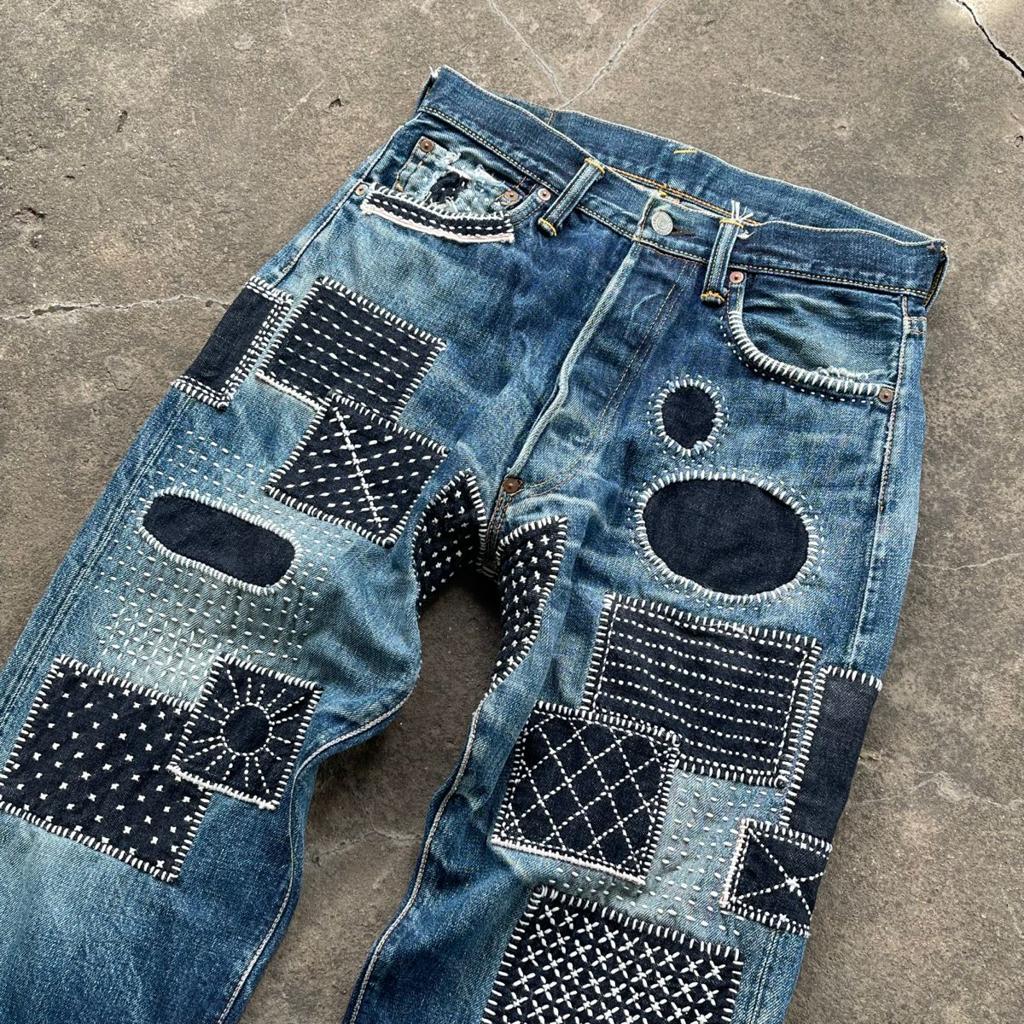
Vintage boro clothing has become collectible because it combines textile history, craftsmanship, and visual uniqueness. Unlike factory-made distressed garments, authentic boro pieces show real repair history built over years or generations.
Collectors value the irregular stitching, layered indigo patches, and natural wear mapping because these cannot be fully replicated. Museums and textile historians also recognize boro as an important part of Japanese rural history.
Why collectors value vintage boro:
- historical authenticity
- handmade repairs
- natural indigo aging
- unique wear patterns
- cultural significance
The older the piece and the richer the repair history, the more desirable it often becomes.
Why Boro Denim Keeps Getting Better With Age
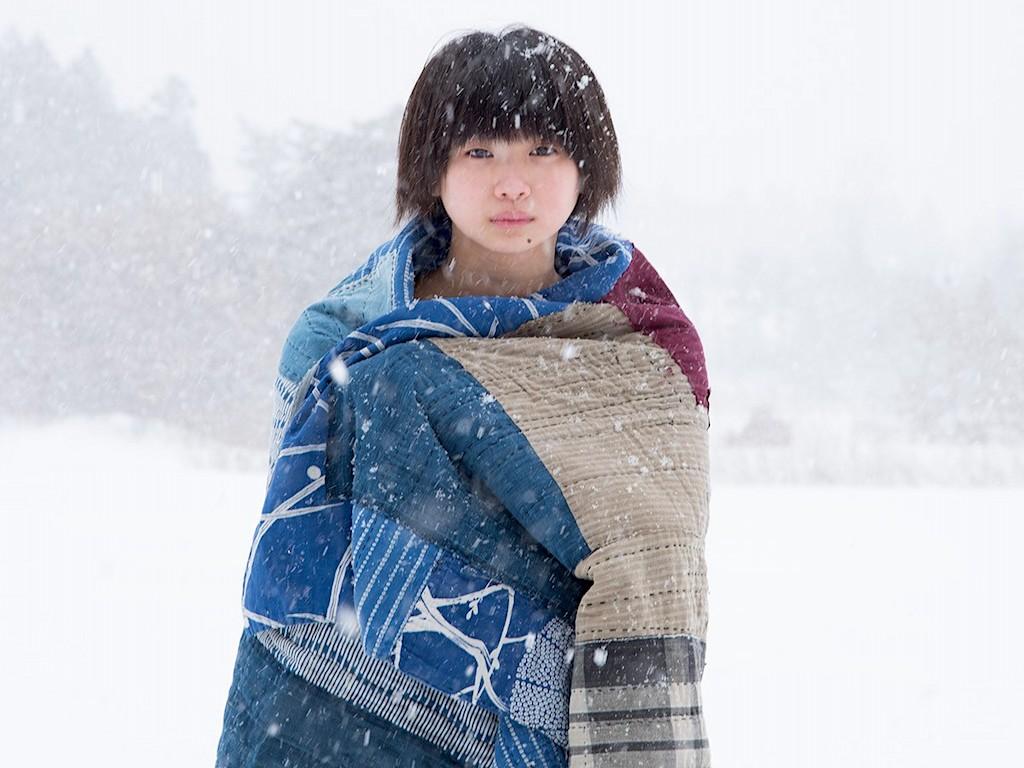
Boro denim improves because repair changes how fabric ages. Stitched areas fade differently. Patch edges soften. Indigo tones evolve.
This creates visual depth impossible in untouched denim.
As repaired denim bends, stretches, and wears, the patch and original fabric begin blending. Contrast lines soften, but stitch patterns remain visible.
Age benefits:
- Better fade contrast
- Softer texture
- Stronger character
- Visible repair history
- Personalized patina
Unlike mass-produced distressed jeans, boro denim earns its wear naturally. Every mark comes from use.
That authenticity is why collectors and denim enthusiasts value repaired garments so highly.
Boro does not hide age. It celebrates it.
That is the core philosophy behind Japanese boro clothing: use, repair, preserve, and continue.
FAQs
Can boro stitching be done with a sewing machine?
Yes, but hand stitching gives better flexibility and authenticity. Sewing machines create faster repairs, but traditional boro relies on hand-sewn tension control.
What thread is best for boro denim repair?
Strong cotton sashiko thread is best because it handles tension well and ages naturally with denim.
How long does boro repair last?
A properly done boro repair can last for years, especially if the patch fabric matches the original garment weight.
Can you use old jeans as boro patch fabric?
Yes. Old denim is one of the best patch materials because it matches durability and wear behavior.
Does washing damage boro stitching?
Not if washed carefully. Cold water and air drying help preserve stitch integrity.
Is boro only for denim?
No. Boro can be used on cotton jackets, shirts, bags, aprons, and other woven garments.