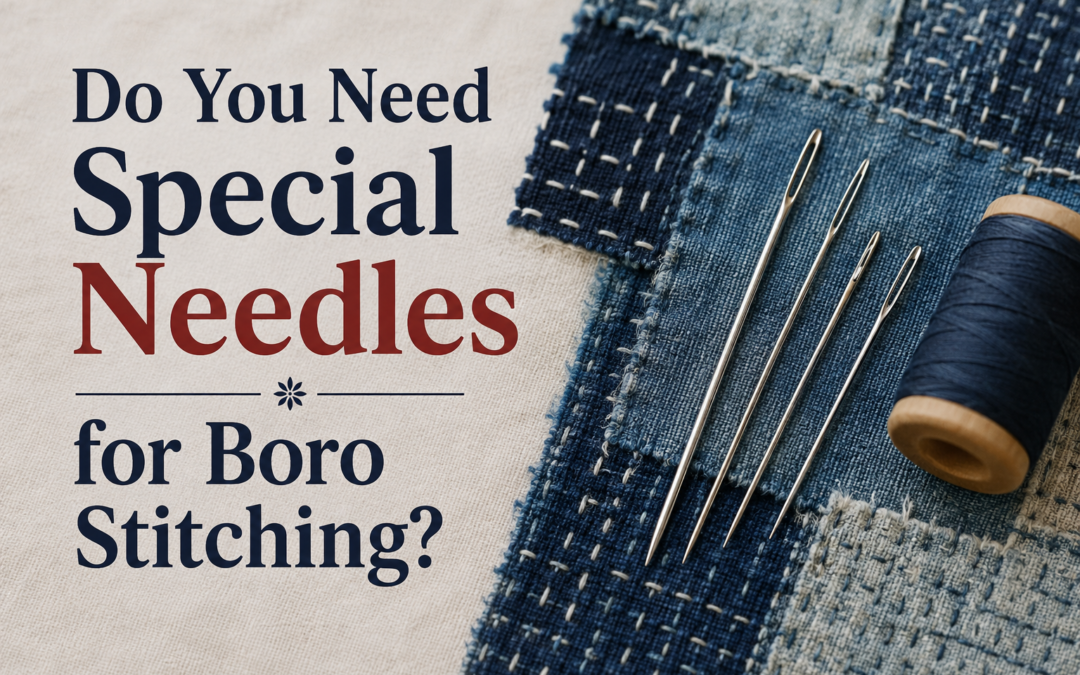
Japanese Boro stitching does not strictly require specialized needles, but the needle type strongly affects stitching control, repair durability, fabric handling, and overall comfort during long sewing sessions. Traditional Japanese boro repairs often relied on long sashiko-style needles because they made repeated running stitches easier across layered indigo textiles. Modern visible mending still follows many of the same practical principles. This guide breaks down all the different various ambiguous thoughts and ideas surrounding the matter in: “Do You Need Special Needles for Boro Stitching?”
Beginners can technically start with ordinary sewing needles or embroidery needles. However, many people quickly notice that longer sashiko needles improve stitch rhythm and reduce frustration, especially when working with denim, hoodies, canvas, or thick layered patches. Needle selection becomes even more important when combining decorative visible mending with structural clothing reinforcement.
The best boro needle depends on:
- Fabric thickness
- Thread weight
- Repair size
- Stitch density
- Hand comfort
- Decorative vs functional goals
Unlike machine sewing, boro stitching relies heavily on hand rhythm and fabric feedback. A poorly matched needle often causes uneven stitches, thread fraying, hand strain, and fabric puckering. Choosing the correct needle improves both appearance and long-term durability.
Modern boro stitching also overlaps with:
- Sashiko stitching
- Visible mending
- Slow stitching
- Denim repair
- Sustainable fashion repair
- Handmade textile restoration
This guide explains which needles work best, how traditional sashiko needles differ from regular sewing needles, when beginners should upgrade tools, and how needle choice affects modern boro repair quality.
Why Needle Choice Matters in Boro Stitching
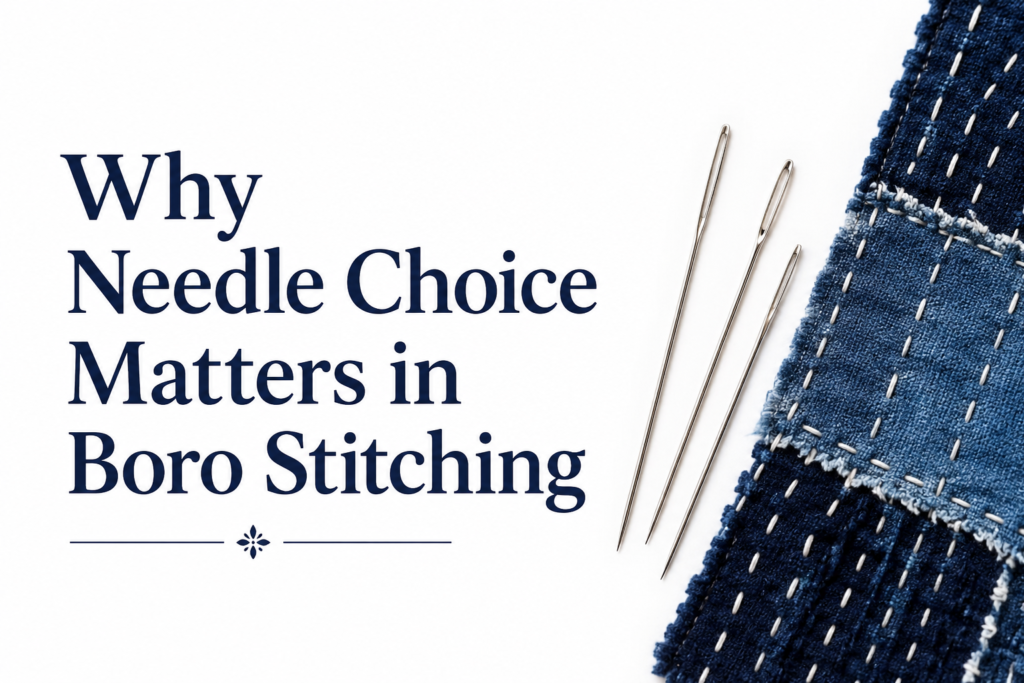
Needle choice affects almost every part of boro stitching. Unlike ordinary clothing repair, boro often involves layered fabric construction, repeated running stitches, and dense reinforcement patterns. The needle becomes a major factor in how smoothly the stitching process flows across the textile surface.
Traditional Japanese boro developed through practical clothing preservation. Rural families repeatedly repaired workwear, blankets, and household textiles using layered stitching techniques. Because fabric was valuable, repairs needed to remain durable while allowing garments to continue flexing naturally during daily labor.
This practical history explains why long running-stitch needles became strongly associated with sashiko and boro work. Longer needles allow multiple stitches to be loaded before pulling the thread through. This improves rhythm and helps maintain more even stitch spacing across large repair areas.
A poor needle choice commonly creates problems such as:
- Bent needles
- Uneven stitch spacing
- Excessive hand fatigue
- Fraying thread
- Fabric distortion
- Slow stitching rhythm
- Broken thread tension
Needle selection becomes especially important on:
- Denim knees
- Hoodie elbows
- Canvas bags
- Thick jacket seams
- Layered visible mending patches
- Heavy cotton textiles
Modern visible mending artists often combine decorative stitching with structural reinforcement. In these cases, the needle must penetrate several fabric layers without enlarging holes or damaging surrounding fibers.
Many beginners initially assume thread matters more than the needle. In reality, both tools work together as a system. Even high-quality sashiko thread performs poorly if the needle eye is too small or the shaft is too weak for the fabric density being repaired.
Have a look at our expert blueprint on best fabric, needles and threads needed for boro stitching, to get to one step closer to an awesome boro stitch experience.
What Types of Needles Are Commonly Used for Boro Stitching?
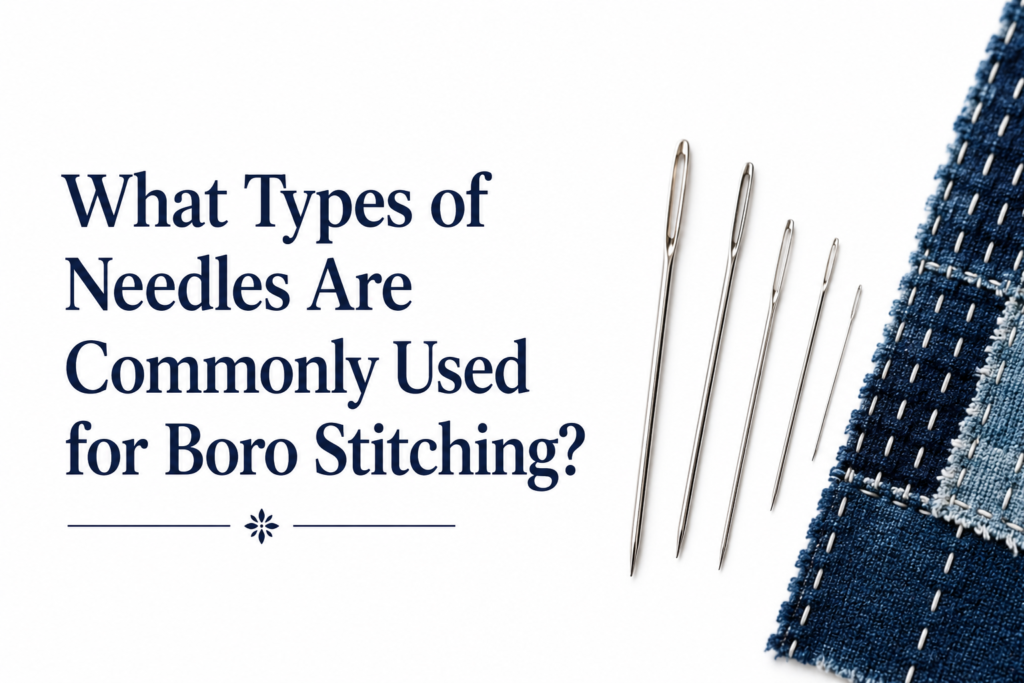
Several needle types can work for boro stitching, but some perform far better depending on the repair style and fabric thickness. Traditional sashiko needles remain the most commonly recommended option because they were specifically designed for repeated running stitches across layered textiles.
Unlike ordinary sewing needles, sashiko needles usually feature a longer shaft and a larger eye. These characteristics help thicker cotton thread glide more smoothly while allowing multiple running stitches to be gathered before pulling through the fabric.
The most commonly used needles in boro stitching include:
- Sashiko needles
- Embroidery needles
- Milliners needles
- Sharps
- Hand sewing needles
- Crewel needles
- Heavy-duty repair needles
Each type behaves differently during stitching. For example, embroidery needles work reasonably well for lightweight visible mending, but they may struggle on thick denim or stacked patch layers. Milliners needles create smoother running stitches because their shaft remains evenly narrow from end to end.
Sashiko needles are preferred for:
- Denim repair
- Repeated geometric stitching
- Thick layered patches
- Long running stitch patterns
- Structural reinforcement
- Large visible mending projects
Important needle characteristics include:
- Length
- Flexibility
- Strength
- Eye size
- Surface smoothness
- Penetration control
Some beginners mistakenly use leather needles on cotton garments. Leather needles have cutting tips designed to pierce hide, which can weaken woven fabric by enlarging holes unnecessarily.
Modern boro artists often experiment with different needle combinations depending on the garment type. A thinner needle may be used for decorative top stitching, while a stronger sashiko needle handles reinforcement layers underneath.
The best setup balances smooth stitching, fabric preservation, and long-term repair durability rather than strict adherence to historical tradition.
Are Sashiko Needles Different From Regular Sewing Needles?
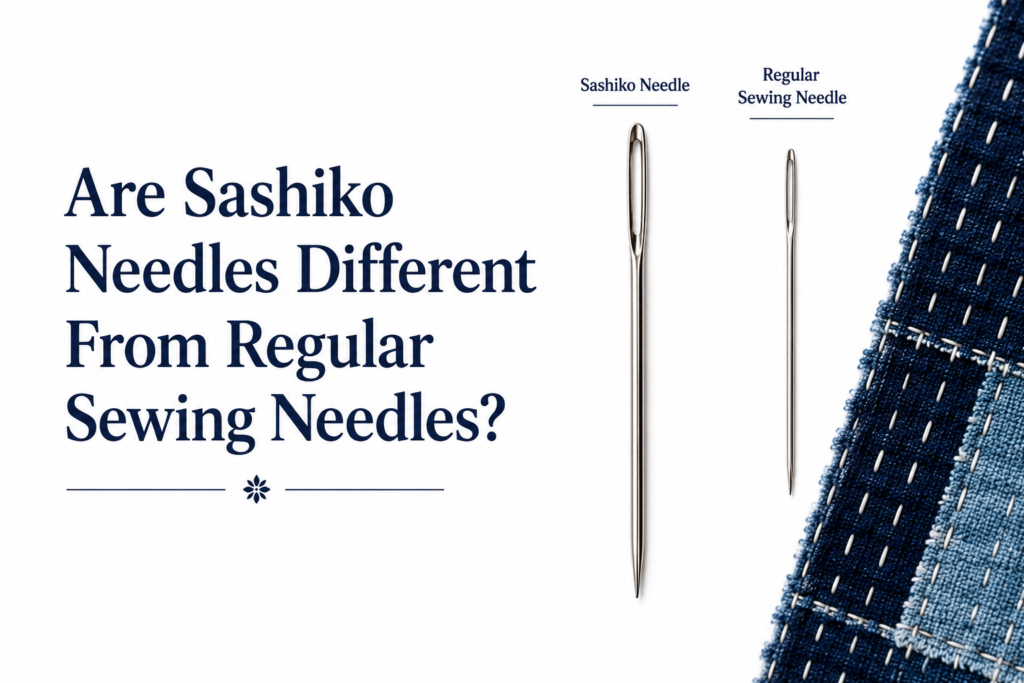
Sashiko needles differ significantly from ordinary sewing needles in both structure and intended stitching behavior. While regular needles are designed for general-purpose sewing, sashiko needles are optimized specifically for long running stitches across layered fabric surfaces.
The biggest difference is length. Sashiko needles are much longer, allowing several stitches to be loaded onto the shaft before the thread is pulled through. This creates the smooth stitching rhythm traditionally associated with sashiko and boro repair work.
Another major difference involves the eye size. Sashiko thread is usually thicker than ordinary sewing thread, so sashiko needles contain larger eyes that reduce thread friction and prevent excessive wear during stitching.
Key differences include:
- Longer shaft length
- Larger thread eye
- Smoother running stitch control
- Better layered fabric penetration
- Reduced thread abrasion
- Improved stitching rhythm
Regular sewing needles work best for:
- Small repairs
- Single-layer fabric
- Precision detail sewing
- Short stitches
Sashiko needles work better for:
- Layered repairs
- Denim reinforcement
- Long stitch rows
- Decorative visible mending
- Repeated running stitches
Many beginners immediately notice improved comfort after switching to sashiko needles. Stitch spacing becomes easier to control, especially when repairing larger garments like jeans or jackets.
Sashiko stitching also depends heavily on rhythm. The long needle helps create smoother repetitive movement that becomes difficult with short conventional needles. This is one reason why experienced visible mending artists often recommend upgrading tools early when practicing traditional-inspired boro work.
Despite these differences, beginners should not feel restricted by tool perfection. Skill development and stitch consistency matter more than owning expensive equipment during the early learning phase.
Why Cheap Needles Sometimes Damage Boro Repairs
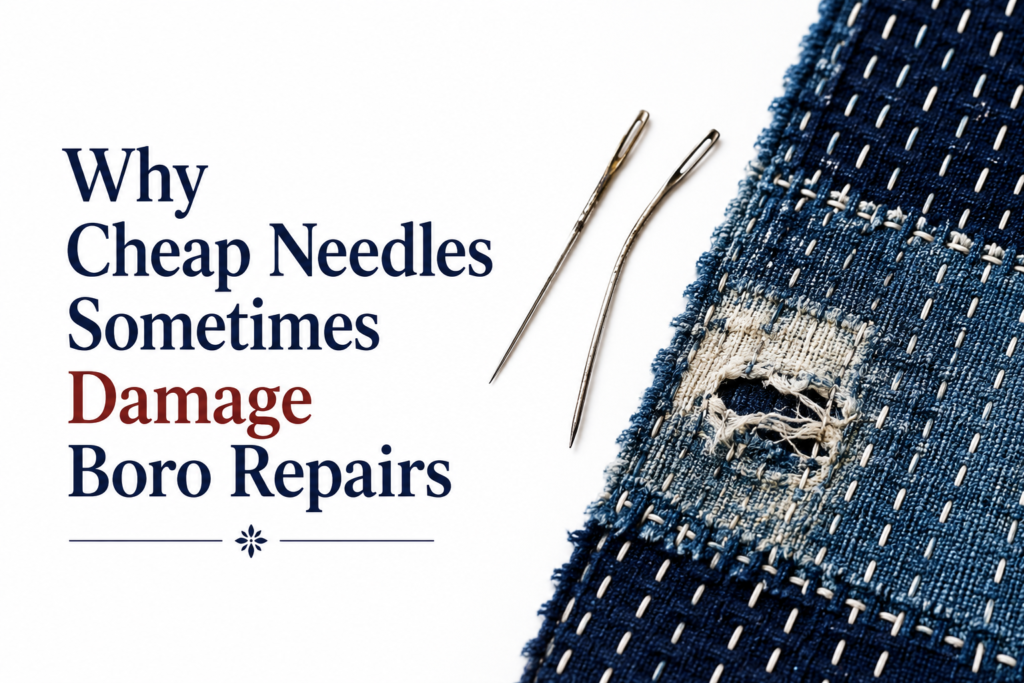
Cheap sewing needles often create problems that beginners incorrectly blame on their stitching technique. Low-quality needles may contain rough edges, weak steel, inconsistent shaft shaping, or poorly finished eyes that increase thread friction during repeated running stitches.
One of the most common issues involves rough needle eyes slowly shredding cotton thread during long stitching sessions. This becomes especially noticeable when using thick sashiko thread on layered denim or canvas repairs. Bent shafts can also distort stitch spacing and make fabric penetration feel inconsistent across dense textile layers.
Low-quality needles may cause:
- Thread fraying
- Uneven stitch tension
- Fabric snagging
- Rough penetration
- Increased hand fatigue
- Faster needle bending
- Inconsistent stitch appearance
Higher-quality Japanese sashiko needles are often polished more carefully, allowing smoother movement through fabric while reducing drag against thread fibers. The difference becomes increasingly noticeable during large visible mending projects that involve repeated reinforcement stitching.
However, beginners do not need luxury tools immediately. A mid-range sashiko needle usually performs far better than extremely cheap craft-store alternatives while remaining affordable for regular practice.
Good needle quality improves:
- Stitch rhythm
- Thread longevity
- Fabric protection
- Repair consistency
- Long-term comfort
The goal is controlled stitching efficiency rather than expensive tool collection.
Can You Do Boro Stitching With Regular Needles?
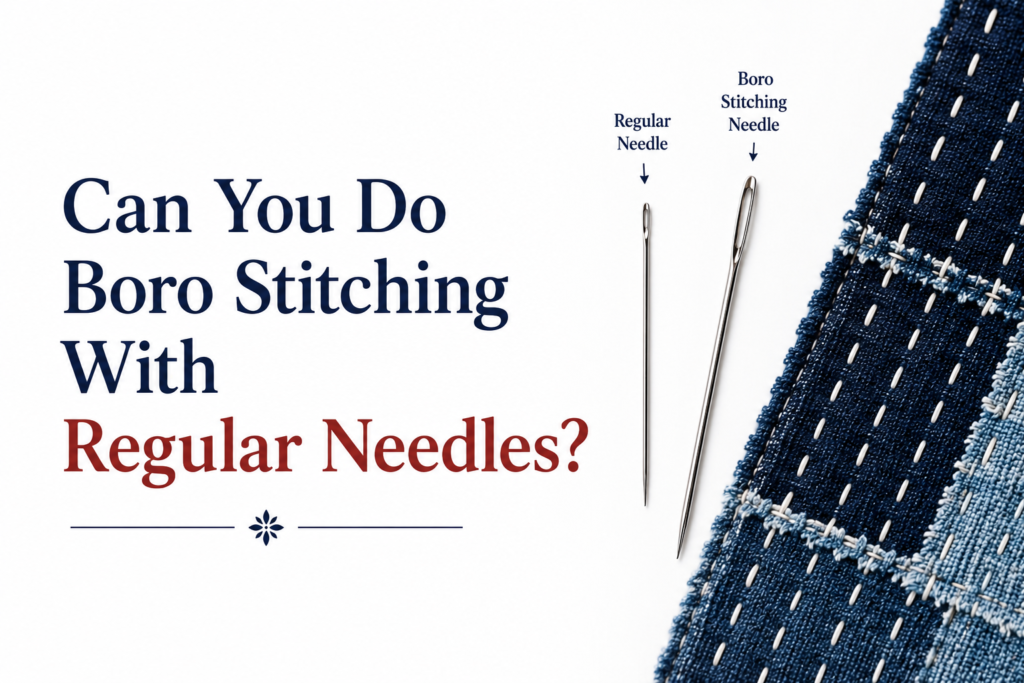
Yes, regular sewing needles can absolutely be used for boro stitching, especially for beginners learning basic visible mending techniques. Many people start using whatever tools they already own before investing in dedicated sashiko supplies.
Simple hand-sewing needles often work well enough for:
- Thin cotton fabric
- Small visible mending repairs
- Decorative stitching
- Lightweight shirts
- Tote bag repairs
- Practice projects
However, limitations become more noticeable as projects become larger or thicker. Standard sewing needles are usually shorter and less comfortable for repeated running stitches across layered fabric.
Common problems beginners experience include:
- Slower stitching rhythm
- Hand fatigue
- Difficulty on denim
- Bent needles
- Fraying thread
- Uneven stitch spacing
Embroidery needles are often a better beginner alternative because they usually have larger eyes that accommodate thicker visible mending thread more easily.
Regular needles may still perform adequately if:
- Fabric layers are thin
- Stitching is decorative only
- Thread weight remains moderate
- Repairs are relatively small
For heavy repairs involving hoodies, denim jackets, canvas, or multiple reinforcement layers, sashiko needles usually provide better control and smoother penetration.
Many modern visible mending artists intentionally avoid rigid traditionalism. Some combine embroidery tools, quilting needles, sashiko thread, and mixed fabric techniques to create personalized repair aesthetics. Boro today exists across both historical craftsmanship and modern textile art culture.
The most important factor is whether the needle allows smooth controlled stitching without damaging the fabric structure.
Good beginner priorities include:
- Comfortable handling
- Appropriate eye size
- Moderate needle strength
- Controlled penetration
- Smooth thread movement
A perfect needle is less important than developing consistent stitching habits and understanding fabric behavior during repair work.
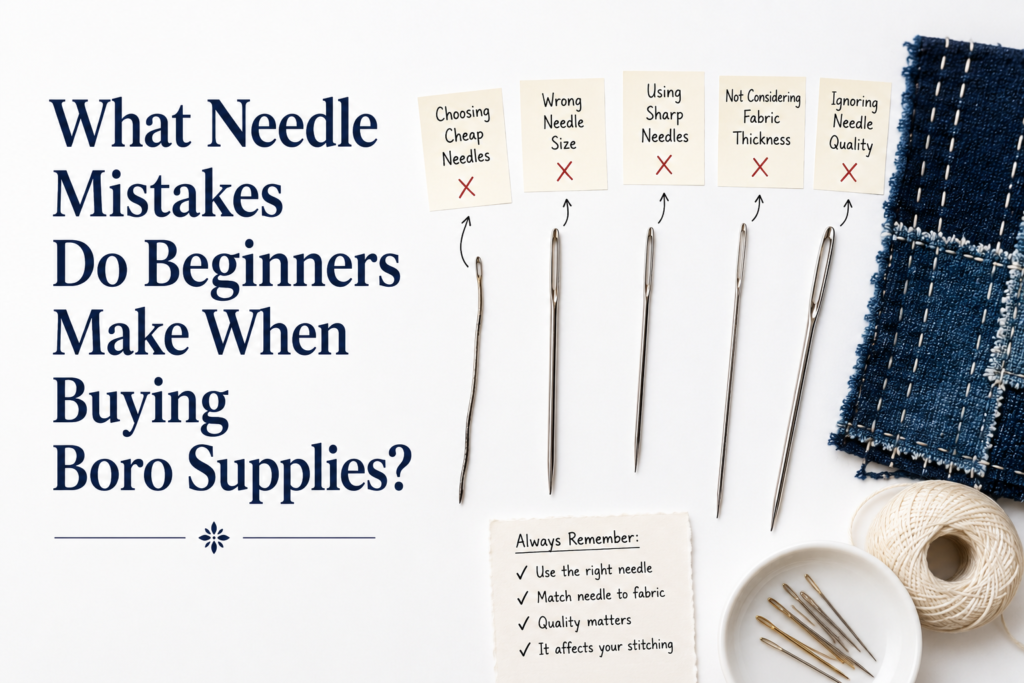
What Needle Mistakes Do Beginners Make When Buying Boro Supplies?
Many beginners buy unsuitable needles because they focus on decorative appearance instead of practical stitching performance. Boro stitching is heavily influenced by fabric behavior, thread compatibility, and repair durability, so tool selection matters more than aesthetic packaging.
One of the most common mistakes is accidentally buying leather needles for woven fabric repairs. Leather needles contain cutting points designed to pierce hide, which can enlarge holes and weaken cotton or denim textiles over time.
Other common beginner mistakes include:
- Buying extremely short needles
- Choosing tiny needle eyes
- Using weak embroidery needles on denim
- Purchasing decorative kits with low-quality tools
- Ignoring thread thickness compatibility
- Using oversized needles on delicate fabric
- Prioritizing appearance over functionality
Many beginners also assume expensive tools automatically improve stitch quality. In reality, stitching control, fabric understanding, and consistent tension matter far more than luxury supplies during early practice.
A good beginner setup usually includes:
- Medium-length sashiko needle
- Strong cotton thread
- Fabric scraps for practice
- Palm thimble
- Small embroidery scissors
Starting with simple durable tools helps build stitching confidence without overwhelming the learning process. Over time, most visible mending artists naturally refine their preferred needle styles based on the fabrics and repair methods they use most frequently.
Good boro stitching depends more on practical consistency than expensive equipment collections.
Refer to our amazing guideline on the best boro supplies for beginners, naming the essentials tools, fabrics and materials needed to start your boro journey.
What Needle Size Works Best for Boro Stitching?
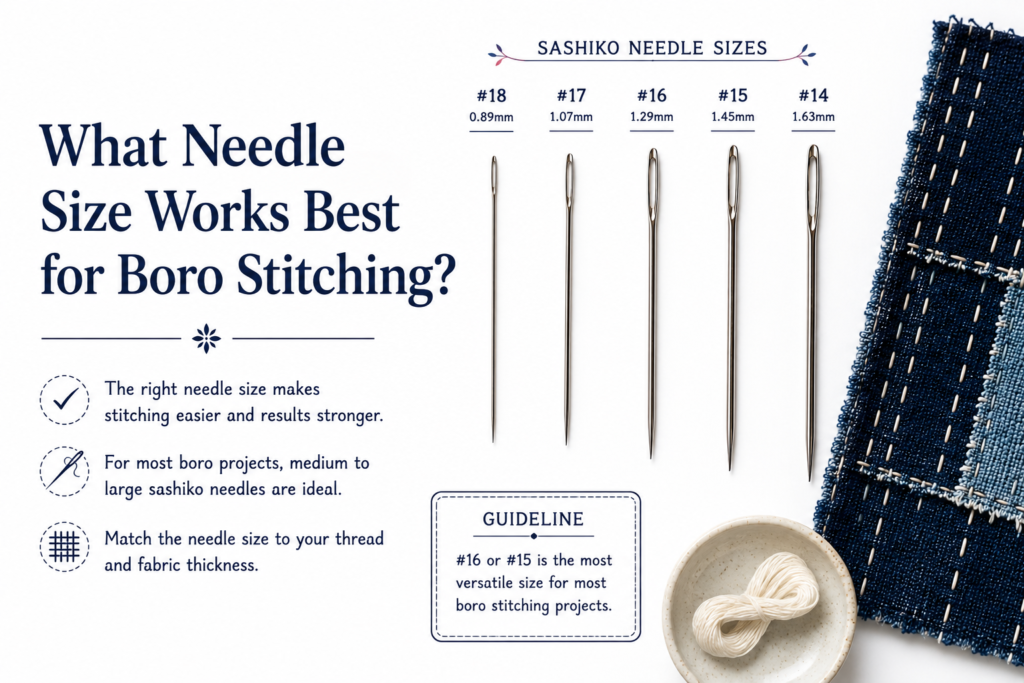
There is no universal “best” needle size for boro stitching because different fabrics, thread weights, and repair goals require different levels of penetration strength and flexibility. Needle selection depends more on compatibility than strict sizing rules.
Thin cotton garments generally work better with finer needles because oversized needles can enlarge holes and weaken delicate fabric fibers. Thick denim, canvas, or layered patch repairs require stronger needles capable of handling repeated pressure without bending.
Most boro stitchers prefer medium-to-long needles because they improve running stitch rhythm while still maintaining control.
General recommendations include:
- Thin cotton → finer needle
- Hoodies → medium sashiko needle
- Denim → stronger long needle
- Canvas → heavy-duty sashiko needle
- Decorative stitching → finer tip
- Structural reinforcement → stronger shaft
Needles that are too thin often bend during layered repairs. Needles that are too thick may distort the textile surface and create unnecessary fabric damage.
Important sizing considerations include:
- Fabric density
- Patch thickness
- Thread weight
- Stitch spacing
- Hand comfort
- Repair visibility
Long needles between roughly 1.5 and 2.5 inches remain common in traditional sashiko-style work because they balance flexibility and efficiency.
Another overlooked factor is eye size compatibility. Thick sashiko thread passing repeatedly through a tiny eye creates friction that weakens the thread over time. Proper matching improves durability and stitching flow.
Experienced visible mending artists often switch needles during a single repair project. Fine decorative overlay stitching may require a smaller needle, while dense reinforcement rows underneath need a stronger sashiko-style option.
The goal is controlled penetration with minimal textile stress. Good boro stitching should reinforce fabric while still allowing natural garment movement after repair.
Which Needle Works Best for Different Boro Fabrics?
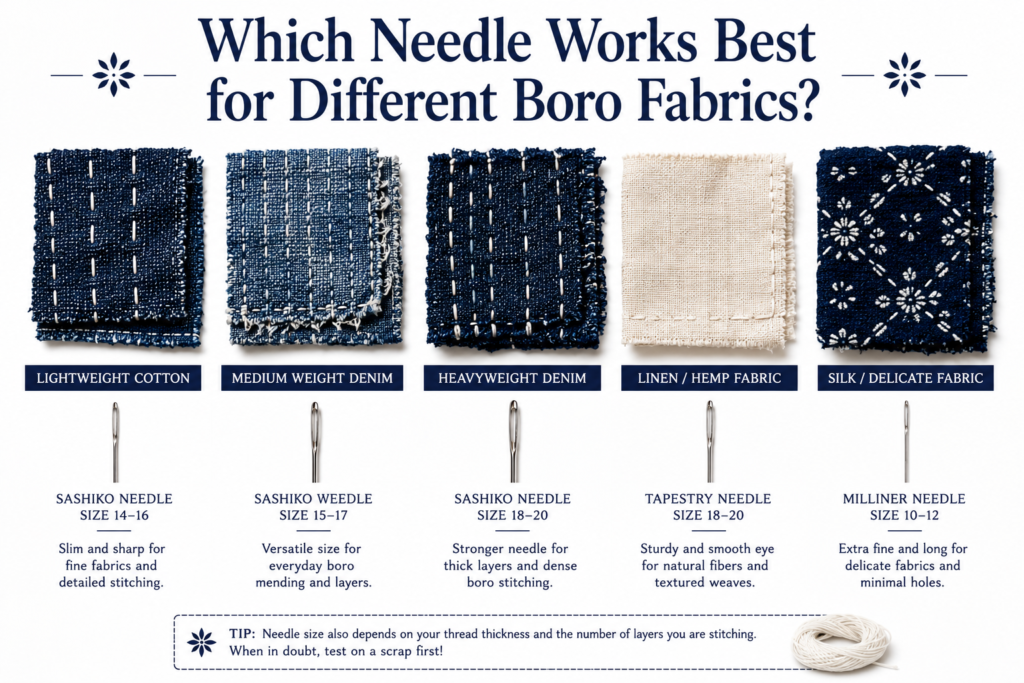
Different fabrics place different levels of stress on boro stitching needles. Choosing the correct needle for each material improves stitch consistency, prevents fabric distortion, and reduces unnecessary hand strain during long repair sessions.
Thin lightweight fabrics usually require finer needles because oversized shafts can enlarge holes and weaken delicate woven fibers. Thick fabrics such as denim and canvas require stronger needles capable of handling repeated penetration through layered reinforcement patches.
The best needle setup depends on:
- Fabric density
- Patch thickness
- Repair visibility
- Thread weight
- Flexibility requirements
- Decorative vs structural goals
Recommended needle guide by fabric type:
| Fabric Type | Best Needle | Difficulty Level | Recommended Thread |
| Thin cotton shirts | Fine sashiko needle | Easy | Fine cotton thread |
| Hoodies | Medium sashiko needle | Medium | Pearl cotton |
| Denim jeans | Long strong sashiko needle | Medium-Hard | Thick sashiko thread |
| Canvas bags | Heavy-duty sashiko needle | Hard | Thick cotton thread |
| Linen garments | Fine running-stitch needle | Easy | Lightweight cotton |
| Layered patches | Reinforced sashiko needle | Medium | Durable sashiko thread |
Heavy fabrics often benefit from stronger needles combined with palm thimbles for better pressure control. Decorative visible mending usually works better with finer needles that create cleaner surface detail without damaging surrounding fibers.
Using fabric-specific tools improves both repair durability and overall stitch appearance.
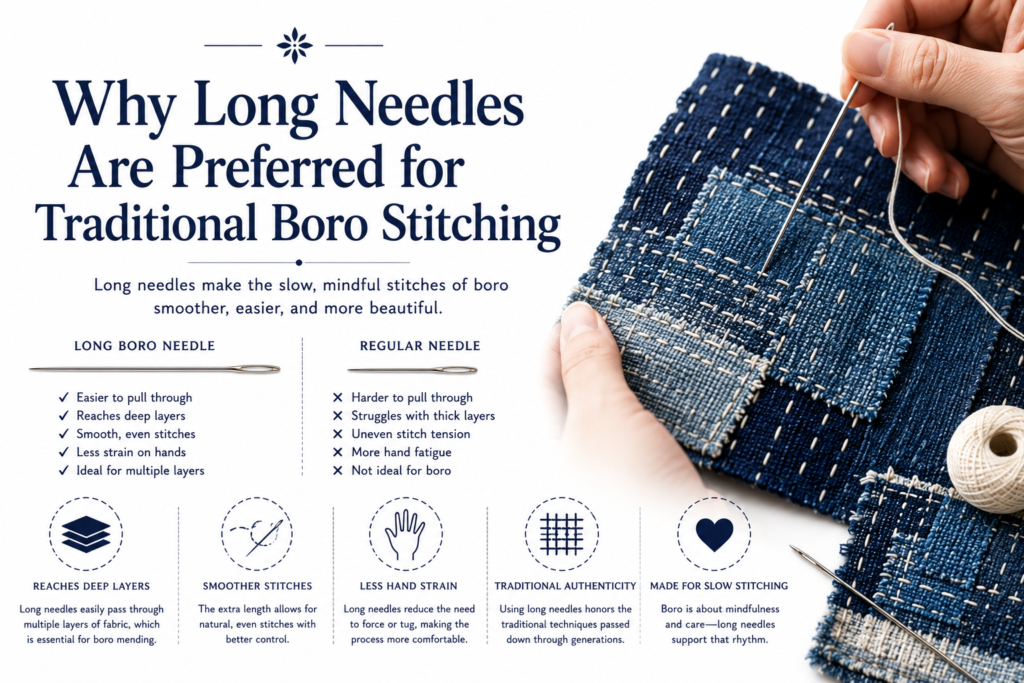
Why Long Needles Are Preferred for Traditional Boro Stitching
Long needles became strongly associated with traditional boro stitching because they improve stitching rhythm, efficiency, and running stitch consistency across large textile surfaces. This practical advantage remains important in modern visible mending today.
Traditional Japanese rural repairs often involved repeatedly stitching large patched areas on workwear garments and household textiles. Long needles allowed several running stitches to be loaded onto the shaft before pulling the thread through, reducing repetitive hand movement.
This creates smoother stitching flow and better spacing control.
Long needles are especially useful for:
- Denim repairs
- Large patch reinforcement
- Repeated sashiko patterns
- Jacket restoration
- Layered visible mending
- Geometric running stitch grids
Short needles interrupt rhythm more frequently because they cannot hold as many stitches simultaneously. This slows stitching and increases hand fatigue during larger repairs.
Benefits of longer sashiko needles include:
- Faster stitch movement
- More consistent spacing
- Reduced wrist strain
- Better fabric navigation
- Easier multi-layer penetration
- Improved stitch rhythm
Many experienced boro artists describe the stitching process as rhythmic rather than mechanical. The long needle becomes part of that repetitive movement system.
Long needles also improve visibility because more of the shaft remains exposed above the fabric surface during stitching. This helps control stitch placement across layered indigo textiles.
However, extremely long needles may feel awkward for beginners initially. Some people prefer medium-length sashiko needles before transitioning to traditional long versions.
Ultimately, long needles remain popular not because of aesthetics alone, but because they improve the efficiency and practicality of repeated running-stitch repair methods that define traditional boro construction.
Why Long Boro Needles Feel Difficult at First
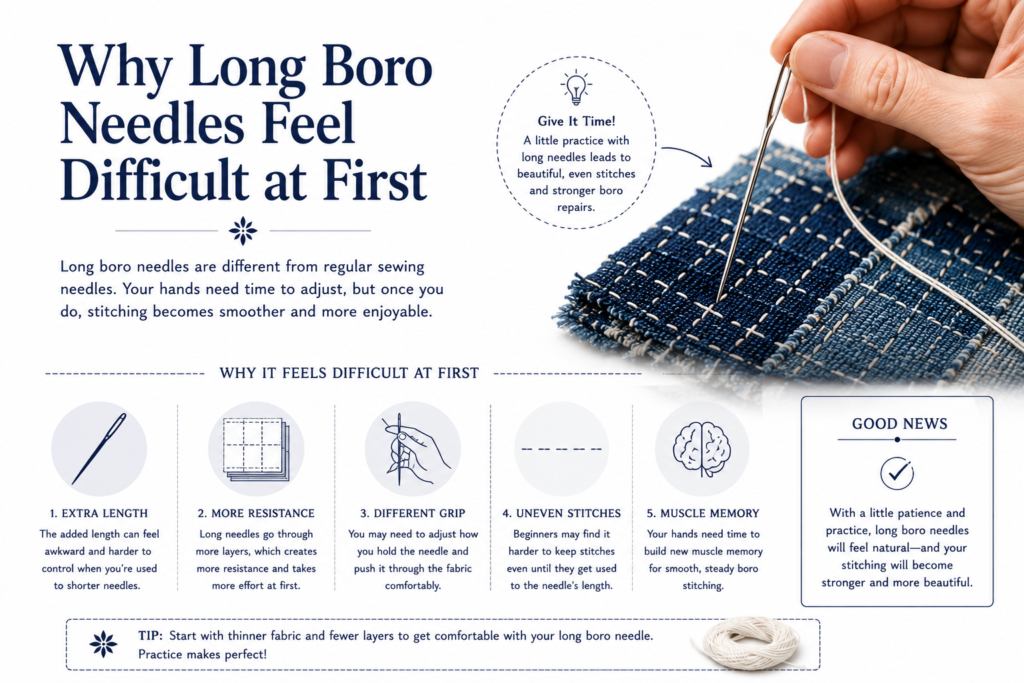
Many beginners initially struggle with long sashiko needles because their stitching habits are usually based on short conventional sewing needles. The longer shaft changes wrist movement, stitch rhythm, and hand positioning during running-stitch work.
At first, long needles may feel awkward or harder to control, especially when stitching small repairs. However, most stitchers gradually adapt after practicing repeated running stitches across larger fabric areas. Once muscle memory develops, long needles often feel faster and smoother than standard sewing needles.
Common beginner difficulties include:
- Uneven stitch spacing
- Over-rotating the wrist
- Pulling thread too tightly
- Difficulty loading multiple stitches
- Slower stitching rhythm
- Hand fatigue during adjustment
Traditional sashiko methods rely on rhythmic movement rather than isolated individual stitches. Long needles support this flowing technique by allowing several stitches to be gathered at once before pulling the thread through the fabric.
Over time, many stitchers discover that long needles improve:
- Stitch consistency
- Speed
- Fabric navigation
- Running stitch control
- Large repair efficiency
Practicing on scrap denim or cotton fabric usually helps beginners adapt more quickly to the movement style required for traditional-inspired boro stitching.
The initial learning curve is normal and does not mean the needle is unsuitable.
Best Boro Needles for Decorative vs Structural Repairs
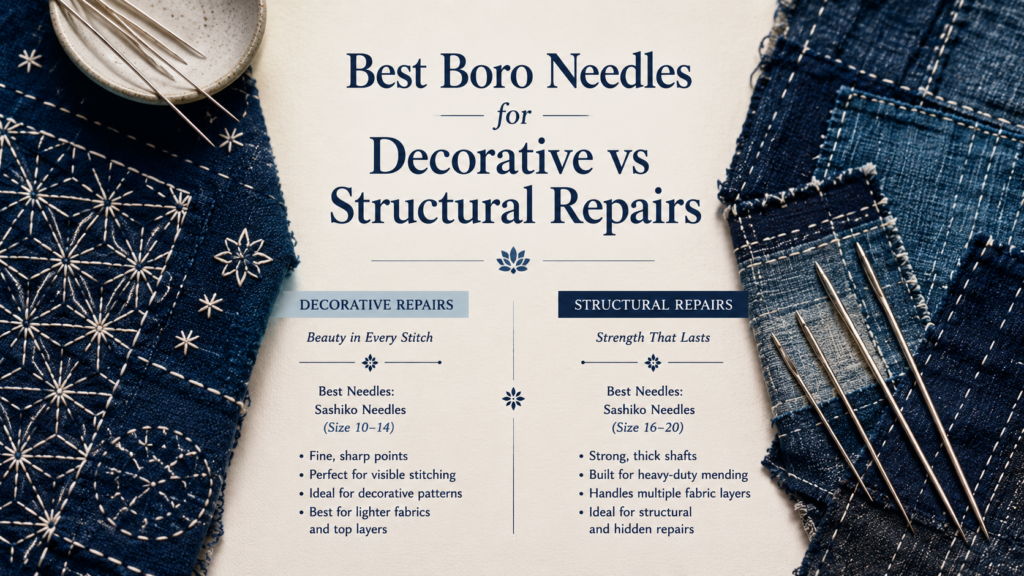
Different boro repairs require different needle behavior depending on whether the stitching is primarily decorative or structurally supportive. Some visible mending projects focus mainly on aesthetic texture, while others are intended to reinforce heavily worn clothing areas subjected to repeated movement and stress.
Decorative visible mending often works better with finer needles because they create cleaner stitch detail without heavily distorting lightweight fabric surfaces. Structural repairs usually require stronger sashiko needles capable of penetrating multiple reinforcement layers consistently.
Decorative repair goals commonly include:
- Surface texture
- Visible stitch patterns
- Artistic patch layering
- Fashion-oriented visible mending
- Fine geometric stitching
Structural repair goals usually focus on:
- Reinforcing weak fabric
- Preventing tear expansion
- Supporting stress zones
- Extending garment lifespan
- Strengthening repeated wear areas
General repair recommendation guide:
| Repair Goal | Best Needle Type |
| Decorative visible mending | Fine sashiko needle |
| Denim knee reinforcement | Strong long sashiko needle |
| Lightweight shirt repair | Fine embroidery needle |
| Canvas repair | Heavy-duty sashiko needle |
| Fashion stitching | Medium decorative sashiko needle |
| Functional patch repair | Reinforced running-stitch needle |
Many advanced boro artists combine both approaches within a single garment by using decorative overlay stitching above structural reinforcement layers underneath.
The ideal needle depends on how the repaired garment will actually be worn after stitching is complete.
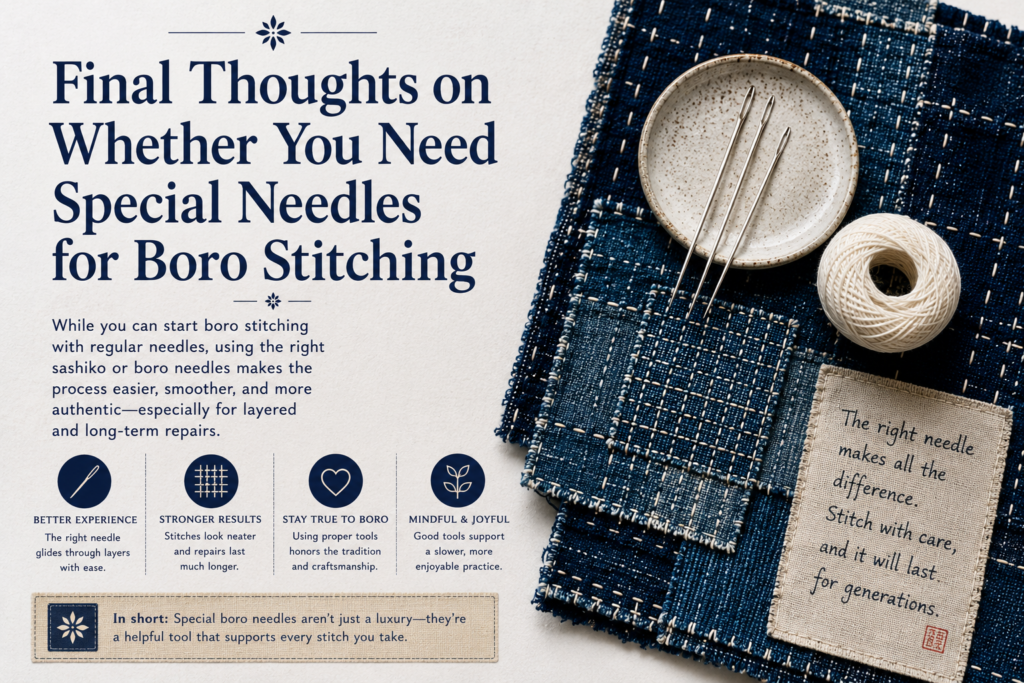
Final Thoughts on Whether You Need Special Needles for Boro Stitching
You do not absolutely need specialized needles to begin boro stitching, but dedicated sashiko needles usually improve stitch rhythm, fabric handling, and repair durability. Longer needles with larger eyes work especially well for layered denim, visible mending, and repeated running stitches.
For beginners, ordinary embroidery or hand-sewing needles can still produce functional repairs. As projects become larger or more complex, many stitchers naturally transition toward stronger sashiko-style needles for better efficiency and comfort.
The best approach is choosing a needle that matches:
- Fabric thickness
- Thread weight
- Repair size
- Stitch style
- Comfort level
In boro stitching, practical control matters more than expensive tools.
How to Maintain Boro Stitching Needles
Proper needle maintenance improves stitching smoothness, prevents thread damage, and extends tool lifespan over time. Even high-quality sashiko needles gradually develop wear if they are stored poorly or repeatedly exposed to moisture and fabric residue.
One common problem involves slight rust formation caused by humidity or skin oils left on the metal surface after long stitching sessions. Roughened surfaces increase friction against cotton thread and make stitching feel less consistent across layered fabric repairs.
Helpful maintenance practices include:
- Storing needles in dry containers
- Using needle books or magnetic cases
- Wiping needles after long use
- Avoiding moisture exposure
- Replacing bent needles quickly
- Separating damaged needles from sharp ones
Thread wax buildup and adhesive residue from temporary fabric stabilizers can also reduce stitching smoothness over time. Cleaning the shaft occasionally helps maintain easier fabric penetration.
Signs a needle should be replaced include:
- Visible bending
- Rough penetration
- Fraying thread repeatedly
- Rust spots
- Distorted stitch formation
Well-maintained needles improve:
- Thread longevity
- Stitch consistency
- Fabric protection
- Hand comfort
- Running stitch rhythm
Traditional boro stitching relies heavily on repetitive movement, so even small needle imperfections become more noticeable during large visible mending projects.
FAQs SECTION
Do beginners need sashiko needles for boro stitching?
No. Beginners can start with regular embroidery or sewing needles, although sashiko needles often make stitching smoother and easier on layered fabric.
What is the best needle length for boro stitching?
Most boro stitchers prefer longer needles around 1.5–2.5 inches because they allow multiple running stitches to be loaded at once.
Can denim damage regular sewing needles?
Yes. Thick denim and layered patches can bend or weaken thin sewing needles over time, especially during repeated repairs.
Are sashiko needles sharper than regular needles?
Many sashiko needles are designed to glide smoothly through layered fabric while maintaining strength and stitch consistency.
Do you need a thimble for boro stitching?
A thimble is not mandatory, but it becomes very helpful when stitching thick denim, canvas, or multi-layer repairs.
Can embroidery needles work for visible mending?
Yes. Embroidery needles are commonly used for visible mending because they are easy to find and work well with thicker thread.
What thread works best with boro needles?
Cotton sashiko thread is commonly preferred because it is durable, visible, and compatible with layered running stitches.
Are expensive Japanese sashiko needles worth buying?
They can improve comfort and stitch flow during large or frequent projects, but beginners can still create excellent repairs with affordable needles.