
Visible mending benefits clothes that experience repeated friction, thinning fabric, and localized wear while still maintaining strong structural integrity. Denim jeans, wool sweaters, canvas workwear, linen shirts, jackets, and high-quality socks respond especially well because they can support reinforcement stitching, decorative patching, and long-term repairs without losing functionality. These garments also develop character over time, making sashiko and boro stitching both practical and visually appealing.
Why Do Some Clothes Respond Better to Visible Mending?

Some clothes respond better to visible mending because of the way their fibers, fabric density, and weave structure interact with reinforcement stitching. Durable natural fibers like cotton, wool, hemp, and linen hold thread securely and remain stable during repairs. These materials usually wear gradually instead of failing suddenly, which gives visible mending techniques time to reinforce weak areas before holes spread further.
Garments made from tightly woven or thick fabrics are especially suitable because stitches distribute tension more evenly. Denim, canvas, and wool can tolerate repeated stitching, patch layering, and washing cycles without distorting excessively. Thin synthetic fabrics, however, often stretch unevenly or tear around repair points because their fibers lack the same structural stability.
Visible mending works best when damage occurs in isolated stress zones rather than across the entire garment. Areas like knees, elbows, cuffs, and pockets naturally weaken first due to repeated friction and movement. Reinforcement stitching strengthens these predictable wear points while preserving the surrounding fabric.
Clothes that respond well to visible mending usually share these characteristics:
- Durable natural fibers
- Medium-to-heavy fabric weight
- Predictable wear locations
- Strong woven or knitted structure
- Long-term usability
- Emotional or financial value
This is one reason traditional Japanese boro repair culture focused heavily on practical workwear and utility clothing. These garments were designed for durability from the beginning, making them ideal candidates for repeated reinforcement over many years.
Which Clothes Are the Easiest and Hardest to Repair With Visible Mending?
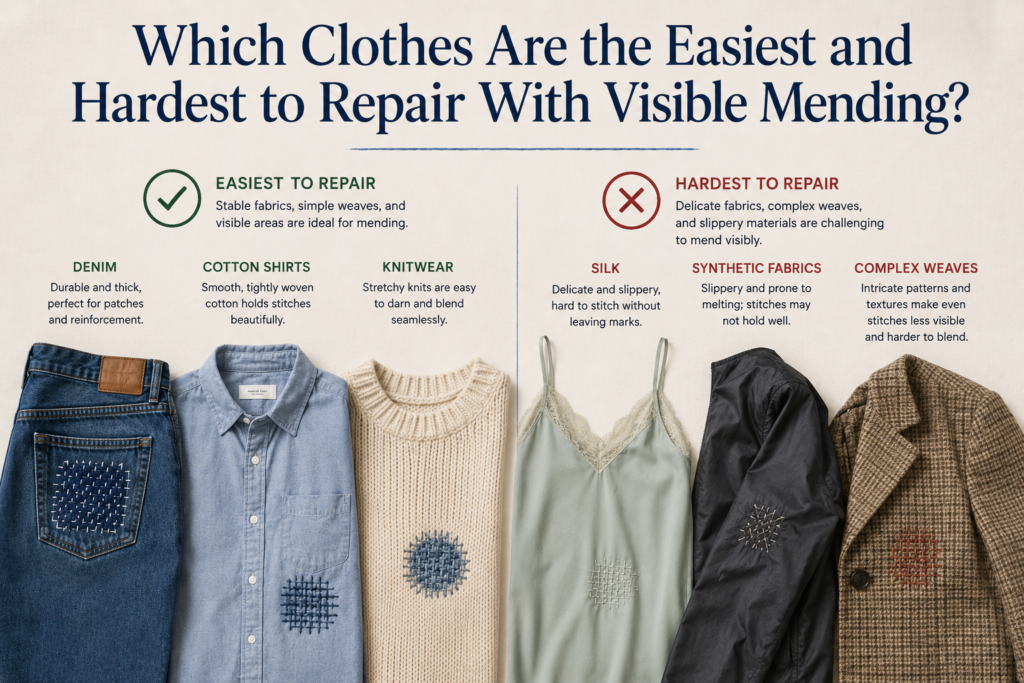
Denim, canvas, wool, and heavy cotton are usually the easiest fabrics to repair because they remain stable during stitching. Thin synthetics and stretchy fabrics are typically harder because they distort more easily and provide weaker structural support for reinforcement.
Visible mending becomes much easier when the fabric can hold stitch tension without puckering or tearing further. Thick woven materials distribute stress evenly, which allows patches and reinforcement stitching to last significantly longer. Softer or thinner materials often require lighter thread, stabilizers, and more advanced tension control.
Some garments also provide better long-term repair value because damage occurs in isolated areas instead of across the entire textile surface. Jeans and workwear commonly fail at knees, cuffs, or pockets while the rest of the fabric remains strong. This makes targeted reinforcement highly effective.
Repairability Comparison
| Garment Type | Repair Difficulty | Longevity Potential | Best Technique |
|—|—|—|
| Denim Jeans | Easy | Very High | Sashiko stitching |
| Canvas Workwear | Easy | Very High | Boro patching |
| Wool Sweaters | Medium | High | Darning |
| Linen Shirts | Medium | Medium-High | Reinforcement stitching |
| Cotton Jackets | Easy-Medium | High | Patch repair |
| Stretch Activewear | Hard | Low-Medium | Flexible patching |
| Thin Polyester | Hard | Low | Stabilized stitching |
The easiest visible mending projects usually involve durable fabrics with localized wear rather than broad material breakdown.
Why Are Jeans One of the Best Clothes for Visible Mending?

Denim jeans are widely considered one of the best garments for visible mending because denim combines durability, flexibility, and repair-friendly texture. The thick cotton twill weave holds stitches securely while still allowing movement, which makes sashiko stitching and layered patchwork highly effective over long periods of wear.
Jeans also develop highly predictable damage patterns. Areas such as the knees, inner thighs, hems, and back pockets experience constant abrasion from movement and friction. Since these stress points appear repeatedly, visible mending techniques can strengthen them before full structural failure occurs.
One of denim’s biggest advantages is its ability to age attractively. Indigo fading, frayed edges, and visible repairs create depth and character instead of making the garment appear damaged. This aesthetic quality aligns naturally with Japanese boro traditions, where layered indigo patches and sashiko stitching transformed worn clothing into durable textiles with unique visual history.
Visible mending on denim often includes:
- Sashiko reinforcement grids
- Layered indigo patches
- Knee strengthening panels
- Pocket corner reinforcement
- Decorative geometric stitching
- Preventive inner-thigh repairs
Denim also works extremely well for beginners because thick fabric hides minor stitching inconsistencies. Unlike delicate fabrics that pucker easily, denim remains stable during repeated needle passes and heavy thread tension.
Well-maintained jeans can survive for many years through repeated reinforcement cycles. Instead of discarding worn denim after the first holes appear, visible mending allows the garment to evolve gradually while maintaining both strength and individuality.
How Do Fabric Fibers Gradually Fail Before Holes Appear?
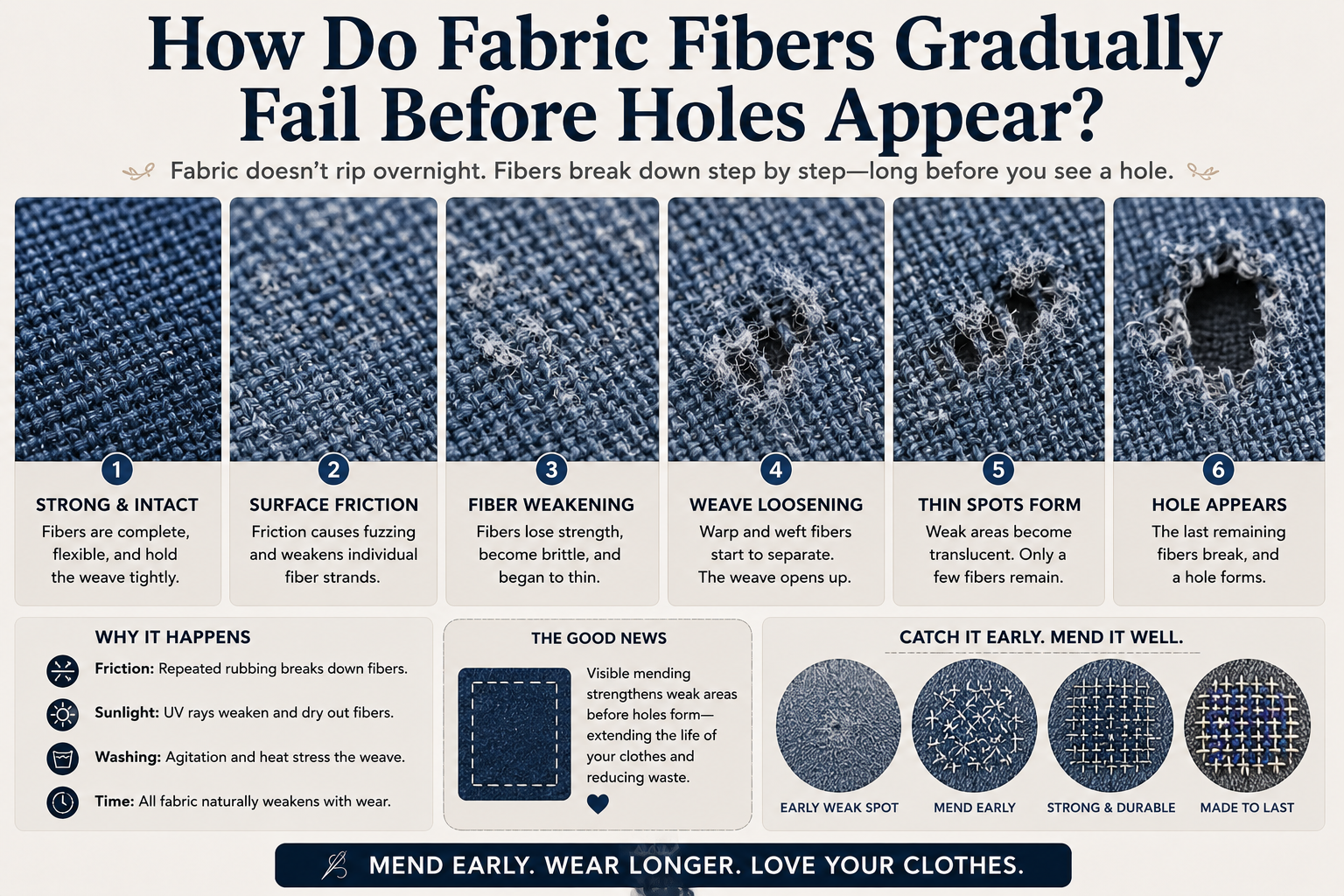
Most clothes do not suddenly develop holes. Fabric fibers weaken gradually through friction, flexing, tension, moisture, and repeated washing cycles before visible tearing eventually appears.
Everyday movement places repeated stress on specific garment areas. Knees bend constantly, elbows flex repeatedly, and pocket edges experience continuous pulling. Over time, individual fibers begin breaking microscopically long before large holes become visible.
As these fibers weaken, fabric density decreases. The textile becomes thinner, softer, and less resistant to abrasion. Eventually, surrounding threads can no longer distribute tension evenly, causing tearing to accelerate rapidly.
Several factors contribute to gradual fabric failure:
- Repeated friction
- Seam stress
- Body movement tension
- Washing machine abrasion
- Moisture exposure
- Fiber aging
- UV exposure
Visible mending works best during this early weakening stage because reinforcement stitches redistribute stress across healthier surrounding fabric. Preventive stitching can stabilize thinning areas before complete structural failure develops.
This gradual wear pattern explains why durable garments like denim and workwear respond especially well to visible reinforcement techniques
Do Sweaters and Knitwear Benefit From Visible Mending?
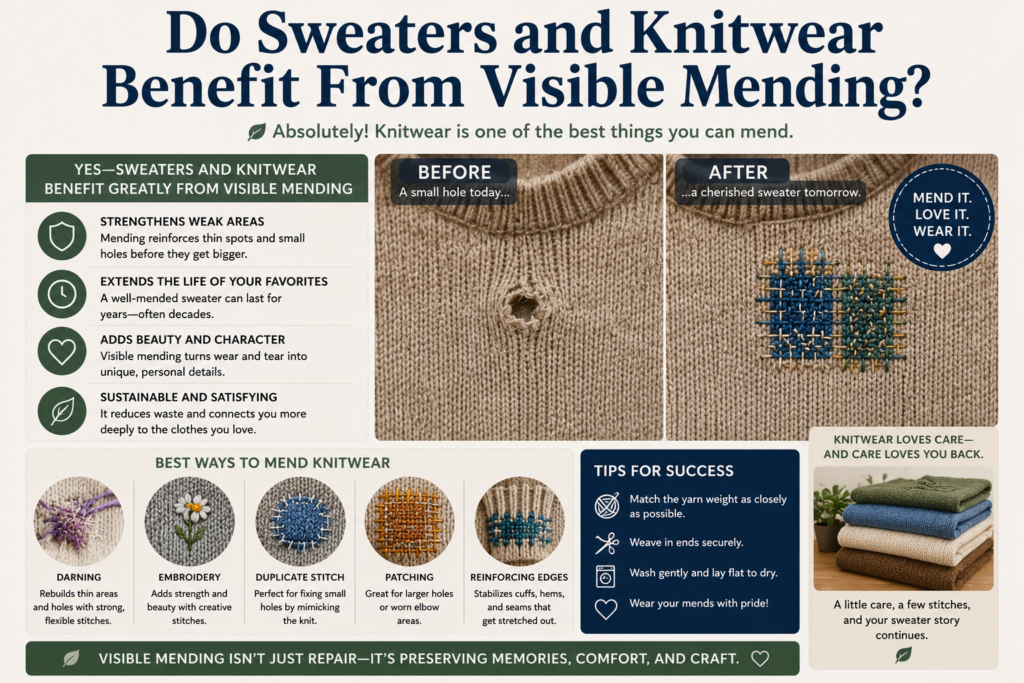
Sweaters and knitwear benefit significantly from visible mending because knitted structures can often be rewoven rather than simply patched. Unlike woven fabrics that rely on intersecting threads, knitwear consists of interconnected yarn loops. This structure allows damaged areas to be stabilized through darning techniques that rebuild missing sections while maintaining flexibility.
Wool sweaters are especially suitable because wool fibers naturally grip surrounding stitches and resist unraveling when repaired correctly. Small holes caused by friction, moth damage, or thinning elbows can often be strengthened before they expand into larger tears.
Visible mending works particularly well on:
- Wool sweaters
- Cardigans
- Hand-knit garments
- Thick winter knits
- Merino wool layers
- Wool blend scarves
Soft knitwear requires different techniques than denim or canvas. Large rigid patches may distort stretch and drape, so flexible woven darning usually performs better. Matching yarn thickness also matters because overly thick repair yarn can create uneven tension around the damaged area.
Many people choose visible mending for knitwear because sweaters often carry sentimental or financial value. High-quality wool garments may last decades if weak areas receive reinforcement early. Instead of hiding repairs completely, decorative darning can add contrast colors, geometric textures, or subtle artistic detail.
Knitwear repairs are often most effective when applied preventively. Areas like elbows, cuffs, and underarms typically thin gradually before full holes appear. Reinforcing these zones early reduces tension on surrounding yarn loops and helps preserve the garment’s overall structure for much longer.
Why Is Workwear Ideal for Boro and Sashiko Repairs?
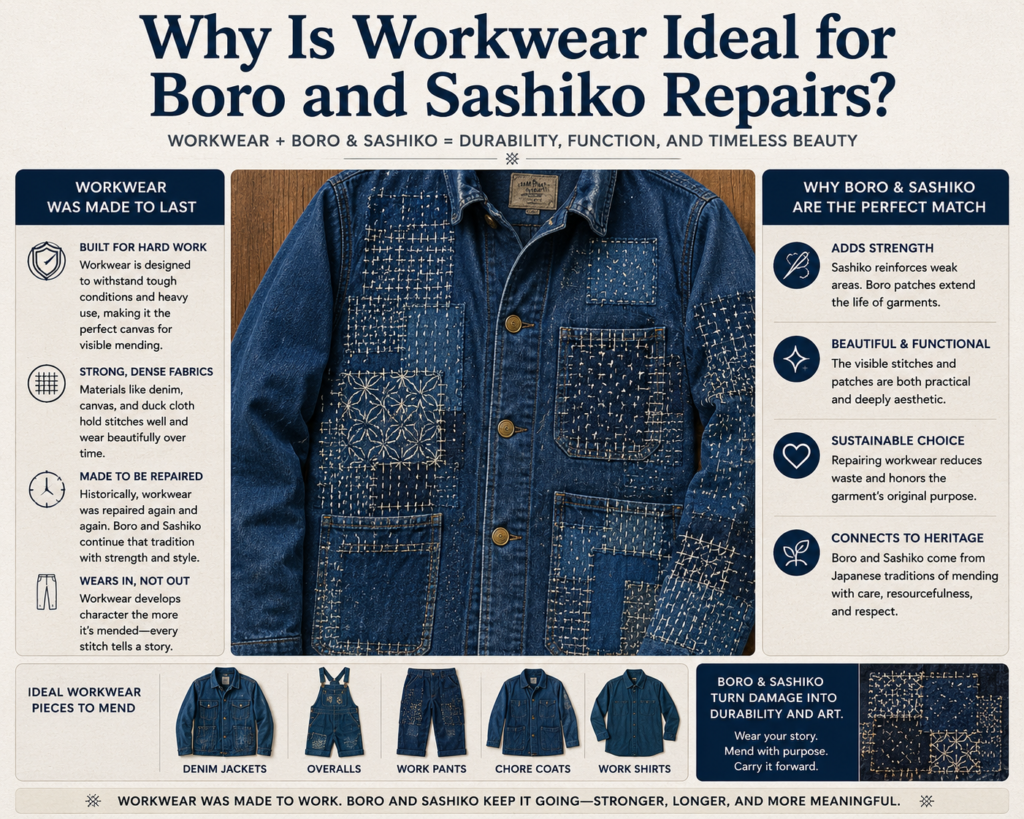
Workwear is one of the most practical categories for visible mending because these garments are designed to handle physical stress, friction, and repeated heavy use. Canvas jackets, chore coats, carpenter pants, aprons, and utility shirts naturally develop wear patterns that respond extremely well to reinforcement stitching and layered patching.
Historically, Japanese boro repair traditions emerged from necessity among working communities that repeatedly repaired durable textiles instead of replacing them. Indigo-dyed cotton garments were patched and reinforced over many years, creating layered surfaces that improved both strength and insulation.
Modern workwear remains ideal for visible mending because the garments already emphasize functionality and durability. Repairs rarely appear out of place on heavy-duty clothing. In many cases, visible stitching enhances the garment’s character and authenticity.
Common repair zones on workwear include:
- Knees
- Elbows
- Cuffs
- Pocket edges
- Seat panels
- Shoulder seams
Heavy fabrics like canvas and thick cotton absorb stitch tension effectively, which reduces distortion during repair. This allows for dense sashiko stitching patterns that distribute stress across larger sections of fabric rather than concentrating pressure around a single tear.
Visible mending also suits workwear because repairs can be both preventive and decorative. Reinforcement panels placed before complete fabric failure help extend garment lifespan dramatically. Multiple repair layers often strengthen older garments beyond their original durability.
For people interested in traditional Japanese repair aesthetics, workwear provides one of the best foundations for authentic boro-inspired patching and visible reinforcement techniques.
Which Thin Fabrics Are Harder to Mend Successfully?
Thin fabrics are generally more difficult to repair because they lack the structural stability needed to support reinforcement stitching. Lightweight synthetic materials, stretchy athletic fabrics, and delicate textiles often distort under tension, which can cause puckering or additional tearing around repair areas.
Unlike denim or canvas, thin fabrics distribute stress unevenly during stitching. Needles may enlarge weakened holes, while thread tension can pull surrounding fibers out of alignment. This is especially common in ultra-light polyester blends or fabrics designed for elasticity rather than durability.
The most challenging fabrics for visible mending include:
- Thin polyester
- Stretch activewear
- Lightweight nylon
- Rayon blends
- Sheer fabrics
- Delicate formalwear
These materials often experience widespread wear instead of isolated stress points. When damage spreads broadly across the fabric, repairs may only provide temporary improvement before nearby fibers continue failing.
Visible mending can still work on thinner fabrics, but the approach usually needs adjustment.
Successful repairs often require:
- Lightweight stabilizing fabric
- Fine needles
- Thin flexible thread
- Minimal stitch tension
- Small reinforcement areas
- Soft patch materials
Decorative visible stitching may also appear more prominent on lightweight garments because thin fabric offers less visual texture to blend repairs naturally.
In many cases, medium-to-heavy natural fibers remain the best choice for long-lasting visible mending because they tolerate reinforcement without excessive distortion. Thin fabrics can still be repaired successfully, but they usually demand greater precision and gentler handling throughout the stitching process.
Ready-to-Paste Table
| Feature | Natural Fibers | Synthetic Fabrics |
| Stitch Grip | Strong | Moderate to Weak |
| Fraying Pattern | Predictable | Uneven |
| Heat Sensitivity | Moderate | Often High |
| Repair Longevity | High | Variable |
| Patch Compatibility | Excellent | Moderate |
| Flexibility During Repair | Stable | Sometimes Distorts |
| Traditional Mending Compatibility | Excellent | Limited |
Natural fibers generally remain easier to repair because their surface texture helps stitches grip surrounding threads more securely.
When Does Visible Mending Not Work Well?
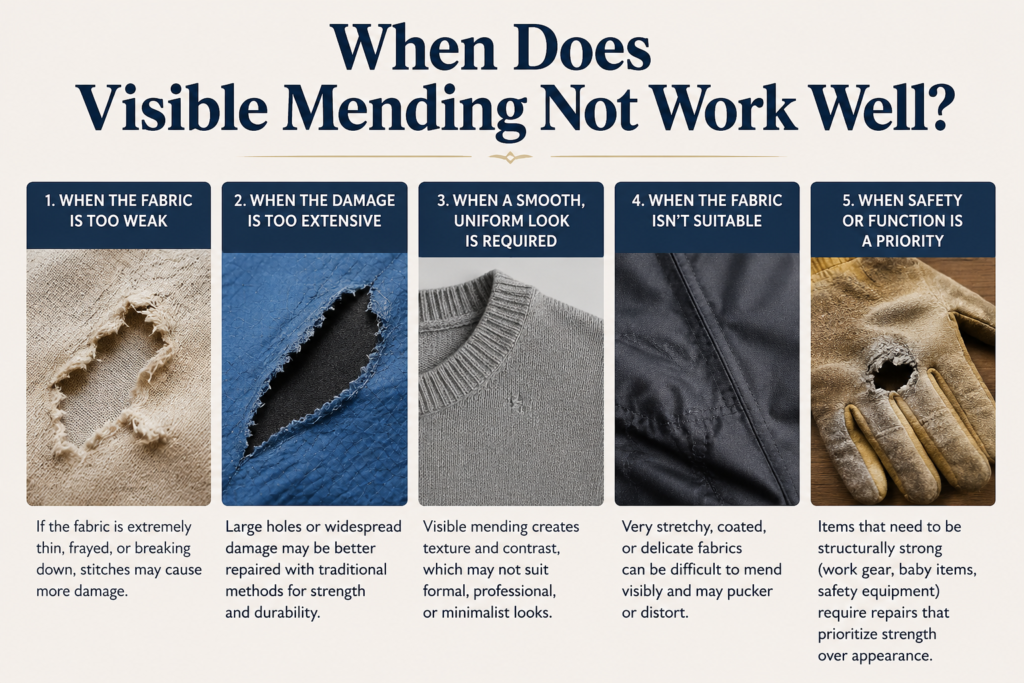
Visible mending becomes less effective when the surrounding fabric is already broadly weakened, brittle, stretched out, or structurally unstable.
Some garments continue deteriorating even after repairs because nearby fibers can no longer support additional tension. This is especially common in low-quality fast-fashion textiles or heavily aged synthetic materials.
Visible mending may perform poorly on:
- dry-rotted fabric
- brittle polyester
- heavily stretched elastic
- melted synthetic fibers
- ultra-thin activewear
- broadly weakened fabric
In some cases, repairs create new tension points that accelerate tearing beside the stitched area rather than stopping damage completely.
Signs that fabric may be beyond effective repair include:
- excessive transparency
- broad thinning
- cracking fibers
- weak seam structure
- severe elasticity loss
Understanding repair limitations helps create more realistic expectations while improving long-term repair success rates.
Are Socks Still Worth Repairing Today?
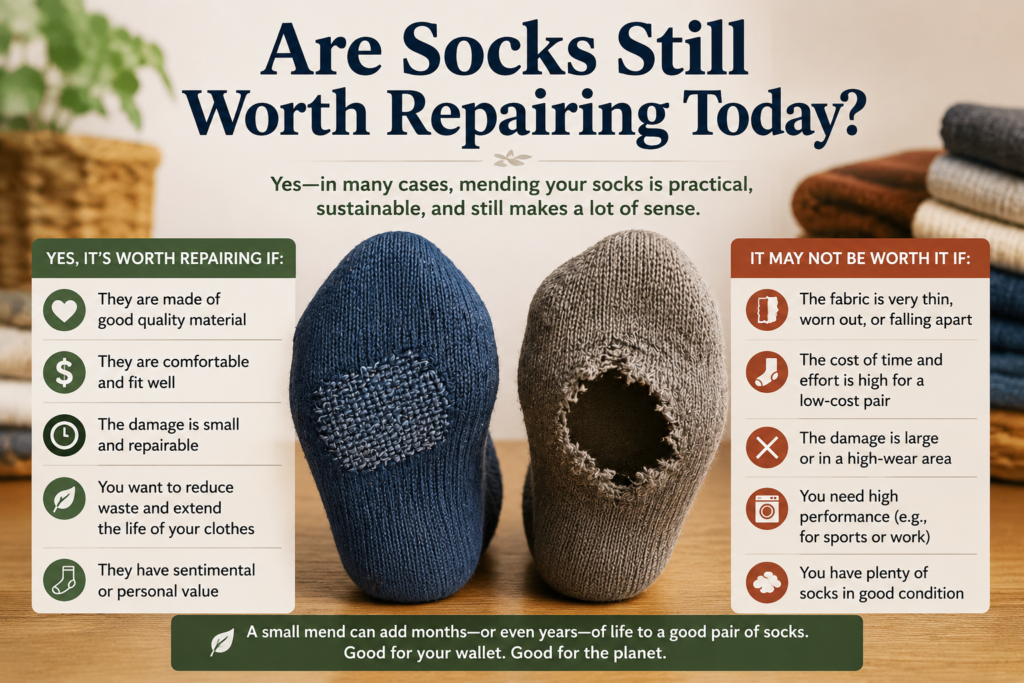
High-quality socks still benefit greatly from visible mending because most sock damage occurs in concentrated friction zones rather than throughout the entire garment. Areas like heels, toes, and the ball of the foot absorb repeated pressure during walking, causing localized thinning over time.
Darning strengthens these stress points by rebuilding worn fiber structures while maintaining flexibility. Traditional textile cultures repaired socks regularly because quality wool and hand-knit garments required significant labor and valuable materials to produce.
Modern visible mending works especially well on:
- Merino hiking socks
- Hand-knit wool socks
- Thick winter socks
- Outdoor performance socks
- Heavy boot socks
- Traditional knitwear
Expensive socks often use high-grade wool blends that remain structurally strong outside the damaged areas. Repairing isolated wear zones can extend their lifespan significantly without affecting comfort.
Sock darning also offers excellent practice for beginners learning controlled tension and woven reinforcement techniques. Because repairs occur in small areas, the process helps build stitching precision without requiring large fabric panels.
Visible sock repairs frequently include:
- Circular woven darning
- Heel reinforcement
- Toe patch weaving
- Contrast yarn patterns
- Dense reinforcement stitching
Thin fast-fashion socks usually benefit less because low-quality fibers wear broadly rather than locally. When the surrounding material becomes weak everywhere, repairs rarely last long enough to justify the effort.
Which Clothes Are Actually Worth Repairing Financially?
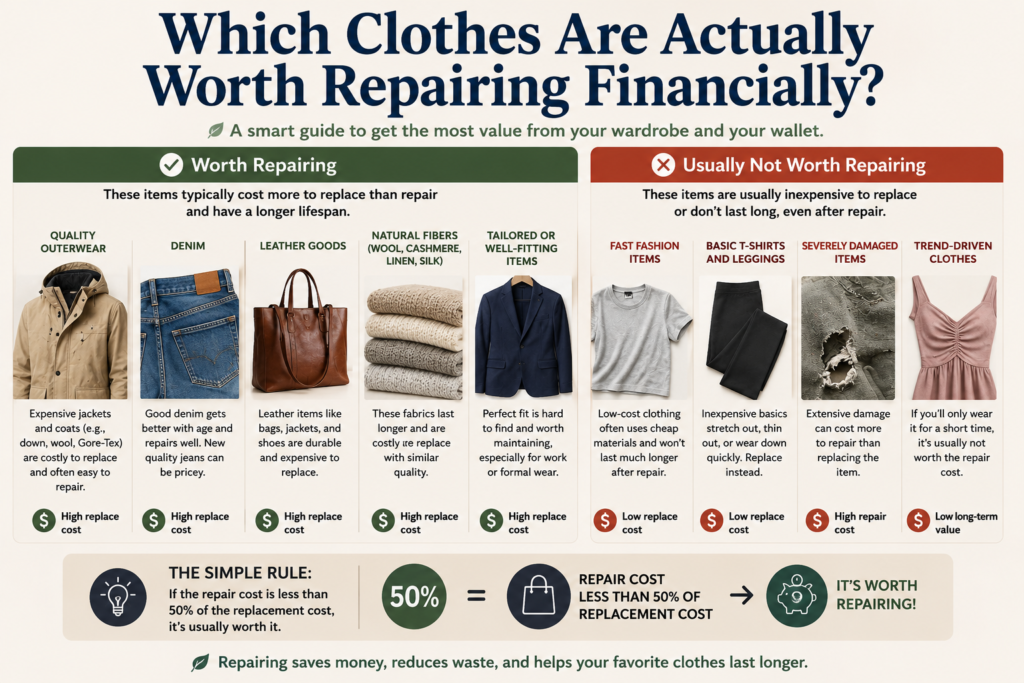
High-quality garments made from durable materials are usually worth repairing because reinforcement can extend their lifespan significantly at a lower cost than replacement.
Visible mending provides the best long-term value when the surrounding fabric still remains structurally strong. Expensive garments made from wool, denim, linen, or heavy cotton often respond extremely well to repair because the damaged area is usually localized rather than widespread.
Repairing clothing becomes especially worthwhile when the garment has:
- strong fabric quality
- sentimental value
- difficult-to-replace fit
- heritage construction
- natural fiber durability
Clothes commonly worth repairing include:
- Raw denim jeans
- Merino wool sweaters
- Vintage jackets
- Handmade knitwear
- Heavy canvas workwear
- Linen overshirts
Cheap fast-fashion garments are sometimes poor repair candidates because the surrounding fabric may already be broadly weakened. Even if one hole gets repaired, nearby fibers may continue failing quickly.
Visible mending often becomes most practical when repair costs remain lower than replacing an equivalent high-quality garment.
Well-repaired wool socks, however, can survive years of additional use while developing a handmade appearance that reflects traditional textile preservation practices.
Which Clothes Are Best for Beginners Practicing Visible Mending?
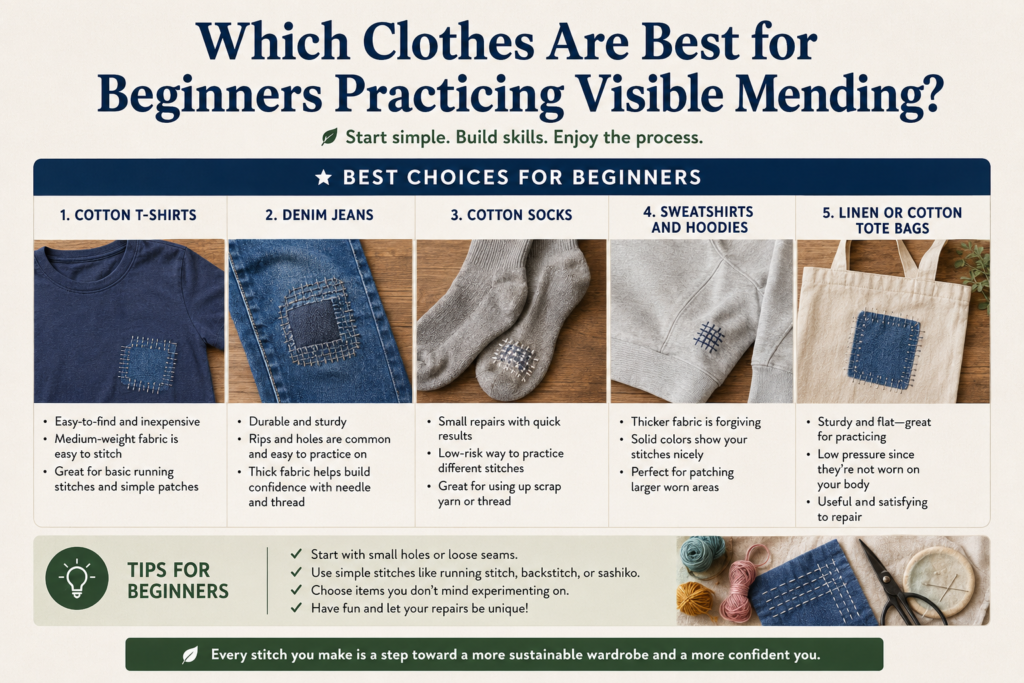
Beginners usually achieve the best visible mending results on thick, stable fabrics that tolerate uneven stitching and repeated needle passes. Denim, canvas, and heavy cotton garments provide a forgiving surface where minor inconsistencies remain less noticeable.
Starting with durable fabrics helps new repairers focus on stitch control, tension management, and patch placement without dealing with fragile textile behavior. Thick garments also resist puckering, which makes the learning process much less frustrating.
The best beginner-friendly garments include:
- Denim jeans
- Canvas tote bags
- Chore coats
- Heavy cotton shirts
- Aprons
- Denim jackets
- Utility overshirts
These garments benefit from visible reinforcement because they naturally develop wear in predictable areas. Small mistakes often blend into the rugged appearance of workwear and utility textiles.
Beginners should usually avoid:
- Stretch fabrics
- Thin synthetics
- Lightweight silk
- Delicate knitwear
- Formal garments
These materials require advanced tension control and precision stitching that can become difficult during early practice.
Denim remains one of the easiest starting points because sashiko stitching visually complements the fabric texture. White reinforcement thread against indigo fabric creates strong contrast while still appearing intentional and traditional.
Visible mending also becomes easier when repairs begin before complete holes form. Reinforcing thinning knees, elbows, or cuffs teaches structural stitching techniques while reducing the complexity of rebuilding missing fabric sections.
For people interested in Japanese boro aesthetics, starting with durable workwear allows skills to develop gradually while producing repairs that remain both functional and visually appealing.
What Mistakes Do Beginners Commonly Make With Visible Mending?
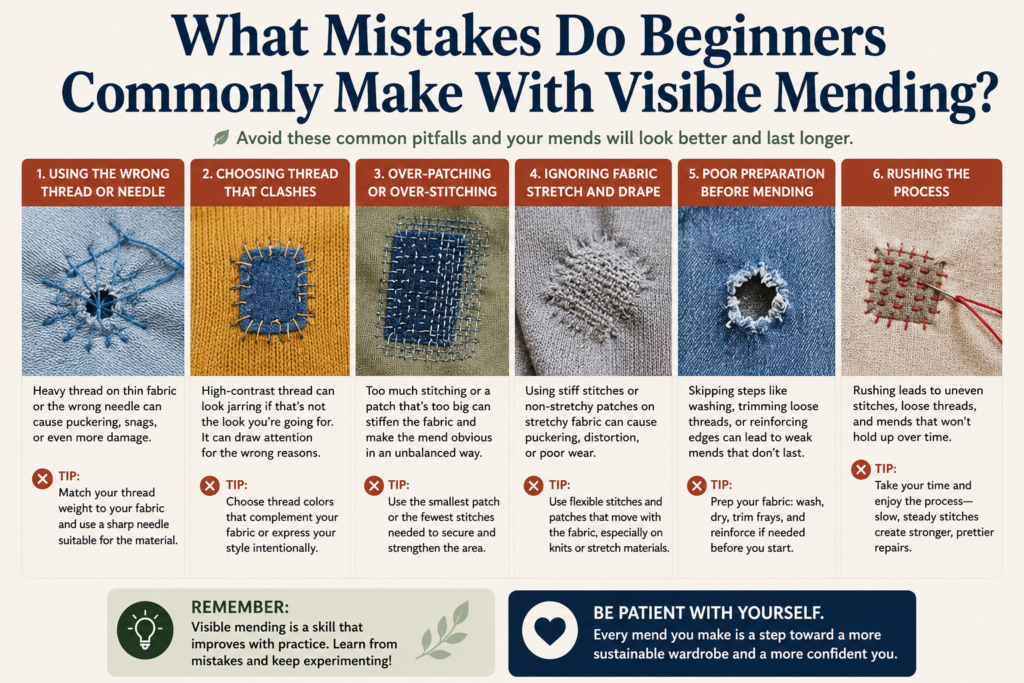
Beginners often damage fabric unintentionally by pulling stitches too tightly, repairing unstable areas too late, or using thread that is too heavy for the garment.
Visible mending works best when reinforcement supports the fabric naturally rather than forcing stiff tension across weak fibers. Excessively tight stitching may cause puckering or create new stress points beside the repair.
Common beginner mistakes include:
- pulling stitches too tightly
- patching badly weakened fabric
- using oversized needles
- ignoring surrounding weak areas
- choosing thread that is too thick
- repairing after holes spread too far
- using unstable patch fabric
Many beginners also focus only on the visible hole itself rather than reinforcing the surrounding thinning fabric. This often causes nearby tearing shortly after repair.
Practicing on denim or canvas usually reduces these problems because thick woven fabrics remain more forgiving during early learning.
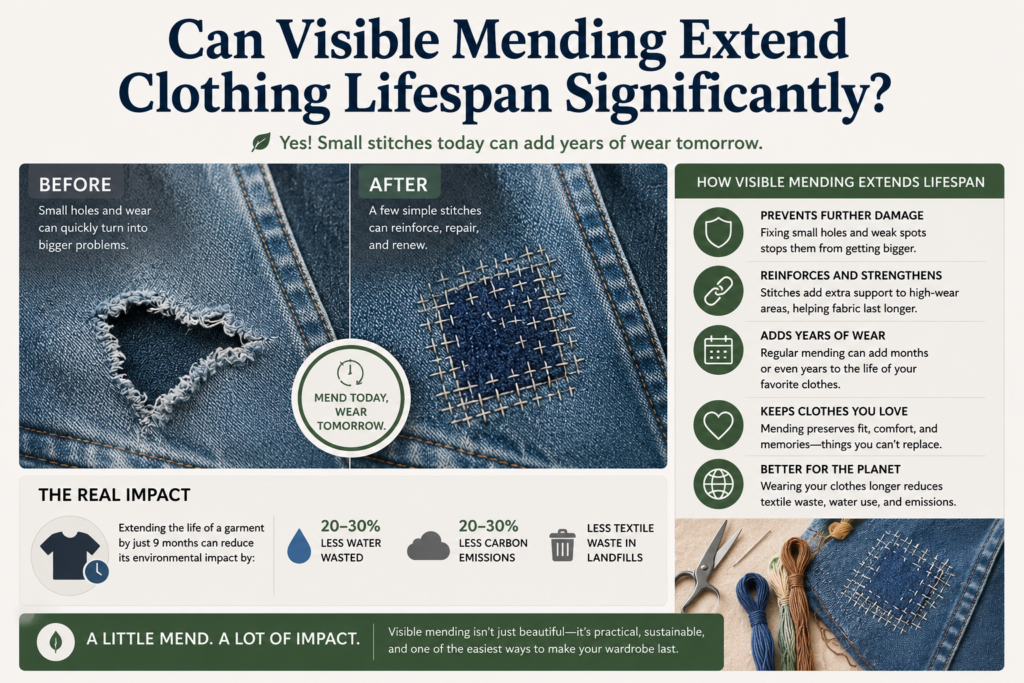
Can Visible Mending Extend Clothing Lifespan Significantly?
Visible mending can extend clothing lifespan dramatically when repairs are applied early and reinforced consistently over time. Many garments fail gradually rather than suddenly, which creates opportunities to stabilize thinning fabric before large structural holes appear.
Preventive reinforcement is often more effective than emergency repair because surrounding fibers remain strong enough to distribute tension evenly. Small stitched reinforcements around knees, elbows, cuffs, or pockets reduce strain on weakened areas and slow future damage progression.
Garments that benefit most from long-term reinforcement include:
- Denim jeans
- Canvas workwear
- Wool sweaters
- Linen shirts
- Utility jackets
- Heavy cotton garments
Visible mending improves longevity through several mechanisms:
- Reinforcing weak zones
- Reducing edge fraying
- Stabilizing fabric tension
- Preventing hole expansion
- Adding structural patch layers
- Redistributing stress across larger areas
Traditional boro garments in Japan sometimes survived for generations through repeated patching and layered reinforcement. Instead of replacing damaged textiles immediately, repairs accumulated gradually while preserving the garment’s usefulness.
Modern visible mending also supports sustainability by reducing textile waste and encouraging long-term garment care. Repairing durable clothes often proves more environmentally responsible than repeatedly purchasing low-quality replacements.
The lifespan extension depends heavily on fabric quality. High-grade natural fibers usually respond best because they maintain structural strength even after years of use. Thin fast-fashion garments, by contrast, often deteriorate too broadly for long-lasting reinforcement.
When practiced consistently, visible mending transforms clothing maintenance from temporary repair into an ongoing process of preservation, reinforcement, and personalization.
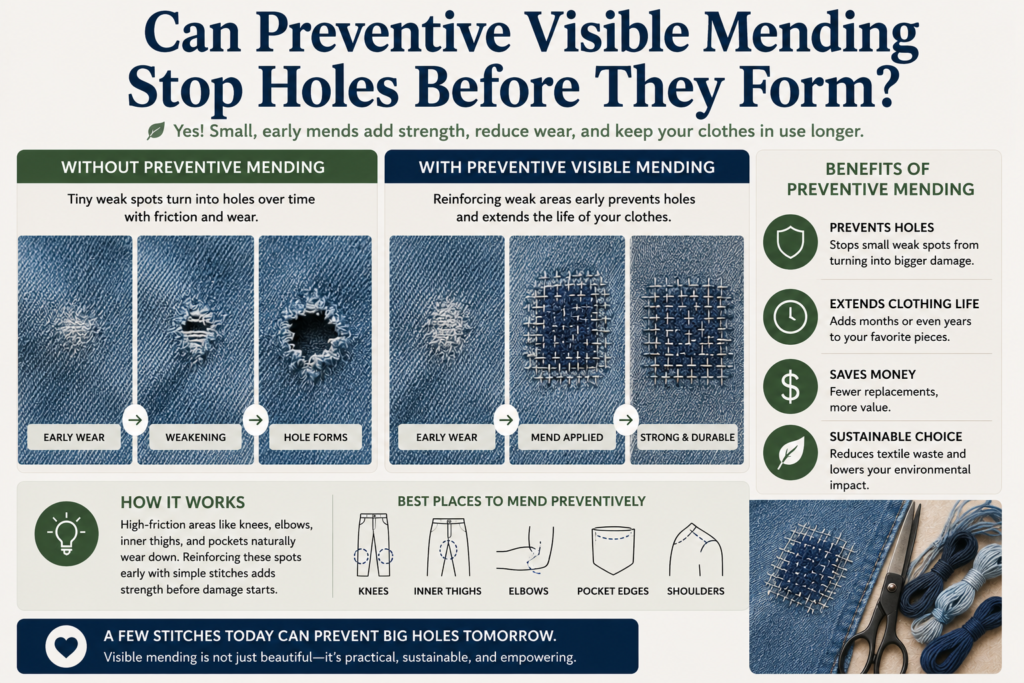
Can Preventive Visible Mending Stop Holes Before They Form?
Preventive visible mending strengthens thinning fabric before full holes appear, helping garments survive significantly longer by reducing stress on weakened fibers.
Many people wait until fabric completely tears before repairing clothing. However, visible mending is often far more effective when applied early. Thin knees, soft elbows, fraying cuffs, and stressed pocket corners can all be reinforced before structural failure spreads.
Preventive reinforcement works because stitching redistributes tension across a wider fabric area. Instead of concentrating stress on weak fibers alone, layered stitching and patches stabilize the surrounding textile structure.
The best areas for preventive visible mending include:
- Jean knees
- Inner thighs
- Sweater elbows
- Jacket cuffs
- Pocket corners
- Seat panels
- Shoulder seams
Preventive repairs are usually smaller, cleaner, and more durable than large emergency repairs performed after severe tearing occurs.
This approach also reflects traditional Japanese boro practices, where garments were continuously reinforced throughout their lifespan rather than discarded after damage appeared.
How Long Does Visible Mending Usually Last?
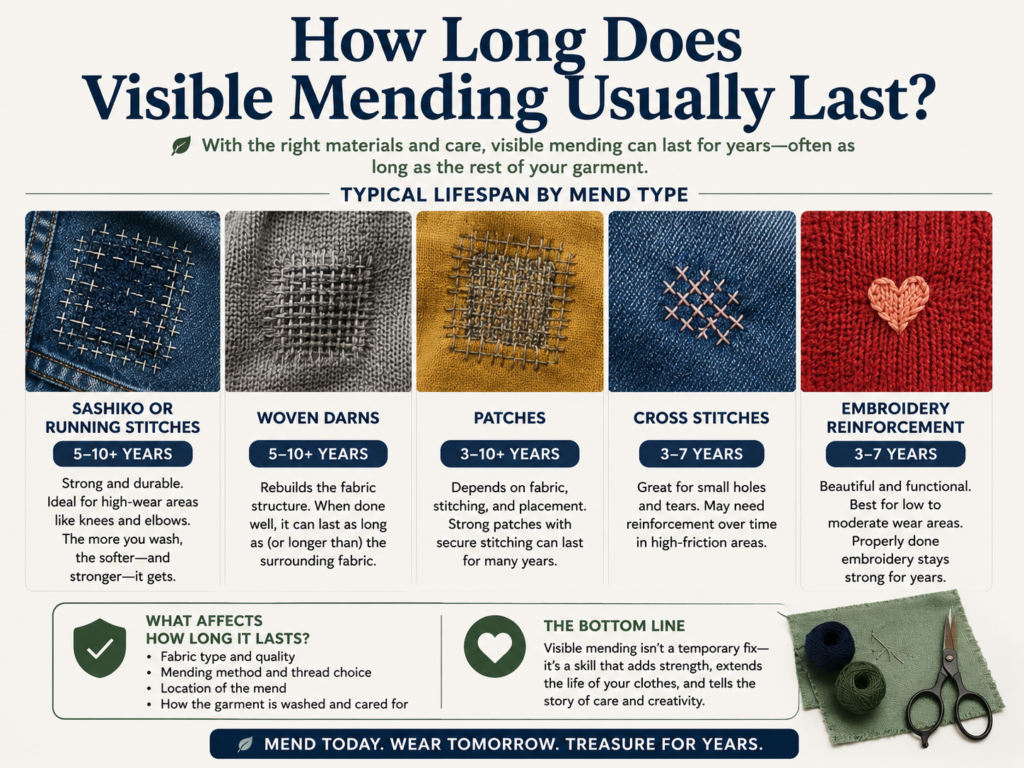
Well-executed visible mending can last for years, especially when repairs are applied early and supported by strong surrounding fabric.
Repair lifespan depends heavily on fabric quality, stitch density, garment usage, and washing frequency. Dense sashiko reinforcement on heavy denim may survive for many years, while delicate repairs on thin synthetic fabric may wear out much faster.
Several factors strongly affect repair durability:
- fabric thickness
- thread strength
- stitch spacing
- washing habits
- friction intensity
- patch size
- surrounding fabric condition
Repairs usually last longer when reinforcement extends beyond the damaged area itself. Stabilizing surrounding fabric helps distribute tension more evenly and reduces concentrated stress at patch edges.
Approximate repair lifespan expectations:
| Garment Type | Typical Repair Lifespan |
| Denim jeans | Several years |
| Canvas workwear | Many years |
| Wool sweaters | Multiple seasons |
| Socks | Months to years |
| Thin synthetics | Variable |
Preventive reinforcement generally lasts longer than emergency repairs because the surrounding fabric remains healthier during the stitching process.
Which Clothes Are Good or Bad Candidates for Visible Mending?
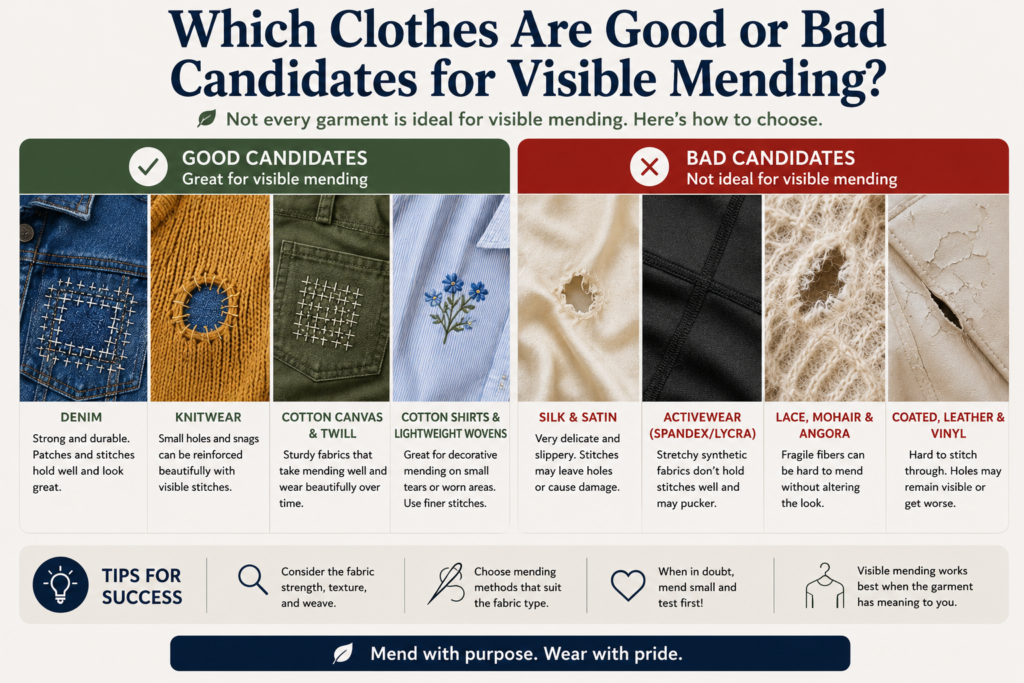
Durable natural fiber garments with localized wear are usually the best visible mending candidates, while broadly weakened synthetic fabrics are often much harder to repair successfully.
Good Candidates
✅ Denim jeans
✅ Canvas workwear
✅ Wool sweaters
✅ Linen shirts
✅ Heavy cotton jackets
✅ Thick socks
✅ Vintage workwear
Sometimes Difficult
⚠ Stretch blends
⚠ Rayon fabrics
⚠ Lightweight cotton
⚠ Athletic wear
⚠ Thin knitwear
Poor Candidates
❌ Ultra-thin synthetics
❌ Brittle polyester
❌ Severely degraded fabric
❌ Melt-damaged textiles
❌ Broadly weakened fast fashion
Choosing the right garment dramatically improves both repair durability and visible mending appearance.
Why Do People Keep Repairing Certain Clothes Repeatedly?

People often continue repairing garments that carry emotional value, exceptional comfort, or long-term personal history even after visible wear becomes noticeable.
Many well-worn garments become difficult to replace because they develop a unique fit and familiarity over time. Favorite jeans soften naturally, jackets mold to body movement, and handmade knitwear often carries sentimental significance connected to family or personal experiences.
Visible mending supports this emotional longevity by allowing clothes to evolve gradually instead of being discarded immediately after damage appears.
Garments commonly repaired repeatedly include:
- inherited sweaters
- favorite denim jeans
- travel jackets
- handmade knitwear
- vintage workwear
- sentimental clothing
Unlike disposable fast fashion, long-term garments often gain character through repair. Layered patches, visible stitching, and fabric fading become part of the clothing’s visual identity.
This emotional connection is one reason visible mending remains closely associated with slow fashion and sustainable clothing culture today.

Final Thoughts on Which Clothes Benefit Most From Visible Mending
The clothes that benefit most from visible mending are durable garments with localized wear patterns and strong underlying fabric structure. Denim jeans, wool sweaters, canvas workwear, socks, jackets, and linen garments all respond especially well because they can support reinforcement stitching without losing flexibility or usability.
Visible mending succeeds best when repairs happen before complete structural failure occurs. Reinforcing weak areas early allows stitches and patches to stabilize fabric gradually rather than rebuilding heavily damaged sections later. This preventive approach often extends garment lifespan significantly.
Natural fibers remain especially suitable because they:
- Hold stitches securely
- Fray predictably
- Age attractively
- Support layered patches
- Maintain strength over time
Japanese boro and sashiko traditions continue influencing modern visible mending because they combine practicality with artistic expression. Repairs become part of the garment’s identity instead of something hidden or discarded.
Visible mending also changes the relationship people have with clothing. Instead of treating garments as disposable, repairs encourage long-term care, personalization, and appreciation for textile craftsmanship. Over time, stitched reinforcements, layered patches, and worn textures create unique visual history that mass-produced replacements cannot replicate.
For beginners, thick fabrics like denim and canvas offer the easiest introduction. For experienced repair enthusiasts, knitwear, layered patchwork, and preventive reinforcement provide opportunities for more advanced textile preservation techniques.
The best visible mending projects are not simply about fixing holes. They are about extending usefulness, preserving quality materials, and allowing clothing to evolve naturally through continued wear and thoughtful repair.
FAQ Section
Which fabric is easiest to visibly mend?
Denim is usually the easiest because thick cotton fabric supports patches and sashiko stitching without puckering.
Does visible mending work on stretchy clothes?
It can, but stretchy synthetic fabrics are harder to stabilize and may distort around stitches.
Why is denim commonly used for boro stitching?
Denim is durable, repair-friendly, and develops predictable wear patterns that reinforcement stitching strengthens effectively.
Can visible mending prevent holes?
Yes. Reinforcing thinning areas early can slow fraying and prevent complete fabric failure.
Are wool sweaters good for visible mending?
Yes. Wool knitwear responds especially well to darning because yarn structures can be rewoven.
Which clothes are hardest to mend?
Very thin synthetic fabrics and delicate formal garments are usually the most difficult.
Is visible mending decorative or practical?
It can be both. Many repairs strengthen garments while also adding artistic detail.
Are expensive clothes worth visibly mending?
High-quality garments often benefit greatly because repairs extend lifespan while preserving craftsmanship.