Introduction
Boro stitching ideas for home decor combine traditional Japanese textile artistry with modern interior design. Originally developed in rural Japan as a method of extending the life of worn fabrics, boro evolved into a distinctive visual style characterized by layered patches, visible stitching, and a deep appreciation for resourcefulness. Today, homeowners, textile artists, and DIY enthusiasts use boro-inspired techniques to create decorative pieces that add texture, warmth, and authenticity to living spaces.
Unlike mass-produced decor items, boro projects celebrate imperfection and craftsmanship. Every stitch, patch, and fabric layer contributes to a story, making each finished piece unique. This aligns closely with growing interest in sustainable living, slow design, and handmade home accessories. Whether incorporated into wall hangings, cushions, table runners, or quilts, boro stitching creates visually rich decor that feels personal and timeless.
Modern interiors often benefit from the contrast that boro textiles provide. Smooth furniture surfaces, painted walls, and minimalist styling gain depth when paired with layered fabric artwork. The natural textures and visible construction details create a sense of comfort that many contemporary homes lack.
Benefits of using boro stitching in home decor include:
- Sustainable use of fabric scraps
- Unique handcrafted appearance
- Compatibility with multiple interior styles
- Durable layered construction
- Strong visual texture
- Endless customization possibilities
As interest in visible mending and sustainable design continues to grow, boro stitching has become one of the most appealing ways to blend creativity, tradition, and functionality in modern home decor.
What Makes Boro Stitching Ideal for Home Decor?
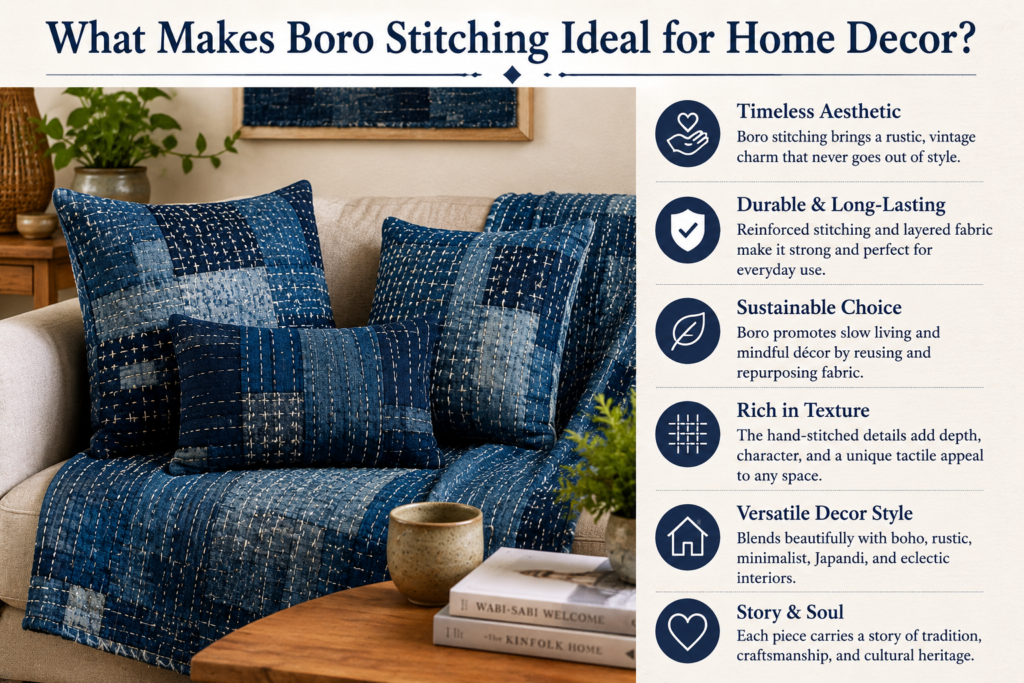
Boro stitching is particularly well suited for home decor because it combines visual beauty with practical durability. The layered construction creates rich textures that immediately attract attention while maintaining the handmade authenticity that modern homeowners increasingly value. Unlike decorative trends that quickly lose popularity, boro’s emphasis on craftsmanship gives it long-lasting appeal.
One of the strongest advantages of boro decor is its ability to work across multiple design styles. Traditional indigo patchwork complements rustic and farmhouse interiors, while neutral-toned boro pieces blend seamlessly into Scandinavian, Japandi, and minimalist spaces. This versatility allows homeowners to introduce textile art without completely changing their existing decor.
The visible stitching itself becomes a decorative element. Rather than hiding seams and repairs, boro highlights them. This creates depth and movement that machine-produced decor often lacks. Every layer contributes to the visual story of the finished piece.
Boro home decor is also highly sustainable. Many projects use repurposed fabrics, vintage textiles, and leftover sewing materials that might otherwise be discarded. This approach reduces waste while producing unique decorative items.
Reasons boro works exceptionally well in home decor:
- Creates strong visual texture
- Encourages sustainable decorating
- Fits modern and traditional interiors
- Highlights handmade craftsmanship
- Offers excellent durability
- Allows complete creative freedom
Because each project is one of a kind, boro pieces often become focal points that add personality and character to a room. Their combination of beauty, history, and sustainability makes them increasingly attractive to today’s homeowners.
Which Boro Home Decor Projects Deliver the Biggest Visual Impact?
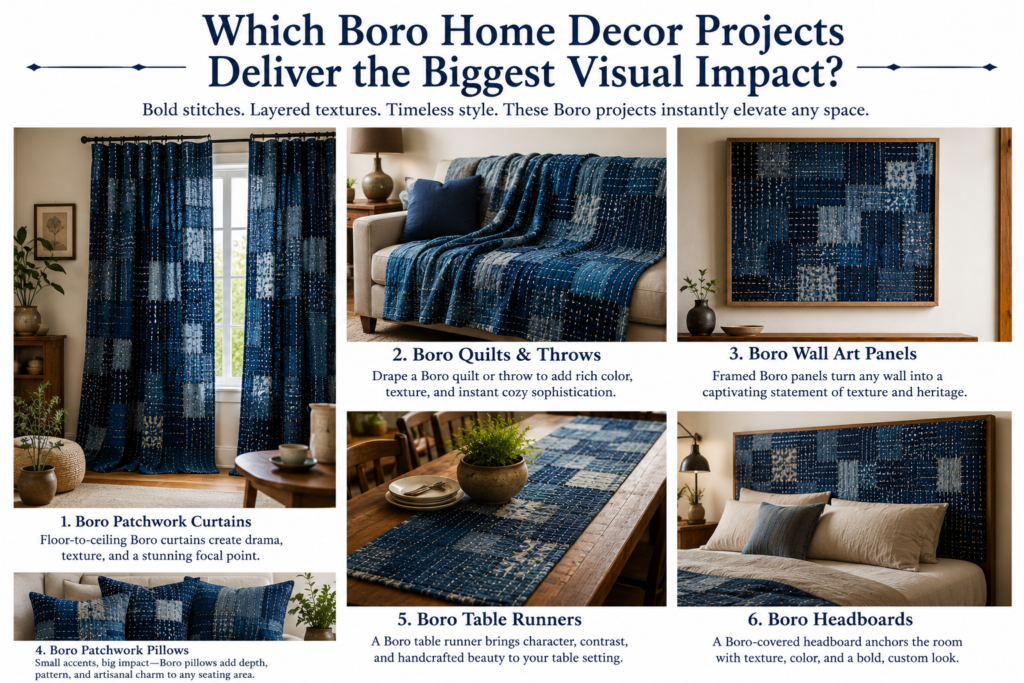
Not all boro projects provide the same decorative impact relative to the time invested. Some projects create dramatic visual transformation with only a few hours of work, while others require extensive stitching but become long-term centerpiece pieces. For beginners, understanding this balance helps prioritize projects that deliver the greatest decorative return.
| Project | Difficulty | Typical Time | Visual Impact |
| Cushion Cover | Easy | 2–4 Hours | High |
| Table Runner | Easy | 3–5 Hours | Medium |
| Wall Hanging | Medium | 6–12 Hours | Very High |
| Throw Blanket | Medium | 10–20 Hours | High |
| Quilt | Advanced | 20–50+ Hours | Extremely High |
For most homeowners, wall hangings and cushion covers provide the best balance between effort and visual transformation. They immediately introduce texture, artisan character, and handcrafted warmth without requiring extensive sewing experience.
How Can Boro Wall Hangings Transform a Room?
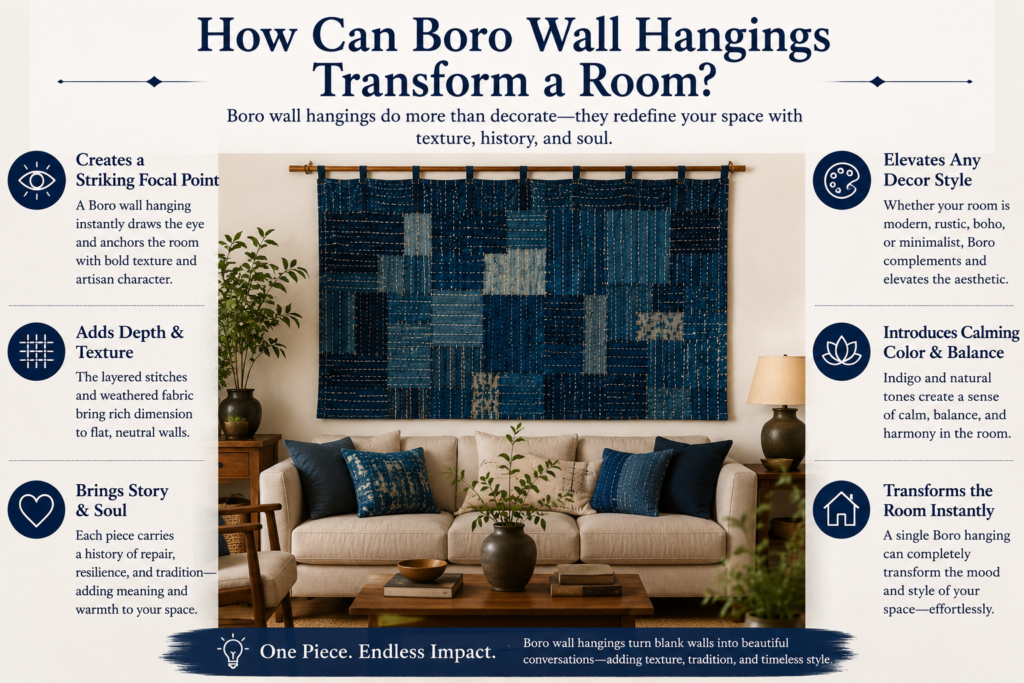
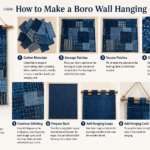
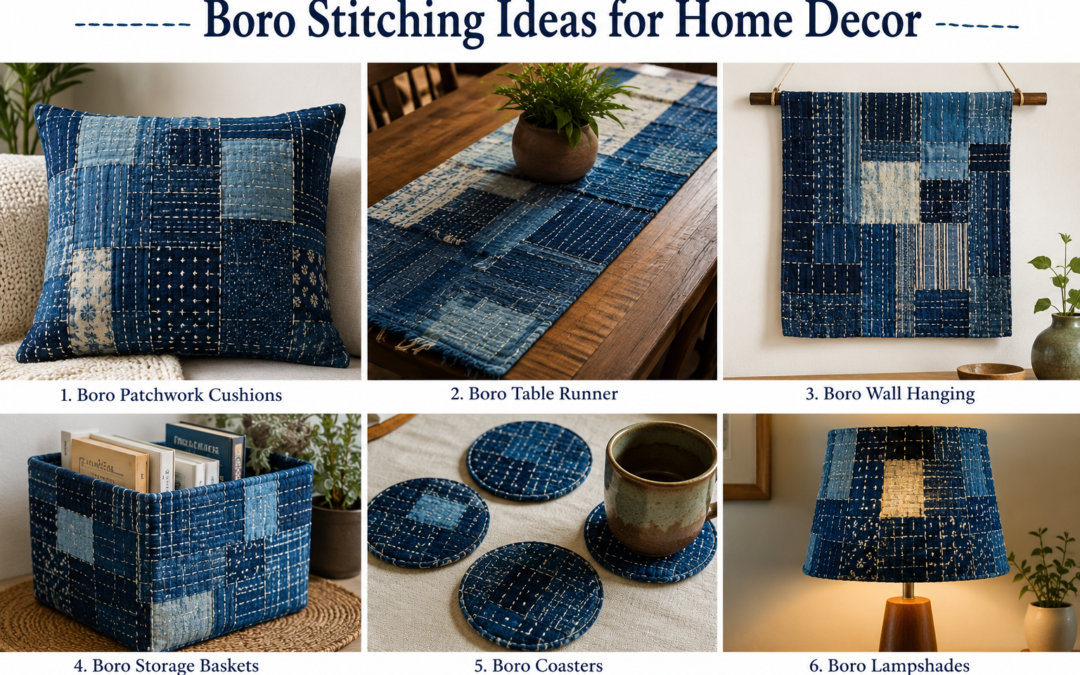
Boro wall hangings are among the most impactful ways to introduce this traditional textile art into home decor. Large fabric compositions immediately draw attention and provide warmth that framed prints or mass-produced artwork often cannot achieve. Because fabric naturally absorbs light differently than hard surfaces, boro wall art adds softness and texture to otherwise flat walls.
The layered patches and visible stitching create visual complexity that encourages closer inspection. Visitors often notice new details each time they view a boro wall hanging. This dynamic quality helps transform simple walls into engaging design features.
Boro wall hangings can also be customized to suit virtually any aesthetic preference. Traditional designs often use indigo-dyed fabrics arranged organically, while modern interpretations may feature geometric layouts, monochromatic palettes, or carefully balanced color blocking. The flexibility of the technique allows artists to create pieces that complement existing furniture and decor.
Ideal locations for boro wall hangings include:
- Living rooms
- Bedrooms
- Home offices
- Entryways
- Hallways
- Reading corners
Another advantage is scale. Wall hangings can be created in small decorative formats or large statement pieces spanning several feet. This makes them adaptable to apartments, homes, studios, and commercial interiors.
As natural light changes throughout the day, the shadows cast by stitched layers create subtle visual variation. This gives the artwork a living quality that many conventional wall decorations lack, making boro wall hangings both decorative and emotionally engaging.
Where Should Boro Decor Be Placed in the Home?
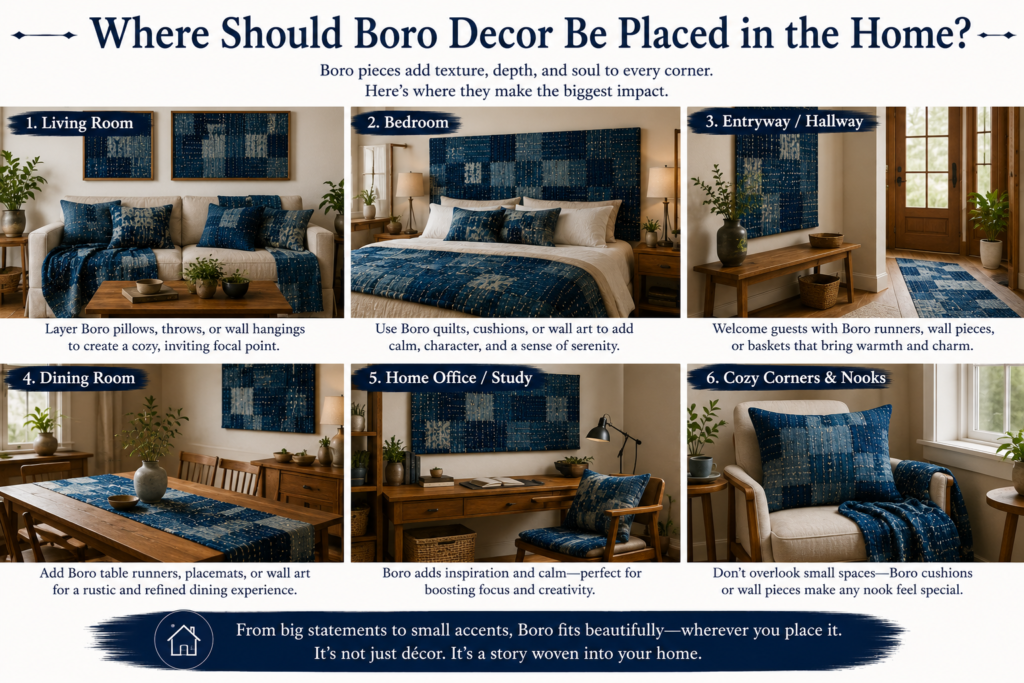
The effectiveness of boro decor often depends on placement. Because the layered textures and visible stitching are highly visual, positioning pieces where they can be appreciated up close maximizes their decorative value.
Living Room
Best choices:
- Cushion covers
- Throws
- Large wall hangings
These pieces add texture while softening modern furniture.
Bedroom
Best choices:
- Quilts
- Pillow covers
- Textile wall art
Boro textiles introduce warmth and create a more personalized atmosphere.
Dining Room
Best choices:
- Table runners
- Placemats
- Decorative textile centerpieces
These projects add handcrafted character without overwhelming the space.
Entryway
Best choices:
- Framed boro panels
- Small wall hangings
These pieces immediately establish a creative and welcoming design identity.
Why Are Boro Cushion Covers So Popular?
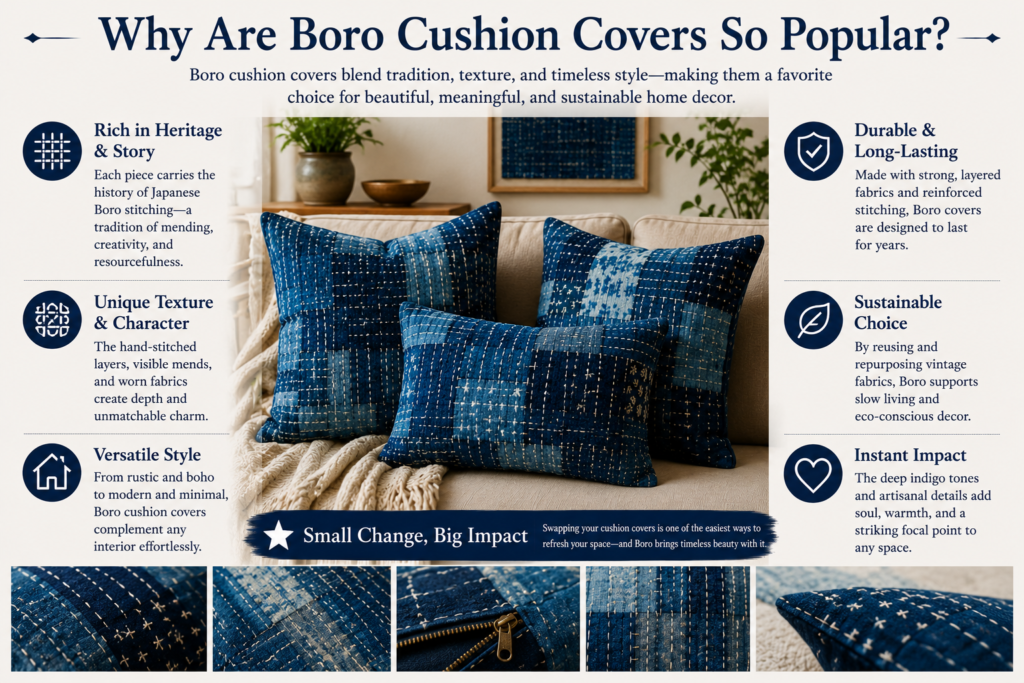
Boro cushion covers have become one of the most popular home decor projects because they combine functionality, comfort, and artistic expression. Cushions are already common decorative elements in living rooms and bedrooms, making them an ideal canvas for showcasing boro stitching techniques.
One reason these projects are so appealing is accessibility. Cushion covers require less fabric than quilts or wall hangings, making them beginner-friendly while still providing enough surface area to explore layering, patch placement, and visible stitching patterns. Even small collections of fabric scraps can produce beautiful results.
The layered construction creates tactile texture that enhances the comfort and visual appeal of sofas, armchairs, and beds. Unlike printed decorative cushions, boro cushions offer genuine dimensional depth created by actual fabric layers and hand stitching.
Popular boro cushion styles include:
- Traditional indigo patchwork
- Neutral minimalist designs
- Denim scrap compositions
- Geometric patch arrangements
- Vintage textile combinations
- Visible contrasting stitch work
Durability is another major advantage. Properly stitched boro cushions often withstand years of everyday use. In fact, many become more attractive over time as fabrics soften and develop natural patina.
Designers frequently use boro cushions to introduce handcrafted character into modern interiors. A few carefully placed cushions can soften contemporary furniture, add warmth to minimalist spaces, and create stronger visual interest without overwhelming the room.
Because every cushion is unique, homeowners can easily create personalized decor that reflects their creativity while supporting sustainable textile practices.
Can Boro Stitching Be Used for Table Runners and Dining Decor?
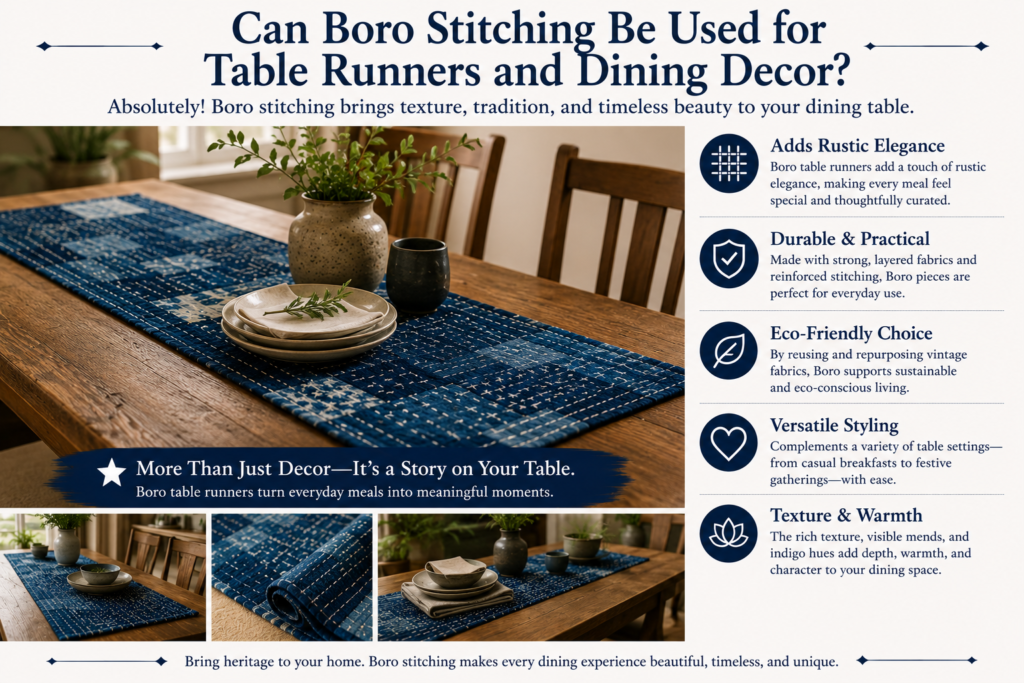
Dining spaces often contain hard surfaces such as wood, glass, metal, and stone. Boro table runners introduce softness and texture that help create a warmer and more inviting atmosphere. The visible stitching and layered fabrics naturally draw attention while maintaining practical functionality.
Unlike delicate decorative textiles that are primarily ornamental, boro-inspired dining accessories can be surprisingly durable. The reinforcing stitches that define the technique help stabilize multiple layers of fabric, allowing pieces to withstand regular use while retaining their appearance.
A boro table runner can serve as a centerpiece even when the dining table is otherwise minimally decorated. The layered construction creates visual depth that enhances both casual and formal dining environments. Coordinated fabric palettes can also help connect dining decor with the broader interior design scheme.
Popular dining applications include:
- Table runners
- Placemats
- Fabric coasters
- Centerpiece mats
- Decorative table toppers
- Seasonal dining accents
Many makers choose natural fibers such as cotton and linen because they provide durability while maintaining the traditional aesthetic associated with Japanese textile arts. Earth tones, indigo shades, and neutral palettes tend to work especially well in dining spaces.
Beyond aesthetics, handmade dining textiles often create a more personal environment for family meals and gatherings. Guests frequently appreciate the craftsmanship visible in the stitching, making boro dining decor both functional and conversational. These qualities make table runners one of the most rewarding home decor applications for boro stitching enthusiasts.
How Do Boro Throws and Quilts Add Comfort and Style?
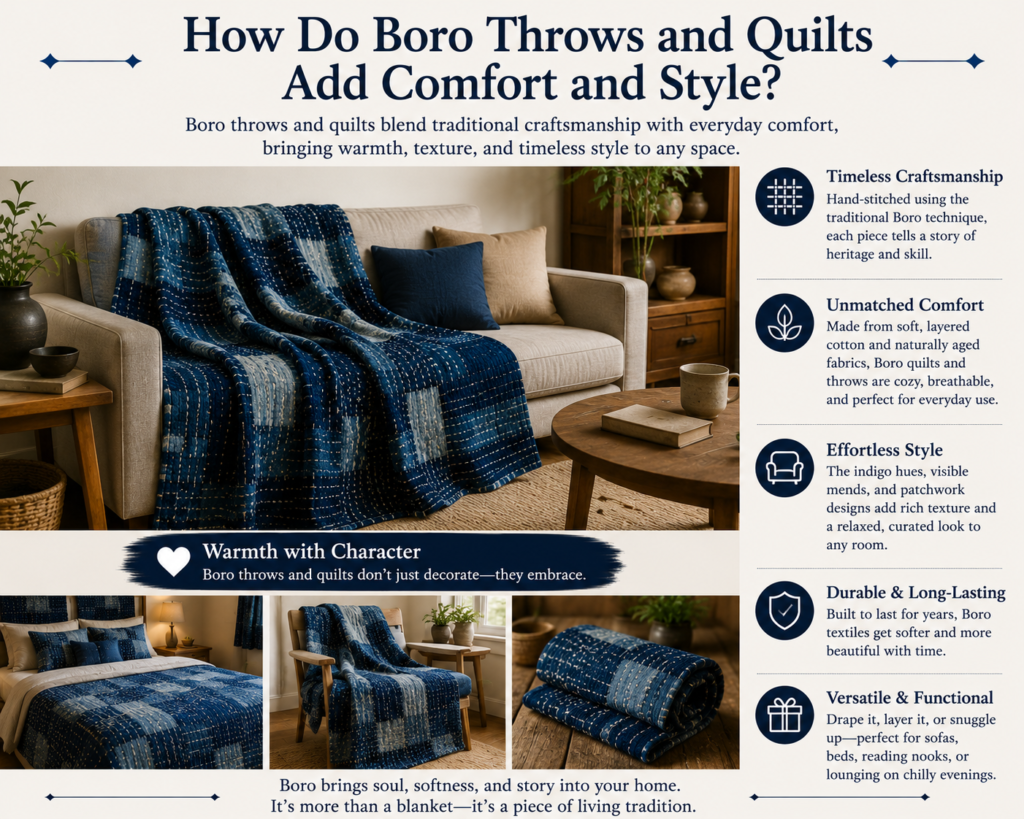
Boro throws and quilts represent one of the closest connections to the historical roots of boro stitching. Traditional Japanese families often repaired and reinforced household textiles repeatedly, creating layered fabrics that became stronger and more visually distinctive over time. Modern boro throws and quilts follow the same philosophy while serving as decorative centerpieces in contemporary homes.
The multiple fabric layers naturally create warmth and insulation, making quilts both functional and beautiful. Unlike factory-produced blankets, a handmade boro quilt contains unique patch arrangements, stitch patterns, and fabric combinations that cannot be replicated exactly. This individuality makes each piece feel more personal and meaningful.
Throws can be draped across sofas, armchairs, benches, or bed footboards to introduce texture and visual depth. The visible stitching immediately adds handcrafted character to a room and often softens the appearance of modern furniture. Many interior designers use textile layering to create a more inviting atmosphere, and boro quilts excel in this role.
Benefits of boro throws and quilts include:
- Decorative and functional value
- Excellent durability
- Strong visual texture
- Sustainable use of fabrics
- Handmade uniqueness
- Seasonal versatility
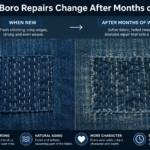
Another advantage is aging. Unlike some decorative textiles that deteriorate visually over time, boro quilts often become more attractive as fabrics soften and acquire natural wear patterns. The evolving appearance aligns perfectly with the Japanese concept of appreciating age and imperfection.
For homeowners seeking a statement piece that combines comfort, artistry, and sustainability, a boro throw or quilt can become one of the most treasured textiles in the home.
Does Boro Stitching Work in Modern Interior Design?
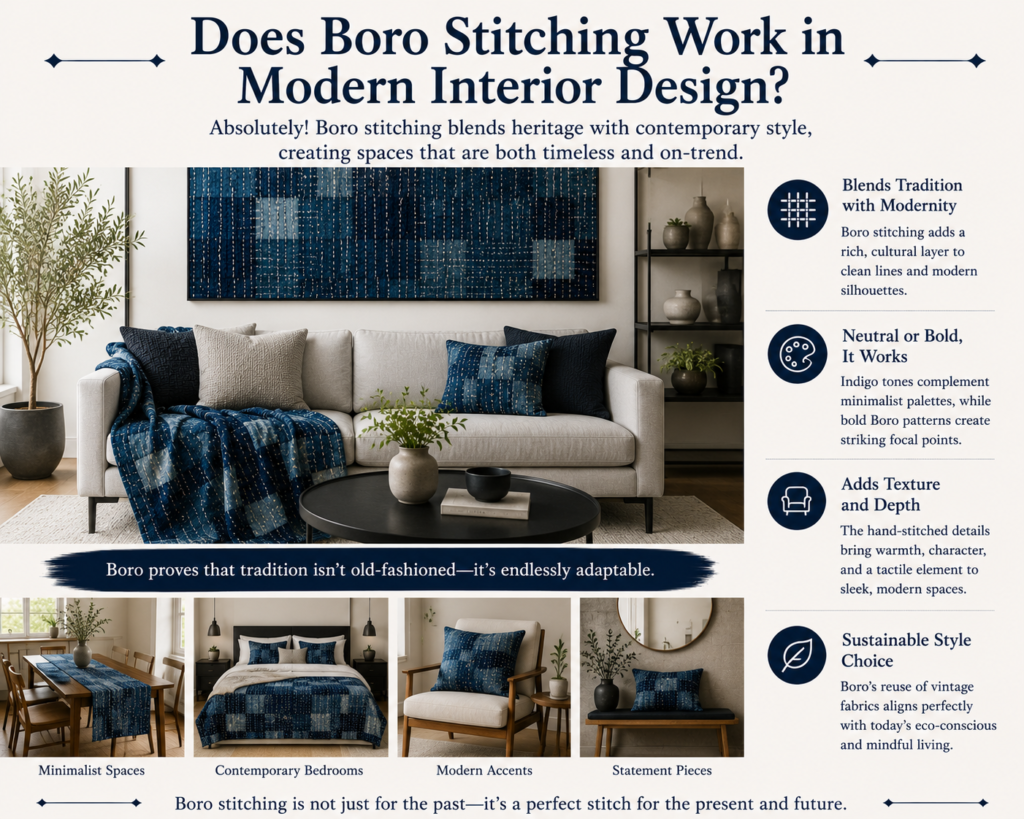
Many people associate boro stitching exclusively with rustic or traditional Japanese interiors, but the technique works exceptionally well in modern design environments. Contemporary homeowners increasingly seek authenticity, craftsmanship, and sustainable materials, all of which align naturally with boro principles.
Modern interiors often rely on clean lines, smooth surfaces, and restrained color palettes. While visually appealing, these spaces can sometimes feel cold or overly minimal. Boro textiles introduce warmth and texture without disrupting the overall aesthetic. A carefully designed wall hanging, cushion cover, or throw can create balance by adding handcrafted detail to otherwise streamlined spaces.
Japandi interiors represent one of the most natural homes for boro decor because both styles emphasize simplicity, natural materials, and intentional design.
However, boro can also complement:
- Scandinavian interiors
- Minimalist homes
- Modern farmhouse spaces
- Industrial lofts
- Contemporary apartments
- Transitional interiors
Color selection plays a major role in integration. Traditional indigo fabrics create stronger visual contrast, while neutral palettes blend seamlessly into modern environments. Linen, beige cotton, gray denim, and off-white fabrics often work particularly well in contemporary settings.
Designers frequently use boro as an accent rather than a dominant feature. A few thoughtfully placed textile pieces can introduce texture and personality while preserving the clean appearance of the room. This balance between simplicity and craftsmanship helps explain why boro has gained popularity among modern interior enthusiasts worldwide.
As sustainable design continues to influence decorating trends, boro stitching is likely to remain highly relevant within contemporary interior design.
Which Boro Color Palettes Work Best for Different Interior Styles?
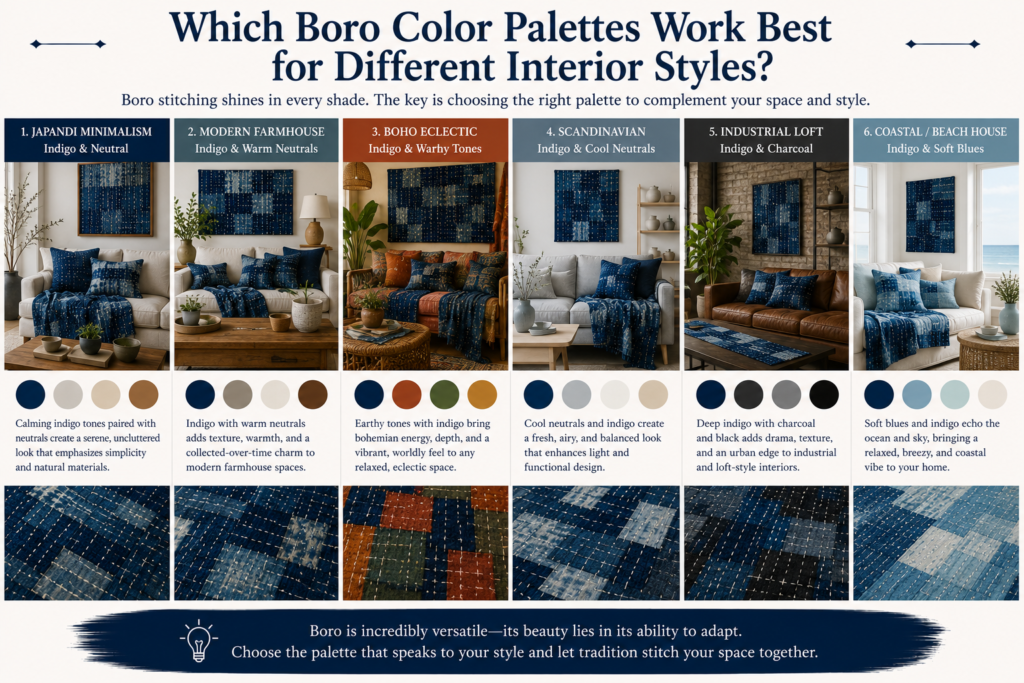
Color selection has a major influence on how boro decor interacts with surrounding furniture and architecture. While traditional Japanese boro often relied on indigo cotton, modern interpretations can be adapted to virtually any interior style.
Traditional Japanese
- Indigo
- Cream
- Faded gray
Japandi & Scandinavian
- Beige
- Charcoal
- Off-white
Rustic Interiors
- Olive green
- Natural linen
- Warm brown
Coastal Interiors
- Soft blue
- Sand tones
- Light gray
Matching the color palette to the room’s existing design creates stronger visual harmony and helps handmade textiles feel intentionally integrated rather than randomly placed.
What Are the Best Fabric Choices for Boro Home Decor?
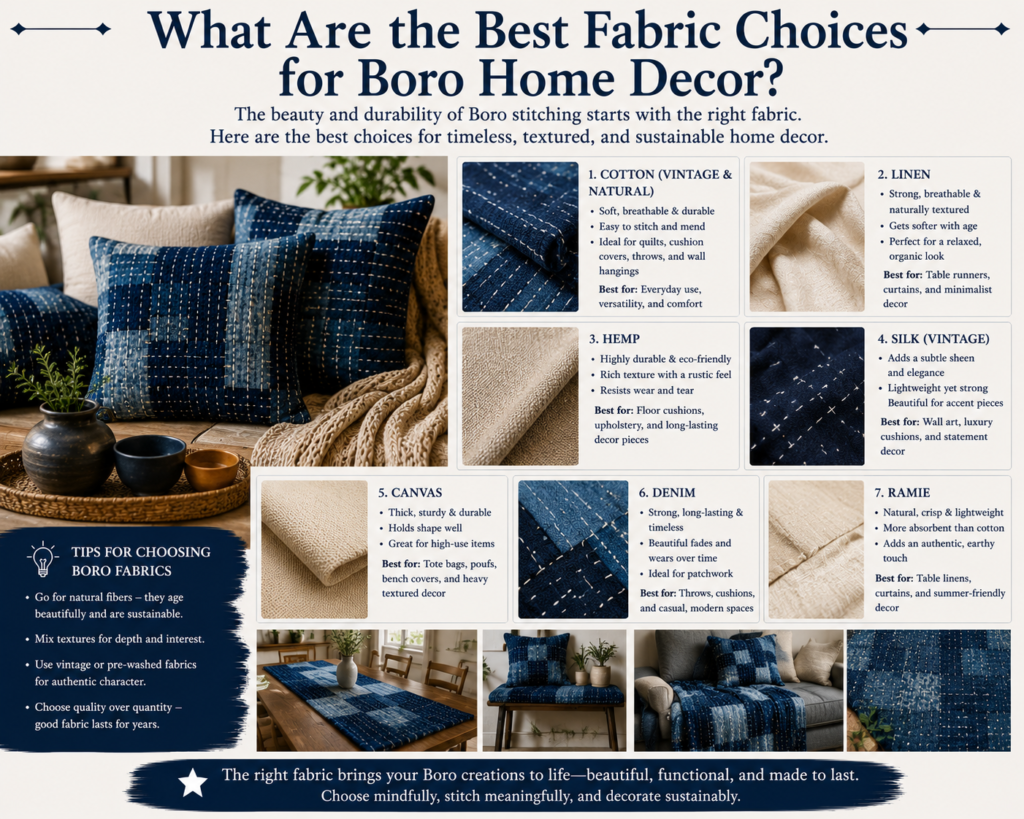
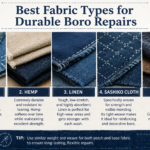
Fabric selection significantly influences both the appearance and longevity of boro home decor projects. Traditional boro relied primarily on cotton because it was durable, easy to repair, and widely available. Modern makers often expand material choices while maintaining the layered aesthetic that defines the technique.
Cotton remains one of the most versatile options because it accepts stitching well and ages gracefully. Indigo-dyed cotton is especially popular due to its strong connection to traditional Japanese boro textiles. Linen is another excellent choice because it offers texture, durability, and a natural appearance that complements handmade decor.
Common fabrics used in boro home decor include:
- Cotton
- Indigo cotton
- Linen
- Denim
- Hemp
- Canvas
- Vintage household textiles
Denim provides exceptional durability and creates strong visual contrast when combined with lighter fabrics. Canvas works well for heavily used items such as cushions and upholstery accents. Hemp offers sustainability benefits while maintaining excellent strength.
Fabrics generally best avoided include:
- Stretch materials
- Silk
- Thin synthetics
- Slippery fabrics
- Delicate decorative textiles
Using materials of similar weight typically produces better results because the layers behave consistently during stitching and everyday use. Pre-washing fabrics is also recommended to minimize shrinkage and improve long-term stability.
Successful boro projects often combine several fabric types to create visual interest. The interplay of texture, color, and wear patterns contributes significantly to the richness and character of the finished piece. Thoughtful fabric selection forms the foundation of durable and visually appealing boro home decor.
How Much Does DIY Boro Home Decor Cost?
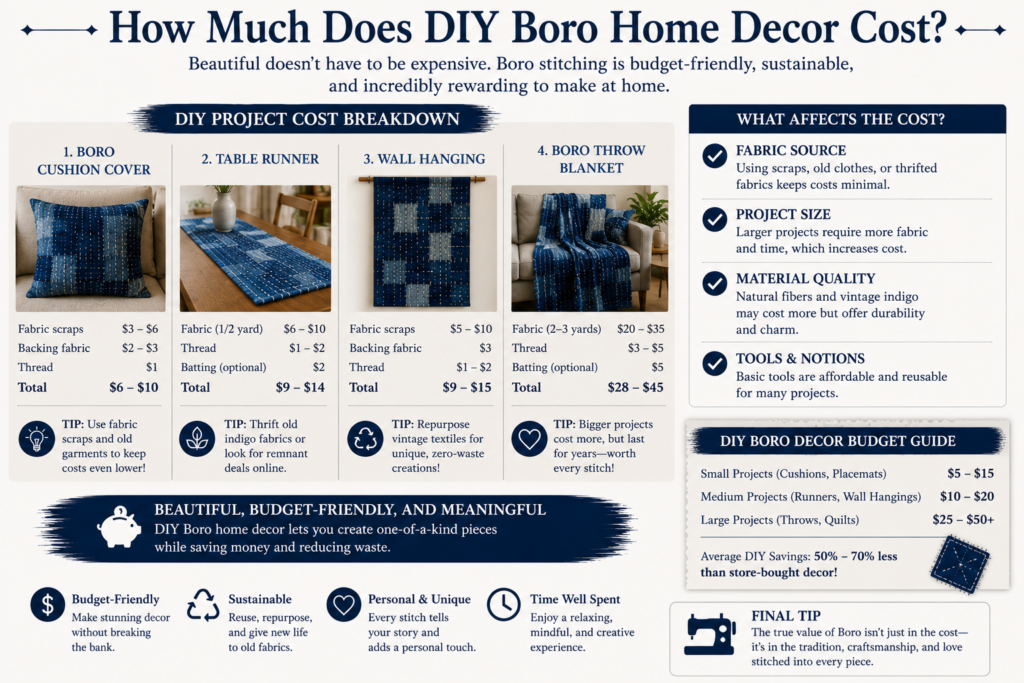
One advantage of boro stitching is its accessibility. Many projects can be created almost entirely from repurposed household textiles, keeping costs surprisingly low. Budget requirements vary depending on project size and whether new materials are purchased.
| Project | Typical DIY Budget |
| Coasters | $0–$10 |
| Cushion Cover | $5–$20 |
| Table Runner | $10–$40 |
| Wall Hanging | $20–$100 |
| Quilt | $50–$300 |
Using recycled fabrics from old clothing, denim, bed linens, or fabric scraps can dramatically reduce costs while enhancing the sustainability benefits that make boro so appealing.
How Does Boro Decor Support Sustainable Living?
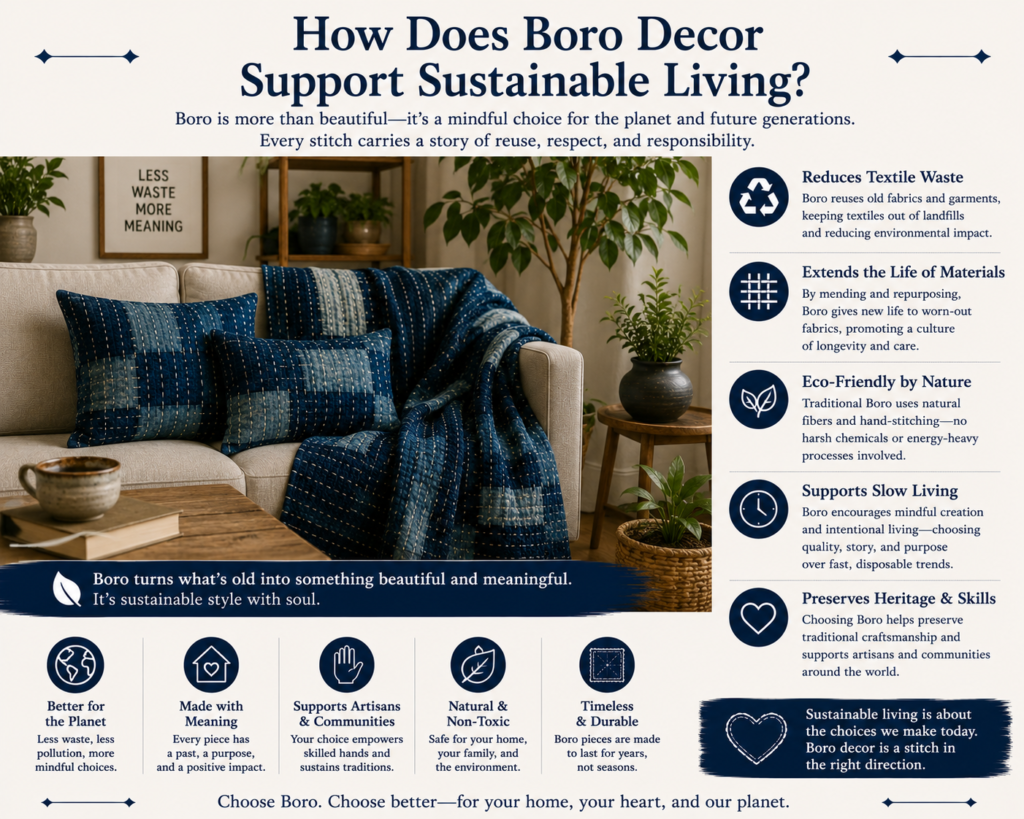
One of the strongest reasons for the global resurgence of boro stitching is its connection to sustainability. At its core, boro represents resourcefulness. The original practice emerged from necessity, with families repeatedly repairing and reinforcing textiles rather than discarding them. This mindset aligns closely with modern efforts to reduce waste and promote responsible consumption.
Today’s home decor industry generates significant amounts of textile waste through fast production cycles and constantly changing trends. Boro offers an alternative approach by encouraging the reuse and transformation of existing materials. Old clothing, fabric scraps, worn household textiles, and leftover sewing materials can all find new life within decorative projects.
Materials commonly repurposed include:
- Old shirts
- Denim jeans
- Bed linens
- Tablecloths
- Fabric remnants
- Vintage garments
Sustainability benefits of boro decor include:
- Reduced textile waste
- Extended fabric lifespan
- Lower environmental impact
- Reduced demand for new materials
- Greater appreciation of craftsmanship
- Support for slow design principles
Beyond environmental advantages, boro encourages a more thoughtful relationship with possessions. Instead of replacing items frequently, people learn to repair, preserve, and creatively adapt materials. This mindset often extends beyond textiles and influences broader sustainable living practices.
For environmentally conscious homeowners, boro decor provides an opportunity to create beautiful interiors while reducing waste. Each project becomes a practical example of how sustainability and aesthetics can coexist successfully within modern homes.
How Does Boro Decor Change the Feel of a Room?
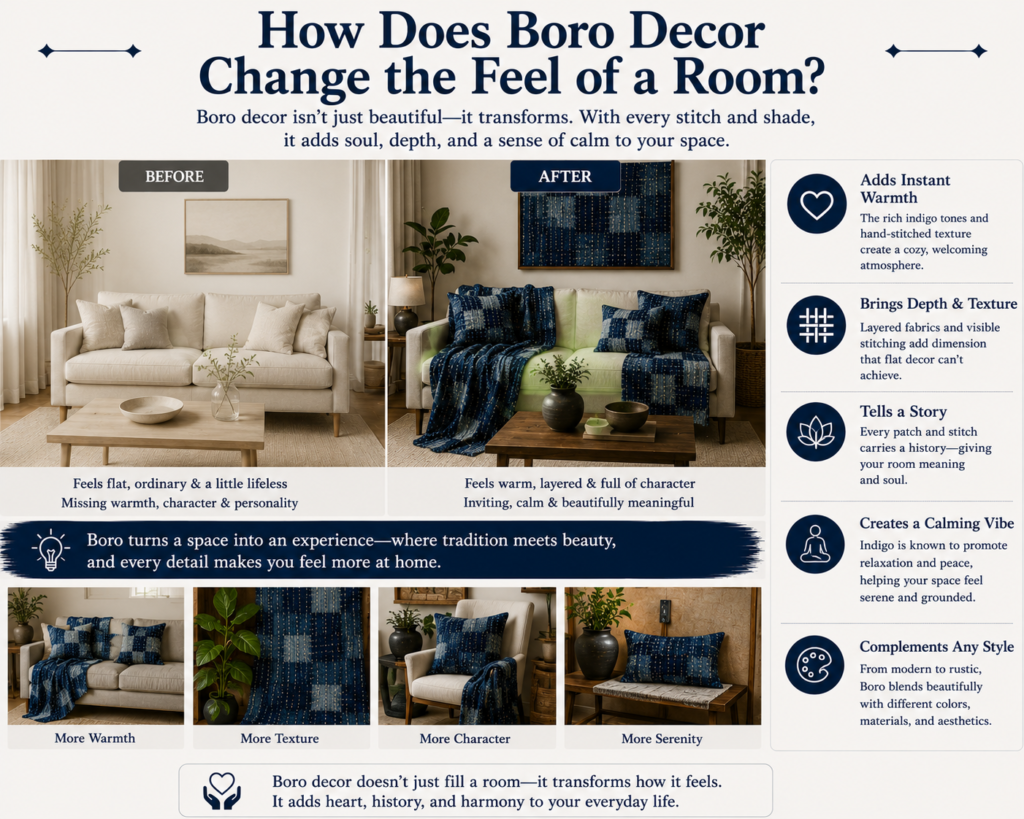
Boro decor influences more than appearance. The layered fabrics, visible stitching, and handcrafted textures can significantly change how a room feels emotionally and visually. Many homeowners describe boro textiles as making spaces feel warmer, more personal, and less manufactured.
| Before | After |
| Plain Sofa | Textured Focal Point |
| Empty Wall | Artisan Statement Piece |
| Generic Bedroom | Personalized Environment |
| Minimal Dining Area | Handcrafted Warmth |
Because textiles naturally soften hard surfaces and absorb visual rigidity, even a single boro piece can dramatically improve a room’s sense of comfort and character.
What Mistakes Can Make Boro Home Decor Look Unbalanced?
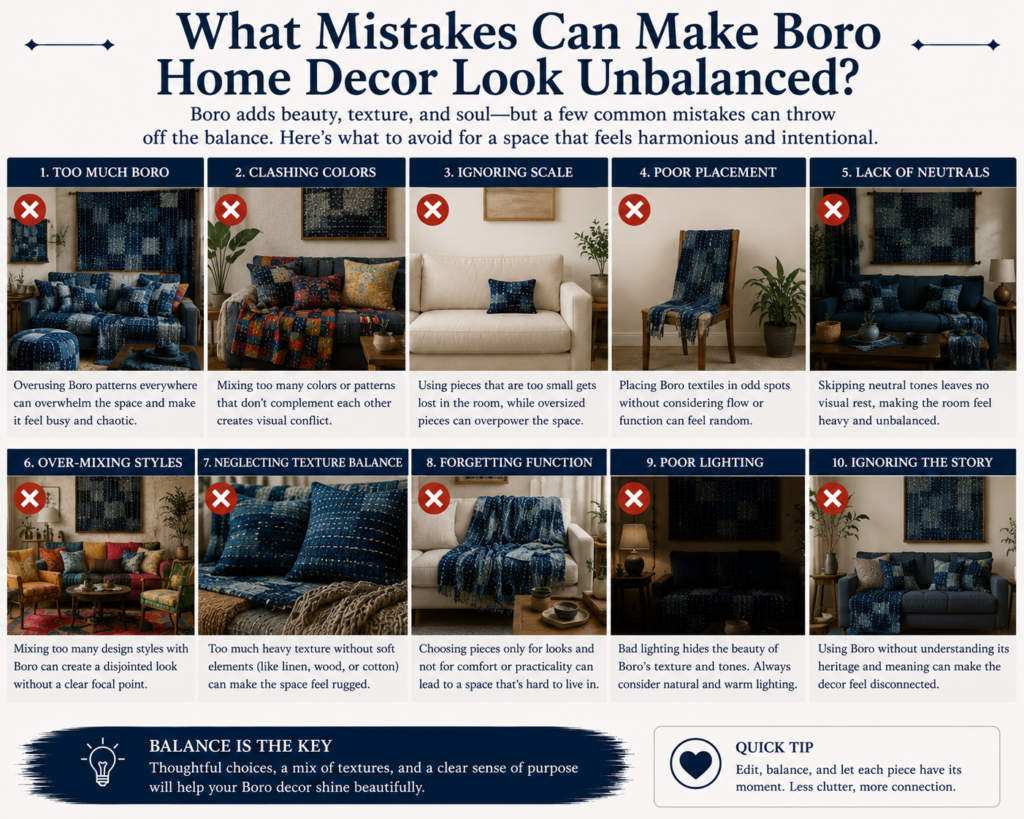
Although boro celebrates imperfection, successful projects still require thoughtful design decisions. Beginners sometimes assume that random layering automatically creates authentic boro aesthetics, but experienced makers understand that balance and composition remain important.
One common mistake is excessive layering. While multiple fabric layers create texture, too many patches can make a piece visually heavy and difficult to appreciate. The eye benefits from areas of visual rest where stitching and patchwork are less concentrated.
Poor color distribution is another frequent issue. If dark fabrics cluster in one area while lighter fabrics dominate another, the composition can appear unintentionally uneven. Successful designs often repeat colors throughout the project to create visual harmony.
Common mistakes include:
- Too many fabric layers
- Uneven stitch density
- Poor color balance
- Weak fabric combinations
- Lack of focal points
- Overcrowded patch placement
Another problem occurs when every section receives the same level of detail. Without variation, the design can appear flat despite the layered construction. Strategic differences in stitch density and patch size help guide the viewer’s eye through the composition.
Professionals frequently step back during the creative process to evaluate overall balance. Viewing a project from a distance often reveals issues that are difficult to notice up close. Photographs can also help identify composition problems before completion.
Understanding these common mistakes allows beginners to create more polished projects while preserving the organic spirit that makes boro stitching so distinctive and appealing.
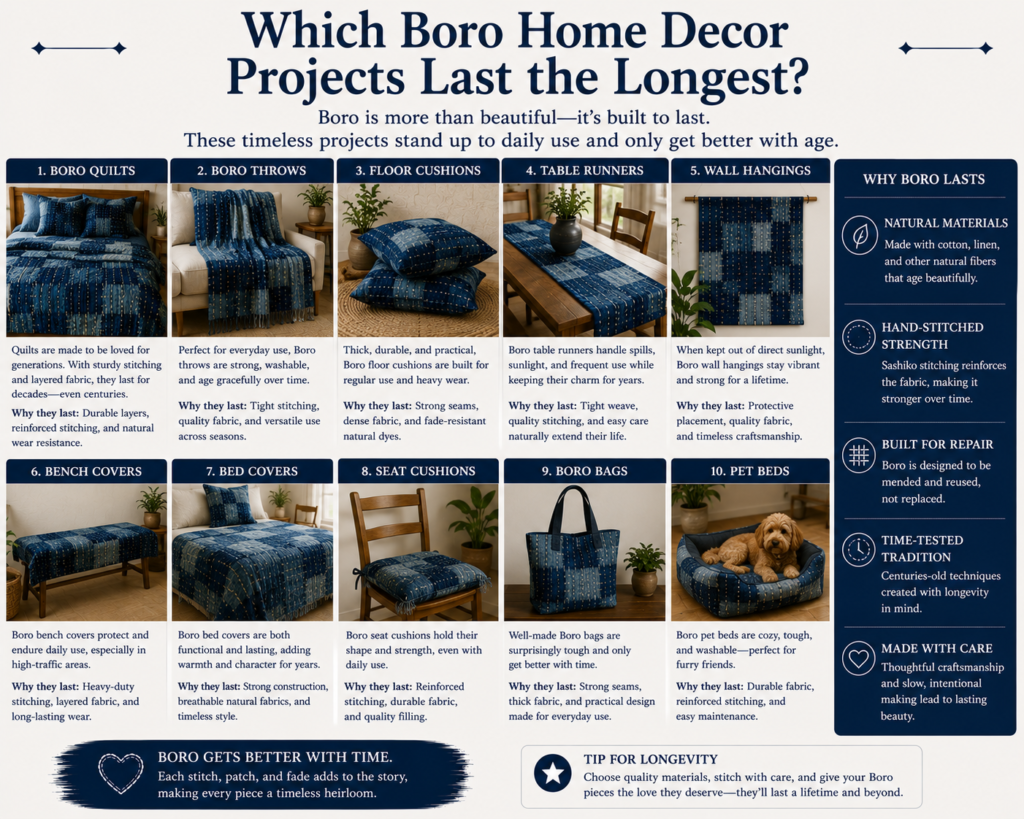
Which Boro Home Decor Projects Last the Longest?
Durability varies depending on placement, fabric choice, and frequency of use. Projects exposed to less physical wear often last for decades, while frequently handled pieces may require occasional reinforcement.
| Project | Expected Lifespan |
| Wall Hanging | 15–30 Years |
| Quilt | 10–30 Years |
| Throw Blanket | 10–20 Years |
| Cushion Cover | 5–15 Years |
| Table Runner | 5–10 Years |
Proper stitching, durable fabrics, and occasional maintenance can significantly extend the lifespan of any boro project. Many traditional examples have survived for generations because of their layered construction.
reserving the organic spirit that makes boro stitching so distinctive and appealing.
Why Interior Designers Use Handmade Textiles as Focal Points
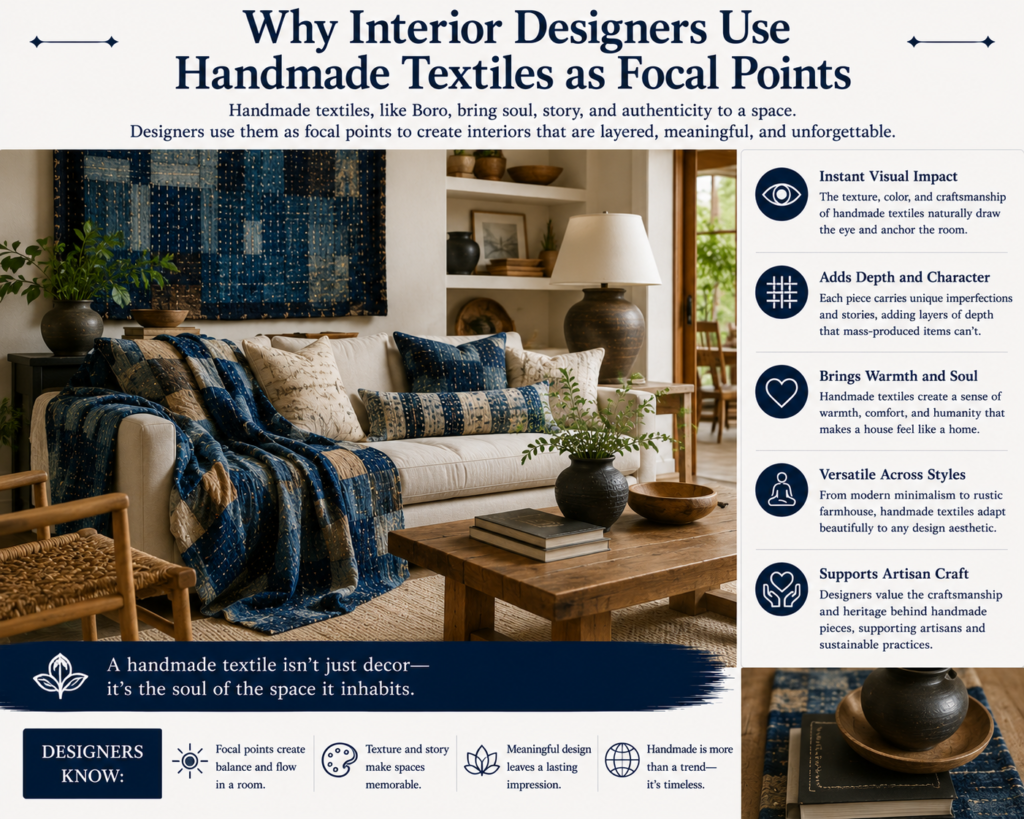
Professional interior designers frequently use handmade textiles to introduce texture, warmth, and visual contrast into rooms dominated by smooth manufactured surfaces. Boro decor performs this role exceptionally well because it combines craftsmanship with strong tactile appeal.
Designers often use boro pieces to:
- Break up flat surfaces
- Introduce natural texture
- Create conversation pieces
- Add artisan character
- Strengthen wabi-sabi aesthetics
- Enhance Japandi interiors
These benefits explain why handmade textile art continues to appear in luxury residential design despite changing decorative trends.
How Do Experienced Artists Create Beautiful Boro Home Decor?
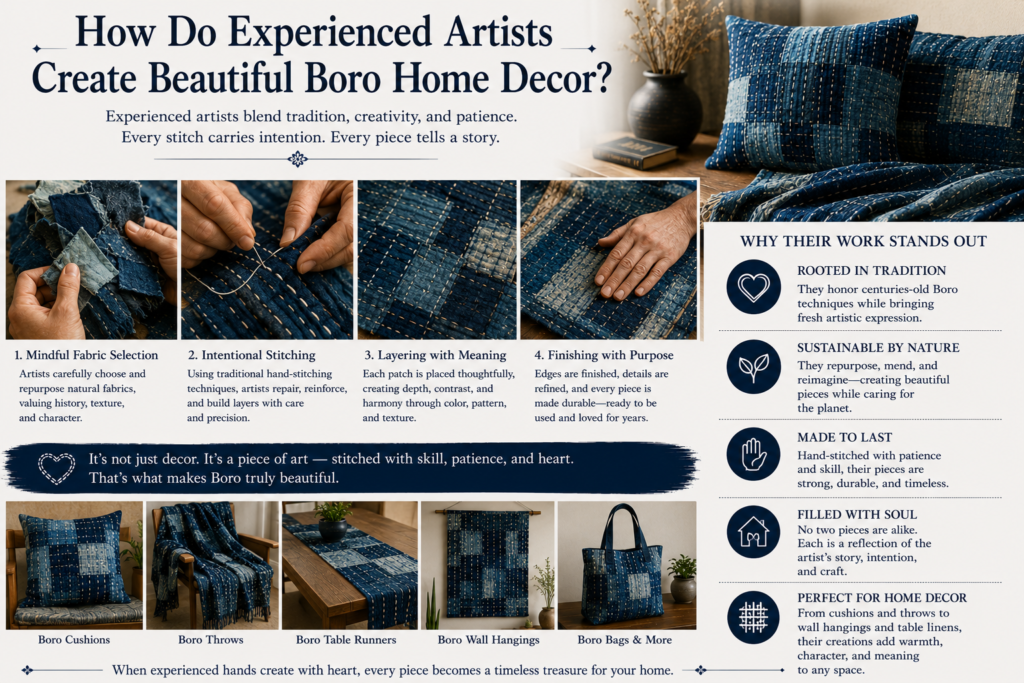
Experienced boro artists understand that successful projects are not simply collections of fabric scraps stitched together. While spontaneity and organic development are important parts of the process, the most visually appealing boro decor combines intuition with intentional design. Skilled makers carefully consider composition, texture, color relationships, and stitch placement to create pieces that feel balanced and cohesive.
One of the key techniques used by experienced artists is establishing a visual focal point. This focal area naturally draws attention before guiding the viewer’s eye across the rest of the design. Larger patches, stronger color contrasts, or denser stitching often help create this effect. Rather than distributing detail evenly, professionals strategically vary visual intensity throughout the piece.
Texture also plays a significant role. Combining fabrics with different surface qualities creates greater depth and visual interest. Linen, cotton, denim, hemp, and vintage textiles each contribute unique characteristics that enrich the overall composition.
Professional boro techniques often include:
- Creating visual focal points
- Repeating colors throughout the design
- Varying stitch directions
- Balancing positive and negative space
- Mixing fabric textures thoughtfully
- Using controlled asymmetry
Another hallmark of experienced work is restraint. Professionals know when to stop adding patches or stitching. Leaving portions of fabric exposed can strengthen the composition and prevent visual overcrowding.
Many artists also draw inspiration from traditional Japanese design principles, including wabi-sabi, which values imperfection, aging, and natural beauty. This philosophy helps create decor that feels authentic rather than overly manufactured.
The result is home decor that combines craftsmanship, artistry, and functionality while maintaining the unique spirit that makes boro stitching so compelling.
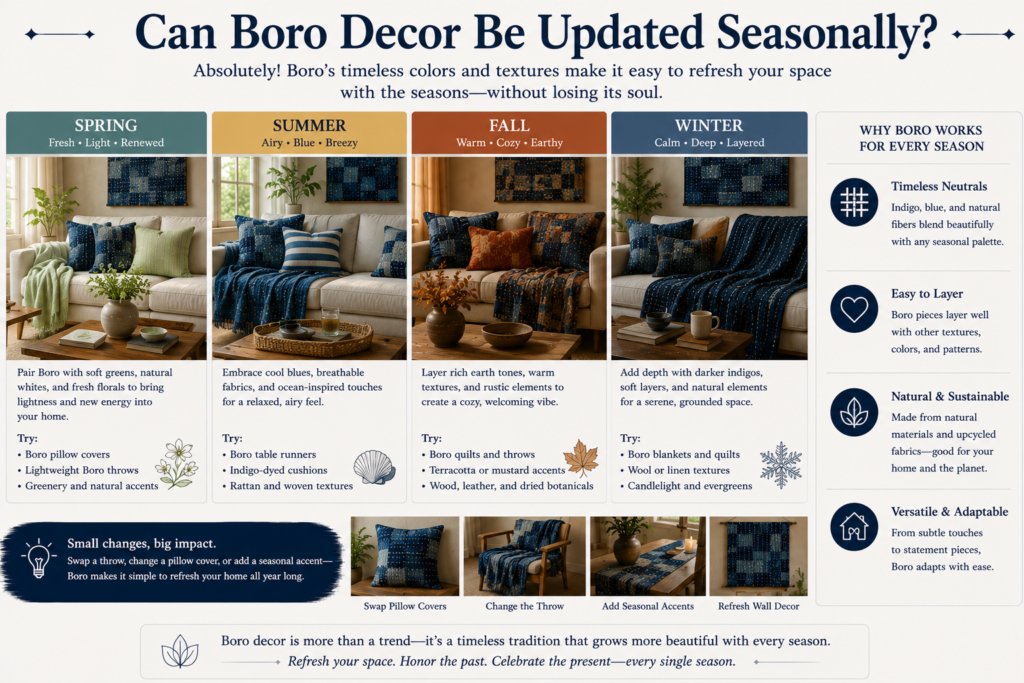
Can Boro Decor Be Updated Seasonally?
Unlike permanent furniture, textile decor can easily evolve throughout the year. Many homeowners rotate boro pieces seasonally to create subtle changes in mood and atmosphere.
Spring
- Lighter fabrics
- Soft neutrals
- Smaller patchwork details
Summer
- Linen blends
- Airy textures
- Coastal-inspired palettes
Autumn
- Earth tones
- Rich indigos
- Heavier textures
Winter
- Dense layering
- Darker fabrics
- Quilt-focused styling
This flexibility helps maintain visual freshness without requiring major decorating changes.
Simple Boro Composition Formula Used by Experienced Makers
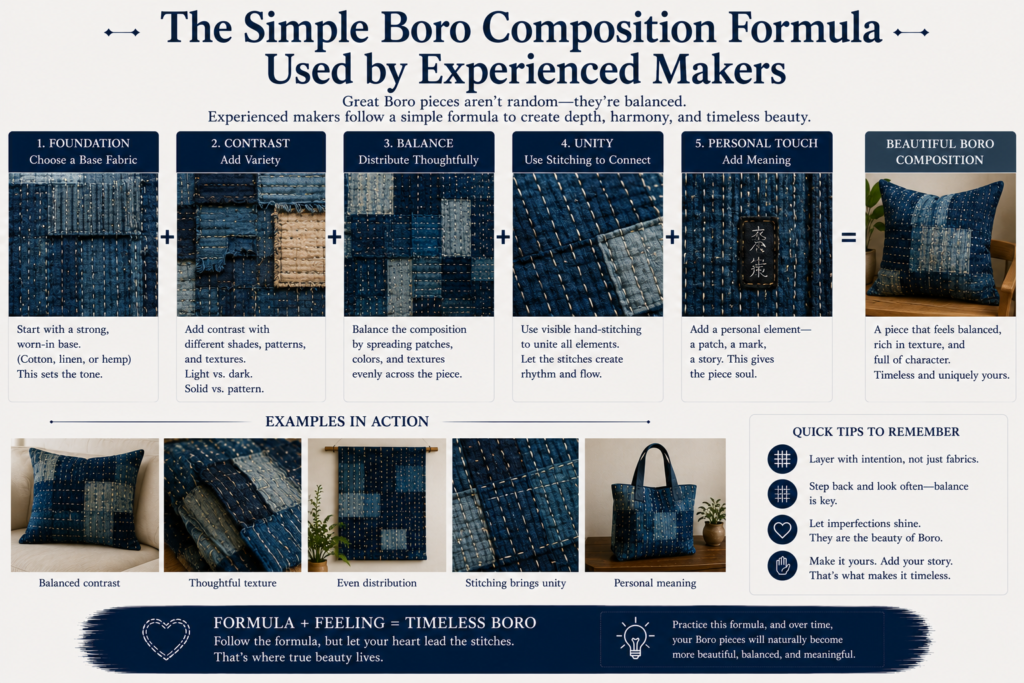
Many experienced makers follow informal composition rules that help maintain visual balance while preserving the organic nature of boro design.
A useful beginner formula is:
- 60% Base Fabric
- 25% Medium Patches
- 15% Accent Patches
For color distribution:
- 70% Primary Color
- 20% Supporting Color
- 10% Contrast Color
This structure prevents overcrowding while creating enough variation to keep the composition visually engaging. Although not a strict rule, it provides a practical framework that helps beginners create more professional-looking results.
What Are the Best Beginner Boro Home Decor Projects?
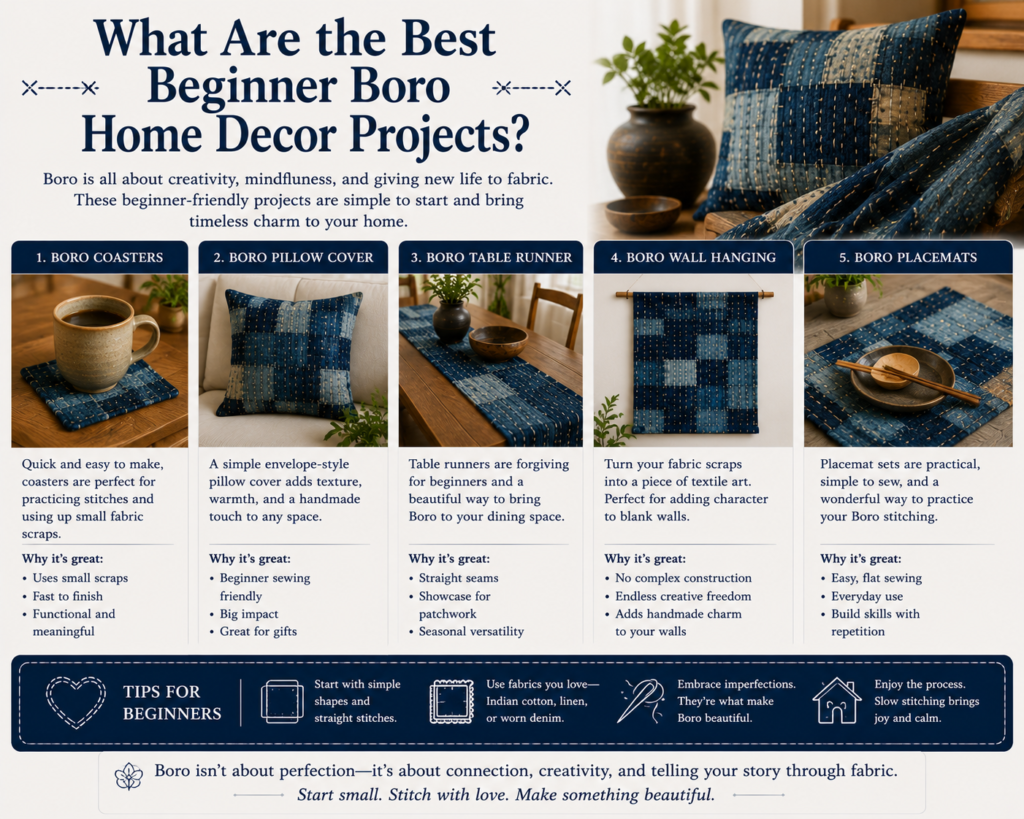
Beginners often achieve the best results by starting with small decorative projects before progressing to larger quilts or wall hangings. Smaller pieces allow makers to practice stitching techniques while completing projects quickly enough to maintain motivation.
Recommended beginner projects include:
- Fabric Coasters
- Cushion Covers
- Placemats
- Small Wall Hangings
- Table Runners
These projects require fewer materials, shorter construction times, and simpler compositions while still showcasing the distinctive aesthetic qualities that make boro stitching so popular.
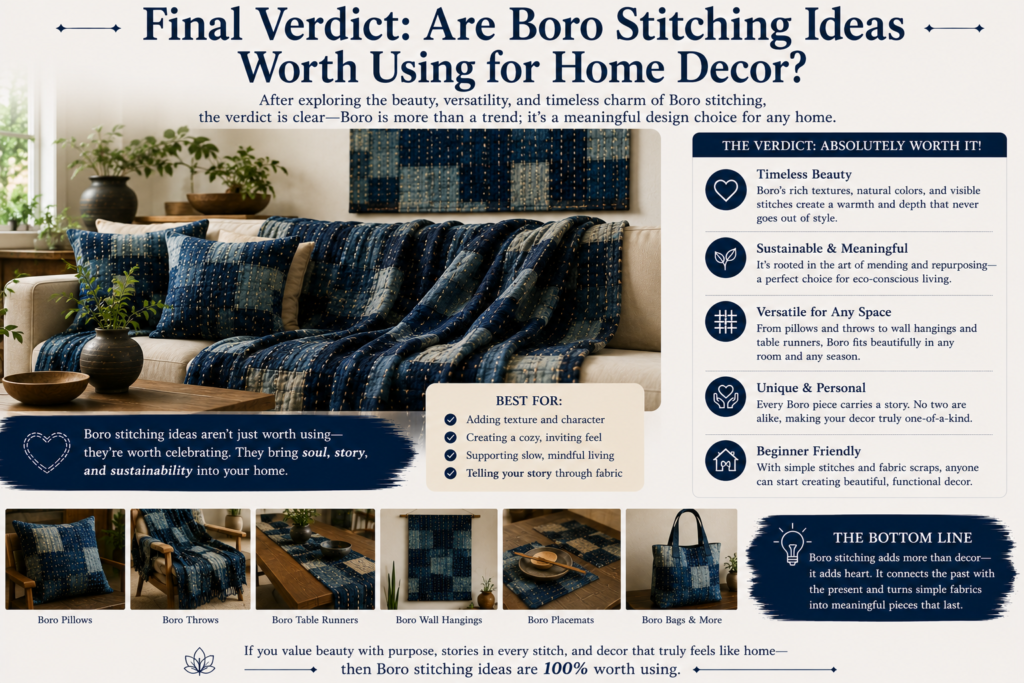
Final Verdict: Are Boro Stitching Ideas Worth Using for Home Decor?
Boro stitching ideas offer one of the most distinctive and meaningful approaches to home decoration available today. They combine traditional textile craftsmanship with modern values such as sustainability, individuality, and conscious consumption. Unlike mass-produced decor items that often follow short-lived trends, boro projects possess timeless appeal because they celebrate authenticity and handmade artistry.
From wall hangings and cushion covers to quilts, throws, and table runners, boro can be adapted to nearly every room in the home. Its versatility allows it to complement a wide range of interior styles, including rustic, farmhouse, Scandinavian, minimalist, Japandi, and contemporary design. Few decorative techniques offer such flexibility while maintaining a strong visual identity.
The benefits extend beyond aesthetics. Boro encourages the reuse of textiles, reducing waste and supporting environmentally responsible decorating practices. Projects can often be completed using materials already available at home, making them both economical and sustainable.
Reasons boro home decor is worth considering:
- Creates unique handmade pieces
- Supports sustainable living
- Adds texture and warmth
- Fits numerous design styles
- Encourages creativity
- Becomes more attractive with age
Perhaps the greatest strength of boro decor is the story behind each piece. Every patch, stitch, and layer reflects time, effort, and personal expression. This emotional value is difficult to achieve through store-bought accessories.
For homeowners seeking decor that combines beauty, durability, sustainability, and artistic character, boro stitching remains one of the most rewarding creative approaches available. Its growing popularity demonstrates that meaningful craftsmanship continues to resonate in modern homes around the world.
Frequently Asked Questions About Boro Stitching Home Decor
What is boro stitching?
Boro stitching is a traditional Japanese textile technique that uses layered fabric patches and visible hand stitching to repair, reinforce, and decorate textiles. Today it is widely used in sustainable home decor projects.
Is boro stitching difficult for beginners?
No. Many beginners start with cushion covers, small wall hangings, or table runners. These projects require basic sewing skills and allow new makers to learn layering and visible stitching techniques gradually.
What fabrics work best for boro home decor?
Cotton, linen, denim, hemp, canvas, and vintage textiles are among the most popular choices. Fabrics with similar weights generally produce more balanced and durable results.
Can I use old clothes for boro projects?
Yes. Old shirts, jeans, jackets, bed linens, and fabric scraps are frequently repurposed into boro decor. This approach supports sustainability while adding character and history to projects.
Does boro stitching fit modern interiors?
Absolutely. Neutral-toned boro textiles integrate beautifully into minimalist, Scandinavian, Japandi, and contemporary homes. Traditional indigo versions can also serve as striking accent pieces.
How long do boro home decor items last?
When constructed with durable fabrics and quality stitching, boro decor can last for many years. The layered structure often makes projects stronger than single-layer textiles.
Is boro stitching sustainable?
Yes. Boro encourages fabric reuse, waste reduction, repair culture, and slow design principles. It is widely recognized as one of the most sustainable textile traditions.
How should boro home decor be cleaned?
Most cotton and linen projects can be hand washed or machine washed on a gentle cycle. Delicate or heavily layered pieces may benefit from spot cleaning or hand washing.
Can boro decor increase a room’s visual appeal?
Yes. The layered fabrics, visible stitching, and rich textures create depth and warmth that many manufactured decorative items cannot replicate.
What room is best for displaying boro decor?
Living rooms, bedrooms, entryways, dining spaces, and home offices all benefit from boro textiles. Wall hangings and cushions are particularly effective focal points.