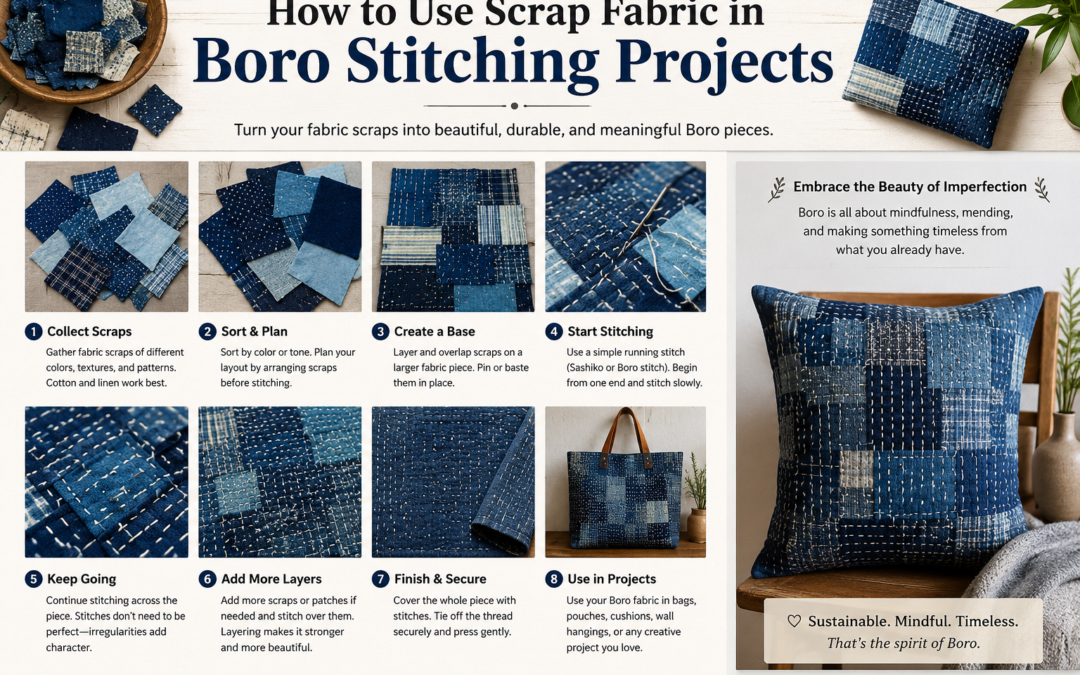
Boro stitching is one of the most practical ways to transform leftover fabric into durable, artistic textile repairs. Originally developed in rural Japan as a survival-based mending method, boro relied heavily on reused cloth fragments layered together through repeated hand stitching. Modern visible mending now uses the same philosophy to create sustainable clothing repairs, decorative textile art, and long-lasting patchwork surfaces.
Scrap fabrics are ideal for boro because the technique celebrates irregularity, layering, texture, and visible reinforcement rather than trying to hide repairs. Old denim, worn shirts, canvas remnants, faded cotton, and linen offcuts can all become part of a functional stitched composition.
Today, many crafters intentionally collect scrap fabric specifically for boro projects because layered patchwork creates a highly personalized aesthetic while reducing textile waste. Whether repairing jeans, decorating jackets, making bags, or building textile wall art, scrap fabric allows every boro project to become visually unique and structurally stronger over time.
What Makes Scrap Fabric Perfect for Boro Stitching?
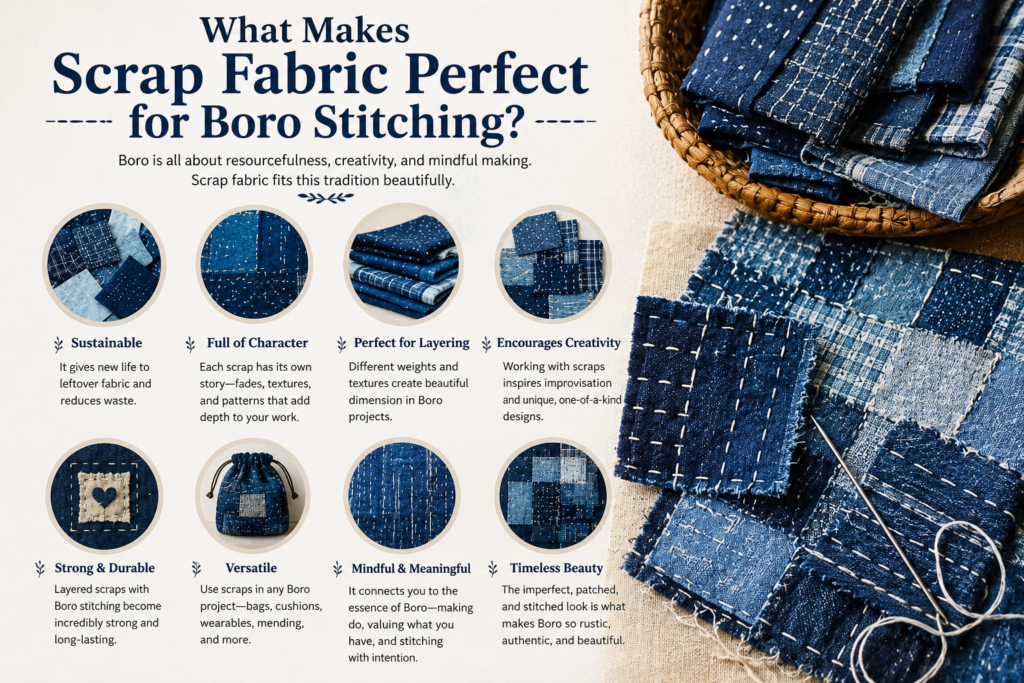
Boro stitching naturally works with scrap fabric because the technique itself was historically created around fabric preservation and reuse. Traditional Japanese households often repaired garments repeatedly using whatever textile fragments were available. Instead of discarding damaged clothing, layers of small cotton patches were stitched together to extend usability for many additional years.
Modern boro projects still follow this same principle. Small fabric remnants become valuable because overlapping construction allows multiple scraps to function together as reinforcement material. Even irregularly shaped pieces can become useful design elements when layered correctly.
One reason scrap fabric works so well is that boro stitching visually embraces imperfection. Uneven edges, fading differences, stitch variation, and visible patch overlap all contribute to the handmade appearance that defines authentic boro aesthetics.
Why scrap fabric improves boro projects
- Creates layered visual texture
- Reduces textile waste
- Strengthens worn fabric areas
- Adds personalized design character
- Encourages sustainable crafting
- Makes repairs visually interesting
- Allows unlimited fabric combinations
Another advantage is accessibility. Most people already own usable scrap material from old clothing, damaged jeans, worn shirts, or leftover sewing projects. This makes boro stitching one of the most affordable textile arts for beginners.
Unlike modern fast-fashion repair methods that aim to conceal damage, boro uses scrap fabric as a visible feature. The patches become part of the story of the garment rather than something hidden beneath the surface.
Which Scrap Fabrics Work Best for Boro Stitching Projects?
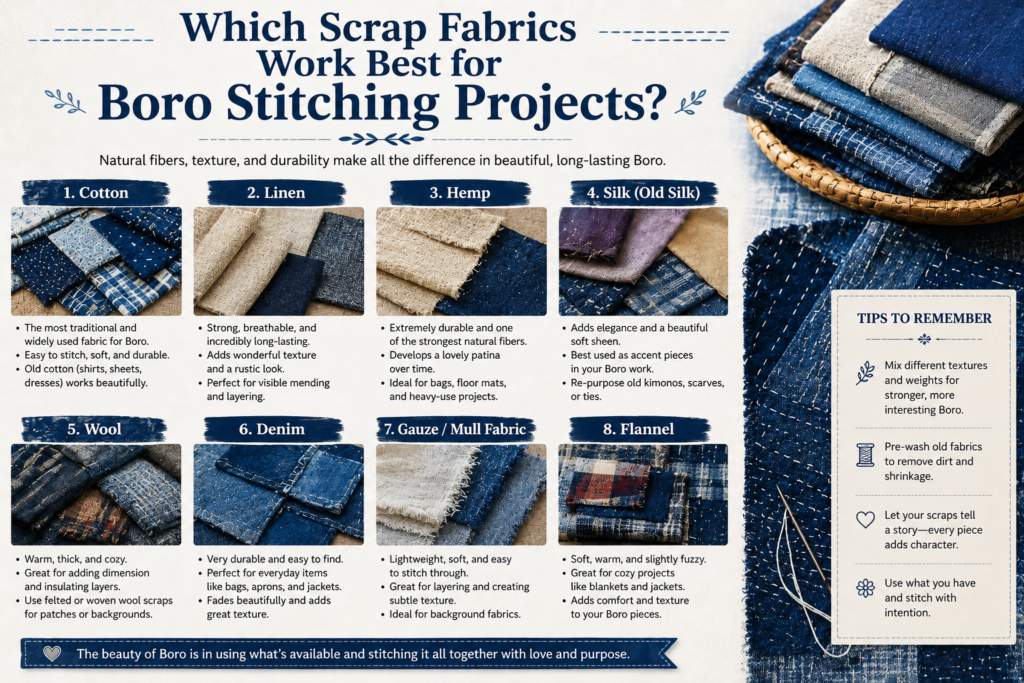
Not all fabric scraps perform equally well in boro stitching. The best materials are usually woven fabrics with moderate durability, stable structure, and enough thickness to tolerate repeated stitching. Fabric compatibility matters because boro repairs often experience tension, movement, washing, and long-term wear.
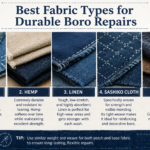
Cotton remains the most traditional and versatile option because it is soft, breathable, easy to hand stitch, and naturally flexible. Indigo-dyed cotton was heavily used in historical Japanese boro garments because it balanced comfort with durability.
Denim is now one of the most popular modern boro fabrics due to its strength and highly recognizable visual contrast with white sashiko stitching. Canvas also performs well for reinforcement-heavy projects because it resists abrasion and maintains structural integrity for long periods.
Linen creates a softer and more rustic appearance. Many decorative boro artists combine linen with cotton and denim to create mixed-texture surfaces that age beautifully over time.
Best fabrics for scrap boro projects
Cotton
- Flexible and beginner-friendly
- Easy to stitch by hand
- Traditional boro material
- Good for lightweight garments
Denim
- Extremely durable
- Ideal for jeans repairs
- Creates strong visual contrast
- Excellent for visible mending
Linen
- Adds natural texture
- Softens over time beautifully
- Good for artistic layering
- Lightweight but durable
Canvas
- Excellent reinforcement strength
- Works well for bags
- Suitable for utility projects
- Handles dense stitching well
Fabrics usually avoided
Some materials are difficult to repair successfully because they distort or wear unevenly.
Common problematic fabrics include:
- Stretch jersey
- Satin
- Silk
- Thin polyester blends
- Slippery synthetic fabrics
- Extremely delicate textiles
Stretch fabrics especially create tension problems because woven patches and knit fabrics behave differently during movement and washing.
Which Old Clothes Make the Best Scrap Fabric for Boro?
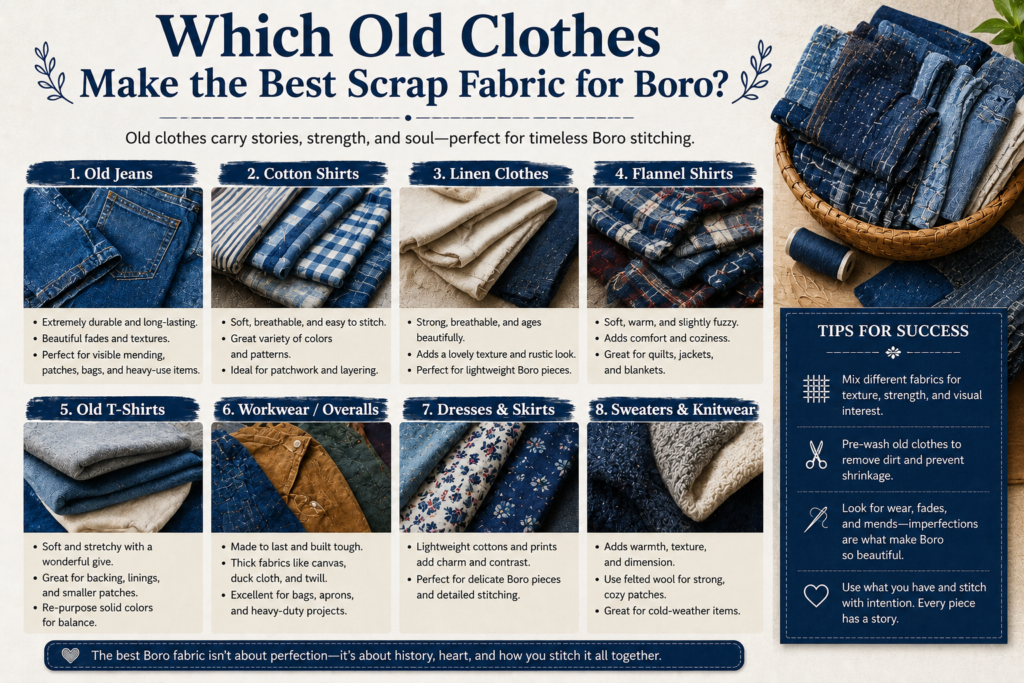
Old clothing is one of the best sources of scrap fabric because worn garments already contain natural fading, texture variation, and softness that work beautifully in visible mending projects. Many traditional boro textiles were created entirely from recycled clothing layers collected over decades of repair.
Jeans are especially valuable because denim combines durability with attractive aging characteristics. Older denim often develops unique fading patterns that create strong visual contrast when stitched onto darker fabric surfaces. Heavy cotton work shirts, flannel garments, chore coats, and canvas jackets also provide excellent repair material because their woven structure handles repeated stitching well.
Some of the best scraps often come from heavily worn clothing sections that still contain structurally strong fabric around less damaged areas.
Best clothing sources for boro scraps
- Old denim jeans
- Flannel shirts
- Canvas work jackets
- Cotton chore coats
- Military surplus clothing
- Heavy aprons
- Woven cotton pants
Clothing usually avoided
- Stretch leggings
- Athletic polyester
- Thin synthetic shirts
- Silk garments
- Ultra-stretch denim blends
Natural woven fabrics usually create the strongest and most visually balanced repairs.
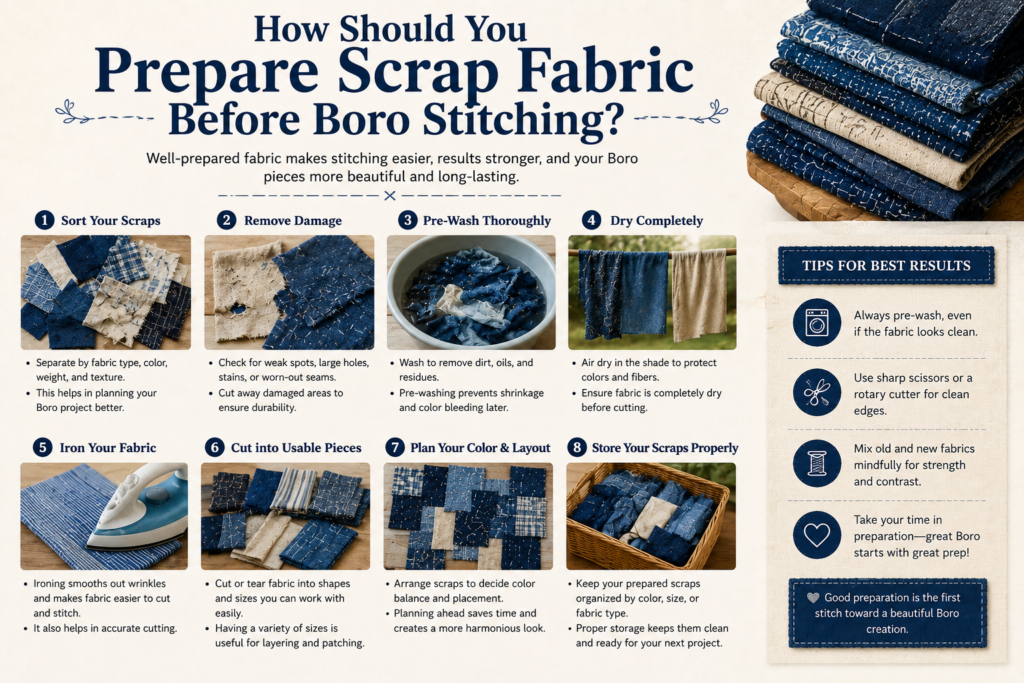
How Should You Prepare Scrap Fabric Before Boro Stitching?
Fabric preparation is one of the most overlooked parts of successful boro stitching projects. Many beginners immediately begin sewing scraps onto garments without preparing the material first, which often leads to uneven shrinkage, puckering, twisting, or distorted repairs after washing.
Proper preparation improves durability, appearance, and long-term stitch stability.
The first step is pre-washing all scrap fabrics. Different materials shrink differently, especially cotton and linen. If scraps are stitched without washing, future cleaning may cause the repair to tighten unevenly or pull against surrounding fabric.
Cleaning also removes oils, dirt, and chemical residues that may weaken thread performance or alter dye consistency over time.
Another important step is inspecting fabric strength. Some old clothing may look visually interesting but contain weak or brittle fibers that no longer provide structural support. Durable scraps always create better long-term repairs.
Important fabric preparation steps
Wash before use
Pre-washing helps:
- Prevent shrinkage mismatch
- Reduce distortion
- Stabilize fabric texture
- Improve long-term durability
Remove weak areas
Avoid scraps with:
- Thin worn fibers
- Severe fraying
- Rot damage
- Brittle texture
- Excessive stretching
Trim manageable shapes
Useful patch shapes include:
- Squares
- Rectangles
- Long strips
- Organic rough patches
- Overlapping fragments
What Scrap Fabric Sizes Work Best for Boro Repairs?
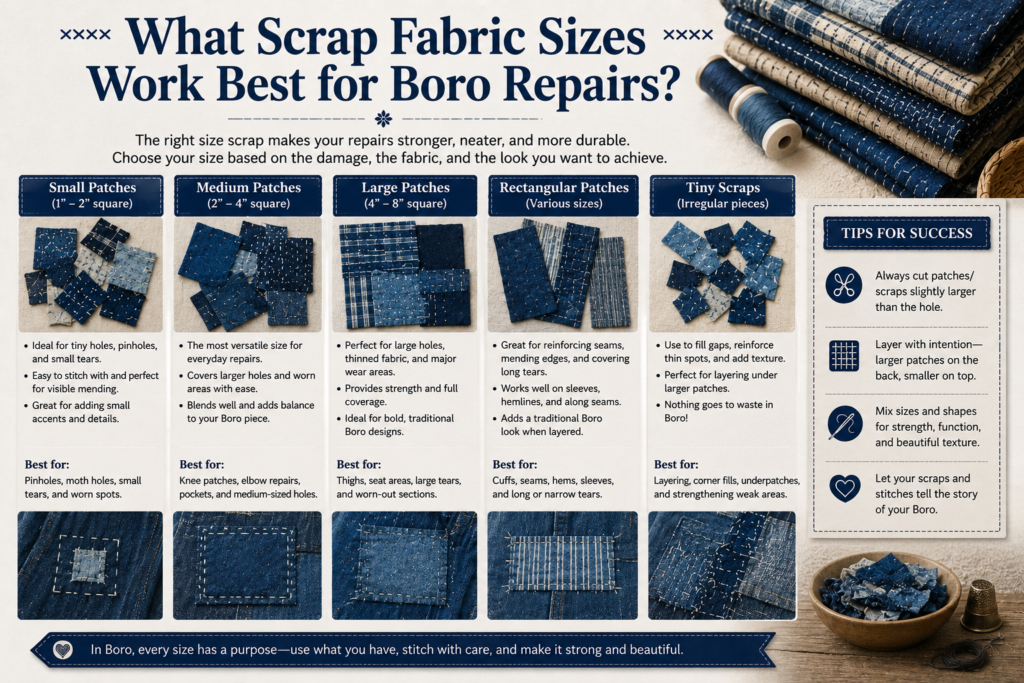
Small and medium-sized patches usually provide the best balance between flexibility and reinforcement. Tiny scraps work well for layered texture and detail repairs, while medium patches help distribute tension across damaged areas more evenly. Extremely large patches can sometimes create stiffness and reduce natural fabric movement, especially on lightweight garments.
Perfectly symmetrical cutting is unnecessary because irregularity contributes to authentic boro aesthetics.
Some advanced boro artists intentionally preserve frayed edges to create additional texture and softness. However, beginners usually achieve cleaner results by lightly trimming unstable edges before stitching.
Prepared scraps are easier to layer, easier to sew through, and more visually cohesive within the finished repair.
How Should You Organize Scrap Fabric for Boro Projects?
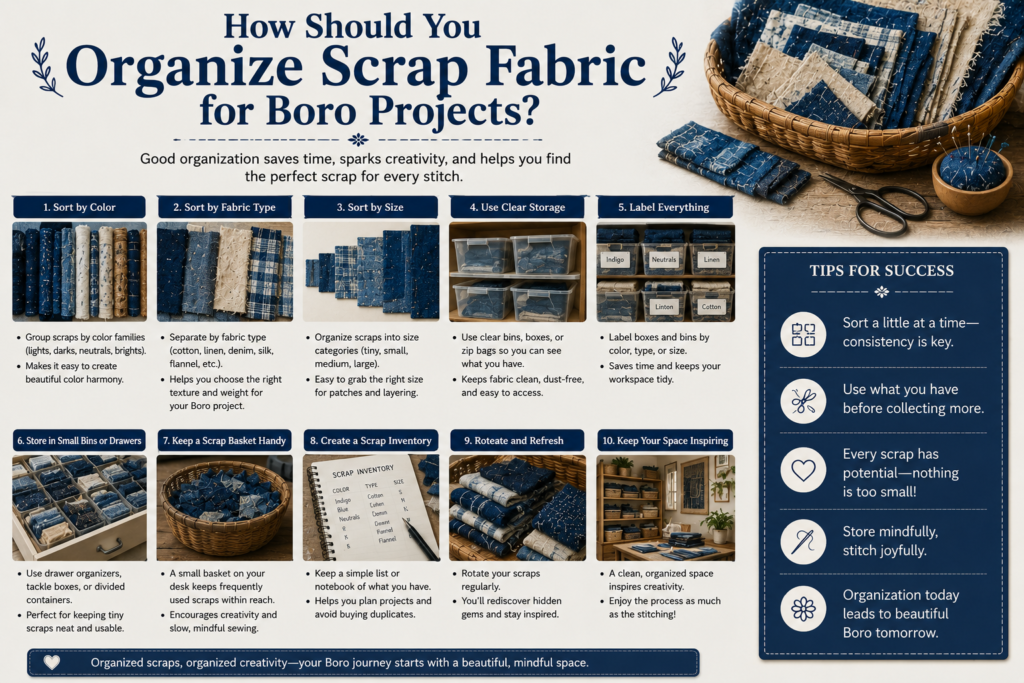
Organizing scrap fabric properly makes future boro projects significantly easier because repair work often depends on quickly finding compatible textures, thicknesses, and colors. Many experienced visible mending artists build dedicated scrap collections over time instead of cutting patches directly from random clothing whenever damage appears.
Sorting scraps by fabric type improves consistency during repairs. Denim, cotton, canvas, and linen all behave differently during stitching and washing, so separating them prevents poor material combinations later. Many crafters also organize scraps by thickness because layered repairs become more balanced when similar fabric weights are paired together.
Another useful strategy is storing pre-washed repair-ready scraps in small folded stacks or containers. This reduces preparation time and helps maintain more cohesive patchwork composition across multiple projects.
Helpful scrap organization methods
- Separate heavy and lightweight fabrics
- Store indigo fabrics together
- Keep neutral colors grouped
- Save strong seam sections separately
- Organize by texture and thickness
- Pre-cut common patch sizes
- Remove weak fabric before storage
Over time, organized scrap collections help boro projects look more intentional rather than visually chaotic.
How Do You Combine Different Scrap Fabrics Successfully?
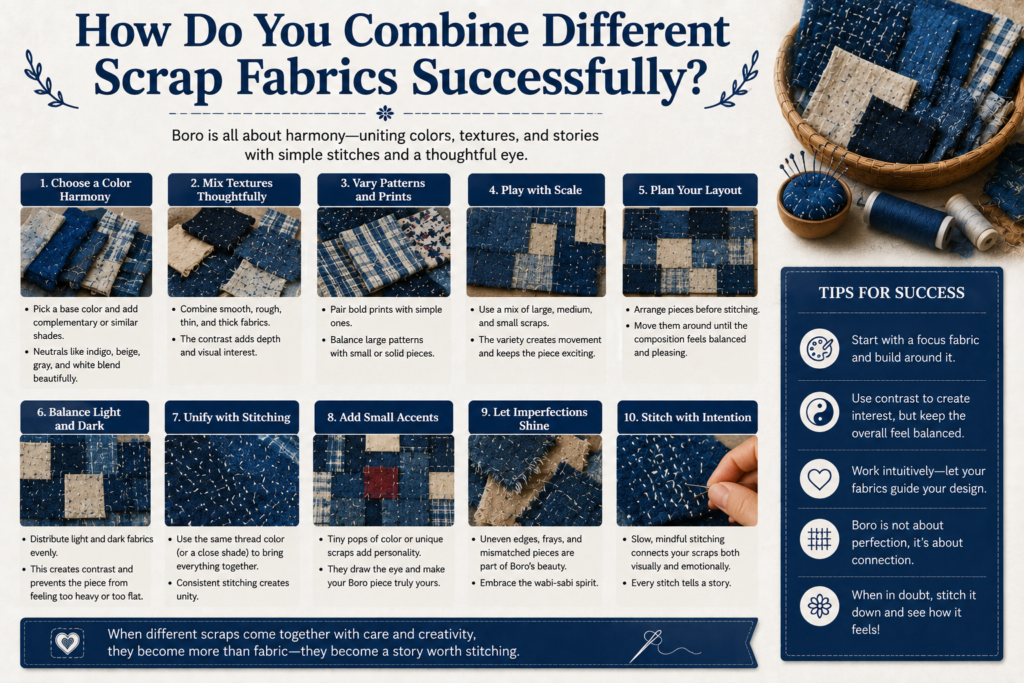
Combining multiple fabric types is one of the defining visual characteristics of boro stitching. Layered patchwork creates depth, movement, contrast, and visible history across the repaired surface. However, successful fabric mixing requires balance between texture, flexibility, and durability.
The most important rule is matching similar fabric weights whenever possible. Heavy denim attached directly to ultra-thin cotton often creates tension imbalance because the fabrics respond differently to movement and washing. Balanced materials wear more evenly over time.
Many boro artists intentionally build layered compositions using gradual tonal shifts rather than random fabric placement. Indigo shades, faded blues, natural linen tones, and neutral cotton colors tend to create harmonious visual flow.
Contrast also plays an important role. White sashiko thread against dark indigo denim remains one of the most iconic visual combinations in traditional-inspired boro work.
Effective fabric combination strategies
Pair similar thicknesses
Good combinations include:
- Denim + canvas
- Cotton + linen
- Medium-weight woven fabrics
- Multiple denim shades
Use visual contrast intentionally
Popular combinations:
- White thread + dark denim
- Faded blue + raw indigo
- Neutral cotton + textured linen
- Light patches + dark base fabric
Layer multiple scraps
Benefits include:
- Better reinforcement
- Richer texture
- Traditional boro appearance
- Improved repair flexibility
Layering several smaller patches often creates more durable repairs than applying one oversized fabric piece. Smaller overlapping sections distribute stress more evenly across the repair zone.
Many advanced visible mending projects also use directional stitching patterns to visually connect different fabric scraps together into one unified surface.
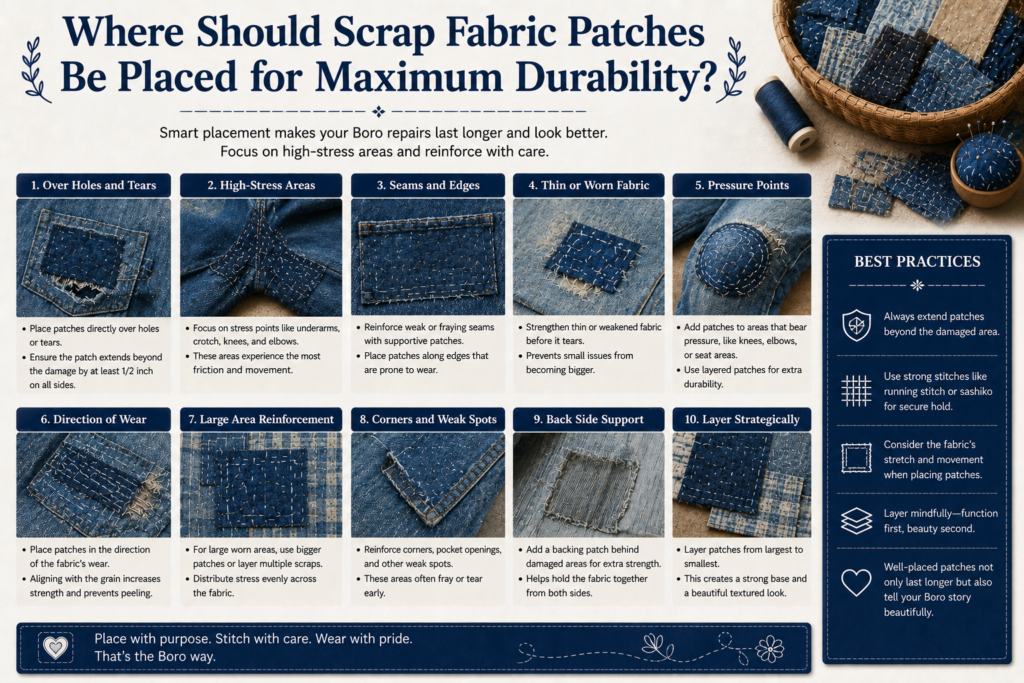
Where Should Scrap Fabric Patches Be Placed for Maximum Durability?
Patch placement strongly affects how long a boro repair lasts because different parts of clothing experience different levels of stress, friction, and movement. Strategic reinforcement helps prevent repeated tearing while improving overall garment stability.
High-stress areas usually require larger overlap zones and denser stitching patterns. Knees, elbows, inner thighs, pocket corners, cuffs, and seat panels experience repeated tension during movement, making them common failure points in heavily worn clothing.
Experienced boro artists often extend patches beyond the visible damaged area so stress spreads across stronger surrounding fabric instead of concentrating directly on the original tear.
Areas that usually need stronger reinforcement
- Jean knees
- Jacket elbows
- Pocket corners
- Inner thigh seams
- Shirt cuffs
- Seat areas
Smart placement techniques
- Extend patches beyond holes
- Reinforce seam intersections
- Use layered overlap construction
- Add extra stitching near movement zones
- Avoid placing weak fabric at stress points
Does Fabric Grain Direction Matter in Boro Stitching?
Fabric grain direction significantly affects how patches behave during wear and washing. Woven fabrics are strongest along their vertical and horizontal grain lines, while diagonal bias sections stretch more easily and may distort over time. Aligning patch grain direction with the original garment usually creates more stable repairs, especially on denim and canvas. Poor grain alignment can cause twisting, uneven tension, and puckering after repeated use.
Good patch placement often matters more than decorative appearance when building durable visible mending repairs.
What Are the Best Beginner Projects for Scrap Fabric Boro Stitching?
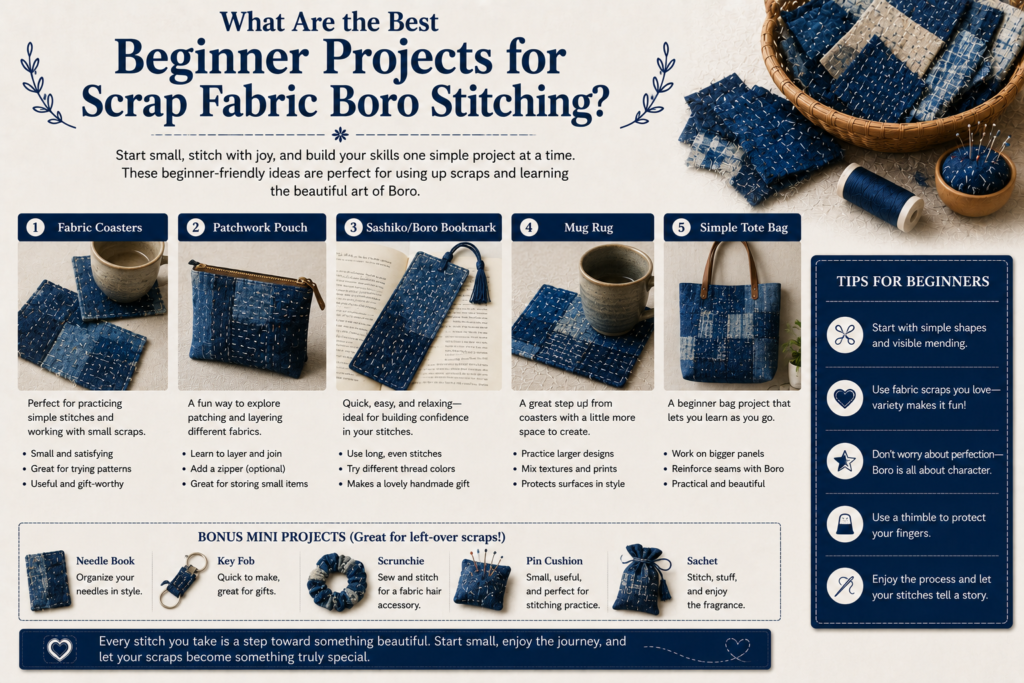
Beginners often achieve the best boro results by starting with simple, flat, low-pressure projects before attempting complex garment repairs. Stable surfaces allow new stitchers to focus on stitch consistency, patch placement, layering, and fabric control without fighting difficult fabric movement.
Jeans repairs remain one of the most popular beginner-friendly projects because denim is forgiving, durable, and visually suited to visible stitching. Knee repairs, thigh reinforcement, and pocket strengthening all provide excellent practice opportunities.
Tote bags are another ideal starting point because they offer large stitching surfaces with minimal shaping complications. Decorative layered patches also work well on canvas bags because slight irregularities enhance the handmade appearance.
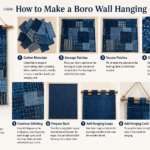
Cushion covers and wall hangings are excellent for artistic experimentation. Since these items experience less stress than clothing, beginners can focus more heavily on visual composition and creative stitching patterns.
Beginner-friendly boro projects
Jeans repairs
Skills learned:
- Patch positioning
- Reinforcement stitching
- Running stitch control
- Layer balancing
Tote bags
Advantages:
- Flat sewing surface
- Strong fabric structure
- Large visible design area
- Easy patch experimentation
Decorative wall art
Benefits:
- Creative freedom
- Mixed texture exploration
- Low structural pressure
- Practice layering techniques
Pocket reinforcement
Useful for:
- Small-scale stitching practice
- Learning stitch spacing
- Controlling thread tension
Projects beginners should avoid initially
Some projects are harder for new stitchers because of shaping complexity or unstable fabric behavior.
Difficult beginner projects include:
- Stretch leggings
- Thin knit garments
- Silk clothing
- Tight curved seams
- Lightweight synthetic fabrics
Starting with sturdy woven materials dramatically improves early stitching confidence and overall repair quality.
How Does Stitching Technique Affect Scrap Fabric Boro Durability?
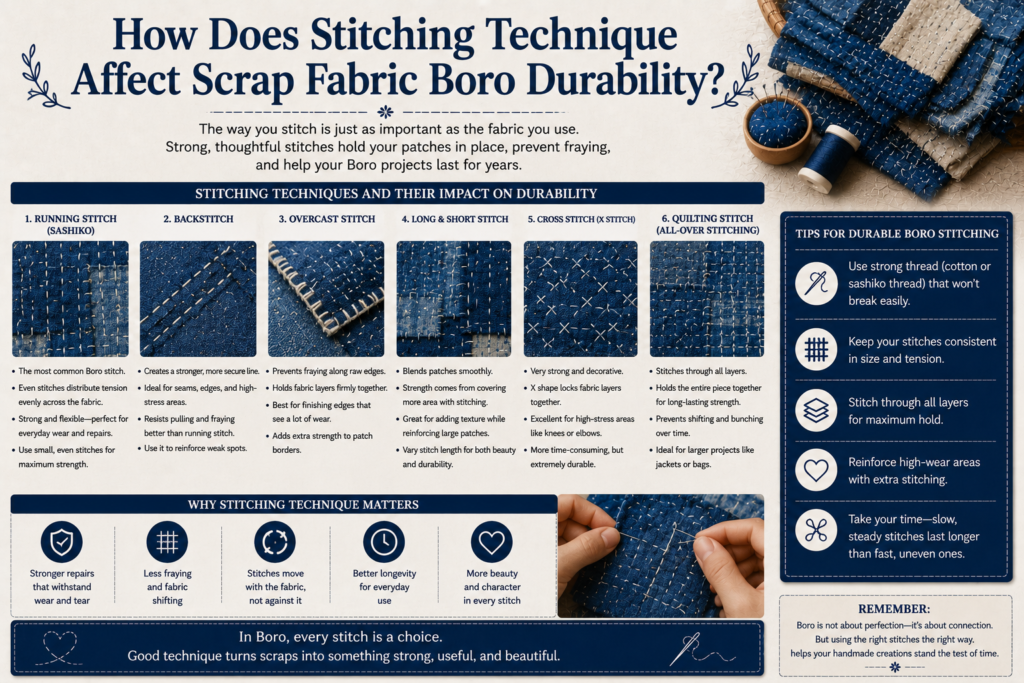
In boro stitching, the thread pattern itself acts as a structural reinforcement system. The stitches do far more than decorate the surface. They physically secure fabric layers together, distribute stress, reduce fabric shifting, and strengthen weakened textile areas over time.
Traditional boro usually uses repetitive running stitches because they provide flexibility while maintaining strong fabric attachment. Dense stitch coverage creates highly durable reinforcement, especially in high-wear areas such as knees, elbows, pockets, and cuffs.
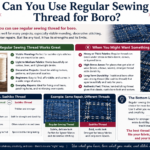
Thread selection also matters significantly. Thick cotton sashiko thread is popular because it remains visible while resisting abrasion better than thin sewing thread. However, many modern visible mending artists also use embroidery floss or strong quilting thread depending on the project type.
Common boro stitching approaches
Traditional running stitch
Advantages:
- Flexible movement
- Strong reinforcement
- Simple technique
- Traditional appearance
Dense stitch patterns
Benefits:
- Better durability
- Stronger patch attachment
- Increased texture
- Higher abrasion resistance
Geometric stitch layouts
Popular patterns:
- Grids
- Waves
- Parallel rows
- Crosshatch designs
- Organic freeform stitching
Common stitching mistakes
Weak repairs often result from:
- Loose thread tension
- Oversized stitch gaps
- Thin thread choice
- Inconsistent spacing
- Poor patch anchoring
High-wear areas usually require smaller stitch spacing and multiple reinforcement rows to maintain long-term strength.
Many experienced boro artists intentionally vary stitch density across the garment depending on movement zones and stress concentration points.
What Is the Difference Between Decorative and Structural Boro Stitching?
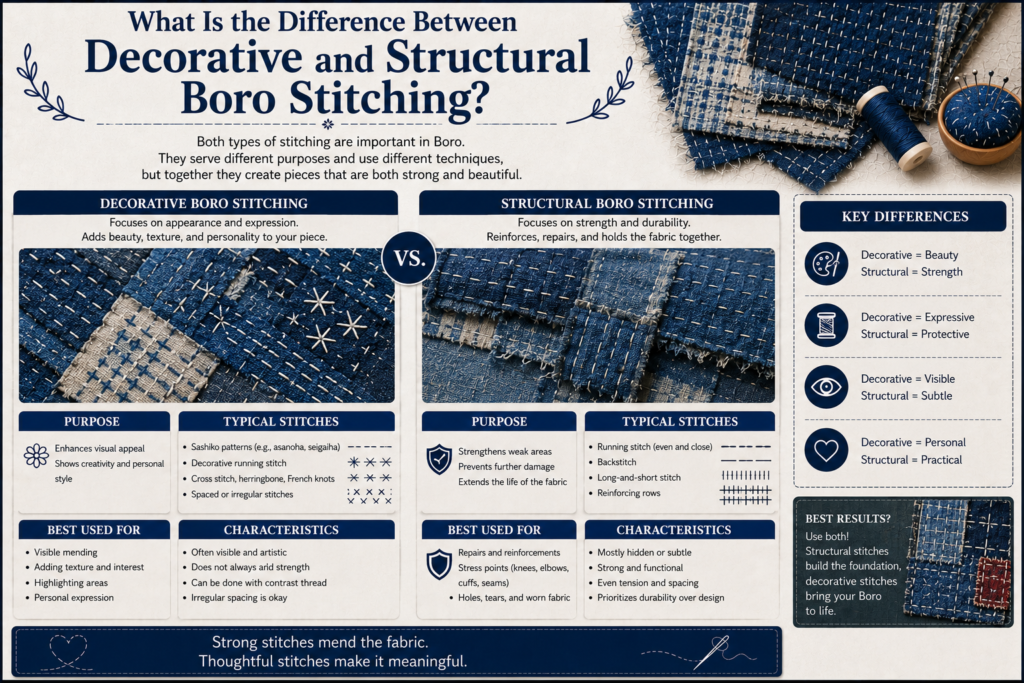
Modern boro projects generally fall into two categories: decorative visible mending and structural reinforcement repair. While both styles use layered fabric and visible stitching, their goals are often very different.
Structural boro focuses primarily on durability. Repairs are designed to strengthen weakened fabric areas using dense stitching, strong woven patches, and carefully distributed reinforcement. This approach is common for workwear, denim repairs, jackets, and high-friction garments.
Decorative boro places greater emphasis on artistic composition, texture contrast, and visual storytelling. Decorative pieces may use lighter stitching density, more varied fabric textures, and asymmetrical layouts designed for aesthetic impact rather than maximum reinforcement strength.
Structural boro characteristics
- Dense stitch spacing
- Heavy reinforcement patches
- Strong woven fabrics
- Stress-zone repair focus
- Long-term durability priority
Decorative boro characteristics
- Artistic patch placement
- Mixed texture experimentation
- Softer stitch density
- Visual asymmetry
- Decorative layering emphasis
Many modern projects combine both approaches by balancing durability with artistic design.
What Scrap Fabric Mistakes Usually Ruin Boro Repairs?
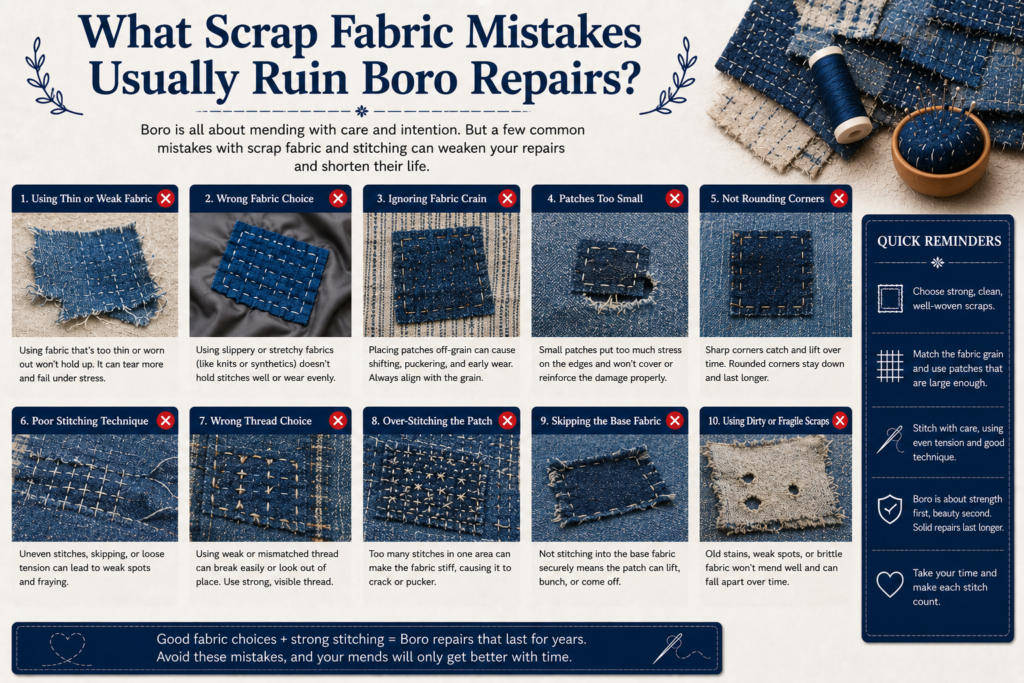
Many boro repairs fail because of fabric compatibility problems rather than stitching skill alone. Beginners often focus heavily on decorative appearance while overlooking structural stability, fabric tension, and long-term wear behavior.
One of the most common mistakes is combining extremely thin fabric with heavy denim or canvas. These mismatched materials move differently during wear, which eventually creates pulling, wrinkling, or patch separation. Skipping fabric pre-washing is another major problem because uneven shrinkage can permanently distort repaired areas.
Weak thread choice also reduces durability. Thin sewing thread may look clean initially but often wears down quickly in high-friction zones.
Common repair problems and causes
| Problem | Likely Cause |
| Puckering | Uneven fabric tension |
| Twisting | Poor grain alignment |
| Patch lifting | Loose stitches |
| Fraying edges | Weak fabric choice |
| Stiff repairs | Excessive layering |
| Broken stitches | Thin thread |
Mistakes beginners should avoid
- Using unstable stretch fabric
- Skipping pre-washing
- Choosing oversized patches
- Using weak thread
- Combining incompatible fabric weights
- Leaving edges unsecured
Successful boro repairs balance artistic texture with structural reinforcement.
Can Scrap Fabric Boro Projects Last for Many Years?
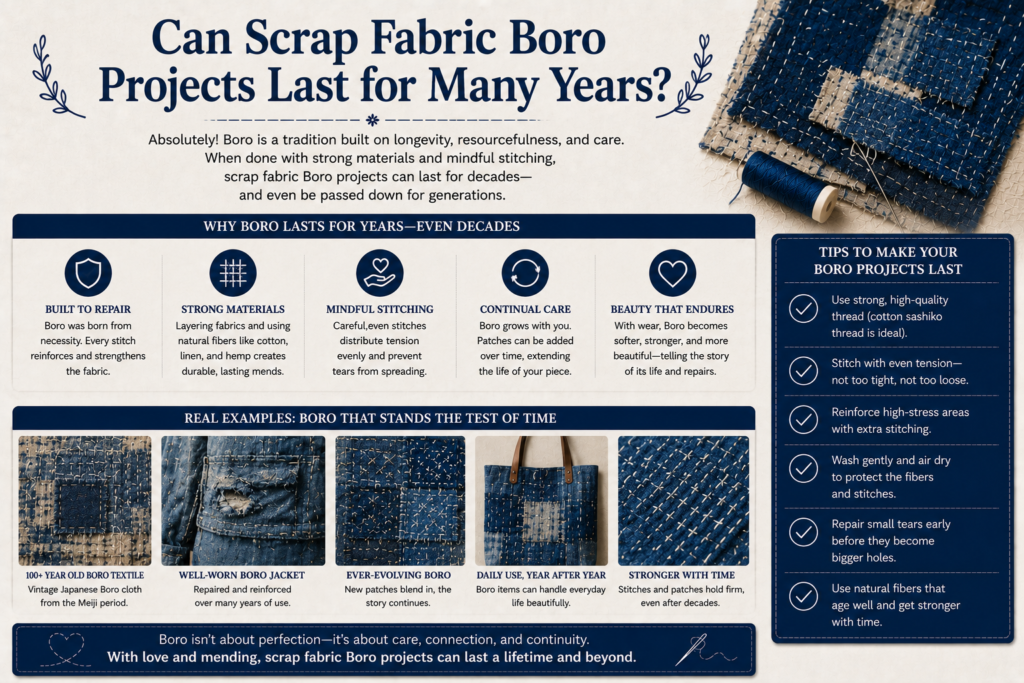
Well-constructed boro projects can remain functional for many years, especially when durable woven fabrics and strong stitching methods are combined correctly. In some cases, layered repairs become stronger than the original damaged textile because the reinforcement distributes stress across multiple fabric surfaces instead of relying on one weakened section.
Longevity depends heavily on fabric compatibility, stitch density, and repair placement. A properly reinforced denim knee repair, for example, may outlast the surrounding original denim after repeated wear and washing.
Boro durability also improves because layered patchwork naturally disperses tension. Instead of concentrating stress in one area, overlapping fabric sections absorb movement collectively.
Factors that improve long-term durability
Strong woven fabrics
Best choices:
- Denim
- Canvas
- Cotton twill
- Medium-weight linen
Balanced layering
Helps:
- Prevent fabric distortion
- Improve flexibility
- Reduce tension points
- Extend repair lifespan
Dense reinforcement stitching
Advantages:
- Better patch stability
- Reduced edge lifting
- Improved abrasion resistance
- Stronger structural integrity
Common durability failures
Repairs usually fail because of:
- Weak thread
- Thin unstable scraps
- Stretch fabric mismatch
- Loose stitching
- Unwashed fabric shrinkage
Regular maintenance also matters. Washing garments gently and repairing small wear areas early helps prevent larger structural failures later.
Many antique Japanese boro textiles survived for decades specifically because repairs were continuously maintained instead of ignored.
How Does Scrap Fabric Boro Change Over Time?
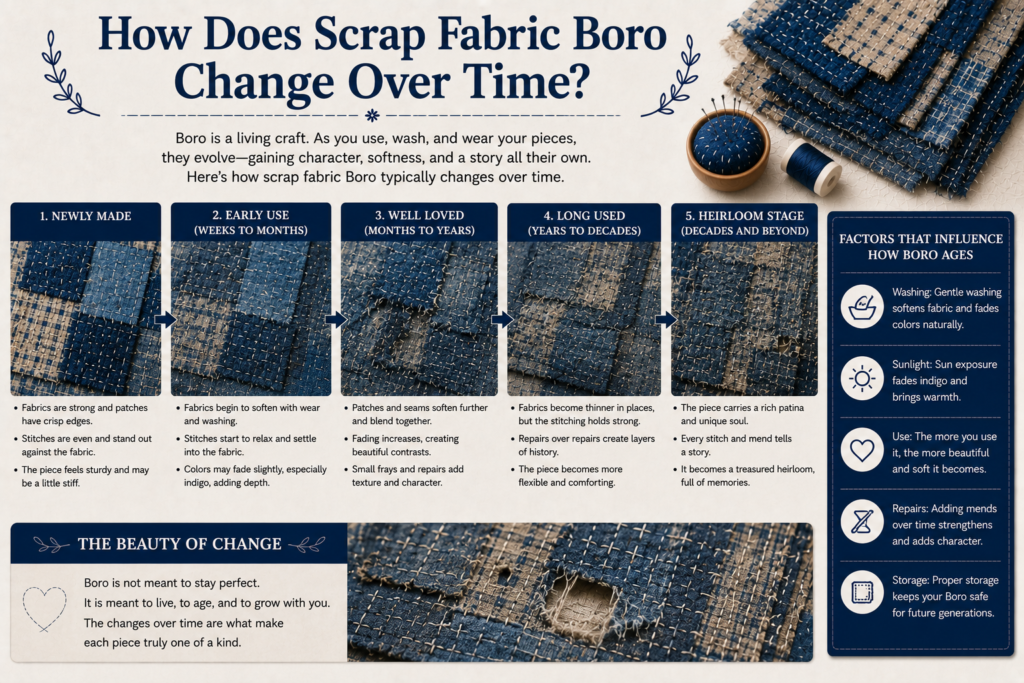
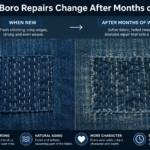
One reason many people appreciate boro stitching is that the repairs often become visually richer as the fabric ages. Denim softens, thread texture becomes more integrated, and layered patches gradually develop unique fading patterns through repeated wear and washing.
Indigo fabrics are especially known for developing high-contrast aging effects. Raised stitch lines slowly create subtle wear patterns around repaired sections, while overlapping fabric layers soften and blend together naturally over time.
Frayed patch edges may also evolve into softer textured borders that enhance the handmade appearance instead of looking damaged.
Common aging characteristics
- Denim fading variation
- Softer stitch texture
- Increased patch blending
- Natural fabric patina
- Frayed edge softening
- Visible repair character development
Unlike hidden repairs that try to disappear, boro stitching often becomes more visually appealing with age.
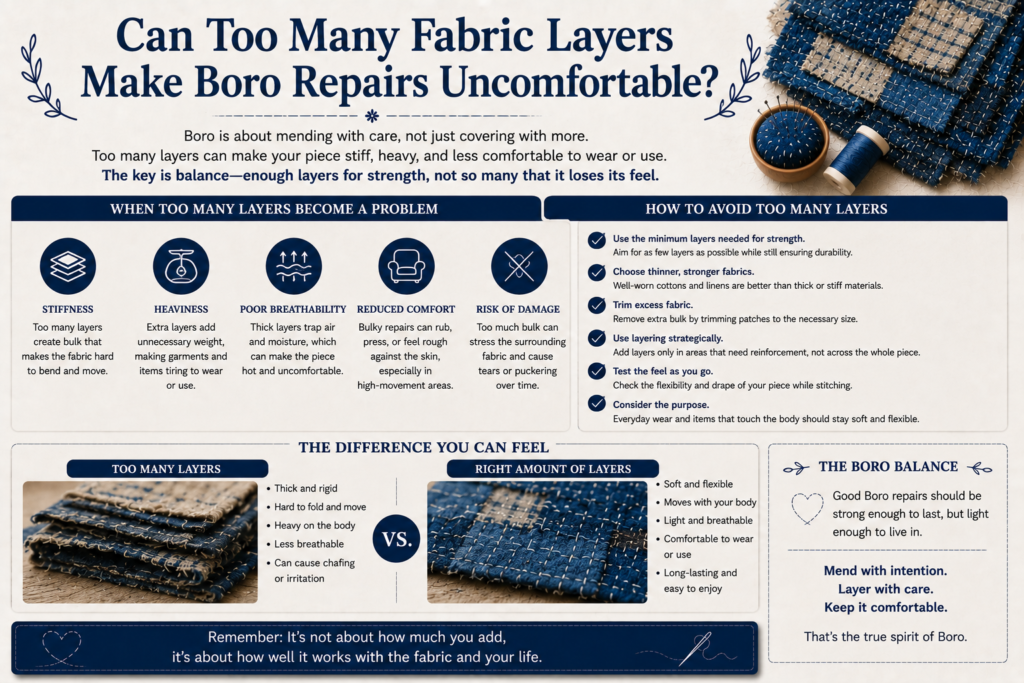
Can Too Many Fabric Layers Make Boro Repairs Uncomfortable
Excessive layering can sometimes make repaired garments feel stiff or bulky, especially around joints and movement zones. Heavy patch buildup near knees, elbows, or inner seams may reduce flexibility and create rubbing during wear. Experienced boro artists often balance reinforcement strength with comfort by trimming unnecessary overlap and using softer fabric layers beneath thicker exterior patches.
Why Does Scrap Fabric Boro Stitching Support Sustainable Fashion?
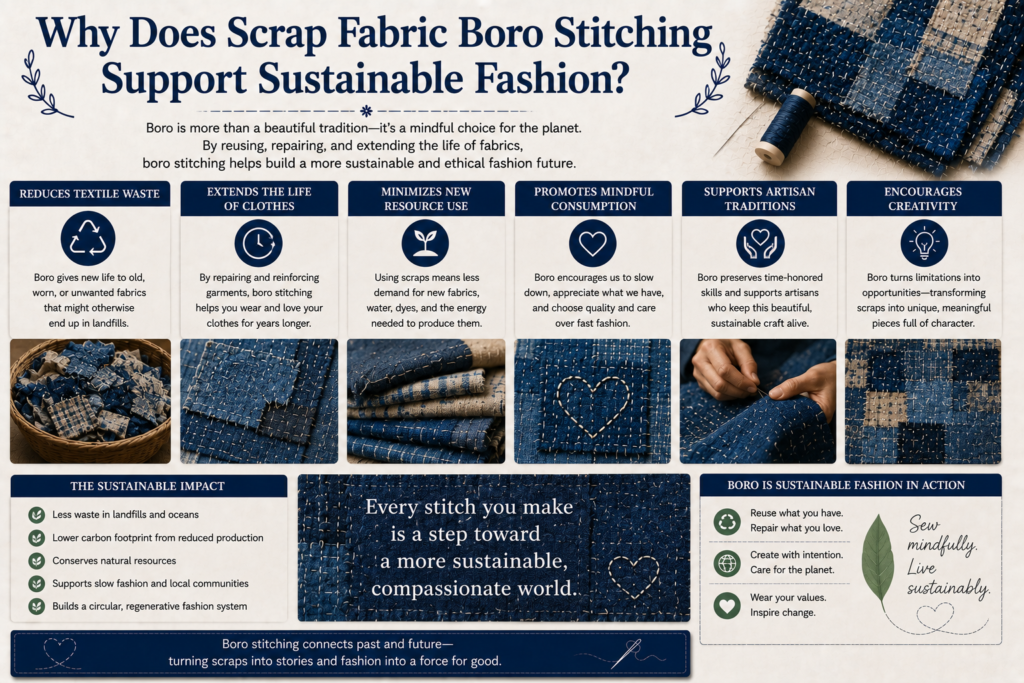
Boro stitching strongly aligns with modern sustainable fashion because it extends textile lifespan instead of encouraging garment disposal. The technique transforms damaged clothing into functional repaired pieces while reducing textile waste and limiting unnecessary fabric consumption.
Fast fashion culture has dramatically increased clothing waste worldwide. Many garments are discarded because of relatively small damage such as knee holes, worn cuffs, or torn pockets. Boro stitching directly challenges this disposable mindset by promoting repair culture and long-term textile ownership.
Using scrap fabric further strengthens sustainability because leftover materials gain new purpose rather than entering landfills.
Sustainability benefits of scrap fabric boro
Reduces textile waste
Boro helps:
- Reuse old clothing
- Repurpose leftover fabric
- Extend garment lifespan
- Lower disposal rates
Encourages slow fashion
Supports:
- Handmade craftsmanship
- Conscious consumption
- Repair-based ownership
- Personalized clothing culture
Reduces material demand
Using scraps decreases:
- New fabric purchases
- Resource consumption
- Manufacturing dependency
- Waste generation
Many people now value repaired garments specifically because visible mending communicates care, individuality, and environmental awareness.
Modern boro also appeals to consumers seeking unique fashion pieces with visible texture and handcrafted identity. Since no two scrap fabric combinations are identical, every repair becomes visually original.
This combination of sustainability, artistry, and functionality is one reason boro stitching continues growing in popularity across modern textile communities worldwide.
How Do Experienced Boro Artists Create Balanced Patchwork Composition?
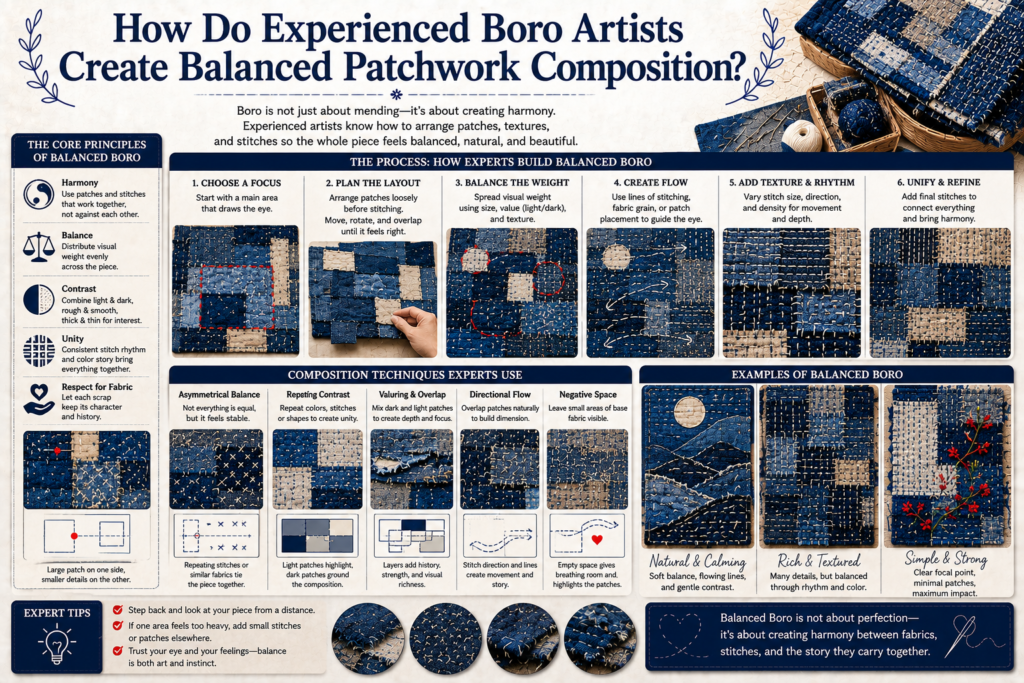
Advanced boro stitching is not only about repair strength. Many experienced textile artists carefully plan visual balance, tonal variation, texture rhythm, and stitch flow across the entire garment surface. The goal is often to create movement and harmony while preserving the organic layered appearance that defines traditional boro aesthetics.
Balanced composition usually combines areas of dense visual texture with quieter sections that allow the eye to rest. Indigo fabrics are frequently distributed across the garment to avoid heavy visual clustering in one location.
Stitch direction also influences visual movement. Parallel stitch lines create structure and calmness, while irregular stitching patterns generate a more expressive and handmade appearance.
Elements experienced boro artists consider
- Visual weight distribution
- Fabric texture contrast
- Tonal balance
- Stitch rhythm
- Negative space
- Layer direction
- Asymmetrical harmony
Strong composition helps repaired garments feel intentional, artistic, and visually cohesive rather than randomly patched together.
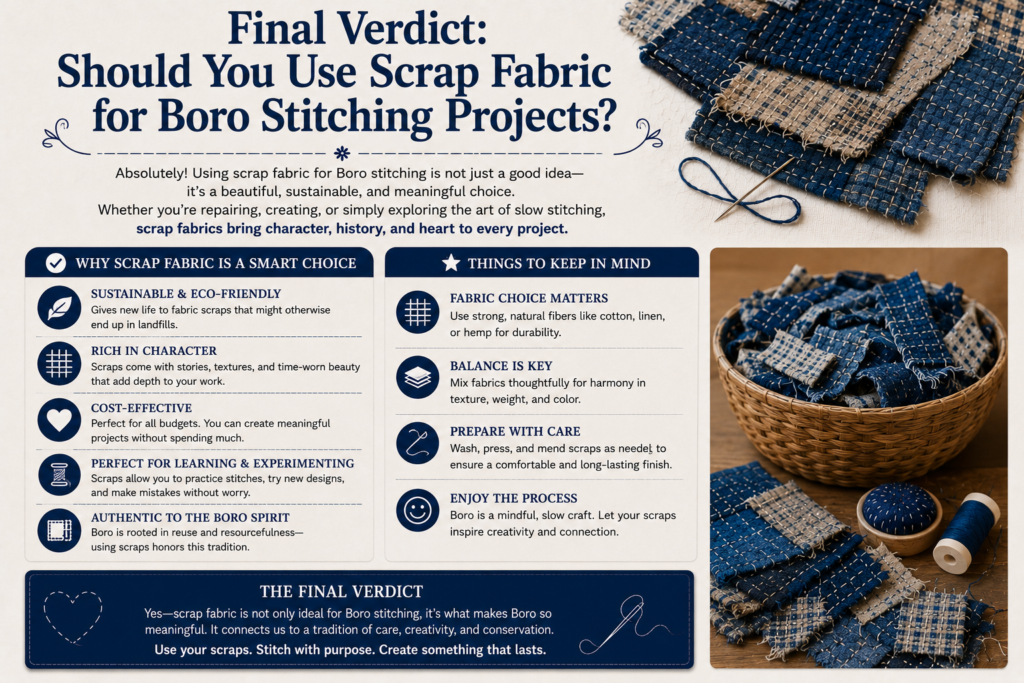
Final Verdict: Should You Use Scrap Fabric for Boro Stitching Projects?
Scrap fabric is one of the best possible materials for boro stitching because the technique itself was historically designed around textile reuse, visible reinforcement, and layered patchwork construction. Durable woven scraps such as cotton, denim, linen, and canvas provide excellent structure while creating rich visual texture through overlapping stitched surfaces.
Successful boro projects depend on combining compatible fabric weights, preparing scraps correctly, using strong stitching methods, and reinforcing high-stress areas carefully. Small fabric remnants that might otherwise be discarded can become highly functional repair material with proper layering and stitch placement.
For beginners, scrap fabric also provides an affordable and low-risk way to learn visible mending techniques. Since boro embraces imperfection, even irregular patches and varied textures contribute positively to the final appearance.
Key takeaways
- Woven fabrics perform best for boro
- Denim and cotton are highly beginner-friendly
- Pre-washing improves durability
- Layering creates stronger repairs
- Dense stitching improves longevity
- Scrap fabric supports sustainable fashion
- Visible mending adds artistic character
Whether creating decorative textile art, repairing damaged jeans, reinforcing workwear, or exploring sustainable crafting, scrap fabric allows boro stitching to remain practical, expressive, and deeply connected to its historical roots.
FAQ Section
Can you use very small fabric scraps for boro stitching?
Yes. Small overlapping scraps often work extremely well because boro stitching relies on layered construction rather than large continuous fabric panels.
Is denim the best fabric for beginner boro projects?
Denim is one of the easiest beginner fabrics because it is durable, stable, and highly compatible with visible stitching.
Should scrap fabric always be pre-washed?
Yes. Pre-washing helps prevent shrinkage mismatch and improves long-term repair stability.
Can you combine different fabrics in one boro project?
Yes, but fabrics with similar thickness and flexibility usually produce more balanced and durable results.
What thread works best for visible mending?
Sashiko thread, embroidery thread, and strong cotton thread are commonly used because they remain visible and durable.
Are stretch fabrics difficult for boro stitching?
Yes. Stretch fabrics often distort during stitching and may wear unevenly against woven patches.
Does boro stitching make clothing stronger?
Properly layered and densely stitched repairs can significantly reinforce weak fabric areas.
Is boro stitching mainly decorative today?
Modern boro combines both functionality and decoration, but its historical purpose was practical garment repair.