Which Sashiko Patterns Work Best for Structural Repairs?
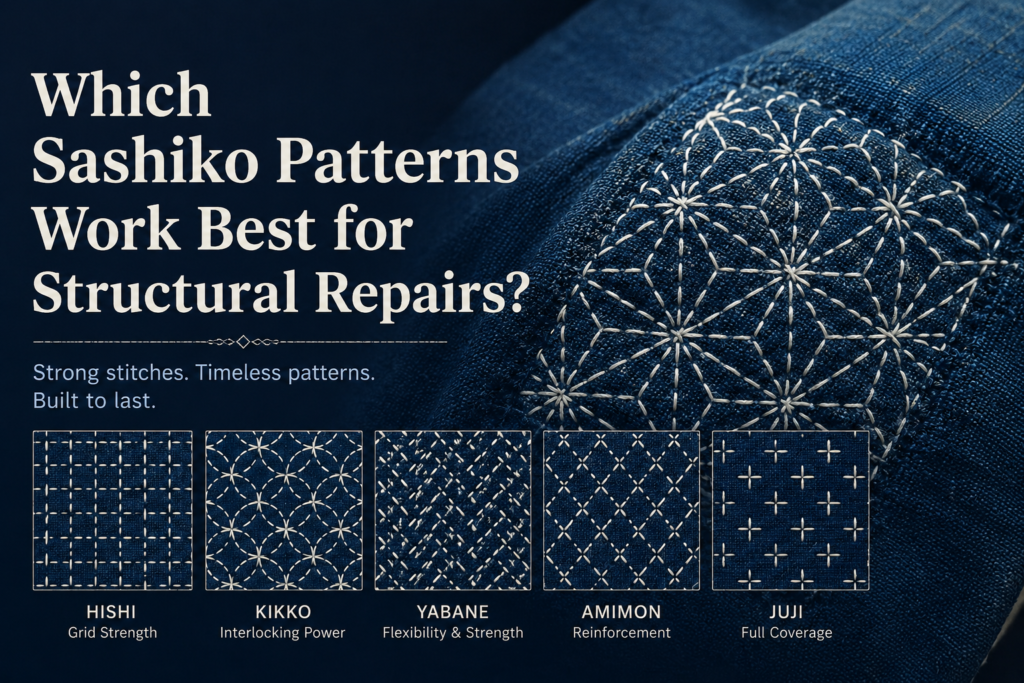
Traditional sashiko patterns used for structural repairs are designed to strengthen worn fabric, stabilize layered patches, and improve long-term durability in heavily used garments. Patterns such as hitomezashi, kikko, asanoha, and straight running stitch grids work especially well because they distribute tension evenly across damaged areas instead of concentrating stress in one fragile point. Dive […]
Do You Need Special Needles for Boro Stitching?
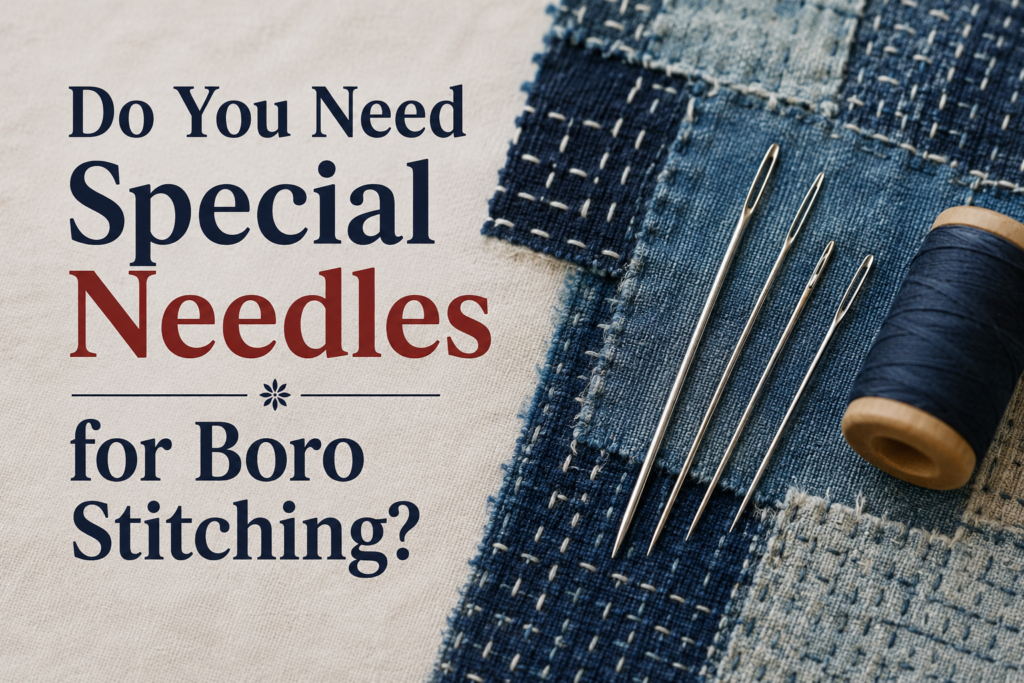
Japanese Boro stitching does not strictly require specialized needles, but the needle type strongly affects stitching control, repair durability, fabric handling, and overall comfort during long sewing sessions. Traditional Japanese boro repairs often relied on long sashiko-style needles because they made repeated running stitches easier across layered indigo textiles. Modern visible mending still follows many […]
How to Make a Boro Jacket: Traditional Japanese Repair Techniques That Turn Old Clothing Into Wearable Art
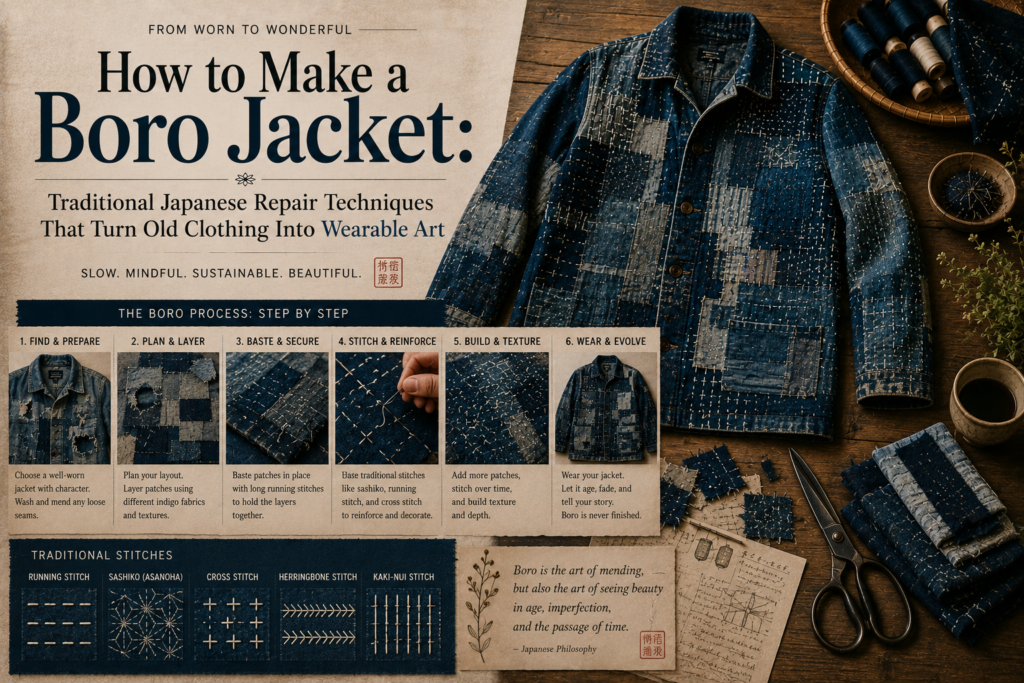
What Is a Boro Jacket and Why Are People Making Them Today? A boro jacket is a layered, hand-stitched garment inspired by traditional Japanese textile repair techniques where worn clothing was repeatedly patched and reinforced over generations. Modern makers create boro jackets not only for repair but also for artistic expression, sustainability, slow fashion, and […]
Best Fabrics, Thread, and Needles for Boro Stitching (Complete Material Guide for Better Results)
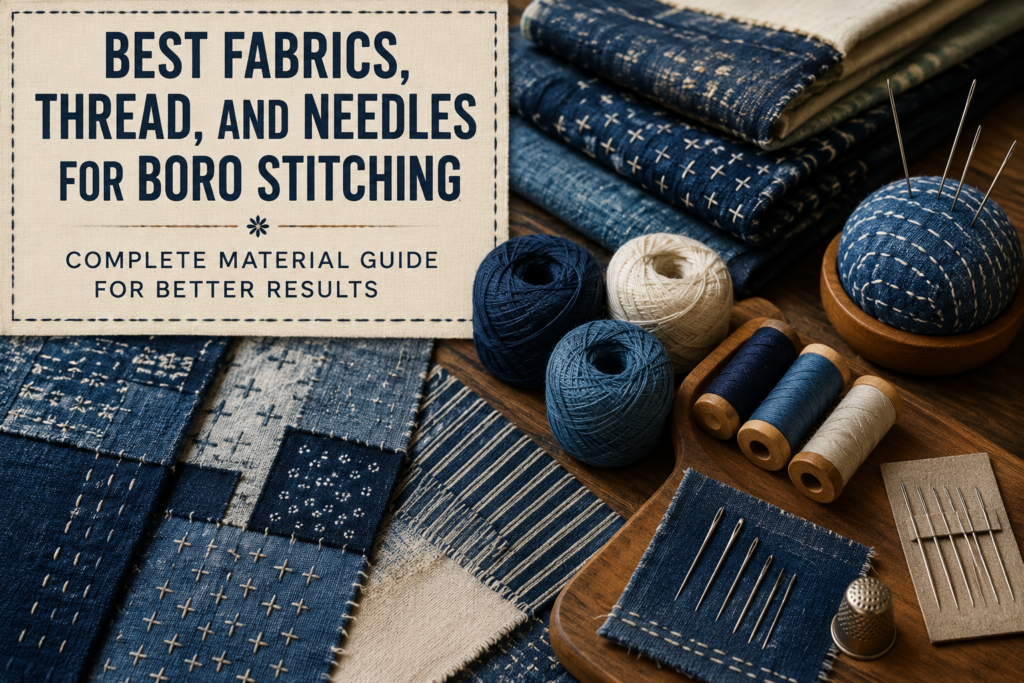
The best Boro stitching materials combine durability, texture, flexibility, and visible contrast. Traditional Boro uses layered cotton or linen fabrics, sashiko-style thread, and long hand-sewing needles designed for running stitches. Choosing the right materials improves stitch control, fabric strength, repair longevity, and the authentic layered appearance associated with Japanese Boro textiles. Why Your Materials Define […]
How to Do Boro Stitching – Step by Step (Complete Beginner’s Guide)
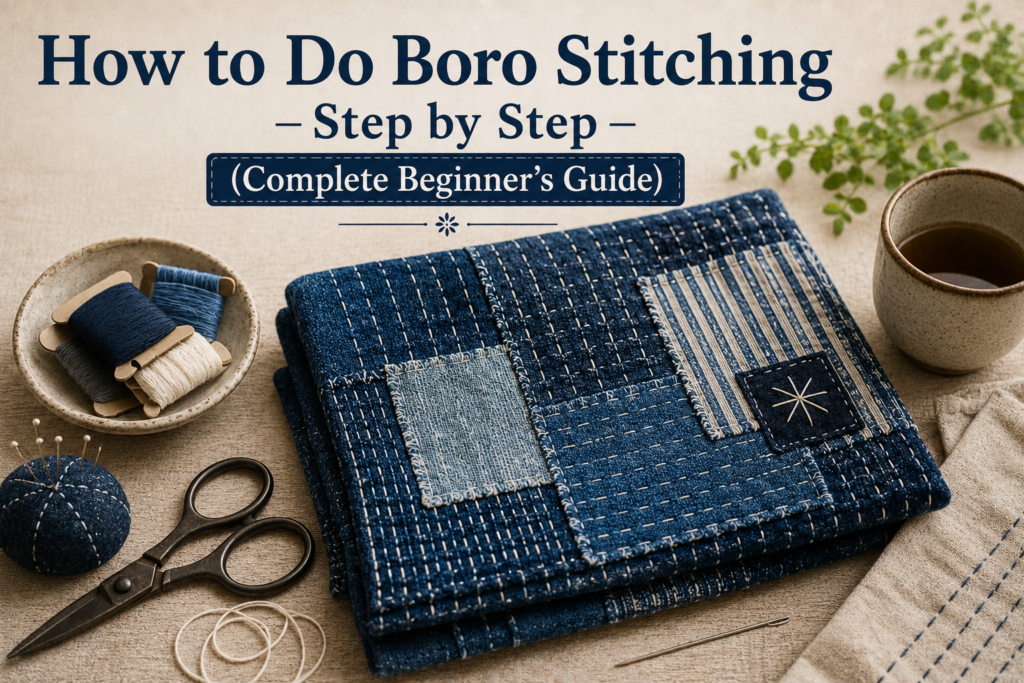
Boro stitching is a traditional Japanese textile repair method built on the idea of reusing, layering, and repairing fabric instead of throwing it away. The word “Boro” translates to “ragged” or “tattered,” but in textile culture, it represents resilience, sustainability, and practical beauty. What Is Boro Stitching? Boro started during Japan’s Edo period when fabric […]