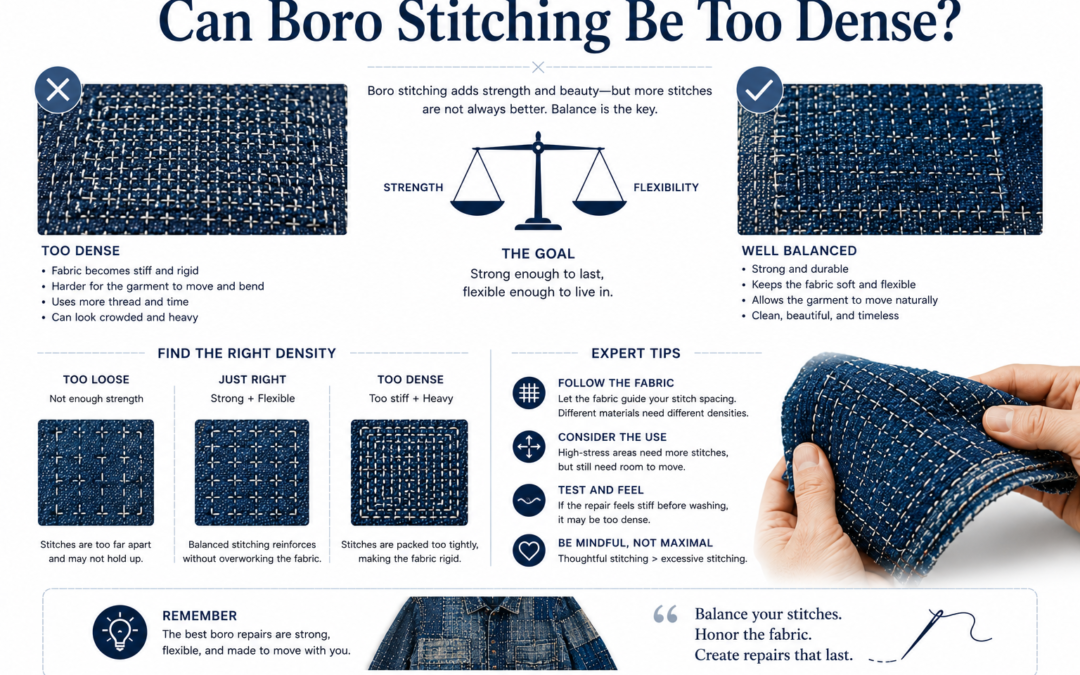
Boro stitching can absolutely become too dense when excessive stitching compresses the fabric, reduces flexibility, creates puckering, and limits the natural movement of the garment. Traditional Japanese boro repairs focused on balanced reinforcement rather than heavy decorative stitching. Proper spacing usually creates stronger, more comfortable, and longer-lasting repairs than overly compact stitch patterns. By having a minute read of this article, all doubts and questions on “Can Boro Stitching Be Too Dense?” can be cleared and even more further queries can be fulfilled.
What Happens When Boro Stitching Becomes Too Dense?
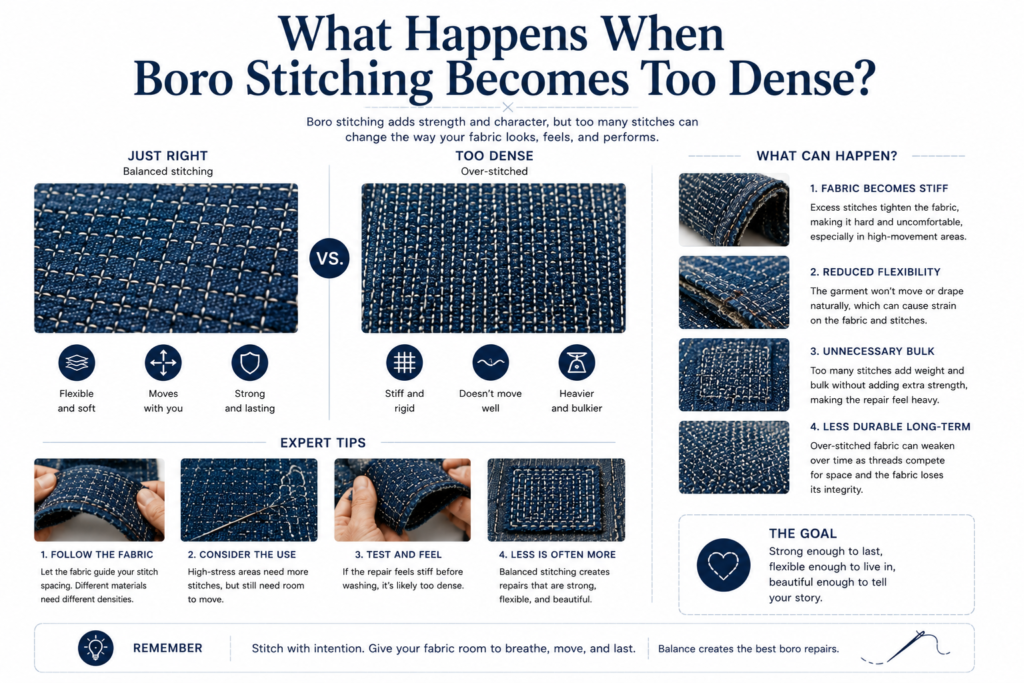
Japanese Boro stitching becomes too dense when the thread coverage starts overpowering the natural structure of the fabric. Instead of supporting the damaged area, the stitching begins restricting movement and compressing the material too tightly. This often happens when beginners believe more stitches automatically create stronger repairs. In reality, excessive stitch concentration can reduce flexibility and create long-term stress across the repaired section.
Traditional Japanese boro techniques were originally developed for practical survival repairs. Farmers and laborers reinforced worn clothing using balanced running stitches that allowed garments to remain wearable during physical work. Dense decorative stitching was not the primary goal. The repair needed to bend naturally with the body while still strengthening weakened fabric.
When too many rows of stitches are packed closely together, the fabric loses its natural drape. Areas around the repair may start feeling rigid or uneven. On jackets and denim, this can make sleeves, knees, or elbows uncomfortable during movement. Overly dense stitching also traps more thread tension inside the fabric layers, increasing the chance of distortion over time.
Signs that boro stitching has become too dense include:
- Fabric stiffness around the repair
- Visible puckering or wrinkling
- Reduced garment flexibility
- Thick thread buildup
- Uneven surface texture
- Distorted fabric grain direction
- Heavy or bulky repaired areas
Real-world vintage boro garments often survived for decades because repairs stayed balanced instead of overworked. Modern decorative visible mending sometimes prioritizes visual texture over wearability, which can create excessively rigid repairs if density is not controlled carefully.
How Close Together Should Boro Stitches Be?
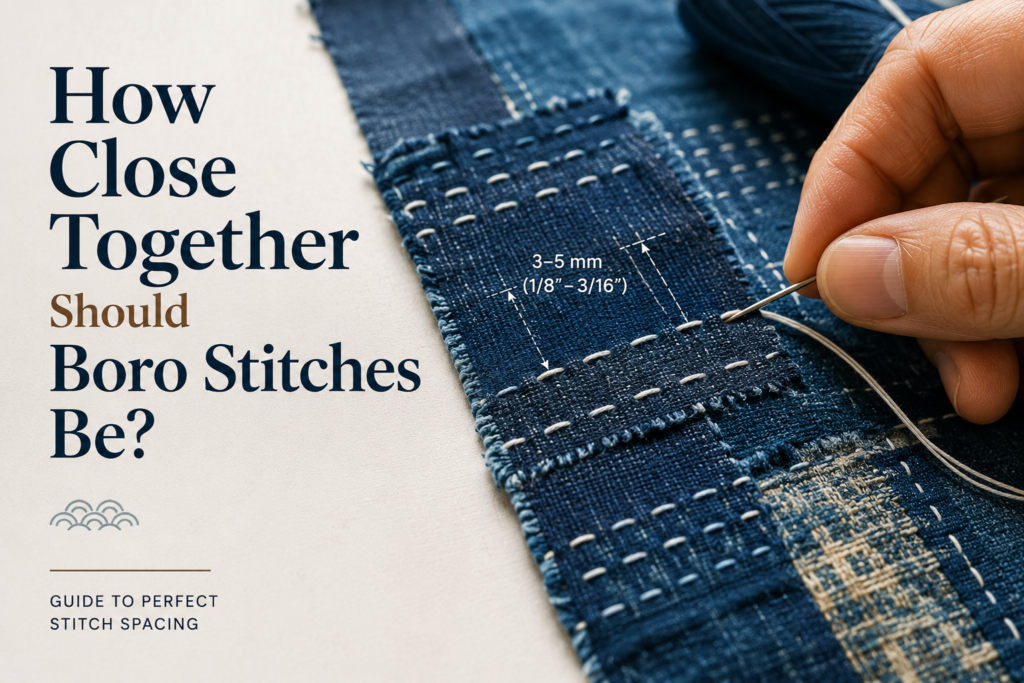
Boro stitch spacing should remain balanced enough to reinforce fabric without compressing it excessively. In most wearable repairs, stitches should still allow the fabric to bend naturally after completion. Extremely compact stitch rows often create unnecessary rigidity, especially on lightweight textiles or movement-heavy garment areas.
Traditional Japanese boro rarely used fully saturated stitching surfaces because flexibility mattered as much as durability. Moderate spacing distributes tension more evenly across the repair while reducing puckering risk. Dense decorative stitching may work visually on display textiles, but clothing repairs usually perform better with breathable spacing and controlled thread concentration.
The ideal spacing changes depending on fabric thickness, garment use, and thread weight. Thick denim can tolerate moderately tighter stitching than lightweight cotton because the heavier weave resists compression more effectively. Stretch fabrics usually require wider spacing so the material can continue moving naturally during wear.
Beginner-Friendly Density Guide
- Lightweight cotton → wider spacing
- Heavy denim → medium spacing
- Decorative repairs → moderate-tight spacing
- Structural reinforcement → balanced moderate spacing
- Stretch fabric → flexible wider spacing
A simple practical rule is that the fabric should still fold comfortably after stitching. If the repair feels hard or board-like, the density is usually becoming excessive.
Why Dense Boro Stitching Creates Fabric Puckering
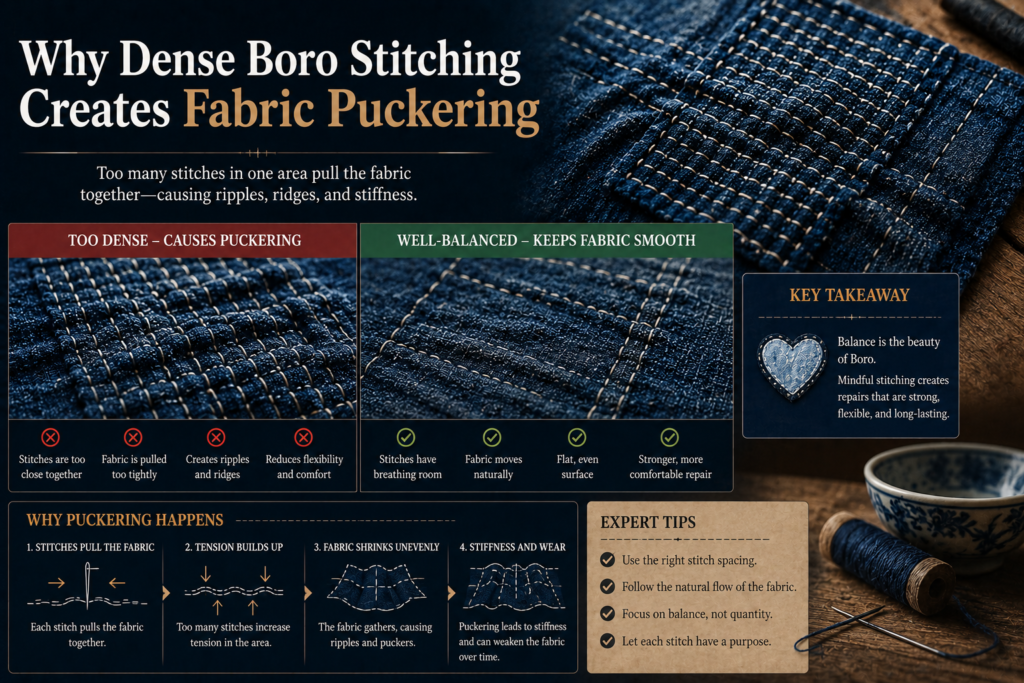
Fabric puckering is one of the most common problems caused by dense boro stitching. Puckering happens when excessive stitch tension pulls the fabric unevenly, creating ripples, wrinkles, or distorted surfaces around the repair. The tighter and denser the stitching becomes, the more pressure is placed on the surrounding fibers.
This issue becomes especially visible after washing because cotton and linen fabrics naturally shrink slightly when exposed to moisture and heat. If the thread tension is already too tight, shrinkage increases the stress imbalance. The repaired section starts contracting differently than the surrounding fabric, producing visible distortion.
Dense stitching also increases friction between layered materials. In boro repairs, multiple fabric layers are usually stacked together. When excessive running stitches compress those layers too tightly, the fabric loses its ability to move independently. Instead of flexing naturally, the layers pull against each other during wear and washing.
Another important factor is stitch consistency. Uneven stitch lengths often create localized tension pockets. If one section contains very tight decorative stitching while another remains loose, the imbalance encourages warping and puckering over time. This is particularly common in beginner sashiko-inspired repairs.
Several factors make puckering worse:
- Tight stitch tension
- Excessive stitch density
- Uneven stitch spacing
- Thick thread usage
- Mixed fabric shrinkage rates
- Poor grain alignment
- Excessive fabric layering
Experienced boro artists often reduce stitch concentration near edges and movement zones because these areas experience higher tension during wear. Traditional repairs usually appear visually balanced rather than heavily saturated with thread. This balance helps preserve the natural flexibility of the original textile while still reinforcing damaged areas effectively.
How Can You Tell If Boro Stitching Is Too Dense?
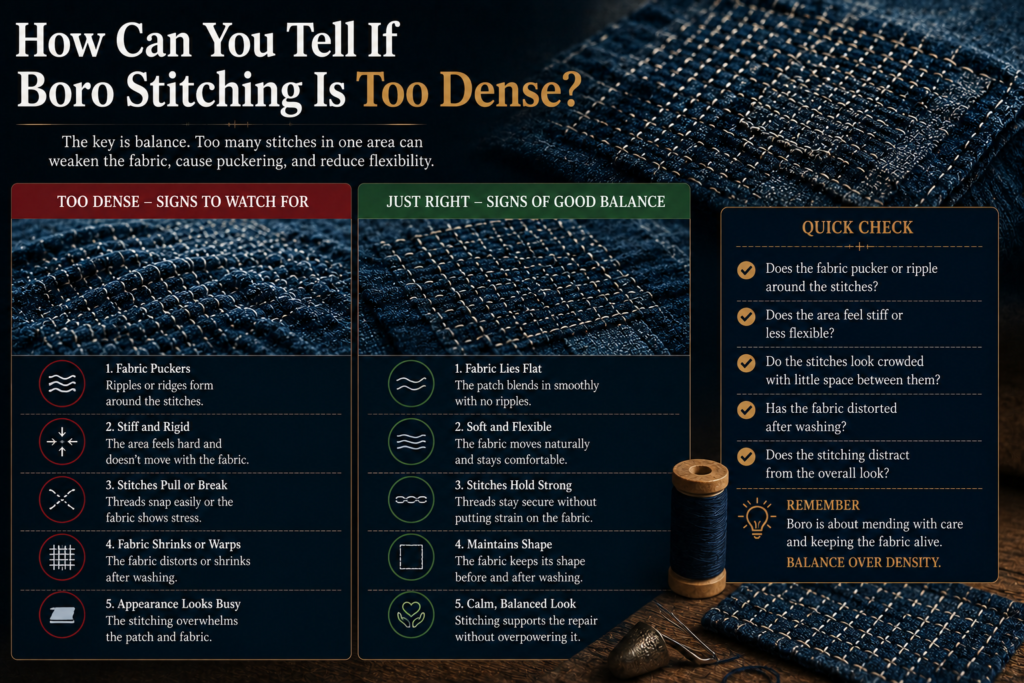
Boro stitching usually becomes too dense when the repair starts changing the natural behavior of the fabric instead of supporting it. The easiest way to identify excessive density is by checking flexibility, drape, and surface texture after stitching is complete.
Well-balanced repairs should move similarly to the surrounding garment. If the repaired section feels noticeably stiffer, thicker, or tighter than the original fabric, the stitching density may already be too high. Puckering lines that spread outward from the repair are also strong indicators of excessive thread tension and compression.
Another important sign appears after washing. Repairs that looked flat initially may begin curling, shrinking unevenly, or wrinkling around the stitched area once moisture tightens the fibers. This often happens when dense running stitches trap too much tension inside layered fabrics.
Common Signs of Excessive Stitch Density
- Fabric feels rigid or board-like
- Repair no longer drapes naturally
- Wrinkles spread outward from stitches
- Fabric curls after washing
- Movement zones feel restricted
- Thick thread buildup dominates texture
- Surface becomes uneven or distorted
Experienced makers often test repairs by folding or bending the fabric gently. If the stitched area resists movement more than the surrounding textile, reducing stitch concentration usually improves long-term wearability.
Can Dense Stitching Make Clothing Less Comfortable?

Yes, dense boro stitching can make clothing significantly less comfortable when excessive thread buildup limits flexibility and increases rigidity. Comfort is one of the most overlooked aspects of visible mending because many modern repairs prioritize appearance over practical wearability. Traditional Japanese boro focused heavily on function, especially for garments worn daily during physical labor.
Dense stitching changes how fabric behaves against the body. Soft cotton or worn denim naturally flexes during movement, but heavy stitch concentration reduces that flexibility. Areas like elbows, knees, shoulders, and waistlines are particularly sensitive because they bend constantly throughout the day. Overly reinforced repairs in these zones can feel stiff, restrictive, or bulky.
Another issue is breathability. Every stitch adds additional thread mass and compresses the textile surface slightly. When stitches become extremely concentrated, airflow decreases and the repaired area may trap more heat and moisture. Thick decorative sashiko patterns on jackets or pants sometimes feel noticeably heavier than balanced reinforcement stitching.
Comfort problems become even more noticeable after repeated washing cycles. Dense stitching often tightens further as fabrics shrink naturally. Over time, the repaired section can become harder than the surrounding textile, creating uneven texture and stiffness.
Common comfort problems caused by excessive stitch density include:
- Restricted movement
- Heavy fabric feel
- Reduced breathability
- Stiff bending zones
- Thick seam-like texture
- Skin irritation from raised thread buildup
- Uneven garment drape
Experienced makers often vary stitch density based on garment location. High-stress areas may need stronger reinforcement, but movement zones require more flexibility. Traditional boro garments survived long-term use because repairs balanced durability with comfort rather than maximizing decorative stitch saturation across the entire surface.
Can Dense Boro Stitching Reduce Breathability?
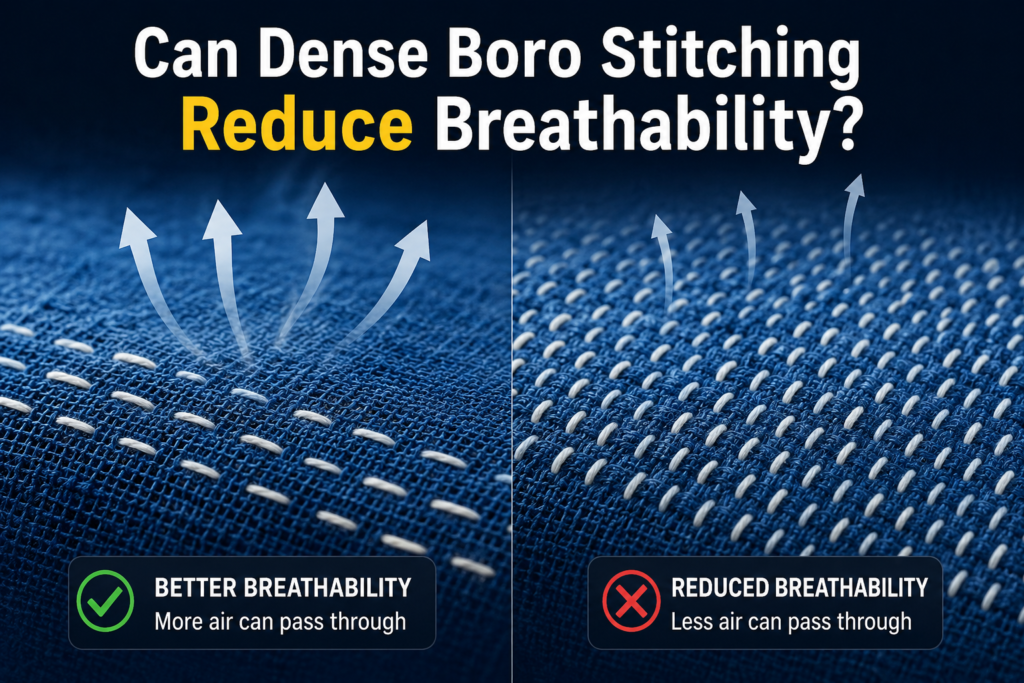
Yes, extremely dense boro stitching can reduce breathability by compressing fabric layers and increasing thread saturation across the textile surface. While moderate reinforcement usually has little effect on airflow, heavily stitched repairs may trap more heat and moisture during wear.
This issue becomes more noticeable on jackets, workwear, and multi-layer denim garments. Every additional stitch slightly reduces open space between fabric fibers. When thick thread and multiple layers combine with dense decorative patterns, the repaired area can feel warmer and heavier than the surrounding textile.
Traditional Japanese boro repairs usually remained breathable because stitching focused mainly on reinforcement instead of surface coverage. Historic garments were worn during physical labor, so flexibility and airflow were important practical concerns. Overly decorative saturation would have reduced comfort during long periods of movement.
Breathability Problems Often Increase With:
- thick sashiko thread
- excessive fabric layering
- compact decorative patterns
- heavy thread overlap
- dense multi-directional stitching
- tightly compressed repair zones
Balanced stitch spacing helps preserve airflow while still reinforcing damaged areas effectively. This is one reason moderate-density repairs often remain more comfortable during long-term wear.
Does More Stitching Always Make Repairs Stronger?
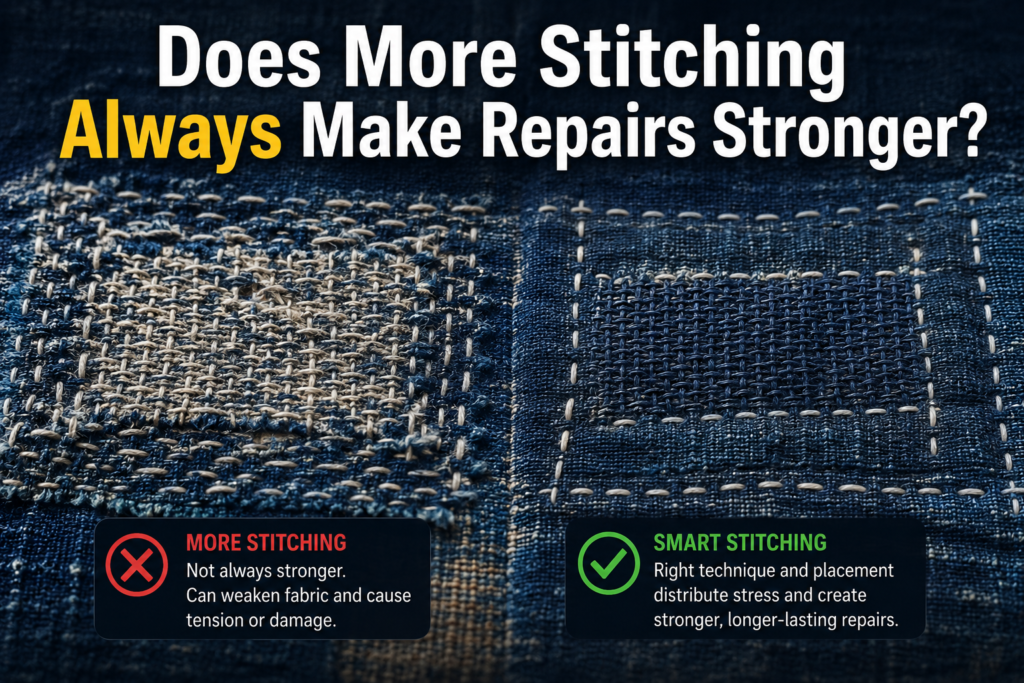
Many beginners assume that adding more stitches automatically creates stronger boro repairs, but this is only partially true. While stitching does reinforce weakened fabric, excessive density can eventually create the opposite effect by increasing tension stress and reducing the textile’s ability to flex naturally.
Strong repairs depend more on balanced reinforcement than thread saturation. Traditional boro stitching distributed tension evenly across damaged areas using moderate stitch spacing. This allowed the fabric and repair layers to move together instead of fighting against each other. Extremely dense stitching often concentrates stress into small areas, increasing the risk of puckering, warping, or long-term fabric fatigue.
Thread itself also affects repair strength. Thick sashiko thread placed very closely together can perforate lightweight fabrics over time, especially when the garment experiences repeated movement. Too many needle holes weaken delicate fibers and may cause tearing around the stitched area.
Balanced reinforcement usually performs better because it supports the fabric without over-compressing it. This is why many vintage boro garments show moderate stitch spacing rather than fully covered decorative surfaces. Durability came from thoughtful placement and layered reinforcement instead of excessive thread density.
Factors that influence repair strength include:
- Fabric thickness
- Thread weight
- Stitch spacing
- Layer alignment
- Tension balance
- Repair location
- Movement frequency
For example, knees and elbows require reinforcement that can bend repeatedly without becoming rigid. A heavily stitched patch may initially feel strong, but long-term stress can cause cracking or distortion if flexibility disappears. Expert makers often prioritize movement-friendly reinforcement because wearable durability matters more than decorative density alone.
The strongest boro repairs are usually balanced, breathable, and flexible rather than visually overloaded with stitching.
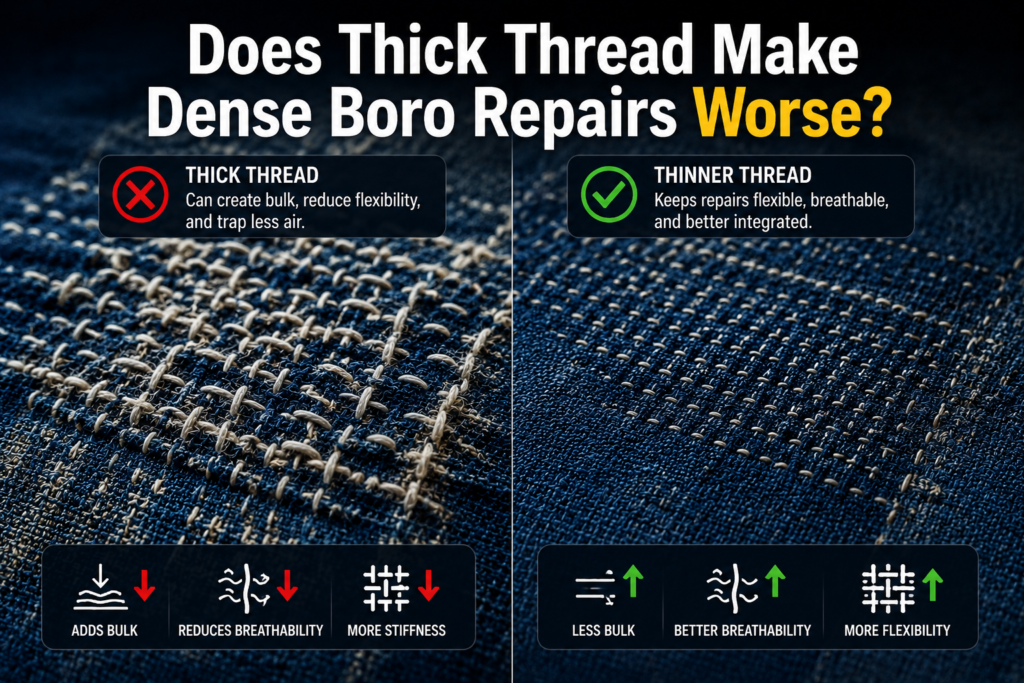
Does Thick Thread Make Dense Boro Repairs Worse?
Thick thread can make dense boro stitching more problematic because larger thread diameter increases fabric compression much faster than fine thread. Heavy sashiko thread creates stronger visual texture, but it also adds stiffness when used too closely together.
Cotton thread naturally expands slightly after washing and repeated use. When thick thread is packed densely into a repair, the expansion increases tension across the surrounding fibers. This often exaggerates puckering, rigidity, and distortion over time, especially on lightweight fabrics.
Decorative visible mending sometimes combines thick thread with extremely compact stitch spacing to create bold texture. While visually striking, this approach can reduce flexibility and create uncomfortable wear zones if the repair covers movement-heavy areas like elbows or knees.
Thick Thread Creates More Risk When Combined With:
- lightweight fabric
- tight stitch spacing
- multiple repair layers
- rigid decorative patterns
- heavy tension pulling
- stretch textiles
Experienced makers often reduce stitch density slightly when using heavier thread. Softer cotton thread with balanced spacing usually creates more wearable repairs than thick decorative stitching packed tightly together.
How Traditional Japanese Boro Balanced Stitch Density
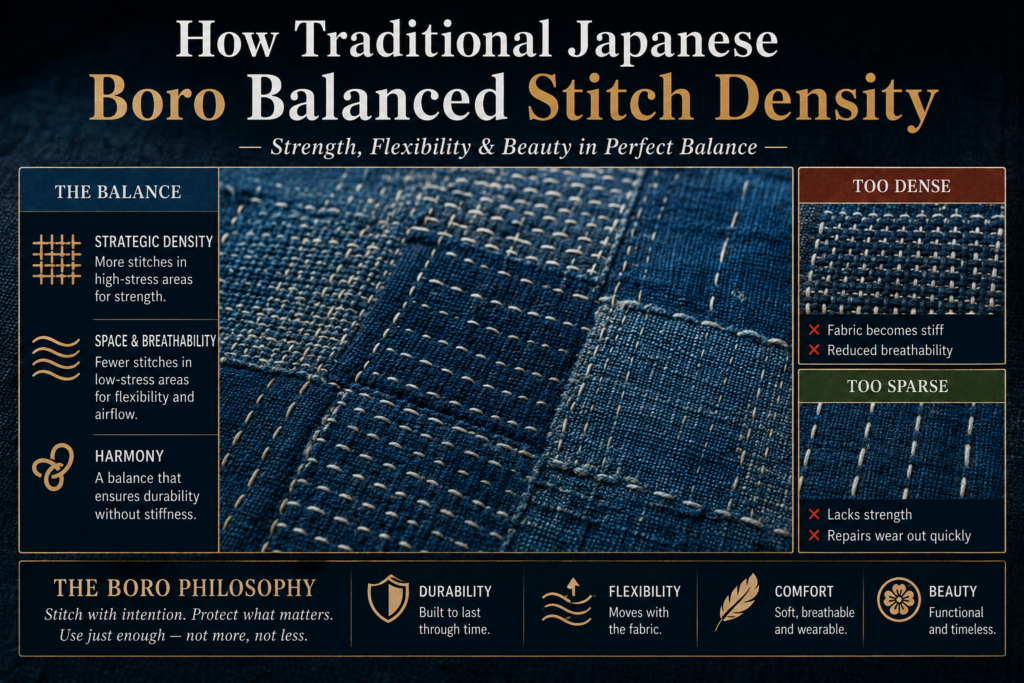
Traditional Japanese boro repairs were created out of necessity rather than decoration. Rural families reused and reinforced textiles repeatedly because fabric was valuable and difficult to replace. The primary goal was extending garment lifespan while maintaining comfort and flexibility during physical work.
This practical purpose heavily influenced stitch density. Historic boro garments rarely used excessive decorative saturation because overly dense stitching would have reduced mobility and increased fabric stiffness. Instead, repairs focused on strategic reinforcement across weakened zones while preserving the natural drape of the clothing.
Most traditional boro used running stitches spaced evenly enough to distribute stress without compressing the textile excessively. Stitch patterns often followed the grain direction of the fabric to minimize distortion. Layers were added gradually over time as garments aged, creating a naturally evolved repair structure instead of one heavily overworked section.
Traditional makers also understood material behavior through experience. Old indigo-dyed cotton softened with wear, so repairs needed to move naturally alongside the existing textile. Dense thread buildup would have made labor-intensive clothing uncomfortable during farming, fishing, and manual work.
Learn how traditional boro stitching differs from Japanese Boro Stitching which people originally used for survival in the Edo Period in Japan.
Traditional density balance techniques included:
- Moderate stitch spacing
- Flexible reinforcement zones
- Grain-aligned stitching
- Soft cotton thread usage
- Layered repairs added gradually
- Reinforcement focused only on damaged areas
- Avoiding unnecessary decorative saturation
Modern visible mending sometimes emphasizes aesthetics more heavily than function. While artistic stitching can look visually impressive, traditional Japanese boro prioritized wearable practicality first. The best contemporary boro repairs usually combine visual beauty with the flexibility and durability principles found in historic garments.
Which Fabrics Struggle Most With Dense Boro Stitching?
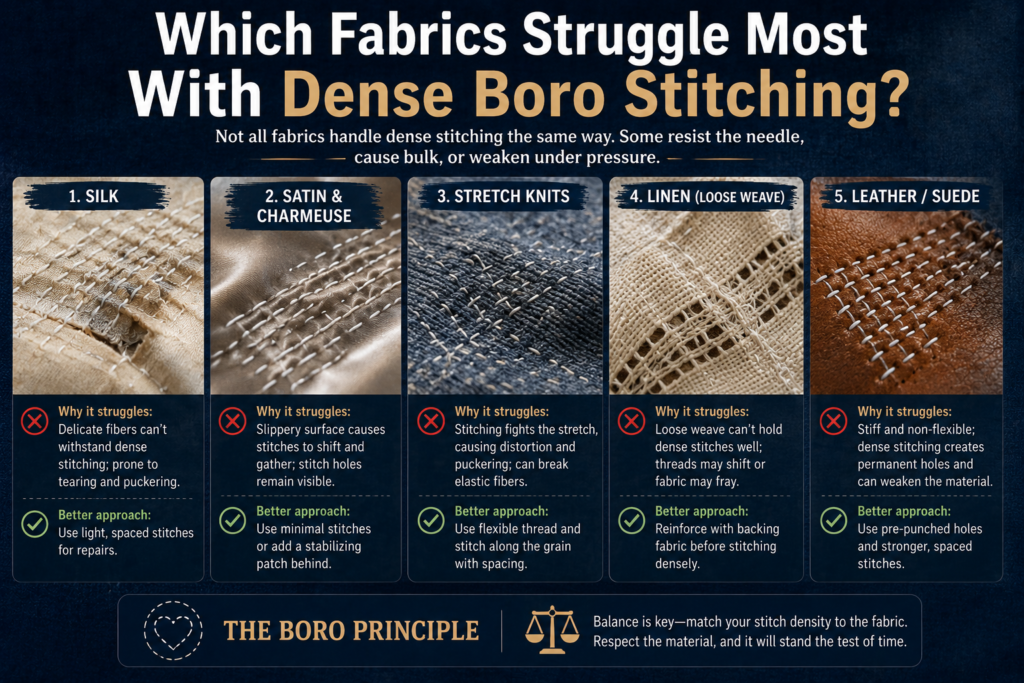
Not all fabrics respond to dense boro stitching the same way. Some textiles can tolerate heavier reinforcement, while others distort quickly when excessive stitching compresses the fibers too tightly. Understanding fabric behavior is essential for creating durable and comfortable visible mending repairs.
Lightweight cotton is one of the most vulnerable materials because thin fibers wrinkle and pucker more easily under thread tension. Dense running stitches can quickly overpower delicate cotton fabrics, especially when thick sashiko thread is used. Linen blends also struggle because they naturally crease and shift under concentrated stitching pressure.
Stretch fabrics are another major challenge. Materials containing elastane or spandex move differently than traditional woven cotton. Dense boro stitching restricts stretch zones and creates uneven tension during movement. This often causes severe distortion, rippling, or thread stress around repaired areas.
Denim generally handles dense stitching better because of its thicker weave structure. However, even denim can become rigid if decorative stitching becomes excessively compact. Heavy thread buildup around knees, elbows, or seams may reduce flexibility and create uncomfortable wear points.
Fabrics most affected by dense stitching include:
- Lightweight cotton
- Linen blends
- Stretch fabrics
- Thin worn textiles
- Soft vintage garments
- Loose-weave fabrics
- Lightweight chambray
Fabrics that tolerate denser stitching better include:
- Heavy denim
- Thick canvas
- Durable indigo cotton
- Multi-layer workwear textiles
Experienced makers usually adjust stitch spacing according to fabric thickness and flexibility. Softer fabrics require lighter reinforcement and looser spacing to maintain movement. Traditional boro succeeded partly because artisans adapted their stitching density to the behavior of each textile instead of using one universal repair style.
Which Garment Areas Should Avoid Dense Boro Stitching?
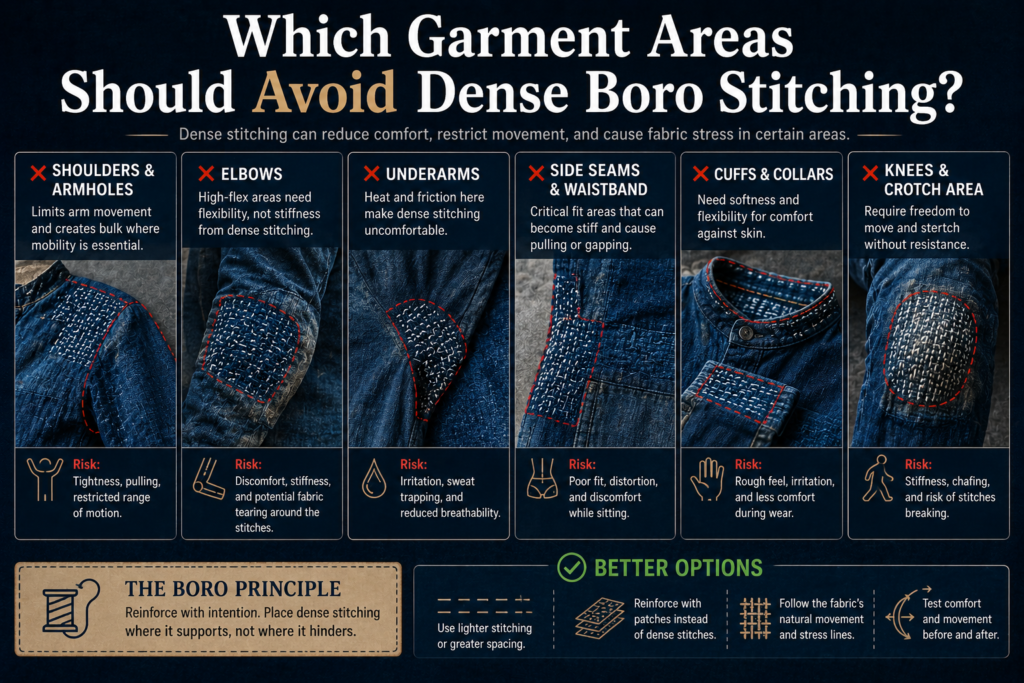
Some garment areas experience constant movement and bending, making them more sensitive to dense boro stitching. Repairs in these zones need flexibility as much as reinforcement. Excessive stitch concentration may initially appear durable but can eventually create stiffness and uncomfortable movement restriction.
Elbows and knees are especially vulnerable because the fabric repeatedly folds during daily wear. Dense decorative stitching across these areas often creates tension lines that worsen after washing. Underarm sections and shoulder seams also require moderate flexibility because they stretch and shift constantly throughout movement.
Traditional Japanese workwear repairs usually adapted stitch density according to stress zones. High-friction areas received reinforcement, but movement-heavy sections avoided unnecessary thread saturation. This practical balance helped garments remain wearable during farming, fishing, and labor-intensive tasks.
Areas That Usually Need Lower Stitch Density
- elbows
- knees
- underarms
- shoulder seams
- waist folds
- crotch seams
- sleeve bends
Flat low-movement surfaces like jacket backs or pocket panels can tolerate slightly denser decorative stitching more comfortably. Understanding movement zones is one of the biggest differences between beginner repairs and expert-level wearable boro work.
How Experts Keep Boro Repairs Flexible and Balanced
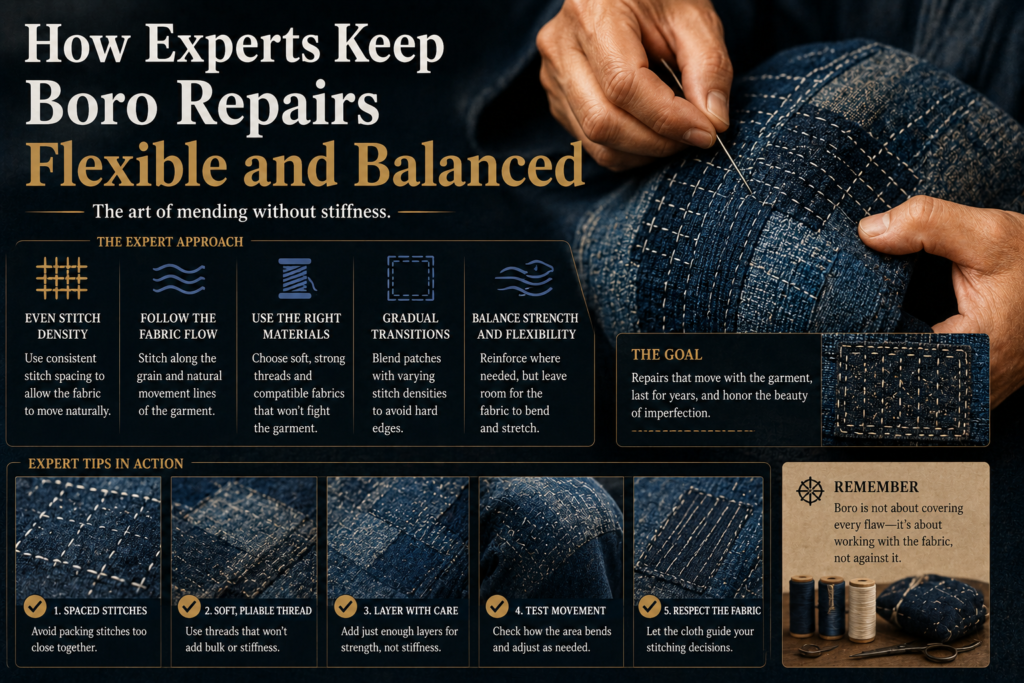
Experienced boro artists rarely use uniform stitch density across an entire repair. Instead, they adjust spacing, tension, and reinforcement according to fabric thickness, movement zones, and long-term wear expectations. This balanced approach helps maintain both durability and comfort.
One of the most important expert techniques is tension control. Skilled makers avoid pulling stitches too tightly because thread tension continues changing after washing and repeated use. Slightly relaxed stitches allow the fabric to move naturally while still reinforcing weakened areas effectively.
Experts also vary density depending on garment function. Elbows, knees, and shoulder areas require flexibility because they bend constantly during movement. Repairs in these zones usually contain more moderate spacing than decorative flat areas like jacket backs or pockets.
Layer management is another major factor. Excessive fabric layers combined with dense stitching often create thick rigid sections. Traditional-inspired repairs usually limit reinforcement to only the areas that truly need support. This prevents unnecessary bulk and helps preserve the original drape of the garment.
Professional balancing techniques include:
- Moderate stitch spacing
- Relaxed thread tension
- Flexible movement zones
- Gradual reinforcement layering
- Fabric-specific thread selection
- Grain-aligned stitching
- Balanced decorative placement
Many experienced makers also step back frequently during stitching to evaluate drape and flexibility. If the repair starts feeling overly rigid, they reduce density before continuing. This practical adjustment process is one reason high-quality boro repairs look balanced rather than visually overloaded.
The best visible mending repairs combine artistry with functional textile understanding. Dense decorative stitching may appear impressive initially, but balanced reinforcement usually performs better for long-term wearable durability.
Why Dense Boro Stitching Changes After Washing
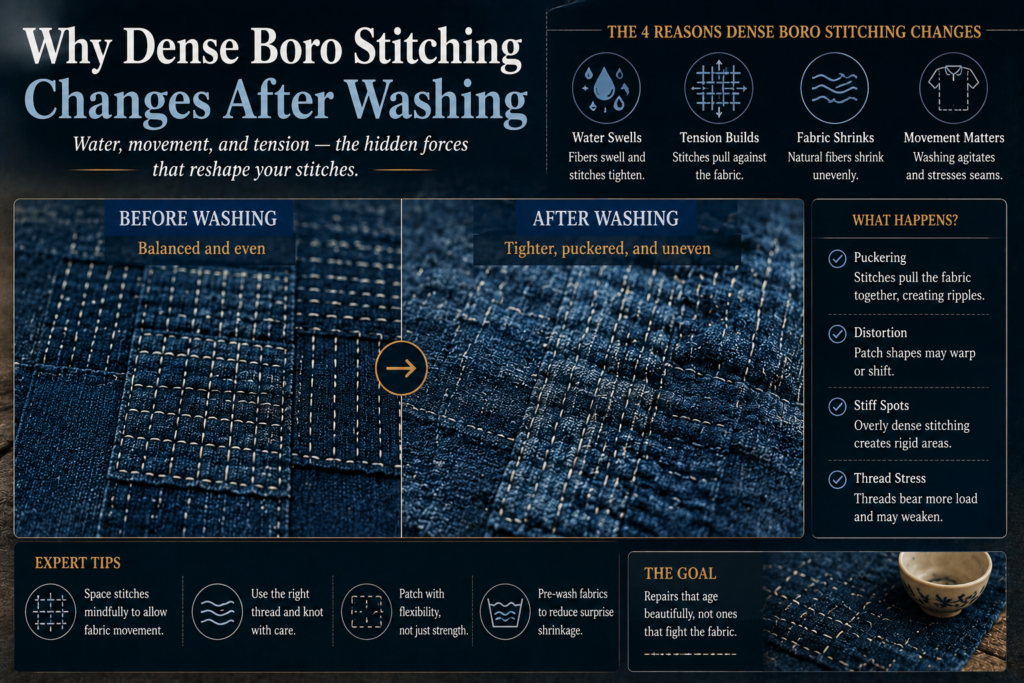
Dense boro stitching often behaves differently after washing because moisture, heat, and fabric shrinkage change thread tension throughout the repair. Many stitched areas appear flat during sewing but begin puckering once the textile contracts naturally during laundering.
Cotton thread absorbs water and tightens slightly as it dries. If the stitching is already compact and highly tensioned, the contraction increases pressure across the surrounding fabric. This creates ripples, wrinkling, and uneven distortion, especially on lightweight textiles or layered repairs.
Mixed fabrics can create even more dramatic changes. Different materials shrink at different rates, so dense stitching may force one layer to pull harder against another. This is one reason balanced stitch spacing usually performs better long-term than tightly compressed decorative patterns.
Washing Often Amplifies:
- puckering
- curling edges
- thread compression
- stiffness
- shrinkage tension
- uneven drape
- layered distortion
Experienced boro makers often wash repaired garments gently after completion to evaluate how the fabric settles naturally. Balanced repairs usually soften with wear, while excessively dense stitching often becomes more rigid over time.
Why Beginners Often Over-Stitch Boro Repairs
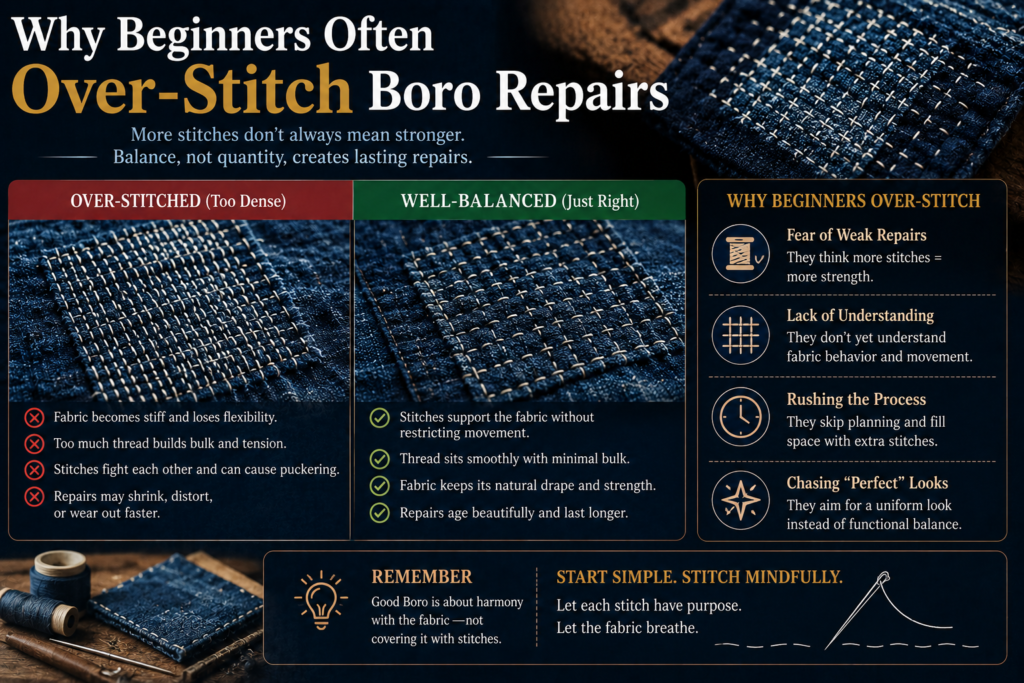
Beginners often over-stitch boro repairs because dense visible stitching looks strong, decorative, and visually impressive. Many new makers assume more thread automatically creates more durability, especially after seeing heavily textured modern sashiko-inspired designs online.
Traditional Japanese boro was usually far more practical. Repairs focused on extending garment life while preserving flexibility and comfort. Historic workwear needed to move naturally during labor, so excessive decorative saturation was rarely the priority.
Another common beginner mistake is trying to fill every visible fabric space with stitching. This often happens when makers feel uncertain about repair strength and continue adding thread long after the damaged area has already been reinforced properly.
Common Beginner Over-Stitching Habits
- pulling stitches too tightly
- using thick thread everywhere
- covering entire patches densely
- ignoring movement zones
- adding unnecessary decorative layers
- repeating stitch rows excessively
Experienced boro artists usually stop stitching once the repair feels structurally balanced. They understand that durability comes from thoughtful reinforcement placement rather than maximum thread coverage. Learning restraint is often one of the most important skills in wearable visible mending.
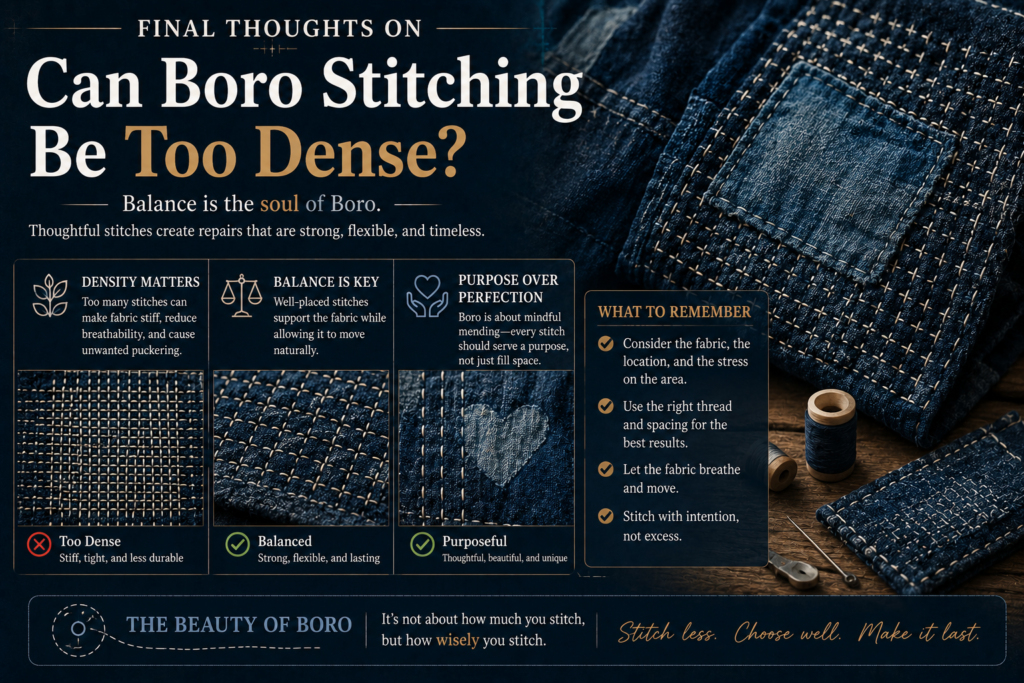
Final Thoughts on Can Boro Stitching Be Too Dense?
Boro stitching absolutely can become too dense when excessive thread concentration reduces flexibility, creates puckering, increases stiffness, and limits long-term wearability. Traditional Japanese boro succeeded because it balanced reinforcement with comfort instead of prioritizing decorative saturation alone.
The strongest repairs are not always the densest repairs. Well-spaced stitching often distributes stress more effectively while preserving the natural drape and movement of the garment. Excessive stitching may look visually dramatic, but it can create rigid repairs that become uncomfortable over time.
Successful boro repair depends on understanding fabric behavior, thread tension, movement zones, and layering balance. Lightweight fabrics usually need softer reinforcement, while heavy denim can tolerate slightly denser stitching. Even then, moderation remains important.
Key lessons from traditional and modern boro include:
- Balanced spacing improves flexibility
- Excessive density increases puckering risk
- Comfortable repairs last longer
- Thread tension matters as much as stitch count
- Fabric type changes ideal density
- Wearable durability is more important than decorative overload
- Strategic reinforcement outperforms random saturation
Traditional Japanese makers developed repair methods through long-term real-world use, not visual trends. Their balanced approach remains valuable today because durable clothing still requires flexibility, breathability, and movement-friendly reinforcement.
Modern visible mending works best when decorative creativity stays aligned with practical textile behavior. Thoughtful stitch density creates repairs that are both beautiful and wearable for years.
FAQ SECTION
Can too much boro stitching weaken fabric?
Yes. Excessive stitching can perforate lightweight fabrics and increase tension stress over time.
Why does dense boro stitching feel stiff?
High stitch concentration compresses fabric layers and reduces natural movement.
Is dense sashiko stitching stronger?
Only to a point. Balanced stitching usually provides better long-term wearability.
Which fabrics handle dense stitching best?
Heavy denim and thick cotton tolerate dense stitching better than lightweight fabrics.
Can washing increase puckering in dense repairs?
Yes. Shrinkage often exaggerates thread tension and fabric distortion.
Should decorative boro use looser spacing?
Usually yes. Moderate spacing keeps garments flexible and wearable.
How do experts avoid over-stitching?
They vary spacing depending on stress zones and fabric thickness.
Does thread thickness matter in dense boro?
Yes. Thick thread increases rigidity faster than fine thread.