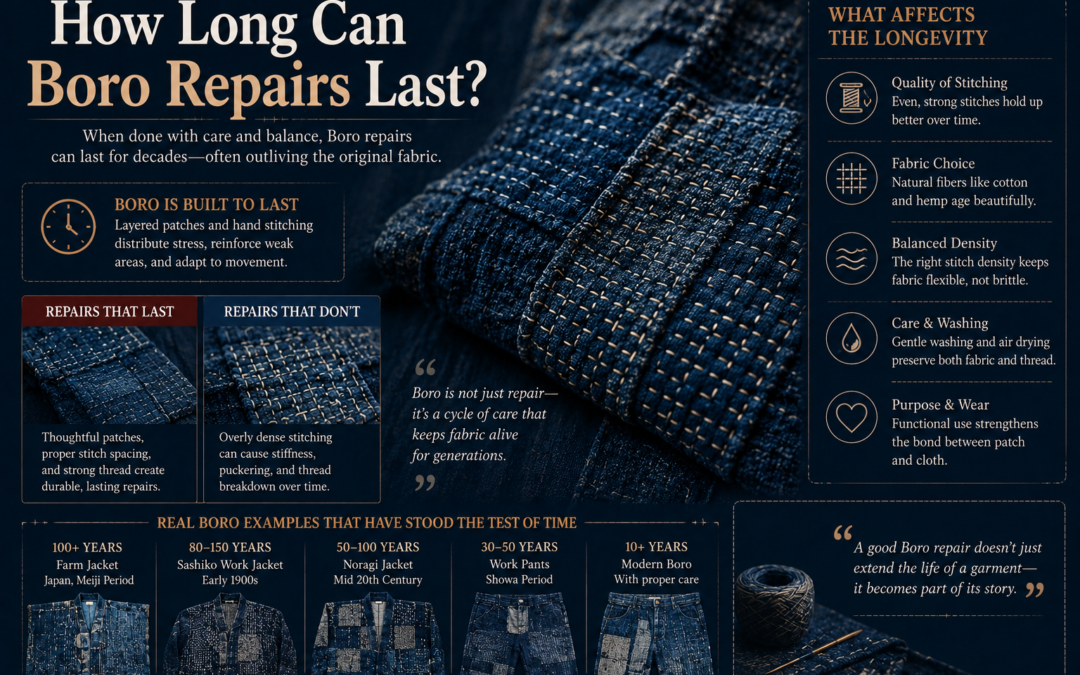
Boro repairs can last anywhere from several years to multiple decades depending on fabric quality, stitch density, washing habits, and reinforcement technique. Traditional Japanese boro stitching was designed to repeatedly extend garment life through layered repairs, making many restored garments stronger than the original worn fabric around them.
Discover the limits of Boro Clothing in how long can boro repairs last and can it even exceed the lifetime of the original clothing before japanese boro stitching left its mark on it.
How Long Boro Repairs Last on Different Types of Clothing
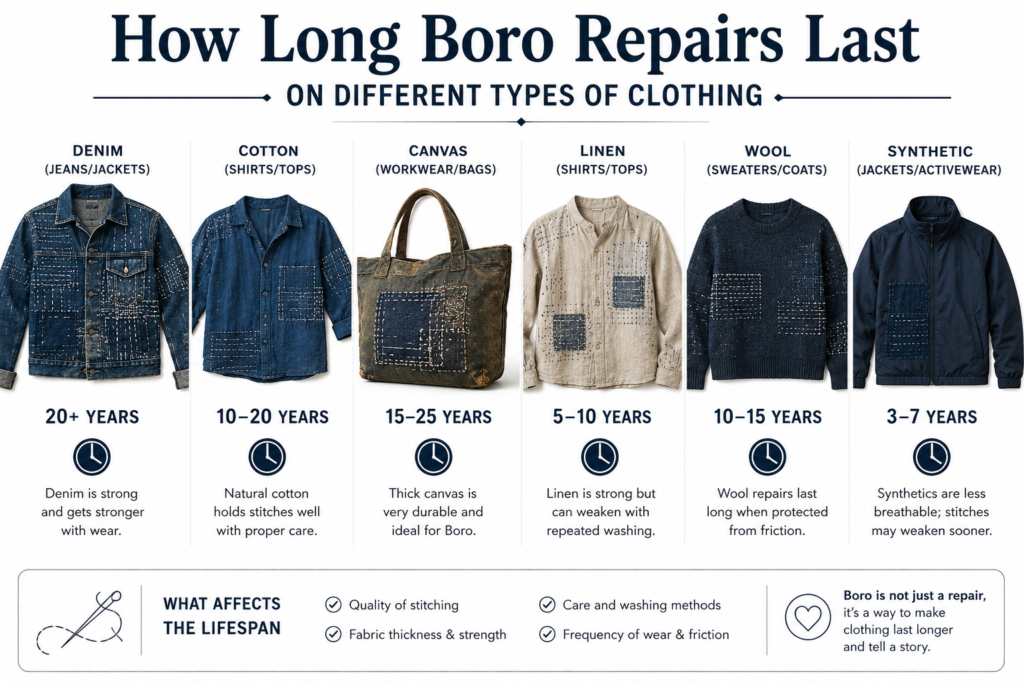
Boro repair lifespan changes significantly depending on the garment type because every piece of clothing experiences different movement patterns, friction levels, and washing frequency. Heavy garments like denim workwear and canvas jackets usually support repairs for much longer because the surrounding fabric remains structurally stable even after years of use. Lightweight shirts and stretch fabrics often wear out faster because the base material weakens more quickly around the repaired area.
Traditional Japanese workwear survived for decades partly because the garments themselves were built from dense woven cotton designed for physical labor. Modern fashion fabrics are often thinner and less durable, which changes how long repairs can realistically last. A well-maintained denim repair may survive ten years or longer, while a lightweight stretch garment might require reinforcement again within one or two years depending on use conditions.
| Garment Type | Typical Repair Lifespan |
| Heavy denim jeans | 3–10 years |
| Canvas work jackets | 5–15+ years |
| Cotton shirts | 1–5 years |
| Stretch denim | 6 months–3 years |
| Canvas bags | 5–20 years |
| Traditional workwear | Decades with maintenance |
Major lifespan factors:
- Friction intensity
- Washing frequency
- Fabric density
- Patch flexibility
- Garment movement
Decision clarity:
The same stitching technique may last dramatically longer on structured workwear than on lightweight modern fashion fabrics.
To learn more about boro clothing, refer to our detailed guide on its history, repairs, styling and authentic craftsmanship.
What Determines How Long Boro Repairs Last?
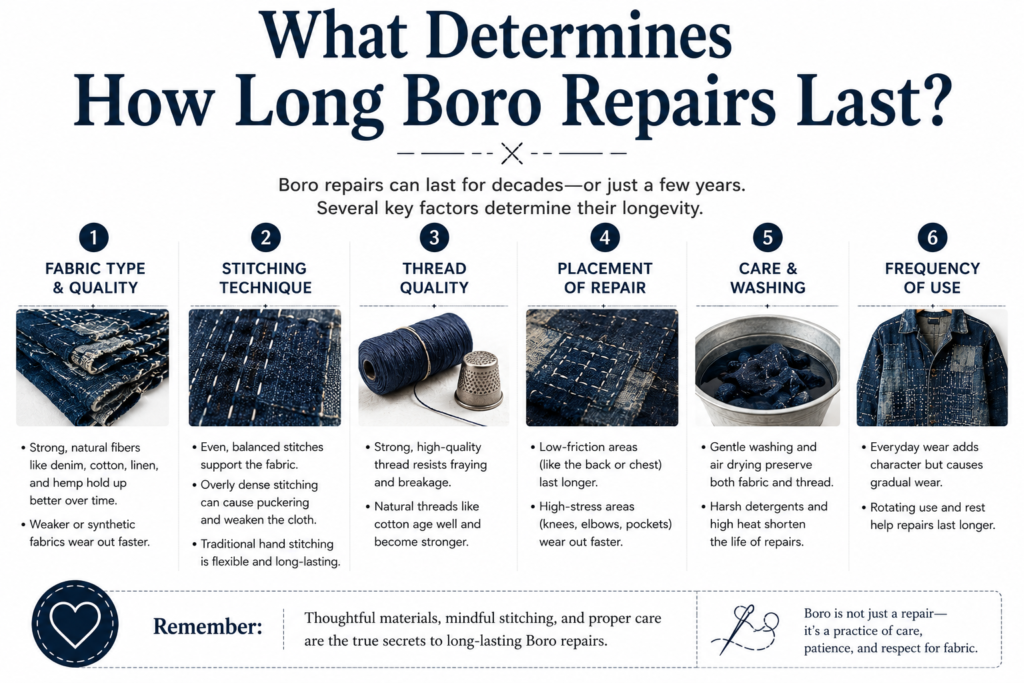
The lifespan of a traditional Boro Stitching repair depends on how effectively the stitching and fabric layers distribute stress across damaged areas. Unlike temporary iron-on patches or modern fast-fashion repairs, boro reinforcement was developed to help garments survive years of heavy use. Farmers, fishermen, and laborers in historical Japan repeatedly repaired clothing instead of replacing it, which is why some original boro textiles still exist today.
A strong repair is not created by adding random layers or dense decorative stitching. Long-lasting repairs require balance between flexibility, fabric compatibility, and reinforcement coverage. If a repair becomes too rigid, stress transfers into the surrounding material and causes new tearing around the stitched section. This is why experienced visible mending artists focus on controlled reinforcement instead of simply increasing thread density.
Several major factors influence durability:
- Fabric thickness and weave quality
- Thread strength and stitch consistency
- Garment movement and stress exposure
- Washing frequency and drying method
- Layer flexibility
- Patch placement accuracy
- Friction intensity during wear
For example, a lightly worn denim jacket elbow repair may survive for decades because the area experiences moderate movement. Meanwhile, a jeans crotch repair exposed to constant friction and stretching may require reinforcement every few years even if stitched properly.
Real-world insight:
Traditional Japanese workwear often accumulated multiple generations of repairs. Instead of aiming for permanent perfection, boro philosophy focused on continuous maintenance and adaptation over time.
Why Fabric Type Has the Biggest Impact on Repair Lifespan
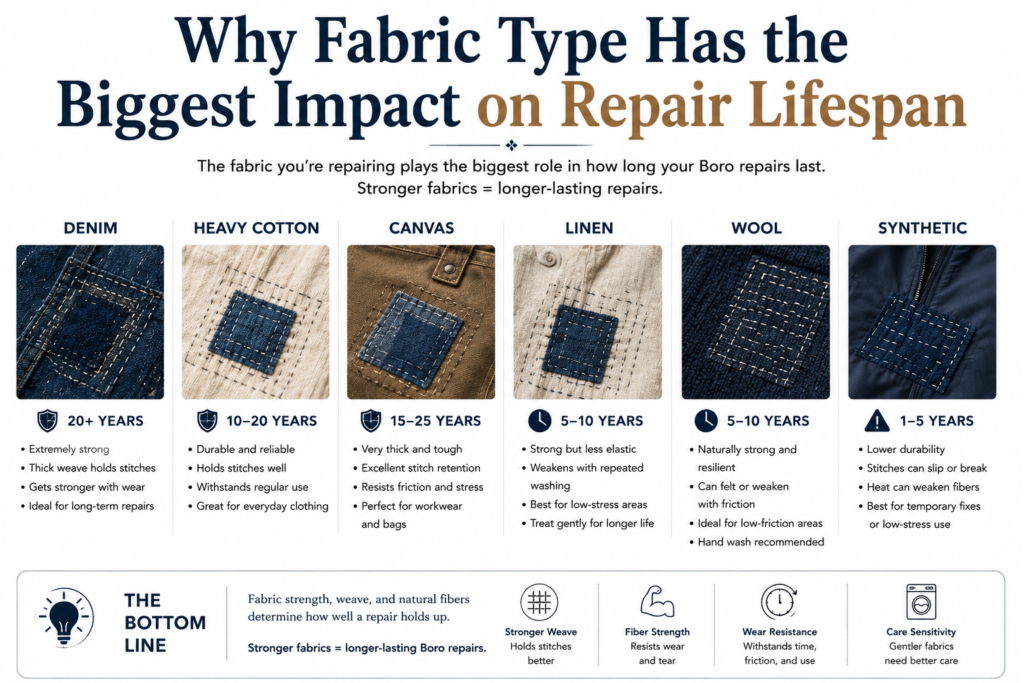
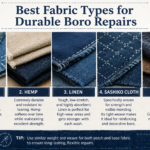
Fabric quality often determines whether a repair survives for years or fails after repeated use. Durable woven fabrics hold stitches securely because their fibers resist tearing and tension movement. Lightweight fabrics, stretchy materials, and thin knits usually weaken faster because the surrounding fabric cannot support the reinforced section properly.
Heavy cotton, canvas, and raw denim are considered ideal for long-term boro repairs because they combine flexibility with structural strength. These fabrics distribute movement evenly across stitched layers instead of concentrating tension into one small area. Traditional Japanese workwear commonly used tightly woven indigo cotton because it could withstand years of repair and repeated reinforcement.
Stretch fabrics are significantly harder to repair long term. Elastic fibers move differently from non-stretch reinforcement patches, which creates uneven pressure around the stitching. Over time, the original fabric may distort or tear beside the repaired section even when the stitches themselves remain intact.
Fabrics that usually support durable repairs:
- Raw denim
- Canvas
- Heavy cotton twill
- Indigo workwear fabric
- Linen blends
- Tightly woven cotton
Fabrics that fail more quickly:
- Thin jersey knit
- Stretch denim
- Polyester blends
- Lightweight cotton
- Elastic sportswear fabrics
Many beginners accidentally reduce repair lifespan by choosing patches that are much thicker than the original garment fabric. This creates stiffness that interrupts natural movement and increases edge stress during wear.
Decision clarity:
Strong stitching alone cannot save weak fabric. Durable repairs require balanced compatibility between the repair layers and the surrounding garment material.
Can Boro Repairs Outlast the Original Garment?
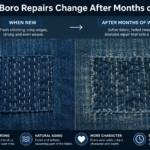
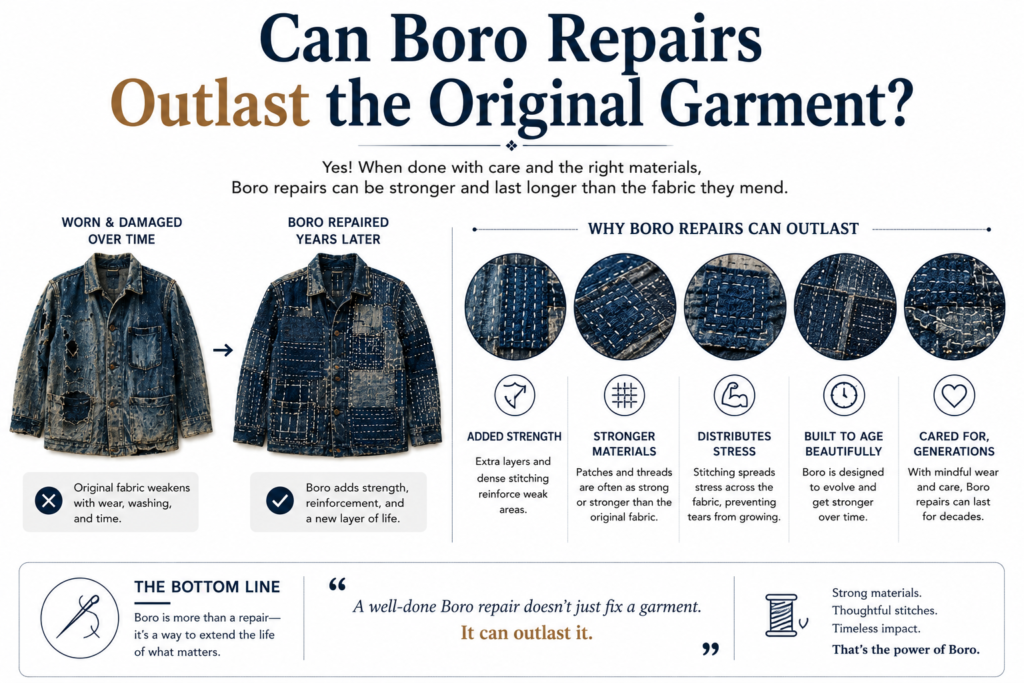
In many situations, yes. Well-executed boro repairs can eventually become stronger than the surrounding original fabric because layered reinforcement distributes stress more effectively than worn single-layer material. This is especially common in repaired denim, canvas workwear, and vintage garments that have accumulated multiple generations of stitching.
Traditional Japanese boro garments frequently display repair zones that survived longer than untouched fabric nearby. Over decades of use, the repaired sections gradually evolved into reinforced structural areas while thinner original material continued wearing down around them. Instead of hiding repairs, boro techniques embraced visible reinforcement as part of the garment’s ongoing life cycle.
However, not all repairs age equally. Decorative visible mending focused mostly on appearance may not provide enough structural support for high-friction areas. Repairs become truly durable when the stitching allows the fabric to flex naturally during movement. Overly dense stitching may appear strong initially but can create rigid tension zones that weaken nearby fabric after repeated washing and wear.
Long-lasting structural repairs often include:
- Multiple lightweight patch layers
- Balanced sashiko stitch spacing
- Flexible reinforcement zones
- Matching fabric weight
- Edge stabilization stitching
Repairs that fail faster often involve:
- Thick decorative thread
- Excessively dense stitching
- Rigid patch placement
- Uneven tension distribution
- Weak surrounding fabric
Real-world example:
Vintage Japanese workwear preserved in museums often shows repairs that remained intact for decades because owners continuously reinforced weak spots before major damage spread further.
Decision clarity:
The strongest boro repairs evolve with the garment instead of trying to create one permanent rigid fix.
Can Too Many Boro Repairs Make Clothing Heavy or Uncomfortable?
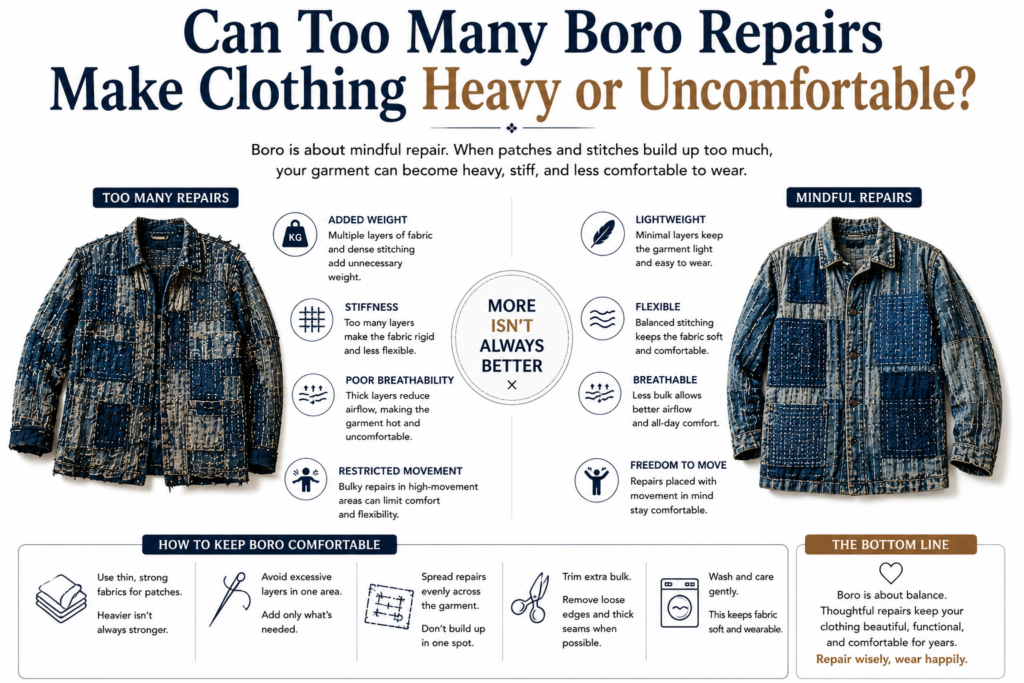
Boro repairs become less effective when excessive layering begins reducing garment flexibility and comfort. Traditional Japanese repairs were designed to strengthen clothing while still allowing natural movement during physical work. When too many thick layers accumulate in one area, the repaired section may become stiff, bulky, or uneven during wear. This is especially noticeable in knees, elbows, and inner-thigh repairs where the fabric bends repeatedly throughout the day.
Modern visible mending sometimes prioritizes dramatic layered aesthetics over structural balance. While heavily layered repairs may look visually impressive, they can trap heat, increase friction, and create rigid pressure points inside the garment. Traditional boro techniques usually relied on thinner flexible layers added gradually over time instead of one massive reinforcement patch.
Signs a repair may be becoming too heavy:
- Fabric feels stiff during movement
- Patch edges rub against skin
- Garment folds unnaturally
- Repair area traps excess heat
- Visible puckering increases after washing
Experts usually avoid:
- Thick stacked denim layers
- Extremely dense thread coverage
- Oversized rigid patches
- Heavy decorative stitching in stress zones
Real-world insight:
Many historical boro garments remained wearable for decades because repairs focused on flexibility rather than maximum thickness.
Decision clarity:
The strongest long-term repairs balance reinforcement and comfort instead of adding unlimited fabric layers.
How Washing Changes the Lifespan of Boro Repairs
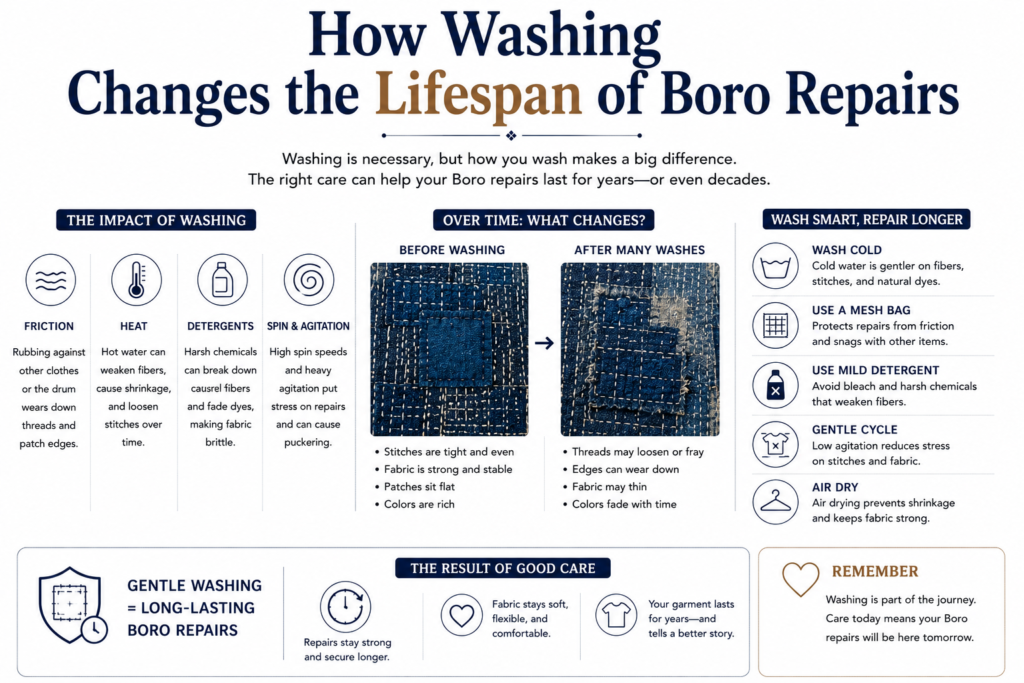
Washing habits directly influence how long repaired garments remain stable. Water agitation, heat exposure, and detergent strength gradually weaken fibers around stitched areas. Even strong repairs slowly lose structural integrity if garments are repeatedly exposed to harsh machine drying or aggressive washing cycles.
Traditional boro garments were usually washed carefully and repaired regularly. This maintenance philosophy helped garments survive much longer than modern fast-fashion clothing. Gentle washing preserves thread tension, prevents patch distortion, and reduces fiber breakdown around stitch holes.
Heat is one of the biggest threats to visible mending durability. High dryer temperatures shrink fibers unevenly and increase tension between layered patches. Over time, this can create puckering, edge curling, or thread loosening around the repair area.
Best washing practices for long-lasting repairs:
- Wash in cold water
- Use gentle detergent
- Turn garments inside out
- Avoid high-speed spin cycles
- Air dry whenever possible
- Repair loose threads early
Signs washing damage is beginning:
- Curling patch edges
- Loose stitch tension
- Distorted fabric shape
- Fraying around stitch holes
- Fabric thinning near repairs
People often assume the thread will fail first, but surrounding fabric wear is usually the real cause of repair breakdown. Protecting the entire garment is just as important as protecting the stitching itself.
Real-world insight:
Many long-lasting vintage boro garments survived because they were maintained gradually instead of being aggressively washed after every use.
How Environment and Daily Wear Affect Boro Repair Lifespan
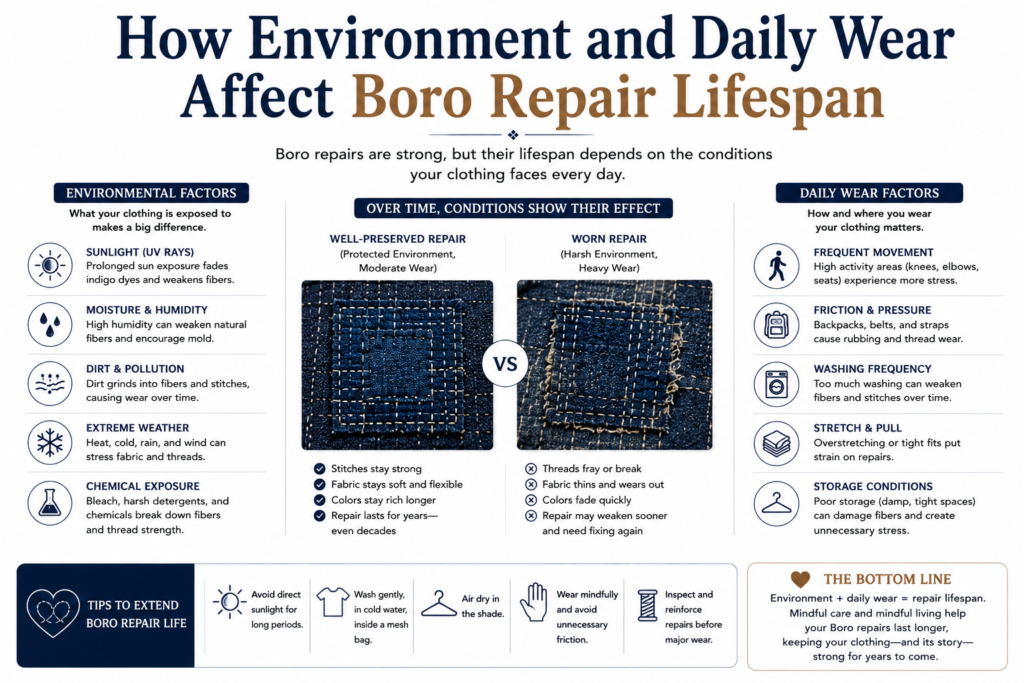
Environmental conditions strongly influence how long repaired garments remain stable. Heat, moisture, sweat, humidity, and ultraviolet exposure gradually weaken both the repair thread and the surrounding fabric over time. Garments used outdoors for physical labor typically experience faster material fatigue because friction and moisture repeatedly stress the repaired area throughout daily movement.
Humidity can soften fibers and increase stretching around stitch holes, while excessive dryness may make older cotton fabric brittle after years of use. Sweat and body oils also affect repair durability because salt and moisture slowly break down fibers in high-contact areas such as collars, underarms, knees, and waistlines. Outdoor workwear exposed to direct sunlight may fade and weaken faster than garments used primarily indoors.
Environmental factors that shorten repair lifespan:
- High humidity
- Frequent UV exposure
- Sweat accumulation
- Salt and moisture buildup
- Heavy outdoor labor
- Repeated abrasion
Protective habits that improve longevity:
- Air drying garments
- Storing clothing in dry spaces
- Rotating frequently worn garments
- Cleaning sweat buildup gently
- Repairing weak spots early
Real-world insight:
Traditional workwear lasted longer partly because garments were rotated seasonally and repaired before environmental wear became severe.
Decision clarity:
Daily environmental exposure often affects repair lifespan just as much as stitching quality itself.

Which Clothing Areas Wear Out the Fastest?
Different garment areas experience different levels of stress during movement. Some sections naturally undergo constant friction, bending, and stretching, which means repairs in those locations usually need more reinforcement and maintenance over time.
The highest-stress zones in clothing include the crotch area of jeans, knees, elbows, pocket corners, cuffs, and seat panels. These areas repeatedly flex and rub against surrounding surfaces, gradually weakening both the original fabric and the repair itself. Lower-stress areas such as jacket backs or outer sleeve sections generally maintain repairs much longer because movement is less concentrated.
Experienced repair artists adapt reinforcement style depending on garment location. High-friction zones require wider stitch coverage, multiple support layers, and flexible tension distribution. Lower-stress areas can often use lighter reinforcement without sacrificing longevity.
High-stress zones usually need:
- Wider patch coverage
- Additional reinforcement layers
- Flexible sashiko spacing
- More frequent inspections
- Early maintenance
Lower-stress zones usually require:
- Moderate stitching density
- Lightweight reinforcement
- Smaller patch layers
- Occasional touch-up repairs
One of the most common beginner mistakes is waiting until fabric completely tears apart before reinforcing it. Traditional boro philosophy focuses on early reinforcement before damage becomes structurally severe.
Real-world insight:
Japanese workers often repaired thinning fabric long before visible holes formed because preventative reinforcement significantly extended garment lifespan.
Decision clarity:
The lifespan of a repair depends heavily on where the garment experiences the most movement and friction.
Does Dense Stitching Make Boro Repairs Last Longer?
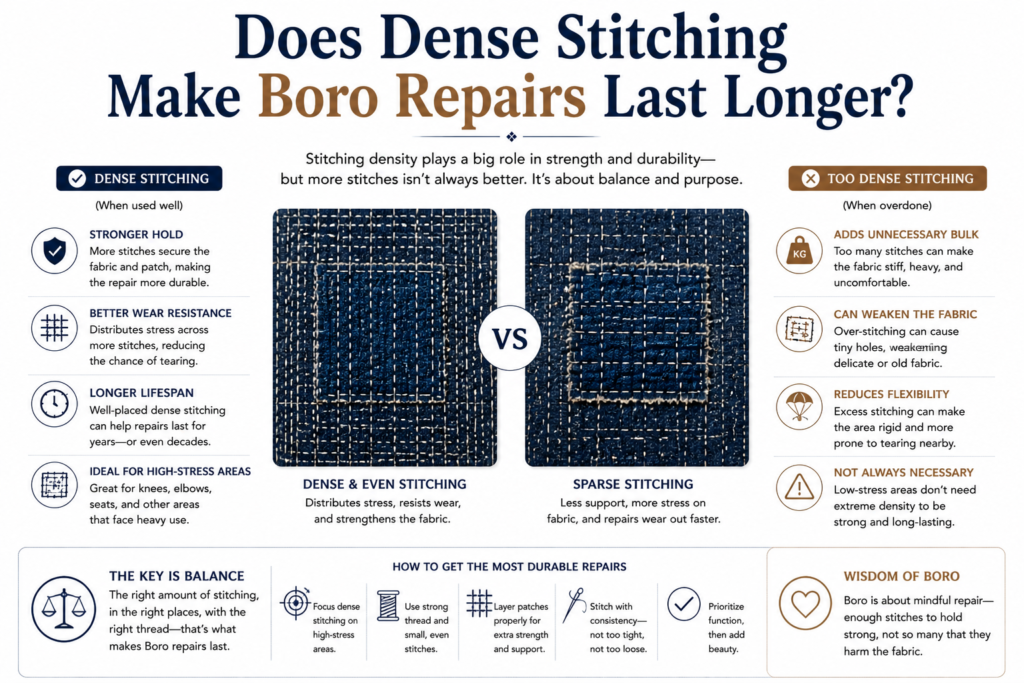
Many beginners believe dense stitching automatically creates stronger repairs, but excessive stitch density can actually reduce durability. Traditional sashiko and boro techniques prioritize balanced reinforcement instead of maximum thread coverage. Repairs survive longer when the fabric retains flexibility and moves naturally with the body.
Refer to out detailed guidance on whether boro stitching can too dense or not, for further clarity.
Overly compact stitching creates rigid sections that resist movement. Instead of distributing stress evenly, stiff repairs transfer pressure into surrounding fabric. After repeated wear and washing, the nearby material may weaken faster than the repaired section itself.
Balanced stitch spacing helps garments maintain comfort, breathability, and long-term structural stability. Experienced repair artists adjust stitch density based on fabric thickness, garment movement, and repair location instead of using one universal spacing style.
Balanced stitching provides:
- Better flexibility
- Reduced puckering
- Improved comfort
- Natural movement
- Lower tension concentration
Excessively dense stitching may cause:
- Fabric stiffness
- Distortion after washing
- Reduced breathability
- Abrasion concentration
- Edge tearing
Decorative visible mending sometimes prioritizes aesthetics over functionality. While highly decorative stitching can look impressive, structural reinforcement requires careful tension control and movement flexibility to remain durable for years.
Real-world example:
Many traditional Japanese work garments used relatively simple sashiko spacing because balanced reinforcement proved more sustainable than extremely dense thread patterns.
Decision clarity:
Durability comes from intelligent reinforcement balance rather than maximum stitch quantity.
Why Some Boro Repairs Fail Much Faster Than Expected
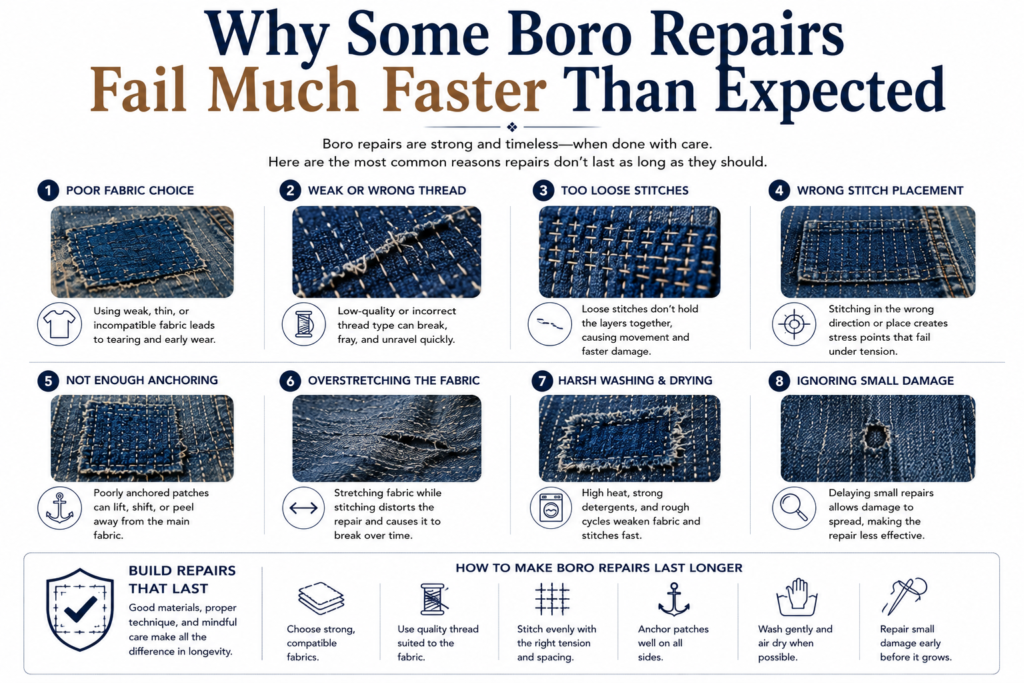
Many boro repairs fail early not because the stitching is weak, but because the repair disrupts how the fabric naturally moves during wear. A repair can appear visually strong while still creating hidden stress points underneath the garment surface. Excessive stitch density, rigid patch placement, and uneven tension often cause surrounding fabric to weaken faster after repeated movement and washing.
One of the most common beginner mistakes is using thick reinforcement patches on lightweight garments. The repair itself may remain intact while the softer surrounding fabric tears around the edges due to tension imbalance. Poor washing habits also accelerate failure. High dryer heat, aggressive detergent use, and constant machine agitation gradually weaken fibers near stitch holes and patch edges.
Common causes of premature repair failure:
- Excessively dense stitching
- Weak surrounding fabric
- Rigid reinforcement layers
- Uneven thread tension
- Ignoring fabric grain direction
- Delayed maintenance
- Aggressive machine drying
Warning signs a repair is weakening:
- Stitch holes enlarging
- Fraying thread
- Curling patch edges
- Fabric distortion
- Puckering after washing
Real-world insight:
Traditional Japanese repairs survived longer because garments were maintained continuously instead of waiting for severe structural damage.
Decision clarity:
The longest-lasting repairs preserve flexibility instead of forcing the fabric into rigid reinforcement zones.
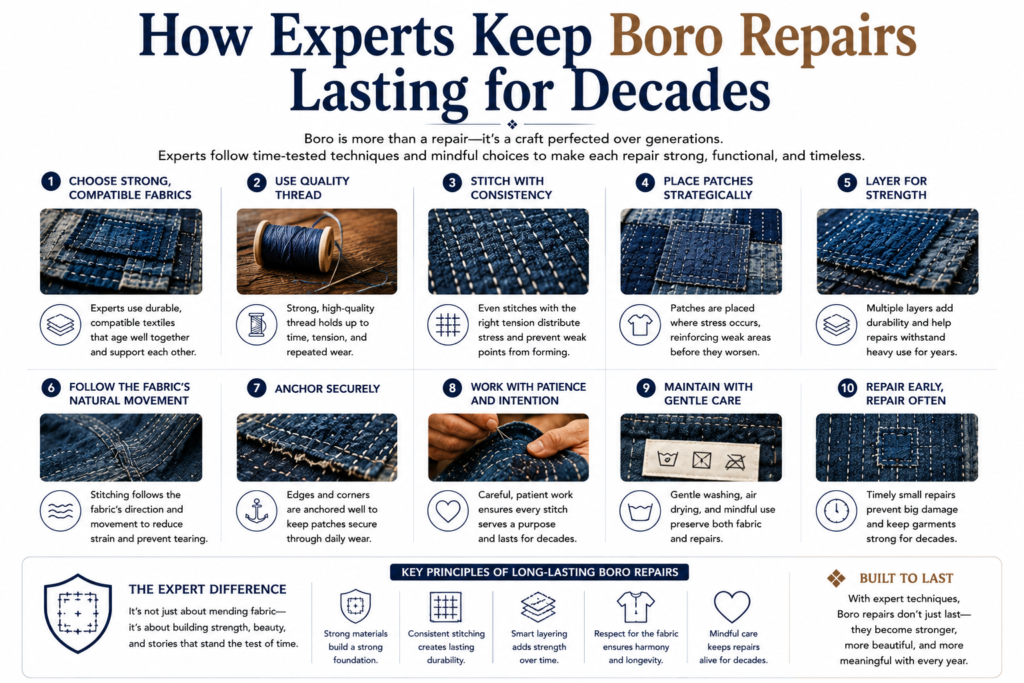
How Experts Keep Boro Repairs Lasting for Decades
Experienced visible mending artists approach repairs as an ongoing process instead of a single permanent solution. Traditional boro techniques focused on gradual reinforcement, early maintenance, and adaptive layering rather than aggressive one-time patching.
Experts usually inspect repaired garments regularly and reinforce small weak areas before major damage appears. This prevents tension concentration and reduces the need for large structural repairs later. Thin layered patches are often preferred over one thick patch because they maintain flexibility while still improving durability.
Professional repair artists also pay close attention to thread tension. Tight stitching may initially appear secure but can restrict movement and increase fabric stress over time. Moderate tension allows the garment to flex naturally during wear and washing.
Common expert repair strategies:
- Reinforcing weak areas early
- Layering lightweight fabrics gradually
- Matching patch flexibility to garment movement
- Using consistent sashiko spacing
- Repairing loose stitches immediately
Long-term maintenance habits:
- Inspect garments after washing
- Reinforce thinning edges quickly
- Avoid overwashing repaired clothing
- Air dry instead of machine drying
- Store garments in dry environments
Traditional Japanese boro survived because garments evolved continuously through maintenance. Instead of discarding damaged clothing, owners strengthened vulnerable areas repeatedly over many years.
Real-world insight:
Some historical boro textiles display multiple overlapping generations of reinforcement because garments were continuously adapted to changing wear patterns.
Decision clarity:
The longest-lasting repairs are maintained consistently instead of being treated as permanent untouched fixes.
Simple Maintenance Timeline for Long-Lasting Boro Repairs
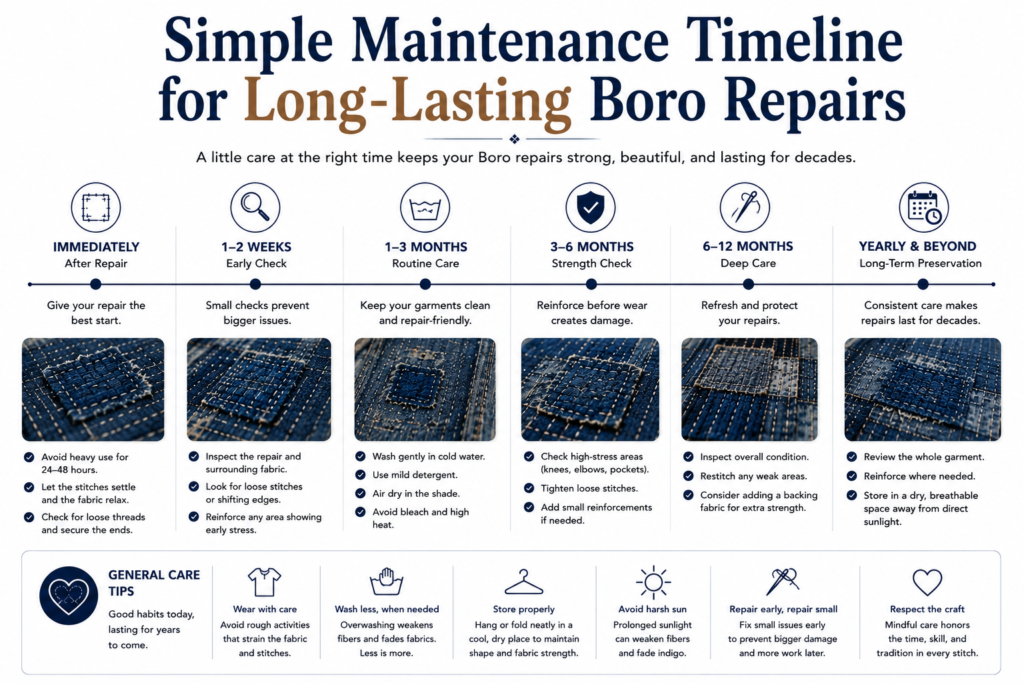
Long-lasting boro repairs depend on ongoing maintenance rather than one permanent repair session. Traditional Japanese garment repair followed a gradual reinforcement philosophy where weak areas were inspected regularly and strengthened before major tearing occurred. Small maintenance adjustments dramatically reduce long-term structural damage because tension remains evenly distributed across the repaired fabric.
Experienced repair artists usually inspect garments after washing because moisture and agitation often reveal loose thread tension or thinning fabric around the repaired section. Early maintenance is much easier than rebuilding a completely damaged repair zone later. Even durable denim repairs benefit from periodic reinforcement over time.
Recommended repair maintenance schedule:
| Maintenance Task | Suggested Frequency |
| Visual inspection | After washing |
| Loose thread repair | Immediately |
| Edge reinforcement | Every few months |
| Patch stability check | Monthly |
| Deep structural inspection | Every 6–12 months |
Experts usually recommend:
- Reinforcing thinning edges early
- Avoiding overwashing
- Rotating frequently worn garments
- Repairing loose stitches immediately
- Monitoring high-friction zones closely
Real-world insight:
Historical boro garments survived because repairs evolved continuously instead of remaining untouched for years.
Decision clarity:
Regular small maintenance repairs extend garment lifespan far more effectively than occasional large repairs
Traditional Utility Boro Repairs vs Modern Decorative Visible Mending
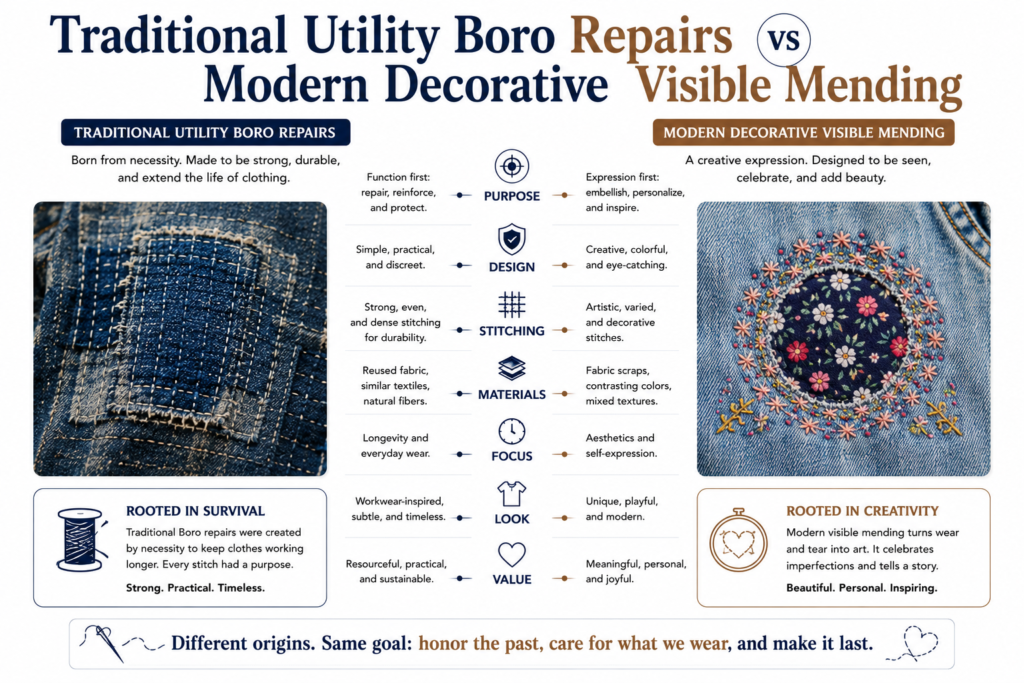
Traditional Japanese Boro Stitching repairs were created primarily for survival, warmth, and long-term garment preservation rather than decoration. Farmers, fishermen, and laborers repeatedly reinforced worn clothing because replacing fabric was expensive and difficult. These repairs focused on structural durability, flexible layering, and practical reinforcement that allowed garments to remain wearable for many years.
Modern visible mending often blends traditional techniques with fashion-focused aesthetics. Decorative stitching patterns, contrasting fabrics, and artistic patch placement are now commonly used as visual design elements rather than purely functional repairs. While decorative visible mending can still strengthen garments, some modern repairs prioritize appearance more than long-term structural performance.
Traditional utility boro focused on:
- Reinforcement strength
- Flexible movement
- Fabric preservation
- Layered durability
- Practical longevity
Modern decorative visible mending often emphasizes:
- Artistic stitching patterns
- Visual contrast
- Fashion styling
- Creative patch layouts
- Statement aesthetics
Traditional repairs usually used balanced sashiko spacing because the goal was sustainable reinforcement rather than visual density. Decorative repairs sometimes use much heavier stitching for artistic impact, which may affect flexibility over time.
Real-world insight:
Many preserved historical boro garments show simple repetitive reinforcement patterns because durability mattered more than decoration.
Decision clarity:
Understanding the difference between functional boro and decorative visible mending helps set realistic durability expectations.
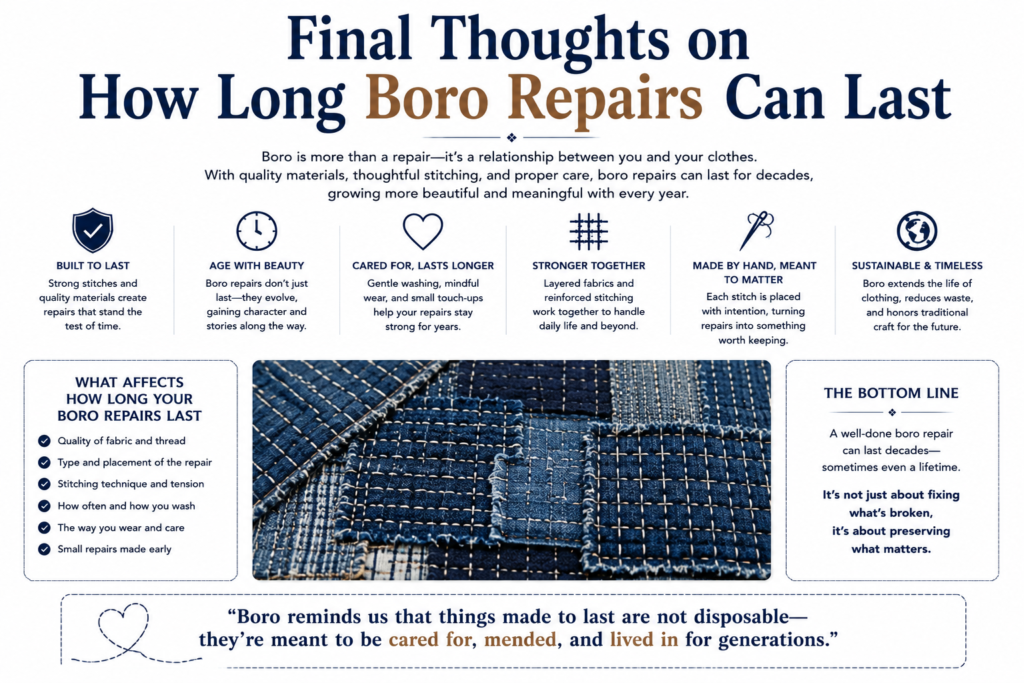
Final Thoughts on How Long Boro Repairs Can Last
Boro repairs can survive for years or even decades when the repair balances flexibility, reinforcement, fabric compatibility, and maintenance correctly. Traditional Japanese visible mending techniques were designed to extend garment life continuously through layered reinforcement rather than temporary cosmetic fixes.
The most durable repairs are not necessarily the densest or most decorative. Long-lasting reinforcement depends on proper stitch spacing, strong fabric support, gentle washing habits, and ongoing maintenance over time. High-stress garment areas naturally require more attention, while lower-friction zones can remain stable for many years with minimal reinforcement.
Traditional boro philosophy also teaches that clothing does not need to remain visually perfect to remain functional. Many of the world’s most durable repaired garments survived because owners adapted them continuously instead of expecting one repair to last forever without maintenance.
Key factors that improve repair lifespan:
- Durable woven fabrics
- Balanced sashiko stitching
- Gentle washing methods
- Flexible reinforcement
- Early maintenance
- Quality thread selection
Factors that shorten repair lifespan:
- Excessive stitch density
- High heat drying
- Stretch fabric instability
- Poor patch placement
- Heavy friction exposure
Final decision clarity:
A properly maintained boro repair often becomes one of the strongest and most valuable parts of a garment over time.
FAQ Section
Can boro repairs really last decades?
Yes. Traditional boro garments often survived for decades through continuous reinforcement and maintenance.
What fabric works best for durable boro repairs?
Heavyweight cotton, denim, and canvas usually provide the best long-term durability.
Does washing weaken boro stitching?
Yes. Frequent hot washing and machine drying gradually weaken both thread and surrounding fabric.
Are decorative boro repairs less durable?
Usually yes. Decorative stitching often prioritizes appearance over structural reinforcement.
Can beginners make long-lasting boro repairs?
Yes. Balanced stitching and proper fabric choice matter more than advanced artistic skill.
Does thick thread improve durability?
Not always. Thick thread can create stiffness that damages surrounding fabric.
Why do crotch repairs fail faster?
Inner-thigh areas experience constant friction, stretching, and pressure during movement.
Is dense stitching stronger?
Only to a point. Excessively dense stitching often reduces flexibility and creates tension problems.