by Humera Shahzaib | Jun 30, 2026 | Boro Projects
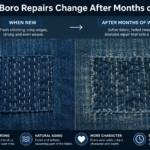
Traditional Japanese Boro Stitching repairs were never random. Every patch placement served a practical purpose. Farmers, fishermen, and laborers reinforced clothing in areas exposed to constant friction, pressure, bending, and abrasion. Today, visible mending...
by Humera Shahzaib | May 28, 2026 | Boro Projects
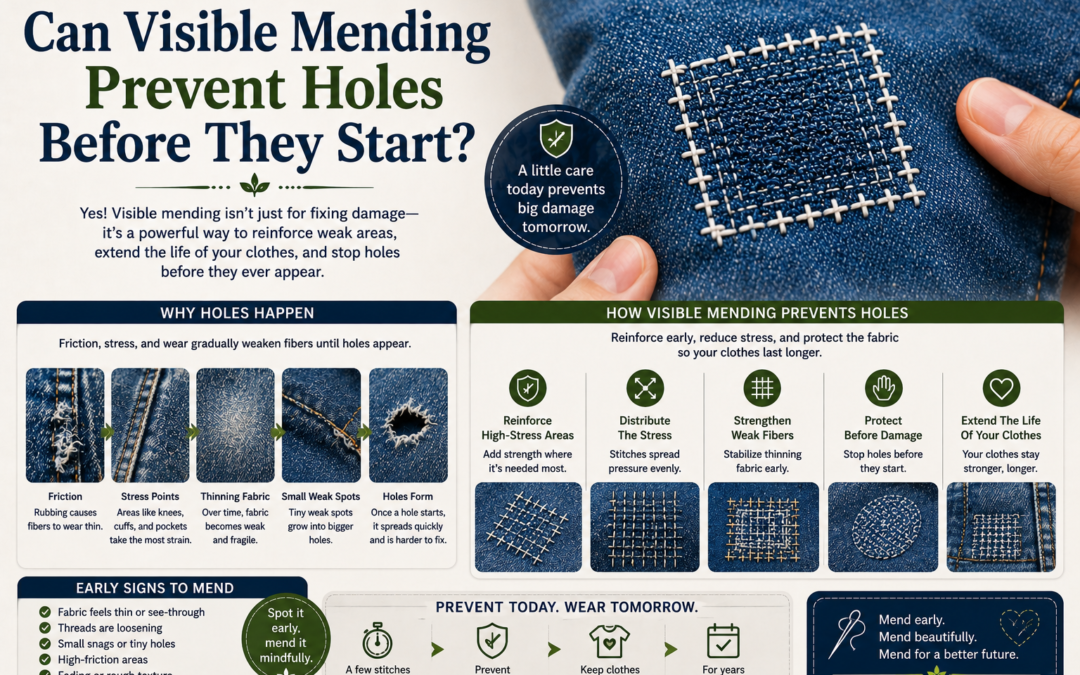
Visible mending can prevent holes before they start by reinforcing weak fabric areas before fibers completely fail. Traditional Japanese boro stitching and sashiko reinforcement techniques strengthen thinning fabric through layered stitching, stress distribution, and...
by Humera Shahzaib | May 27, 2026 | Boro Stitching Learning
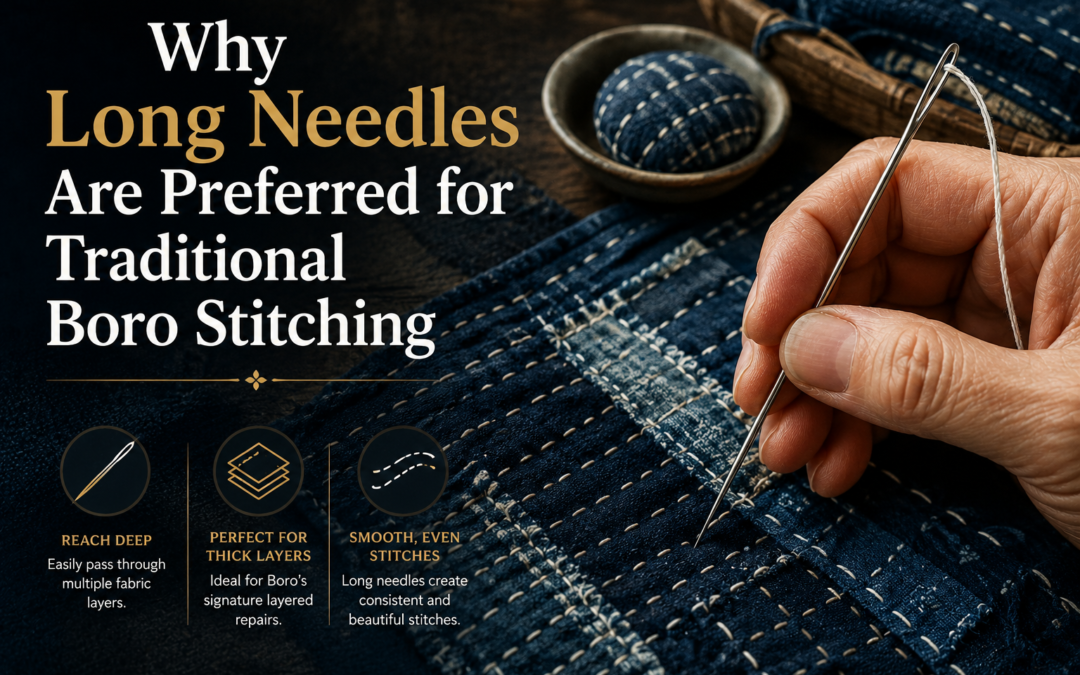
Traditional Boro stitching uses long needles because they improve running stitch rhythm, fabric control, layered repair efficiency, and hand comfort during repetitive sewing. Long sashiko needles allow artisans to load multiple stitches at once, maintain even spacing,...
by Humera Shahzaib | May 22, 2026 | Boro Stitching Learning
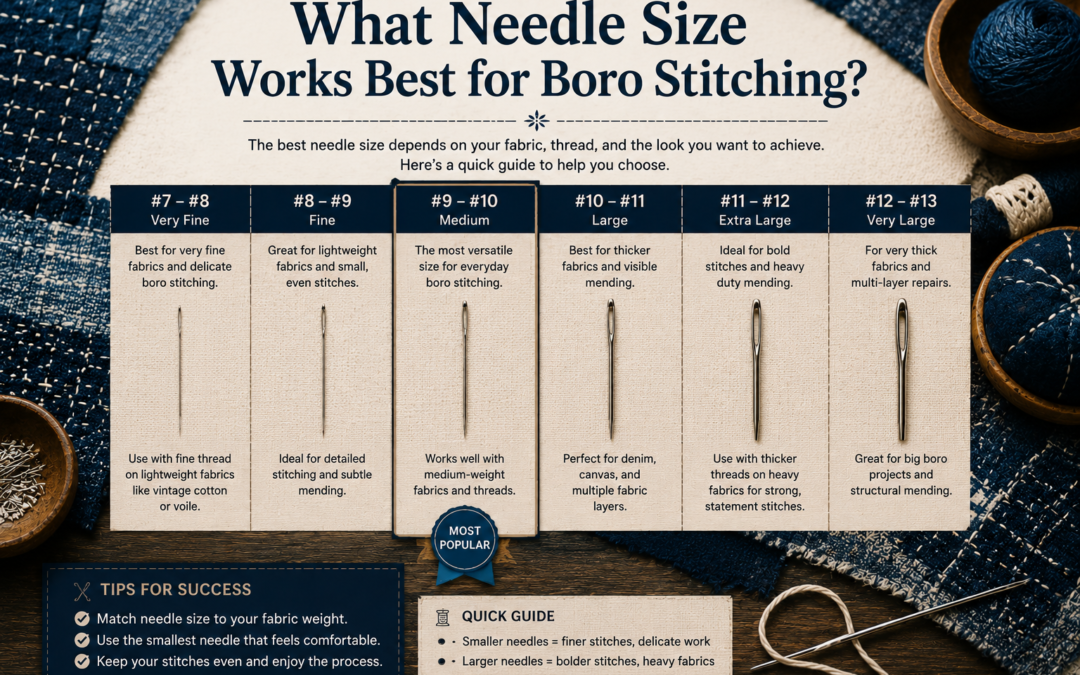
Traditional boro stitching works best with long sashiko-style needles that can pass through multiple fabric layers smoothly while maintaining even running stitches. Most experienced boro artists prefer needles between 48 mm and 65 mm because longer needles improve...

by Humera Shahzaib | May 22, 2026 | Visible Mending
Visible mending repairs often fail quickly because decorative stitching alone cannot stabilize weakened fabric under repeated movement, friction, and washing stress. Long-lasting repairs depend on reinforcement layering, correct stitch spacing, balanced thread...