by Humera Shahzaib | May 21, 2026 | Boro Clothing
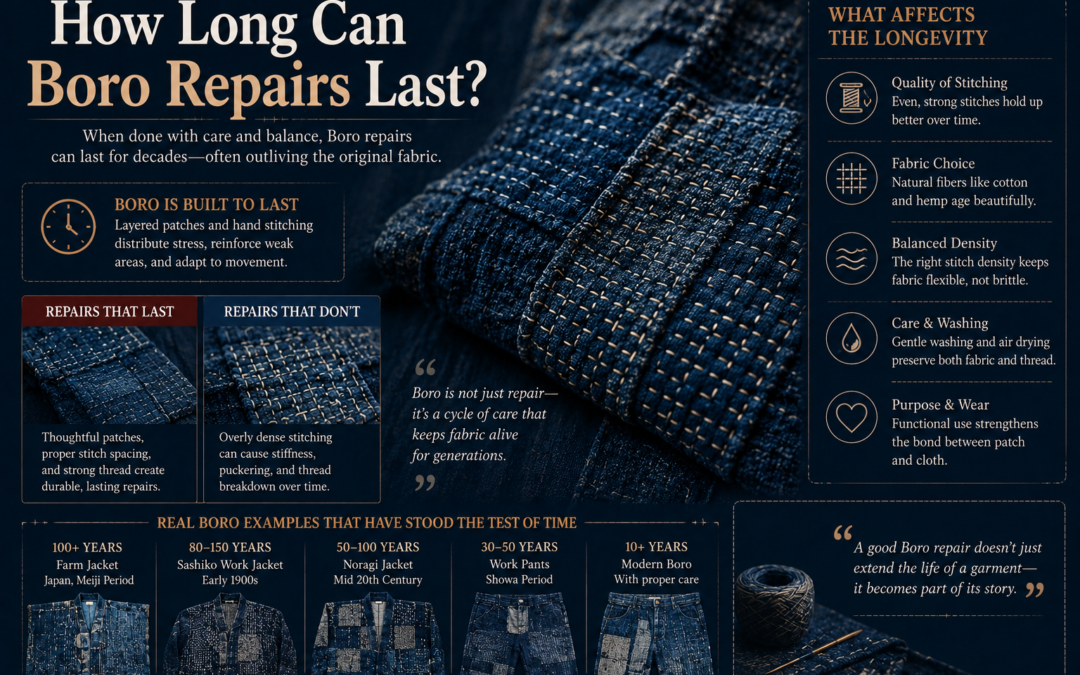
Boro repairs can last anywhere from several years to multiple decades depending on fabric quality, stitch density, washing habits, and reinforcement technique. Traditional Japanese boro stitching was designed to repeatedly extend garment life through layered repairs,...
by Humera Shahzaib | May 21, 2026 | Sashiko
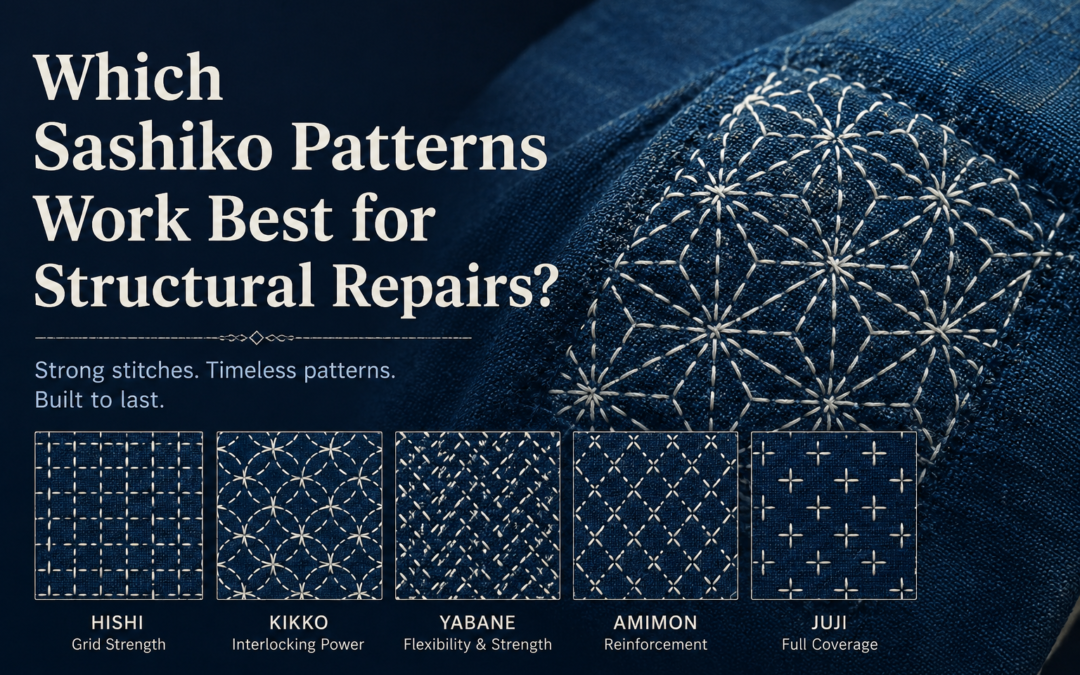
Traditional sashiko patterns used for structural repairs are designed to strengthen worn fabric, stabilize layered patches, and improve long-term durability in heavily used garments. Patterns such as hitomezashi, kikko, asanoha, and straight running stitch grids work...
by Humera Shahzaib | May 20, 2026 | Boro Stitching Learning
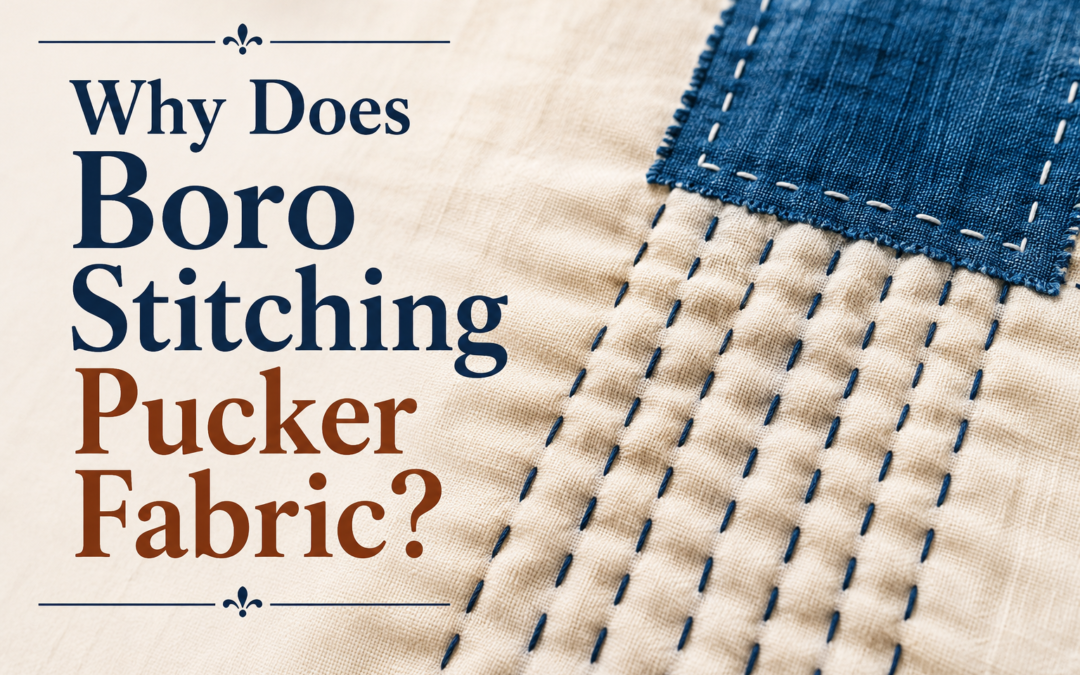
Boro stitching puckers fabric because repeated running stitches compress textile fibers and pull layered materials together. Mild puckering is often normal in traditional Japanese boro because handmade texture is part of the repair aesthetic. However, severe wrinkling...
by Humera Shahzaib | May 19, 2026 | Boro Stitching Learning
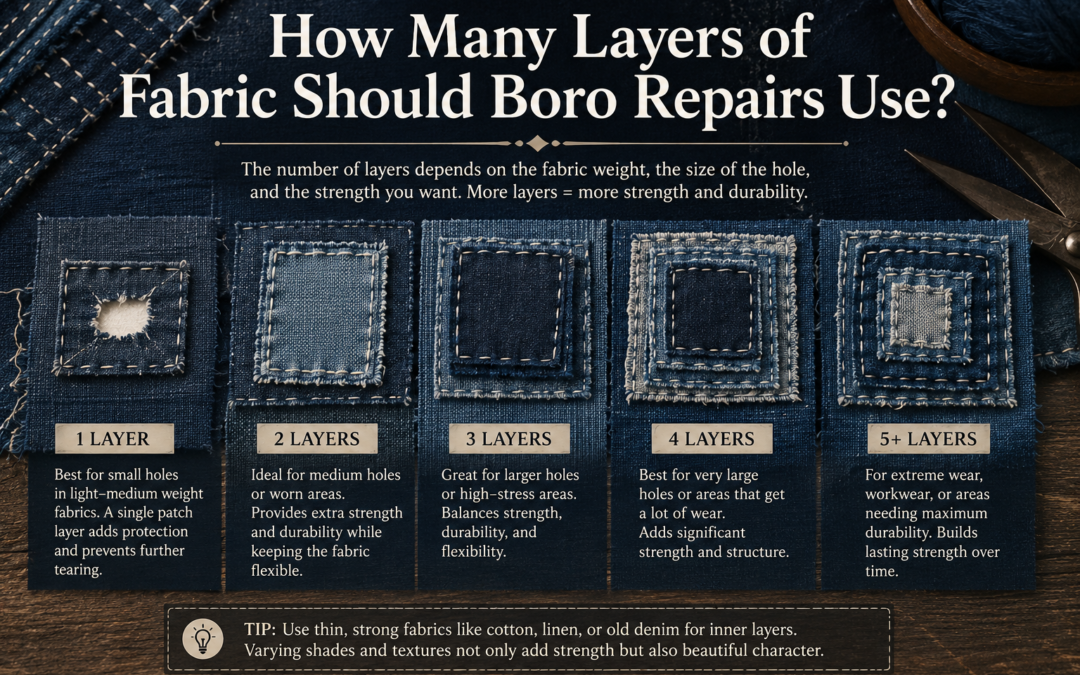
Boro repairs usually work best with 2 to 3 layers of fabric because this creates a balance between durability, flexibility, comfort, and long-term wearability. Thin fabrics often need additional support layers, while heavyweight materials like denim or canvas usually...
by Humera Shahzaib | May 19, 2026 | Boro Stitching Learning
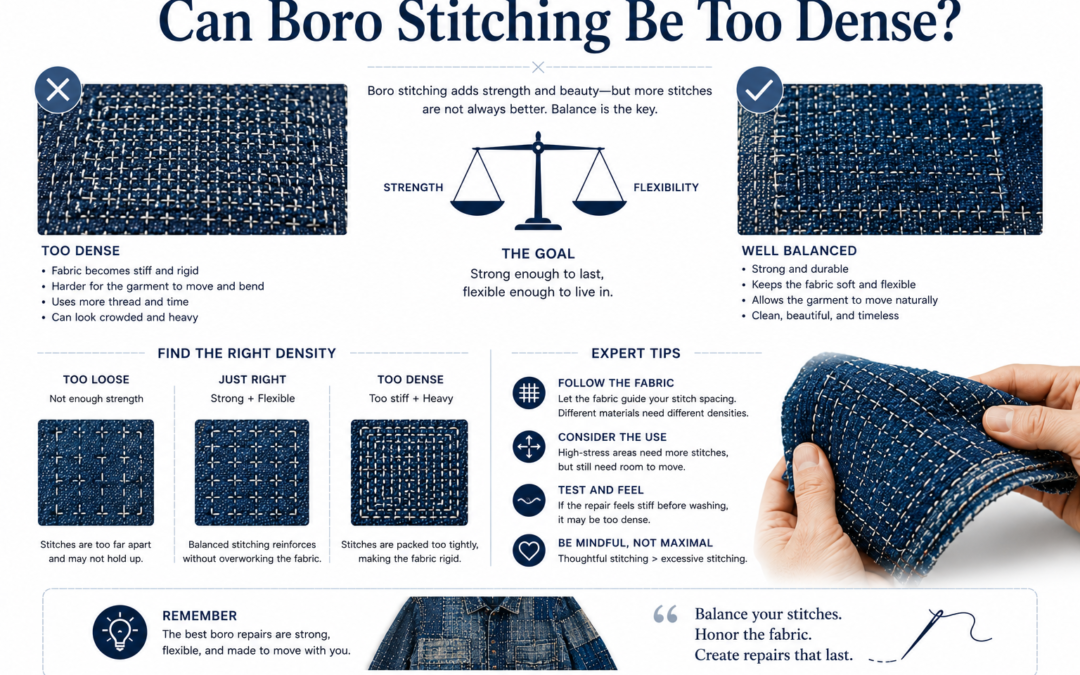
Boro stitching can absolutely become too dense when excessive stitching compresses the fabric, reduces flexibility, creates puckering, and limits the natural movement of the garment. Traditional Japanese boro repairs focused on balanced reinforcement rather than heavy...