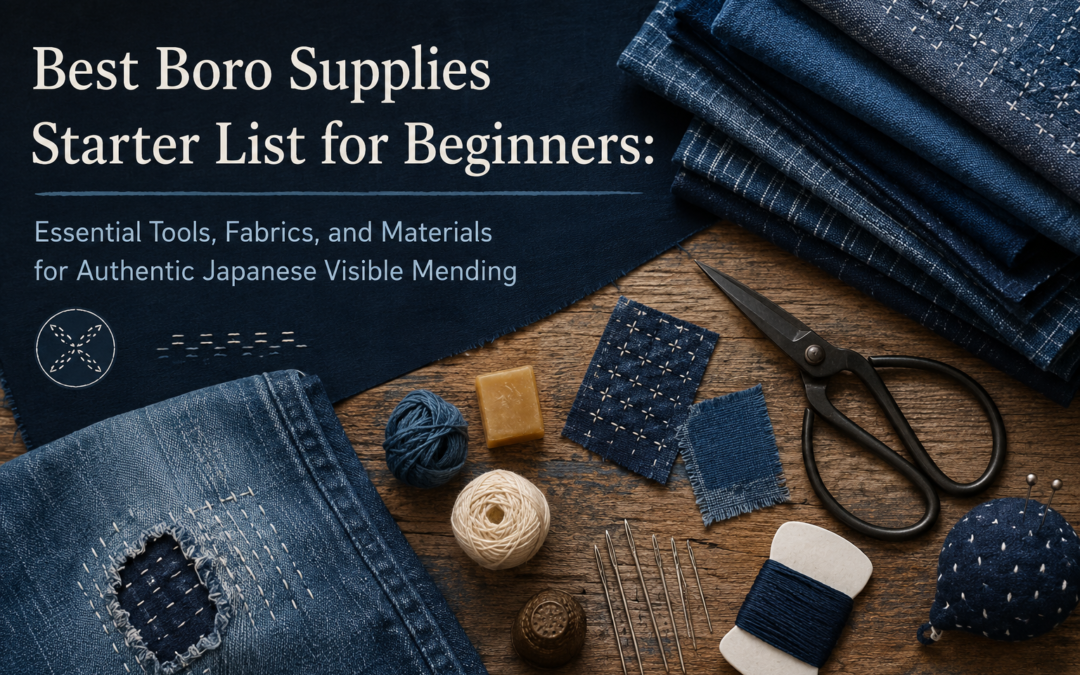
Boro stitching beginners do not need expensive sewing rooms or large textile collections to start creating beautiful visible mending repairs. A strong beginner setup focuses on durable fabric, reliable thread, comfortable needles, and practical tools that support long-lasting hand-stitched repairs. The right supplies make stitching easier, improve repair durability, and help beginners understand how traditional-inspired boro layering develops naturally over time.
Here, we have compiled a comprehensive guide on the best boro supplies starter list for beginners.
What Supplies Do You Need to Start Boro Stitching?
Japanese Boro stitching began as a practical survival-based repair method rather than a decorative textile hobby. Traditional Japanese families repeatedly repaired clothing using layered fabric patches and visible stitching because textiles were valuable and difficult to replace. Because of this history, beginners only need a small number of durable tools and materials to start learning authentic repair techniques.
Many beginners assume boro requires specialized equipment, but the foundation of good visible mending comes from fabric quality and stitching consistency rather than expensive tools. Strong cotton fabric, visible thread, sharp needles, and clean layering matter far more than complicated sewing accessories.
A simple beginner setup allows new stitchers to focus on important fundamentals such as stitch spacing, patch placement, tension control, and layering balance. Starting with too many decorative materials often creates confusion and weakens overall repair quality.
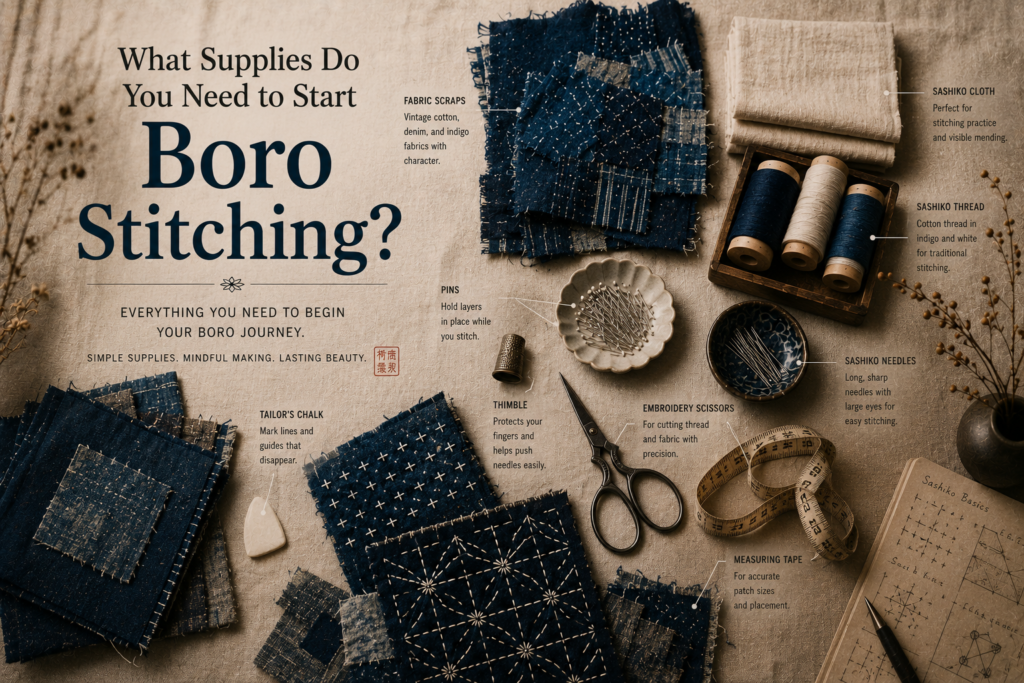
Essential beginner boro supplies include:
- Indigo or dark cotton fabric scraps
- Sashiko thread
- Long hand-sewing needles
- Fabric scissors
- Thimble
- Chalk or washable fabric marker
- Denim or canvas base fabric
- Small clips or pins
- Iron for flattening layers
One of the biggest beginner advantages comes from working with recycled materials. Old denim jeans, faded jackets, work shirts, and worn cotton textiles often perform better than thin decorative fabrics sold in beginner craft bundles.
Strong materials help repairs age naturally while maintaining durability through repeated washing and daily use. This practical mindset reflects the original philosophy behind traditional boro repair culture.
Which Fabrics Work Best for Beginner Boro Projects?
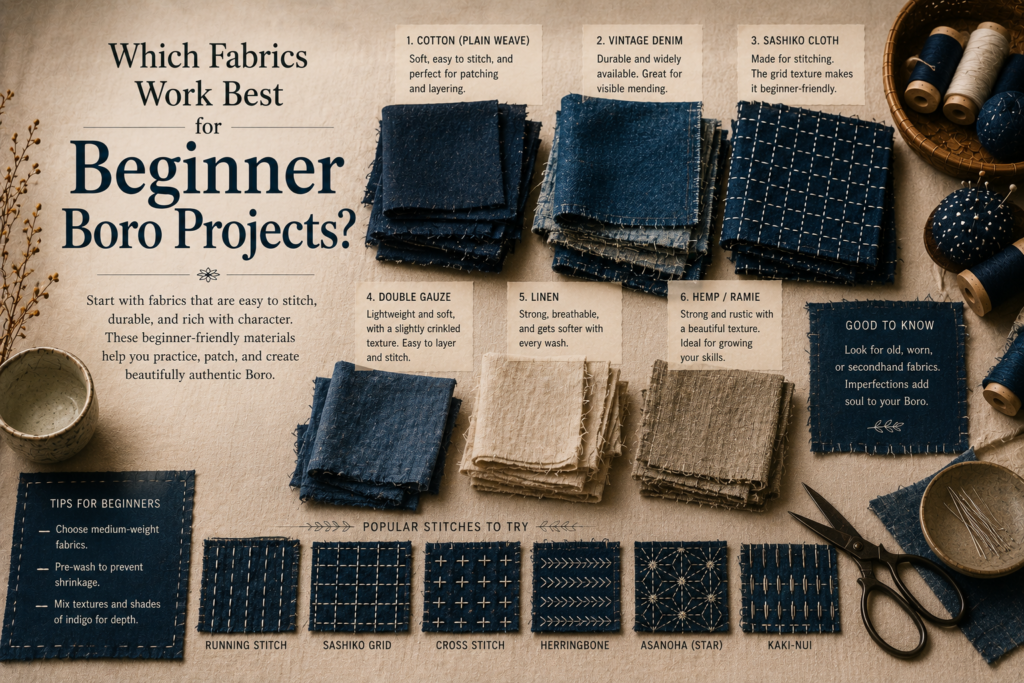
The fabric chosen for boro stitching affects durability, stitch appearance, flexibility, and long-term aging patterns. Beginners usually achieve the best results with medium-weight woven cotton because it balances strength, softness, and stitch visibility without becoming too difficult to sew by hand.
Traditional boro heavily relied on indigo-dyed cotton because it was durable enough to survive repeated patching and daily labor. Over time, layered indigo fabric developed beautiful fading, texture variation, and visible repair contrast that became associated with authentic boro aesthetics.
Beginners often make the mistake of choosing fabric based only on color or decorative appearance. Thin synthetic fabric may initially look attractive, but repeated stitching tension can quickly weaken the fibers and distort the repair structure. Durable woven cotton behaves much more predictably and creates cleaner layered surfaces.
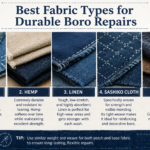
The best beginner fabrics include:
| Fabric Type | Why It Works |
| Indigo denim | Strong and authentic aging |
| Cotton canvas | Durable repair foundation |
| Sashiko cloth | Easy stitch visibility |
| Linen blends | Natural texture and flexibility |
| Vintage workwear fabric | Realistic repair appearance |
Helpful beginner fabric characteristics include:
- Medium weight
- Low stretch
- Strong woven structure
- Visible texture
- Good stitch grip
- Soft aging over time
Avoid fabrics such as:
- Polyester-heavy textiles
- Stretch denim
- Silk
- Slippery synthetic blends
- Thin fashion cotton
Old clothing often becomes the best source of beginner boro material because naturally aged textiles already contain fading, softness, and surface texture that improve repair realism.
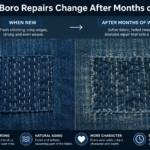
One of the most overlooked parts of beginner boro stitching is how different fabrics change after repeated wear, washing, and repair cycles. Traditional boro became visually powerful because repaired textiles slowly developed layered fading, soft texture transitions, and visible stitch contrast over many years of use. Fabric aging behavior strongly affects how authentic and durable the final repair eventually becomes.
How different boro fabrics age over time
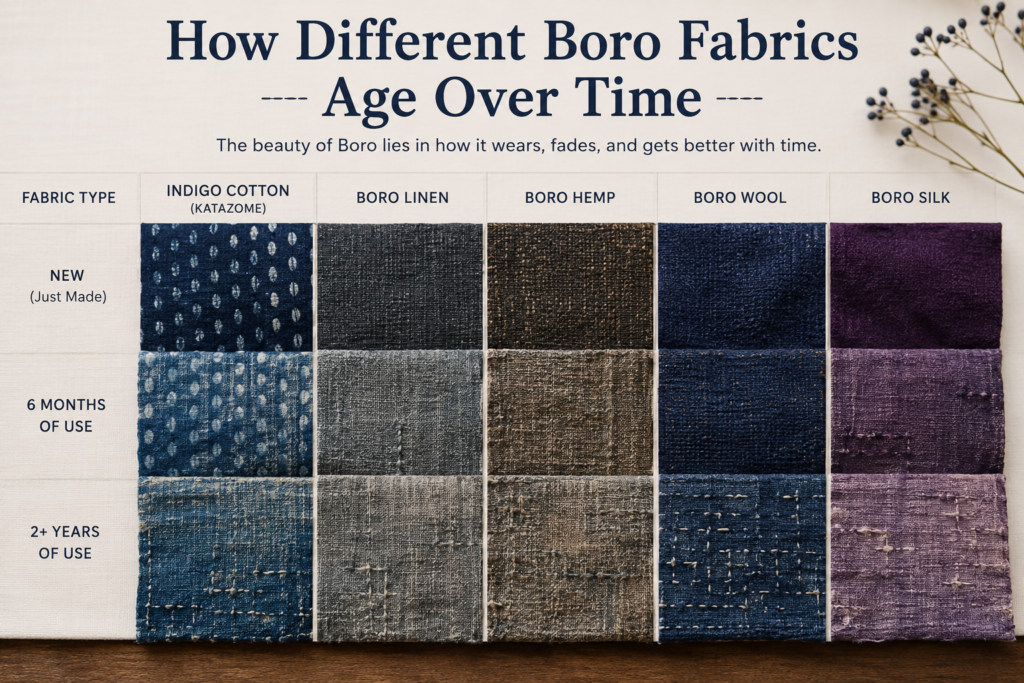
Indigo denim usually softens gradually while maintaining strong structural integrity, making it one of the most reliable beginner materials. Cotton canvas remains durable for heavy repairs but can become stiff if layered too heavily. Linen develops beautiful wrinkled texture over time but may fray faster around stress points if unsupported. Thin fashion cotton often weakens quickly because repeated stitching tension damages the fibers after multiple washes.
Different fabric aging patterns include:
- Denim softens while preserving strength
- Canvas becomes rigid under excessive layering
- Linen develops textured fading
- Loose cotton frays around stitch holes
- Synthetic blends may distort after washing
Experienced visible mending artists often combine slightly different fabric textures because uneven aging creates deeper visual character and more natural repair transitions over time.
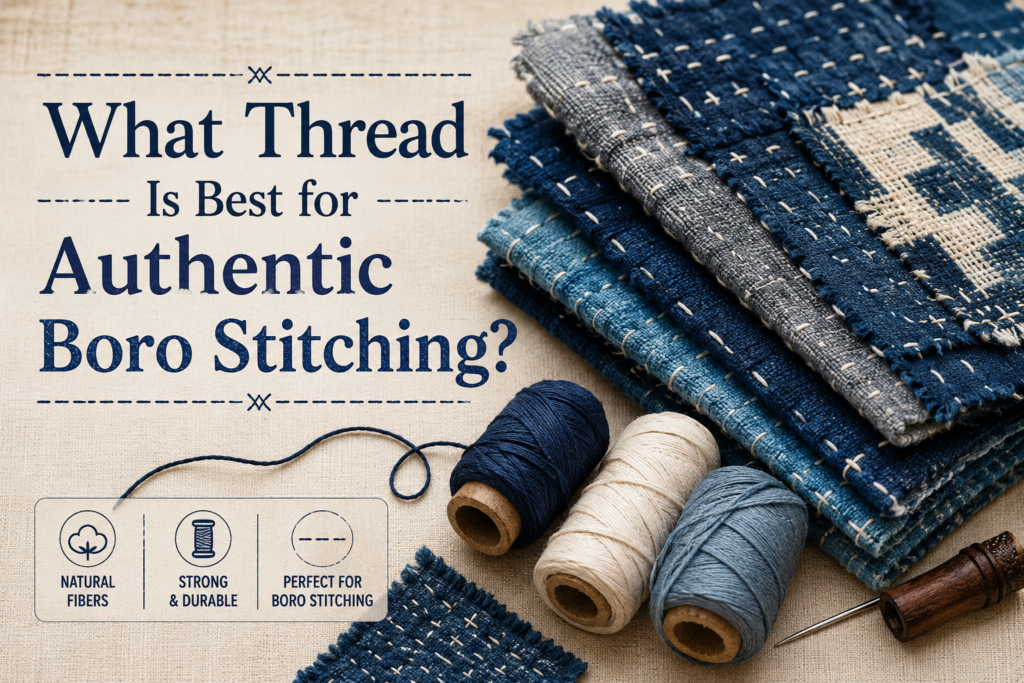
What Thread Is Best for Authentic Boro Stitching?
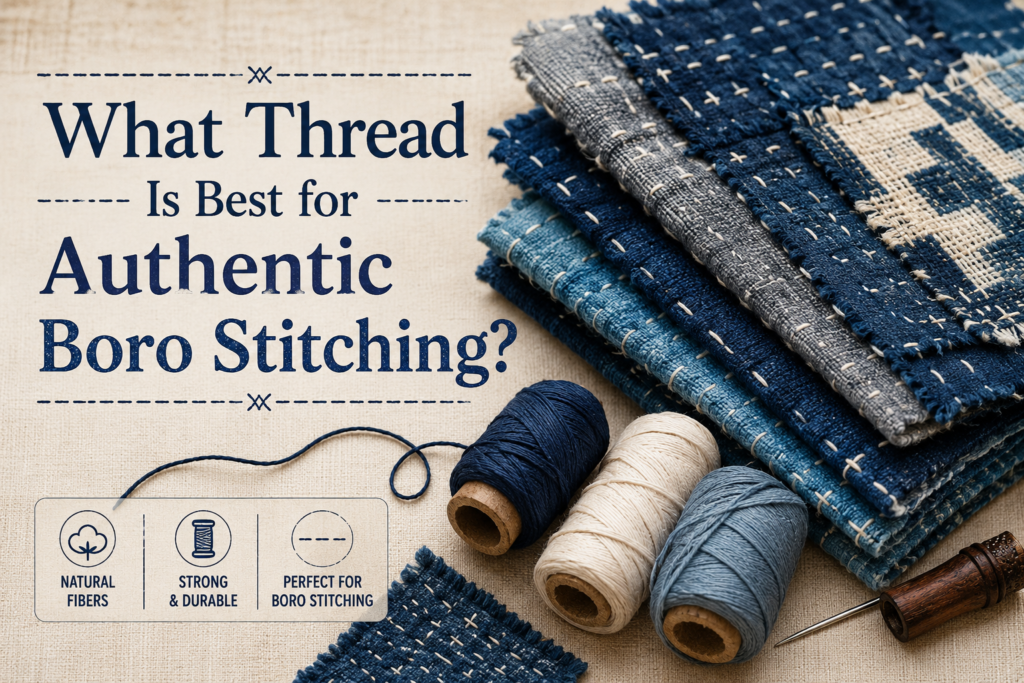
Thread selection plays a major role in both repair durability and visual character. Traditional-inspired boro stitching usually works best with thick cotton sashiko thread because it creates visible stitch definition while maintaining strength across multiple fabric layers.
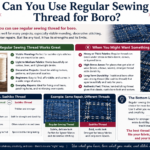
Ordinary sewing thread often disappears into fabric and lacks the structural presence needed for visible mending. Sashiko thread creates stronger visual rhythm and allows the repair stitching itself to become part of the textile’s design language.
Traditional white thread on indigo fabric became iconic because the high contrast made repairs easier to inspect while also creating a recognizable handcrafted appearance. Over time, the stitching slowly softened and blended into the surrounding fabric without disappearing completely.
Common beginner thread choices include:
- White sashiko thread
- Cream cotton thread
- Indigo sashiko thread
- Pearl cotton thread
- Heavy embroidery cotton
The most important beginner consideration is thread thickness. Very thin thread can break under tension, while extremely thick thread may become difficult to control during tight layered stitching.
Sashiko Thread vs Embroidery Thread
| Feature | Sashiko Thread | Embroidery Thread |
|—|—|
| Thickness | Thicker | Usually thinner |
| Durability | High | Medium |
| Stitch visibility | Excellent | Moderate |
| Traditional authenticity | Strong | Lower |
| Layer strength | Better | Weaker |
Beginners can temporarily use embroidery thread while learning, but authentic sashiko thread improves repair structure and produces more balanced stitching patterns.
Helpful beginner thread qualities include:
- Strong cotton fibers
- Low fraying
- Consistent thickness
- Visible contrast
- Smooth stitching movement
Good thread creates cleaner repair lines and reduces frustration during repetitive stitching practice.
How Thread Thickness Changes Repair Strength and Flexibility
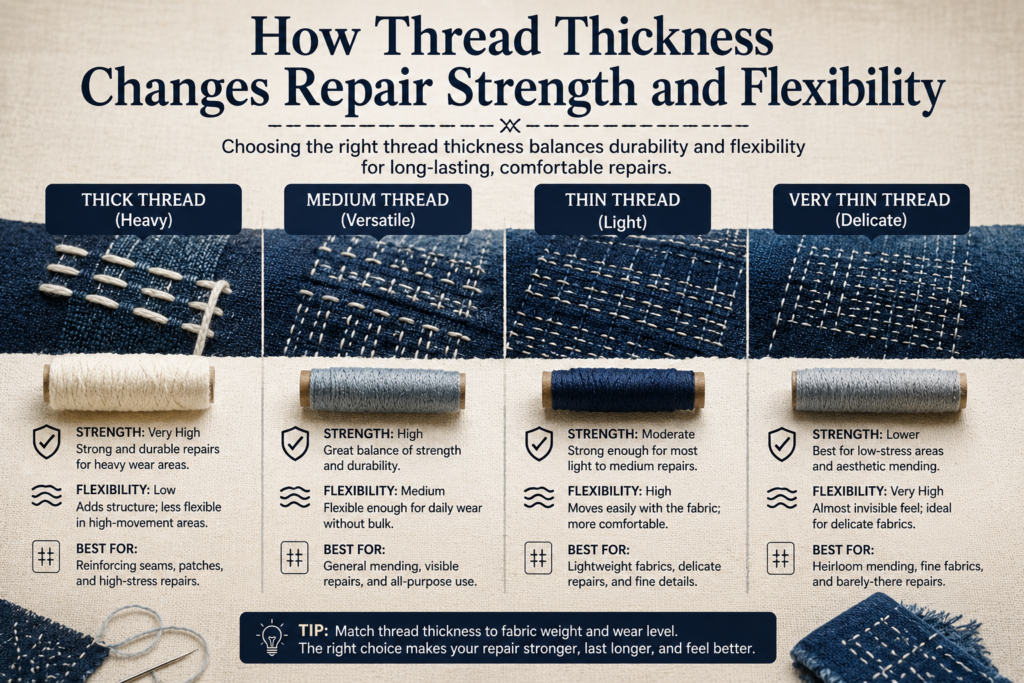
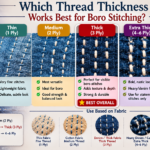
Thread thickness changes both the visual appearance and physical behavior of boro repairs. Many beginners choose thread based only on color, but thickness directly affects flexibility, durability, stitch visibility, and fabric tension. Understanding this relationship helps beginners avoid stiff or weak repairs.
Thin thread creates softer and more flexible repairs, making it useful for lightweight shirts, sleeves, and delicate fabric layering. However, thin thread can weaken faster in high-stress areas such as knees, cuffs, and elbows. Thick sashiko thread creates stronger reinforcement and more visible texture, but excessive thickness can bunch lightweight fabric and reduce flexibility.
A medium-weight cotton sashiko thread usually provides the best beginner balance because it combines durability with manageable stitch control.
General Thread Thickness Behavior
| Thread Thickness | Repair Result |
| Thin thread | Flexible but less durable |
| Medium thread | Balanced beginner option |
| Thick thread | Strong reinforcement but stiffer |
Helpful beginner guidelines include:
- Use thicker thread for denim repairs
- Use lighter thread for shirts
- Match thread strength to fabric weight
- Avoid extremely thick thread on thin cotton
- Practice tension control before upgrading thread size
Strong thread selection improves long-term repair stability while also creating cleaner visible stitch definition.
To have a better outlook for the types of fabrics, threads and needles to use for boro stitching, head to out expert guide providing you with every small required and optional choices and the decision-making on how to choose them.
Why Are Long Sashiko Needles Better for Beginners?
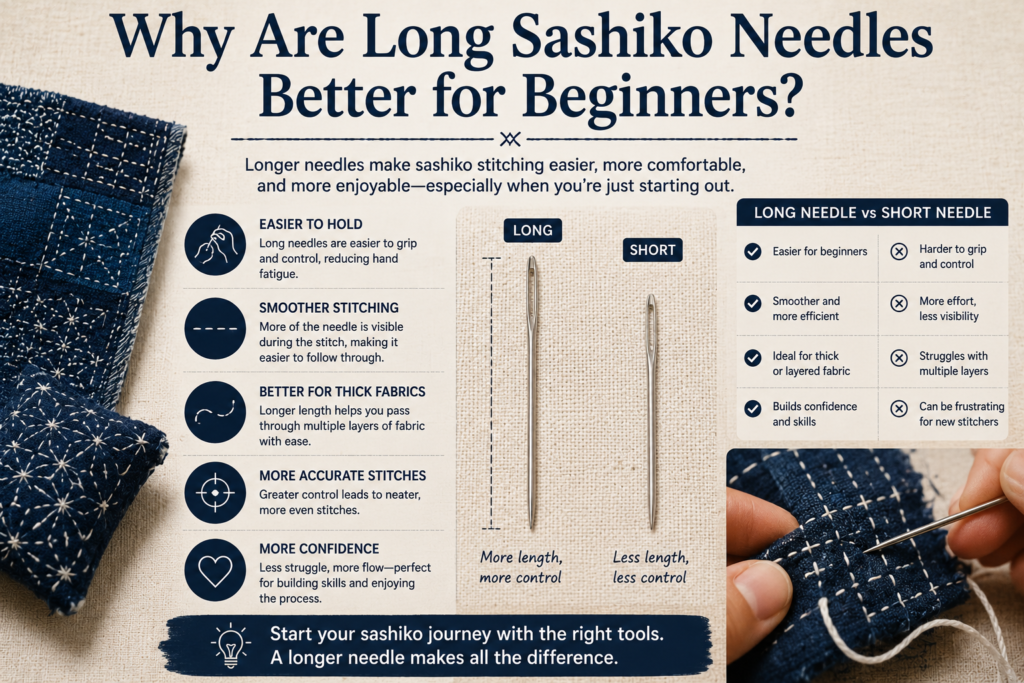
Needle selection dramatically affects comfort, stitch consistency, and repair speed. Long sashiko needles are designed specifically for repetitive running stitches across layered fabric surfaces, making them one of the most useful beginner upgrades.
Traditional sashiko stitching involves loading several stitches onto the needle before pulling the thread through the fabric. Longer needles make this motion easier because they hold multiple stitches comfortably while reducing repetitive hand movement.
Short sewing needles force beginners to stop frequently, reposition fabric constantly, and create inconsistent stitch spacing. Long sashiko needles improve rhythm and allow smoother stitching flow across larger repair areas.
Benefits of long sashiko needles include:
- Faster stitching
- Better stitch spacing
- Improved repair rhythm
- Reduced hand fatigue
- Easier penetration through layered denim
- Cleaner running stitches
Needle thickness also matters. Thin needles slide easily through light cotton, while thicker needles perform better with heavy denim and canvas layers.
Beginners should usually choose medium-length sashiko needles because extremely long needles can initially feel difficult to control.
Helpful beginner needle accessories include:
- Palm thimbles
- Leather finger guards
- Needle threaders
- Magnetic needle holders
A good thimble becomes especially important once repairs involve thick denim layering because pushing needles through multiple fabric layers increases finger strain quickly.
One of the most common beginner frustrations comes from using tiny household sewing needles designed for lightweight clothing repairs rather than visible mending work.
Comfortable tools encourage longer practice sessions and more consistent repair quality over time.
Which Boro Supplies Work Best for Different Repair Areas?
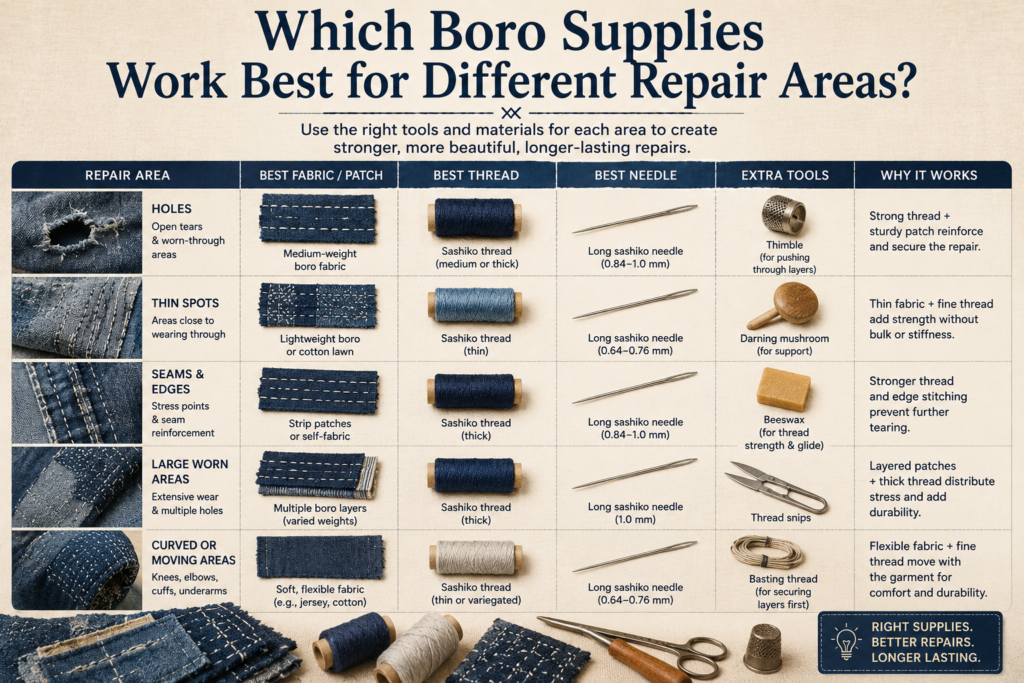
Different clothing areas experience different levels of stress, movement, and friction. Because of this, beginners should adjust fabric weight, thread thickness, and layering style depending on the repair location. This functional approach creates stronger repairs and helps visible mending remain comfortable during everyday wear.
High-stress areas such as knees, elbows, cuffs, and pockets usually require heavier denim, thicker thread, and stronger reinforcement stitching because these sections experience constant bending and abrasion. Softer areas such as shirt backs or lightweight sleeves often benefit from thinner patches and more flexible stitching patterns that preserve fabric movement.
Recommended Repair Strategies
| Repair Area | Best Supply Choice |
| Knees | Heavy denim + thick thread |
| Elbows | Flexible cotton layering |
| Shirt sleeves | Lightweight patch fabric |
| Jacket shoulders | Medium-weight reinforcement |
| Pocket corners | Dense visible stitching |
Helpful beginner repair principles include:
- Match patch weight to garment weight
- Avoid stiff layering on flexible areas
- Reinforce stress points gradually
- Use softer fabric where movement matters
- Increase stitch density around tears
This repair-area strategy creates more comfortable and durable visible mending while helping repairs blend naturally into the garment’s original structure.
Should Beginners Buy a Boro Starter Kit or Individual Supplies?
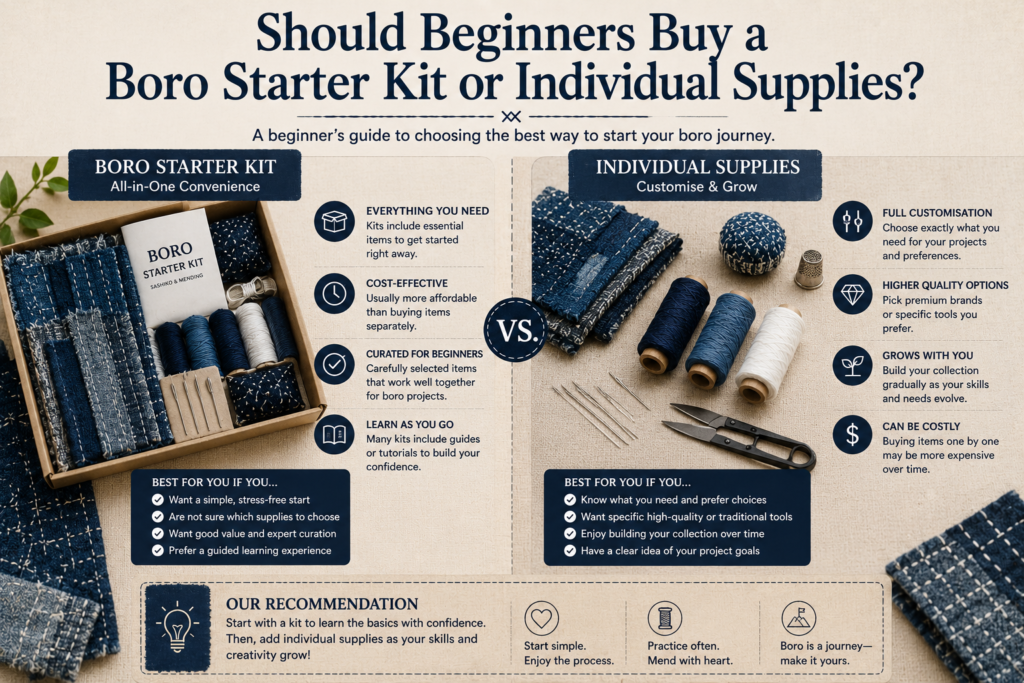
Many beginners wonder whether premade boro starter kits are worth purchasing or if building a custom supply collection creates better long-term results. Both approaches can work, but each has advantages and limitations.
Starter kits simplify the learning process because they remove early decision fatigue. Beginners receive coordinated materials, thread, fabric samples, and tools in one package, making it easier to begin stitching immediately.
However, some inexpensive kits focus more on decorative presentation than repair durability. Thin fabric scraps, weak thread, and low-quality needles can limit long-term learning progress.
Starter Kit Advantages
- Convenient setup
- Beginner-friendly organization
- Faster project preparation
- Lower initial research requirements
- Simple introduction to visible mending
Individual Supply Advantages
- Better material quality
- More authentic fabric choices
- Stronger durability
- Greater flexibility
- Long-term customization potential
Many experienced visible mending artists recommend a hybrid approach:
- Buy reliable needles individually
- Purchase quality sashiko thread
- Reuse household textiles
- Add specialty fabric gradually
This method keeps costs manageable while helping beginners understand how different textiles behave during layering and repair.
Good beginner kits should contain:
- Real cotton fabric
- Durable thread
- Long needles
- Clear instructions
- Fabric suitable for repeated stitching
Avoid kits filled with:
- Thin synthetic fabric
- Decorative-only patches
- Weak thread
- Plastic novelty tools
Authentic boro developed from necessity and practicality. A simple durable setup often teaches more than large decorative supply collections.
Authentic Boro Supplies vs Modern Decorative Visible Mending Supplies
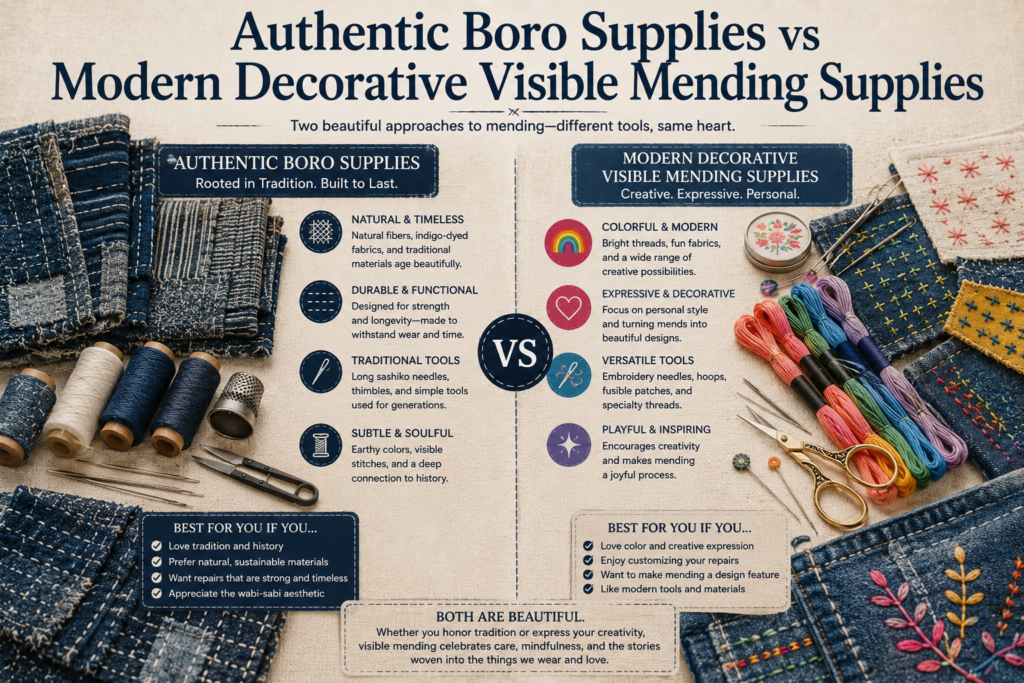
Modern visible mending trends sometimes blur the difference between authentic-inspired boro repair and decorative fashion stitching. While both styles can be beautiful, their supply choices often reflect very different goals.
Traditional boro developed from necessity. Families reused damaged fabric repeatedly because replacing clothing was expensive and difficult. Repairs focused on extending garment life through layered reinforcement and durable stitching. Decorative visible mending, however, often prioritizes artistic styling, color coordination, and aesthetic experimentation over long-term repair durability.
Major Supply Differences
| Authentic-Inspired Boro | Decorative Visible Mending |
| Reused fabric | New fabric bundles |
| Indigo cotton | Mixed decorative textiles |
| Durability-focused | Appearance-focused |
| Practical reinforcement | Artistic styling |
| Repeated repair layering | Single decorative patches |
Authentic-inspired beginners usually benefit from working with worn textiles because naturally faded fabric creates stronger visual depth and more realistic repair transitions. Decorative beginner kits often include thin colorful fabric that looks attractive initially but may not withstand repeated wear.
Understanding this distinction helps beginners choose supplies that match their long-term goals and preferred repair philosophy
What Small Tools Make Boro Stitching Easier?
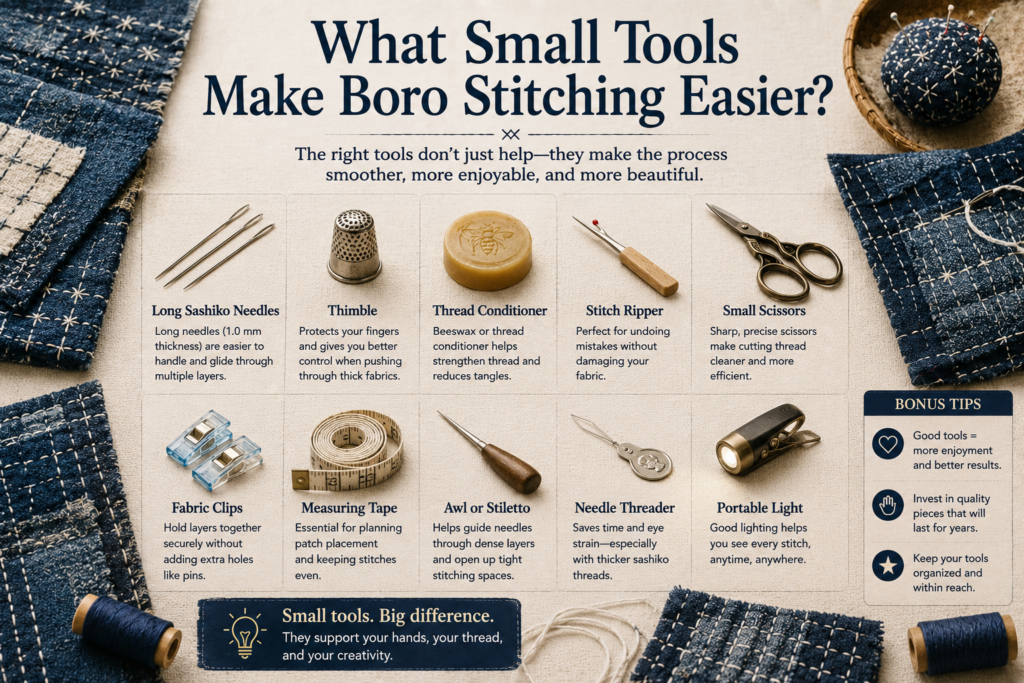
While fabric and thread form the foundation of visible mending, several inexpensive supporting tools can dramatically improve stitching accuracy, comfort, and repair consistency.
Many beginners struggle not because of poor stitching ability, but because their fabric shifts during sewing or their layers bunch unevenly. Simple support tools reduce these problems and create cleaner finished repairs.
Helpful beginner support tools include:
| Tool | Purpose |
| Fabric clips | Hold thick layers securely |
| Chalk marker | Draw stitch guidelines |
| Small ruler | Improve stitch spacing |
| Thread snips | Cleaner trimming |
| Palm thimble | Finger protection |
| Iron | Flatten layered fabric |
| Needle threader | Faster setup |
| Fabric weights | Stabilize repair areas |
Ironing is especially important in boro work because flat layered surfaces create smoother tension distribution during stitching. Wrinkled fabric causes bunching, distorted stitch lines, and uneven repair structure.
Small clips often work better than pins for layered denim because thick fabric becomes difficult to pin securely.
Additional beginner-friendly tools include:
- Cutting mats
- Rotary cutters
- Small storage trays
- Thread organizers
- Fabric marking pencils
These tools are optional but can improve workflow efficiency over time.
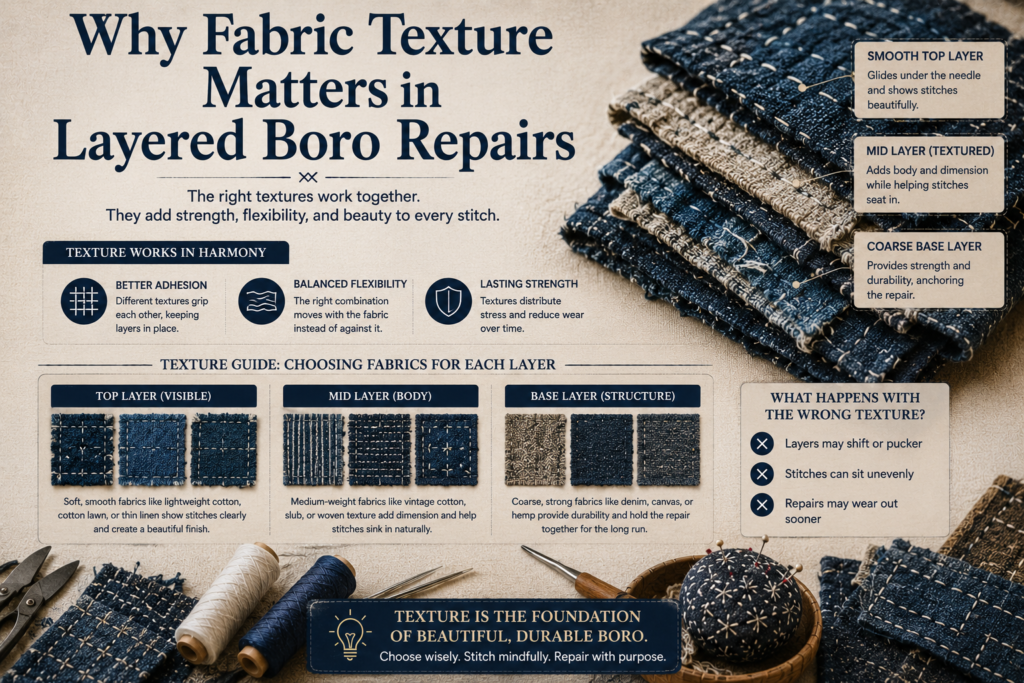
Why Fabric Texture Matters in Layered Boro Repairs
Texture variation is one of the hidden reasons authentic boro repairs develop such strong visual depth over time. Layered repairs become more interesting when different fabric surfaces interact naturally through wear, fading, and repeated stitching cycles.
Smooth fabric layered against rough denim creates stronger visual contrast because the stitching highlights differences in texture and light reflection. Soft worn cotton usually blends more naturally into existing garments, while heavily textured canvas creates bold structural reinforcement that stands out visually.
Texture also affects comfort and flexibility. Thick rough patches can become stiff if layered excessively, especially around moving areas such as elbows or knees. Softer patch fabric often creates more wearable repairs because the layers adapt more naturally to body movement.
Helpful beginner texture strategies include:
- Mix soft and rough fabrics carefully
- Use flexible patches on moving areas
- Combine faded and dark indigo textiles
- Avoid extremely thick layered stacking
- Let visible texture variation remain natural
One reason vintage boro textiles appear visually rich is because years of wear slowly softened the contrast between layered materials while preserving subtle surface variation underneath the stitching.
Texture layering adds depth that cannot be replicated through color alone.
Real-World Example
A beginner repairing denim knees often sees immediate improvement after pressing patches flat with an iron before stitching. Flattened layers reduce fabric movement and create more balanced visible stitching lines after washing.
Comfort and organization matter because repetitive hand stitching requires patience and consistency. Small workflow improvements often lead to cleaner repairs and less frustration during long projects.
What Mistakes Do Beginners Make When Buying Boro Supplies?
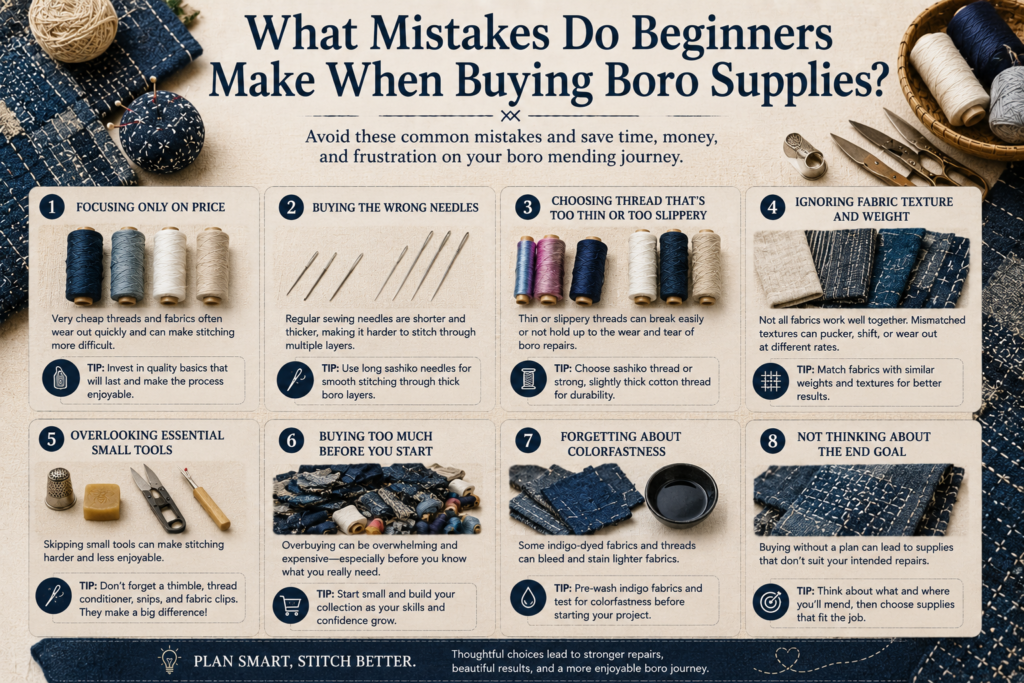
One of the biggest beginner mistakes is prioritizing visual appearance over long-term durability. Authentic boro evolved from practical textile repair, meaning structural strength always mattered more than decorative perfection.
Many beginners purchase colorful fabric bundles or novelty visible mending kits without understanding how fabric behaves during repeated stitching and washing. Thin decorative material often weakens quickly and creates unstable repairs.
If you want a comprehensive list of some of the common boro stitching mistakes beginners make, look no further than our expertly compiled list of beginner mistakes and how to avoid them.
Common beginner supply mistakes include:
- Buying fabric that is too thin
- Using weak sewing thread
- Choosing slippery synthetic fabric
- Ignoring fabric weight compatibility
- Using tiny needles for thick denim
- Overbuying unnecessary accessories
- Prioritizing appearance over durability
Another common mistake involves using identical fabric for every repair patch. Realistic boro texture develops through variation. Different shades of indigo, slightly worn cotton, and uneven fading create more natural visual depth over time.
Beginners also frequently underestimate the importance of needle comfort. Poor-quality needles create hand fatigue quickly, especially during larger repairs.
Helpful beginner buying principles include:
- Choose durability first
- Focus on woven cotton
- Buy fewer higher-quality tools
- Reuse household textiles
- Start simple
- Practice before expanding collections
Authentic visible mending becomes stronger and more visually interesting through gradual layering and repeated repair cycles. Beginners improve faster when they focus on learning textile behavior instead of collecting decorative supplies.
Avoid chasing perfection early. Traditional boro itself developed from imperfect repeated repairs, which is part of its visual and historical beauty.
Why Cheap Boro Supplies Sometimes Fail Quickly
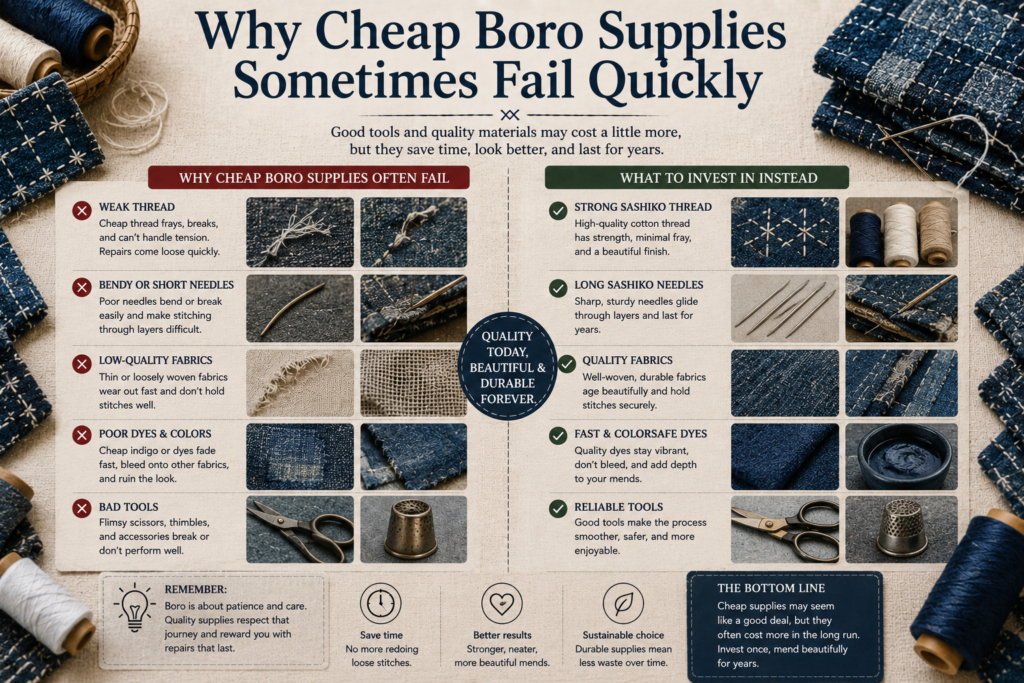
Low-quality sewing supplies can create frustration for beginners because poor tools often damage fabric, weaken repairs, and slow stitching progress. Many inexpensive visible mending kits focus on decorative presentation rather than functional durability, which can lead to disappointing long-term results.
Cheap needles frequently bend when pushed through layered denim, creating uneven stitch spacing and uncomfortable hand movement. Weak thread may fray or snap under repeated tension, especially around high-stress repair areas such as knees and cuffs. Low-quality scissors can crush fabric edges instead of cutting cleanly, causing unnecessary fraying around patch borders.
Common low-quality supply problems include:
- Bent needles
- Fraying thread
- Weak fabric patches
- Rough scissor cuts
- Uneven thread thickness
- Synthetic fabric distortion
Beginners do not need luxury supplies, but investing in a few reliable core tools often improves the entire learning experience. A strong needle, durable cotton thread, and sharp scissors usually provide more long-term value than large novelty sewing kits filled with decorative accessories.
Reliable tools reduce repair mistakes while helping beginners focus on stitch rhythm, layering balance, and fabric behavior.
How Can Beginners Build an Affordable Boro Supply Collection?
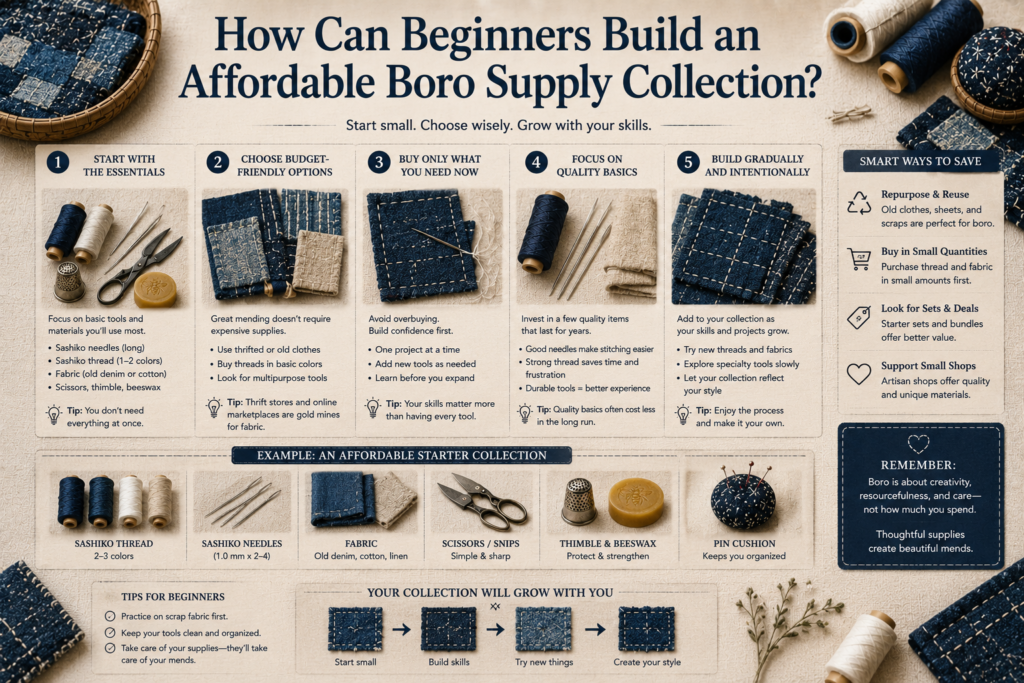
Boro stitching is naturally well-suited for beginners working with limited budgets because the repair tradition itself developed around reuse, conservation, and long-term textile preservation.
Many experienced visible mending artists intentionally reuse damaged clothing because naturally worn fabric develops more authentic layering transitions and surface texture than newly manufactured material.
Affordable beginner fabric sources include:
- Old denim jeans
- Work shirts
- Canvas bags
- Cotton curtains
- Thrift-store jackets
- Worn aprons
- Vintage workwear
- Heavy cotton tablecloths
The smartest beginner strategy is prioritizing only a few essential purchases while reusing household fabric for practice projects.
Essential Purchases
- Good needles
- Durable thread
- Sharp scissors
Reusable Household Materials
- Denim scraps
- Cotton clothing
- Canvas textiles
- Old jackets
- Worn bags
Budget-friendly beginners often progress faster because they experiment more freely without worrying about damaging expensive fabric.
Beginner Supply Priority List
| Supply | Importance |
| Denim scraps | Essential |
| Cotton thread | Essential |
| Needle set | Essential |
| Fabric scissors | Essential |
| Thimble | Recommended |
| Fabric clips | Helpful |
| Specialty rulers | Optional |
Building a supply collection slowly also helps beginners understand which tools genuinely improve their workflow before investing heavily in specialty materials.
Over time, stitchers naturally develop personal preferences regarding fabric texture, thread thickness, needle length, and patch layering techniques.
The best beginner setup is not necessarily the most expensive one. It is the setup that encourages consistent practice, durable repairs, and long-term learning.
How Long Beginner Boro Repairs Usually Last
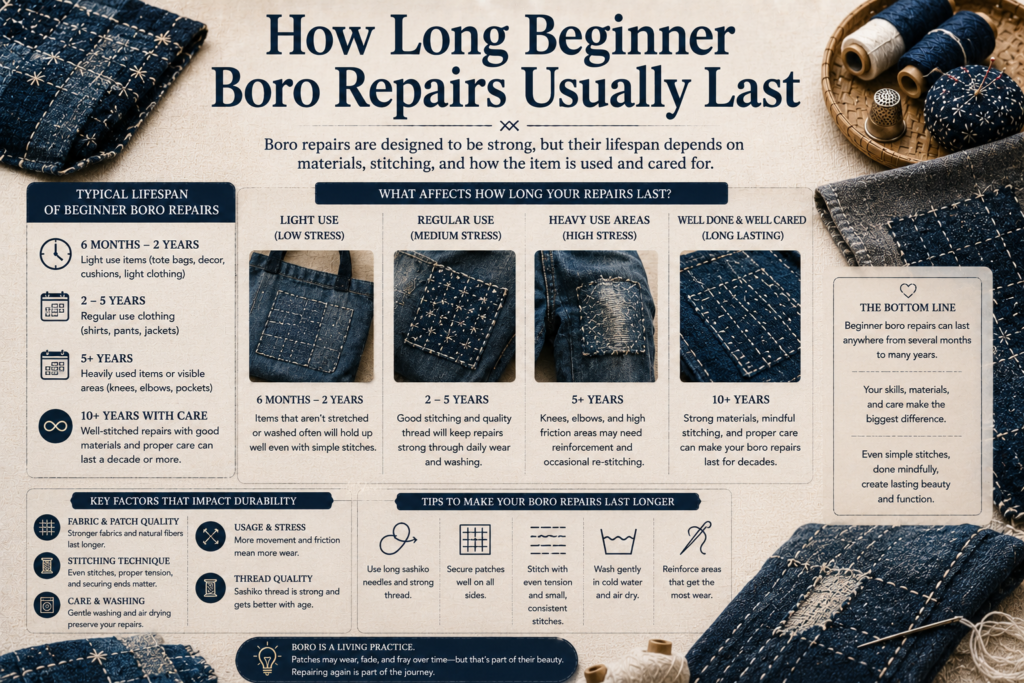
Repair longevity depends heavily on fabric quality, stitching density, garment stress level, and washing frequency. Strong beginner repairs made with durable cotton fabric and quality thread can remain functional for many years, especially when the garment receives occasional reinforcement over time.
High-stress repairs such as denim knees or jacket elbows naturally wear faster because those areas experience repeated bending and abrasion during everyday use. Lightweight shirt repairs often last longer because the surrounding fabric experiences less tension and friction.
Several factors influence repair lifespan:
- Fabric strength
- Thread quality
- Stitch density
- Layer thickness
- Washing habits
- Garment usage frequency
General Repair Expectations
| Repair Type | Typical Durability |
| Decorative shirt repair | Long-lasting |
| Heavy denim knee repair | Moderate-heavy wear |
| Reinforced jacket elbow | Very durable |
| Thin cotton patching | Lower durability |
Experienced visible mending artists often continue reinforcing older repairs gradually instead of replacing them entirely. This repeated layering process reflects the original philosophy behind traditional boro, where garments evolved through continuous repair rather than permanent restoration.
Understanding realistic repair longevity helps beginners choose stronger materials and develop better long-term stitching habits.
Final Thoughts on the Best Boro Supplies Starter List for Beginners
The best beginner boro supplies focus on practicality, durability, and repair functionality rather than decorative complexity. Strong cotton fabric, visible sashiko thread, comfortable needles, and simple support tools create a far better learning experience than oversized novelty kits filled with unnecessary accessories.
Authentic-inspired boro develops slowly through repeated stitching, layered repairs, and long-term textile aging. Beginners improve fastest when they focus on understanding fabric behavior, stitch rhythm, and repair structure instead of chasing perfection.
A simple setup using recycled denim, cotton patches, reliable thread, and sharp needles can already produce beautiful visible mending work with strong traditional character. Over time, each repair naturally gains texture, softness, fading, and layered history that reflects the original philosophy behind Japanese boro culture.
The goal is not flawless stitching. The goal is creating repairs that remain strong, useful, and visually meaningful through years of continued wear.
FAQs
Do beginners need authentic Japanese sashiko thread?
No. Beginners can start with strong cotton thread, although authentic sashiko thread improves durability and stitch visibility.
Can old jeans be used for boro stitching?
Yes. Old denim is one of the best beginner fabrics because it is durable and develops authentic aging patterns.
What fabric should beginners avoid?
Stretch fabric, thin polyester blends, and slippery synthetic materials are difficult to repair cleanly.
Is boro stitching expensive to start?
No. Many beginners start using recycled household textiles and only buy thread and needles.
What is the difference between boro and sashiko?
Boro refers to layered repair textiles, while sashiko refers to the stitching technique often used to create repairs.
Are starter kits worth buying?
They can help beginners start quickly, but individually selected supplies often provide better long-term quality.
Which needle length is best for beginners?
Medium-to-long sashiko needles usually provide the best balance between control and stitching speed.
Can embroidery floss replace sashiko thread?
Temporarily yes, but sashiko thread creates stronger and more authentic repair structure.