Visible mending has become far more than a simple sewing trend. It now represents a broader shift toward slow fashion, sustainable clothing ownership, and textile preservation. Instead of throwing garments away after minor damage, visible mending encourages people to strengthen and reuse clothing repeatedly. This creates a more durable relationship between the garment and the owner while reducing textile waste at the same time. This expert analysis focuses on diminishing the myths, discussing actual facts and matters on how can visible mending make clothes last longer.
Unlike invisible repairs that attempt to hide damage completely, visible mending openly reinforces weakened fabric using layered patches, decorative stitching, and structural thread patterns. Many repairs become stronger than the original garment because reinforced areas distribute tension more evenly during wear. This is why heavily repaired denim, workwear, and canvas garments often remain functional for years after their first signs of wear.
Why Does Visible Mending Help Clothes Last Longer?
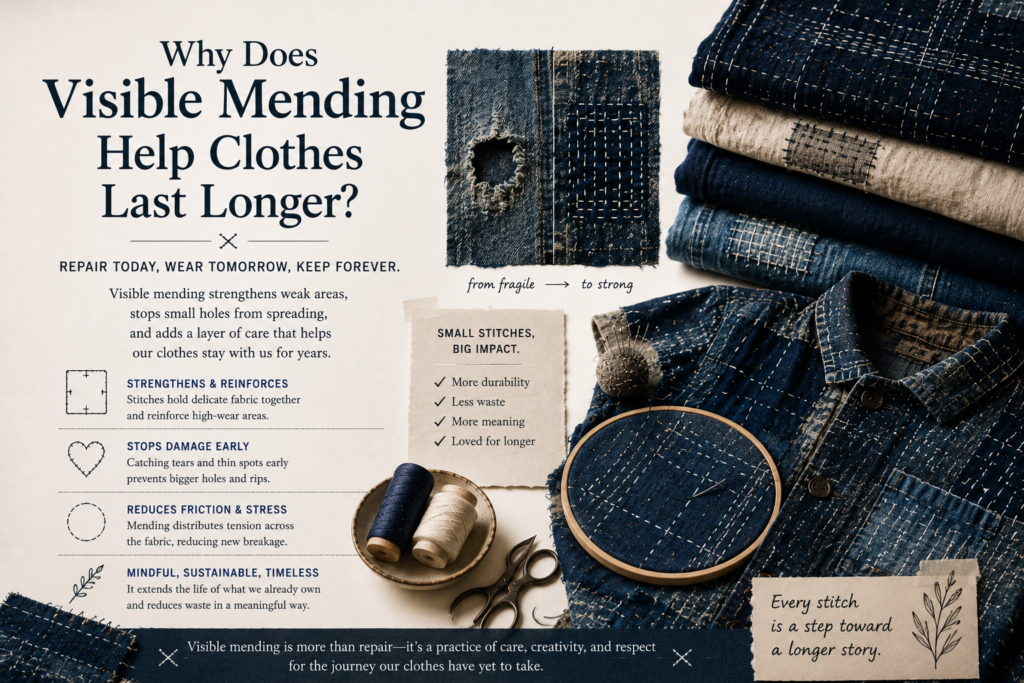
Clothing rarely fails instantly. Most garments weaken slowly through repeated washing, friction, stretching, body movement, moisture exposure, and heat. Areas like knees, elbows, pockets, inner thighs, and cuffs experience constant mechanical stress. Once fibers become thin, even small holes begin spreading quickly because surrounding fabric can no longer absorb tension effectively. Visible mending interrupts this process before major structural failure occurs.
Traditional Japanese boro textiles survived for decades because families repeatedly reinforced worn garments instead of discarding them. Every repair added another layer of support that strengthened the fabric while extending usability. Modern visible mending follows the same principle. Rather than treating clothing as disposable, repairs become part of the garment’s long-term maintenance cycle.
The biggest advantage comes from tension redistribution. When stitches spread force across a wider area, fabric weak points stop carrying the entire load alone. This dramatically reduces tearing progression. Strong repairs also stabilize frayed edges and prevent holes from enlarging during movement or washing.
Visible mending helps clothes last longer because it:
- Reinforces weak fabric zones
- Prevents tears from expanding
- Stabilizes thinning material
- Reduces stress concentration
- Adds structural support layers
- Slows friction-related damage
- Encourages long-term garment care
- Makes future repairs easier
Many repaired garments eventually become stronger than fast-fashion originals because repair stitching intentionally focuses on durability rather than manufacturing speed or low production cost.
How Fabric Stress Spreads Around Clothing Damage
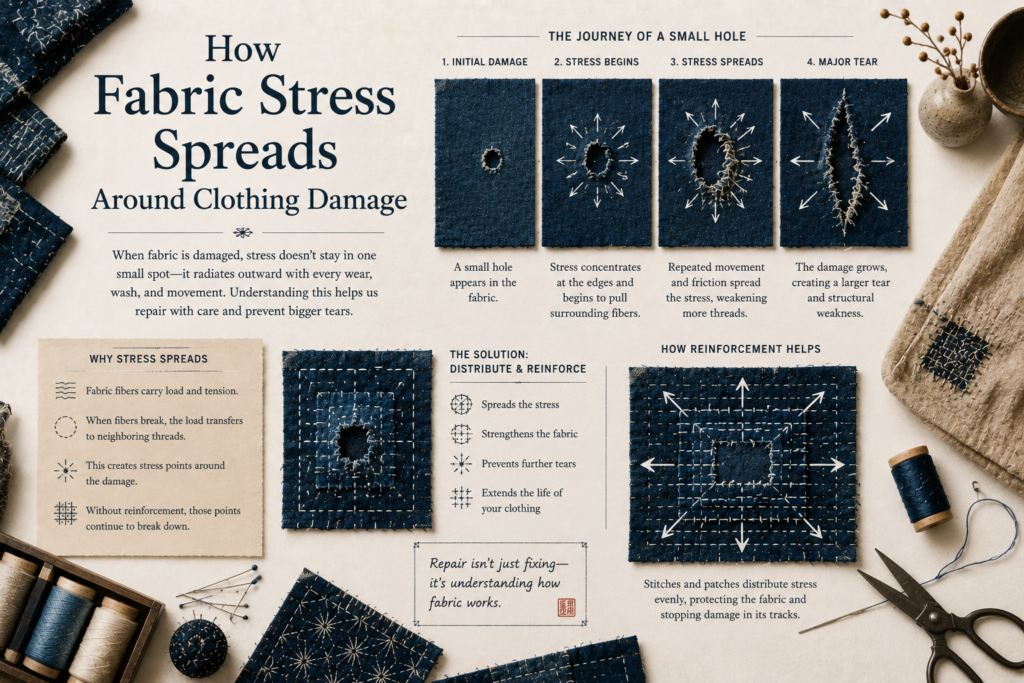
Clothing holes spread because weakened fibers concentrate tension into smaller areas until surrounding fabric begins tearing outward during movement and friction.
Fabric damage rarely stays isolated to one tiny point. Once fibers weaken, surrounding material absorbs extra stress every time the garment bends, stretches, or rubs against the body. This creates stress concentration zones where tension repeatedly pulls against already fragile threads. Over time, tiny weak spots expand into larger tears because nearby fibers can no longer distribute force evenly across the fabric surface.
This is especially common around knees, elbows, pocket corners, and inner thighs because these areas experience constant directional movement. Warp and weft fibers begin separating unevenly, causing damage to spread outward rather than remaining contained. Visible mending helps interrupt this mechanical failure process by redistributing tension through reinforcement stitching and support patches before larger structural tearing develops.
Strong visible mending repairs reduce stress concentration by:
- Spreading force across wider areas
- Stabilizing frayed edges
- Reinforcing weakened warp and weft fibers
- Reducing directional fabric strain
- Supporting surrounding thin fabric
- Slowing friction-based expansion
This is one reason sashiko-inspired stitching patterns remain effective. Repeated running stitches distribute movement stress more evenly across damaged fabric instead of allowing tension to focus around a single hole.
Want an in-depth directive on fabric stress and tightness and how does it effect boro stitches in durable repairs, look no further than our expertly researched facts.
Which Types of Clothes Benefit Most From Visible Mending?
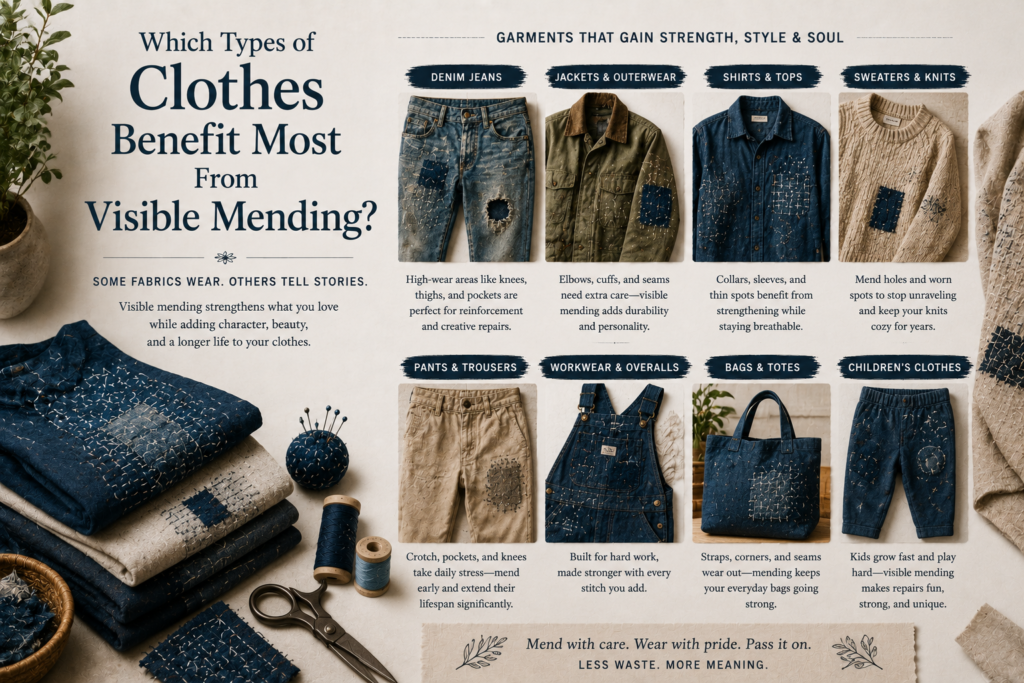
Denim, linen, cotton, wool, canvas, and workwear benefit most because their woven fibers support strong reinforcement stitching.
Some fabrics respond exceptionally well to visible mending because their structure can handle repeated stitching without further weakening. Thick woven materials generally repair better than ultra-thin synthetic fabrics. Durable natural fibers provide stronger anchor points for stitches, patches, and reinforcement layers, allowing repairs to remain flexible while still increasing strength.
Denim is one of the best examples because jeans repeatedly fail in predictable areas. Inner thighs, knees, and pocket corners experience continuous abrasion during movement. Visible mending strengthens these stress points before holes expand further. Many heavily repaired jeans actually become more durable than new jeans because layered reinforcement creates stronger support zones.
Canvas jackets, workwear, chore coats, and utility garments also respond well to visible repair techniques. These clothes were originally designed for practical durability, so reinforced stitching integrates naturally into the garment structure. Wool sweaters benefit from darning methods that rebuild damaged fibers using woven thread reconstruction.
Visible mending works especially well for:
- Jeans and denim jackets
- Cotton shirts and trousers
- Linen garments
- Canvas workwear
- Wool sweaters
- Tote bags
- Utility jackets
- Heavy cotton outerwear
However, extremely thin synthetic fabrics may repair poorly because the surrounding material continues degrading after stitching. Fabric condition matters just as much as repair technique.
Many people now intentionally buy higher-quality garments expecting to repair them over time instead of replacing them immediately. This mindset shifts clothing ownership from disposable consumption toward long-term textile preservation.
Can Visible Mending Prevent Holes Before They Start?
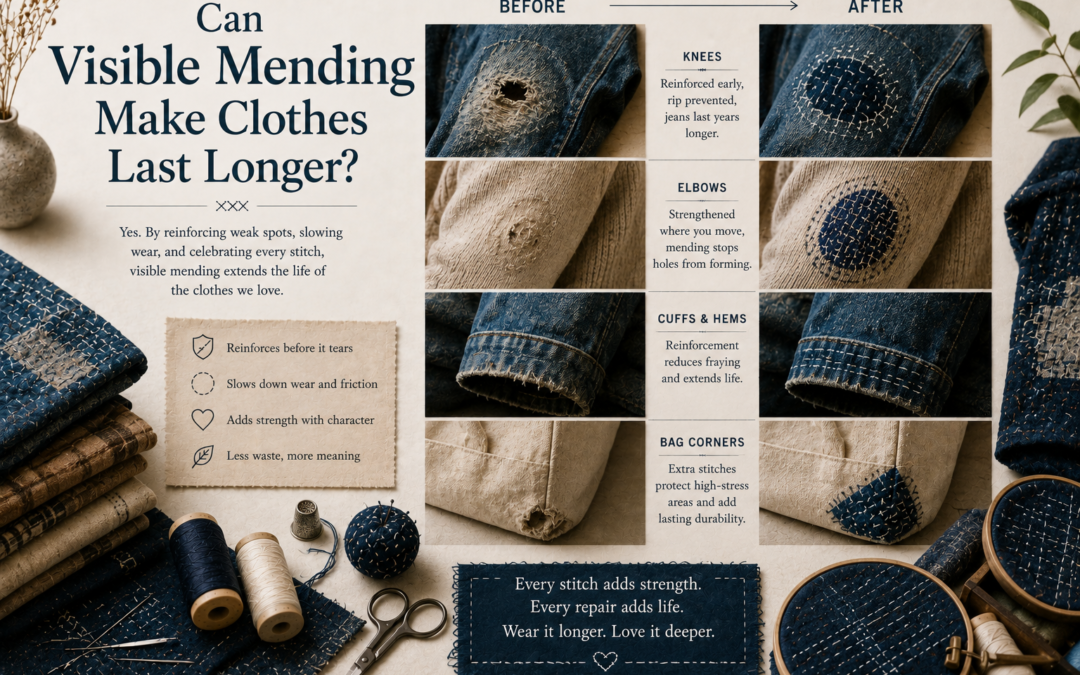
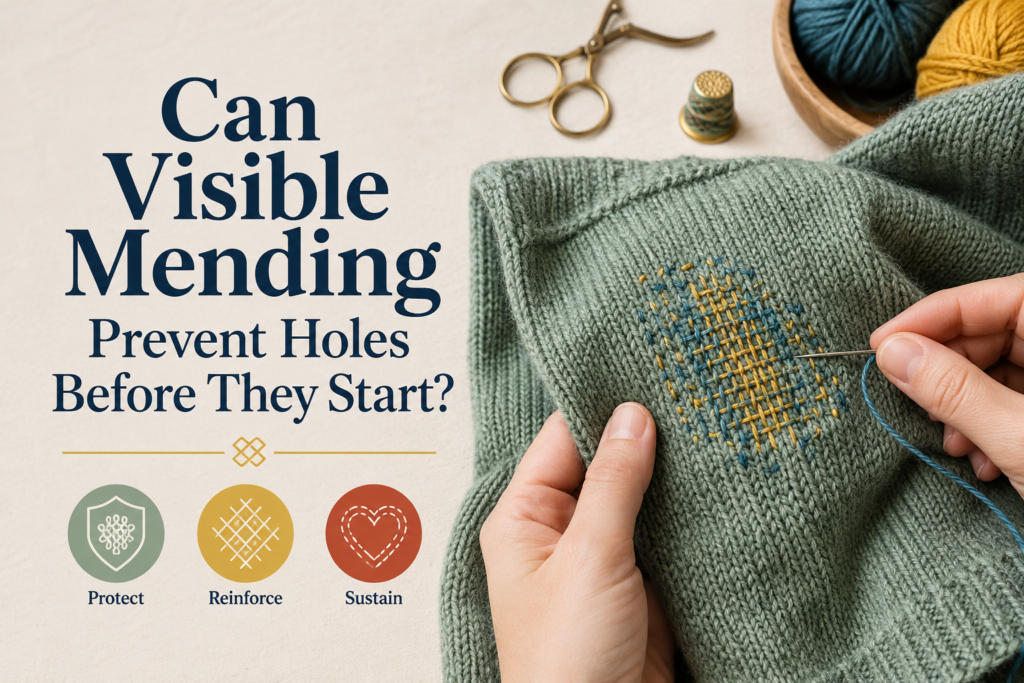
Preventative visible mending reinforces thinning fabric early, slowing damage before full holes or tears develop.
Many experienced visible menders repair clothing before obvious holes appear. This approach is called preventative reinforcement because it strengthens high-friction areas while the fabric still retains most of its structural integrity. Reinforcing early wear zones dramatically increases garment lifespan because weak fibers receive support before tearing begins spreading outward.
Denim jeans are one of the best examples. Inner thighs often become thin long before visible holes appear. Adding light sashiko stitching or reinforcement patches early can slow abrasion damage and prevent sudden blowouts later. Workwear jackets, elbows, tote bag corners, and cuffs also benefit from proactive repair strategies.
Preventative visible mending works especially well because healthy surrounding fibers still anchor stitches securely. Once fabric becomes severely degraded, repairs become harder because the surrounding textile can no longer support reinforcement tension properly.
Common preventative reinforcement areas include:
- Inner thighs on jeans
- Jacket elbows
- Pocket corners
- Shirt cuffs
- Knees
- Canvas bag handles
- Workwear stress points
This proactive repair mindset reflects traditional boro philosophy where garments received repeated reinforcement throughout their lifespan rather than waiting for complete structural failure
Can Decorative Visible Mending Still Be Durable

Decorative visible mending can remain highly durable when structural reinforcement comes before aesthetic design.
One of the biggest misunderstandings about visible mending is the assumption that decorative stitching automatically weakens repairs. In reality, decorative visible mending often becomes extremely durable because many designs use dense stitch patterns, layered fabric, and broad reinforcement coverage. The key difference is whether the repair prioritizes structure first or decoration alone.
Strong visible repairs reinforce the entire weakened zone rather than only covering the visible hole. Decorative stitching then adds additional stabilization while improving appearance. Traditional boro textiles naturally became visually beautiful because repeated reinforcement stitching created layered patterns over decades of use.
Problems happen when aesthetics replace structural logic. Weak thread, unstable patch placement, or small decorative embroidery without support fabric may fail quickly under stress. Durable visible mending requires understanding how tension moves through fabric during wear.
For more visible mending ideas for beginners, have a read for our expertly compiled list of ideas for beginners.
Strong decorative repairs usually include:
- Reinforcement beneath visible stitching
- Durable patch materials
- Balanced thread tension
- Wider repair coverage areas
- Stable edge stitching
- Strong cotton or sashiko thread
- Flexible stitch spacing
- Structural support layers
Many sashiko-inspired repairs succeed because geometric running stitches distribute stress evenly across damaged fabric instead of concentrating force in one area. This combination of function and appearance is what makes visible mending unique compared to purely decorative embroidery.
Modern visible mending succeeds best when beauty develops from reinforcement rather than replacing it. The strongest repairs often become visually interesting precisely because they were designed for long-term durability first.
Which Threads Make Visible Mending Stronger?
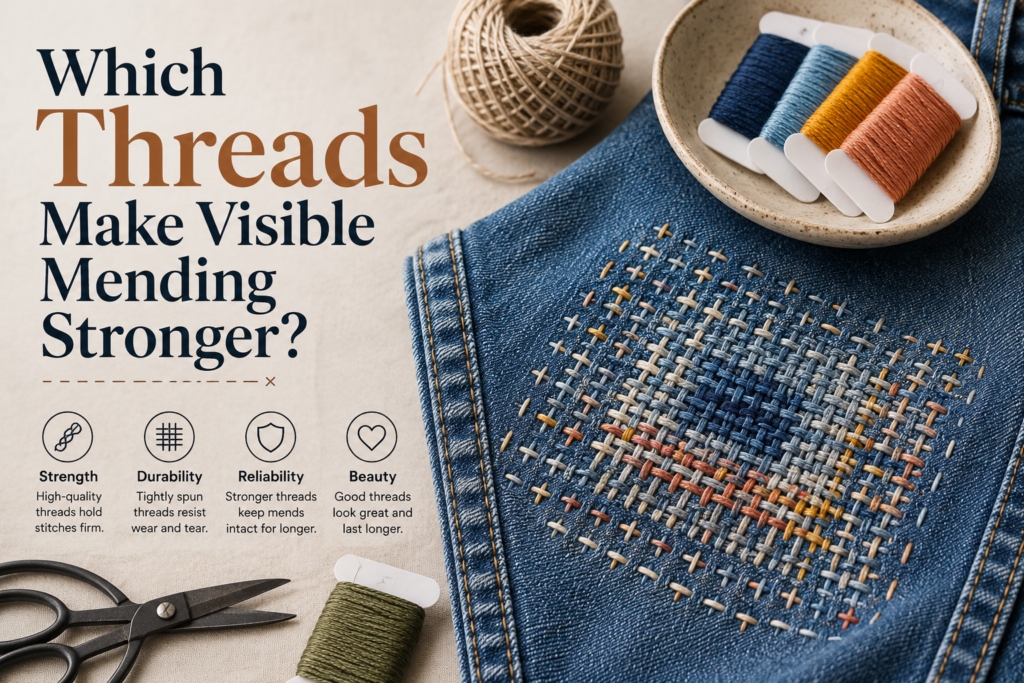
Thread strength, flexibility, and abrasion resistance all affect how long visible mending repairs survive repeated wear and washing.
Different thread types behave very differently under stress. Some threads prioritize softness and flexibility, while others maximize abrasion resistance and tensile strength. Choosing the correct thread depends on the garment type, repair location, and desired balance between durability and movement.
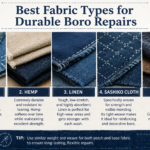
Traditional sashiko thread remains popular because it combines strength with flexibility, allowing stitches to move naturally with fabric instead of cutting into it. Cotton thread also develops a softer aged appearance over time that matches boro-inspired repairs well. Polyester thread usually lasts longer under heavy abrasion but may feel stiffer in lightweight garments.
Common visible mending thread options include:
| Thread Type | Best Use |
| Sashiko thread | Denim and traditional repairs |
| Pearl cotton | Decorative reinforcement |
| Polyester thread | Heavy abrasion zones |
| Waxed linen thread | Durable hand repairs |
| Embroidery floss | Light decorative stitching |
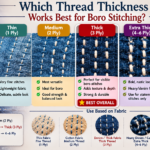
Thread thickness also matters. Extremely thin thread may wear out quickly, while overly thick thread can create stiff tension points in soft fabric.
Good visible mending balances:
- flexibility
- durability
- abrasion resistance
- fabric compatibility
- wash performance
This is why experienced visible menders often test thread behavior on scrap fabric before repairing heavily worn garments.
How Does Visible Mending Compare to Invisible Repair?
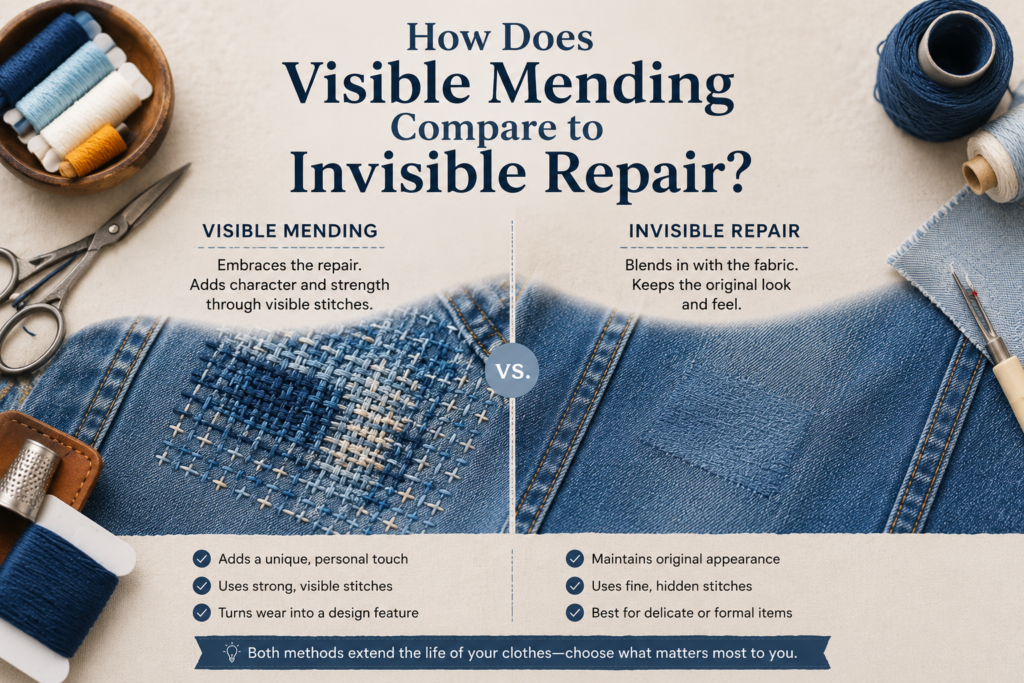
Visible mending often lasts longer because it openly reinforces damaged areas instead of minimizing repair visibility.
Invisible repair focuses on concealment. The goal is making damaged fabric appear untouched so the garment looks original. While this works well for formal tailoring or luxury clothing restoration, invisible repair sometimes sacrifices structural reinforcement because larger support patches or heavy stitching would remain noticeable.
Visible mending takes the opposite approach. Instead of hiding reinforcement, it embraces it openly. This allows repairs to use stronger stitch density, larger patch coverage, and layered fabric support without worrying about concealment. As a result, many visible repairs become mechanically stronger than invisible alternatives.
Visible mending offers several durability advantages:
| Visible Mending | Invisible Repair |
| Reinforces larger areas | Focuses on concealment |
| Allows layered patches | Uses minimal added fabric |
| Easier to repair again later | Re-repair can be difficult |
| Uses stronger visible stitching | Prioritizes hidden seams |
| Encourages ongoing maintenance | Often treated as one-time repair |
Visible repairs also change how people interact with clothing psychologically. Once repairs become part of the garment identity, owners often maintain clothes more carefully and repair them earlier before severe damage develops.
Invisible repair remains useful for professional tailoring, luxury garments, and formalwear where appearance matters most. However, for long-term workwear, denim, casual clothing, and sustainable fashion, visible mending frequently provides greater durability and easier maintenance over time.
This is one reason visible mending has become closely associated with slow fashion and long-term clothing ownership rather than disposable consumption habits.
What Visible Mending Techniques Improve Durability Most?
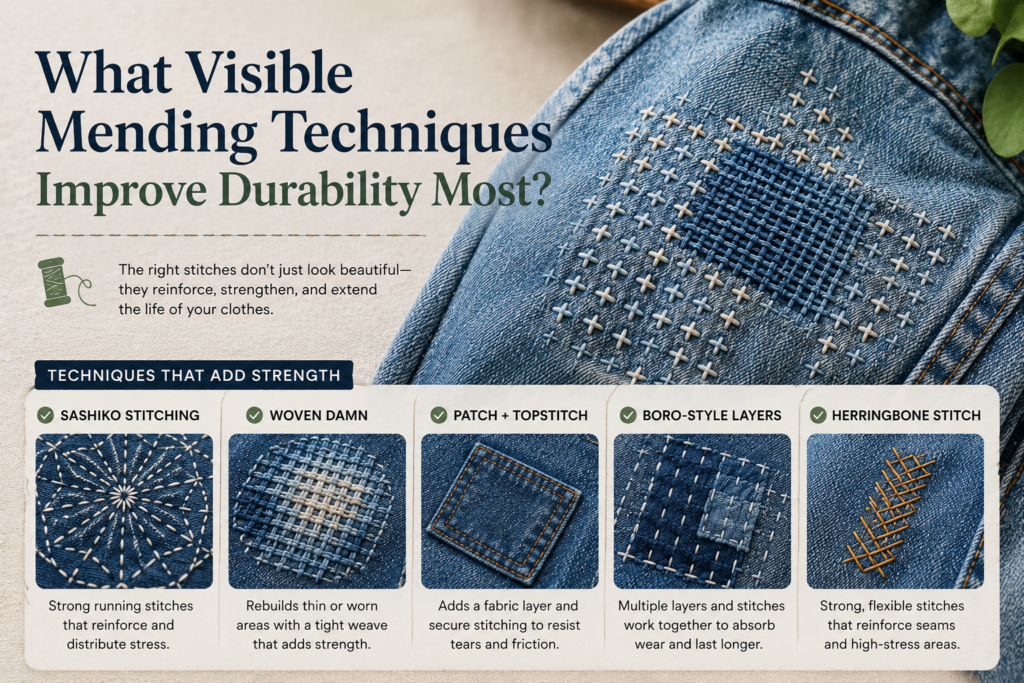
Sashiko stitching, layered patching, darning, and stress-point reinforcement provide the strongest durability improvements.
Different repair methods solve different structural problems. Thin fabric behaves differently than torn seams or missing knit fibers, so repair techniques must match the garment’s specific damage pattern. Some methods strengthen woven fabric broadly, while others rebuild missing material directly.
Sashiko stitching remains one of the most durable reinforcement techniques because repeated running stitches distribute tension evenly across weakened zones. Traditional Japanese sashiko was originally developed for practical reinforcement rather than decoration, making it highly effective for workwear and denim.
Patch layering strengthens garments by adding additional structural fabric beneath damaged zones. When stitched correctly, layered patches reduce strain on weakened original fibers and prevent holes from reopening quickly.
Darning works differently because it reconstructs missing textile structure using woven thread replacement. This technique works especially well for knitwear and socks where missing fibers need rebuilding instead of patch coverage.
The most effective durability techniques include:
- Sashiko reinforcement stitching
- Layered denim patching
- Darning knitwear
- Stress-point reinforcement
- Edge stabilization stitching
- Preventative patch placement
- Running stitch reinforcement grids
Preventative repairs often work even better than reactive repairs. Reinforcing thinning areas before complete failure dramatically slows damage progression and increases total garment lifespan.
Strong repairs also maintain flexibility. Overly stiff reinforcement can create new stress points beside the repair zone, eventually causing fresh tears around the patch edges. Balanced tension and compatible fabric weight are essential for long-term success.
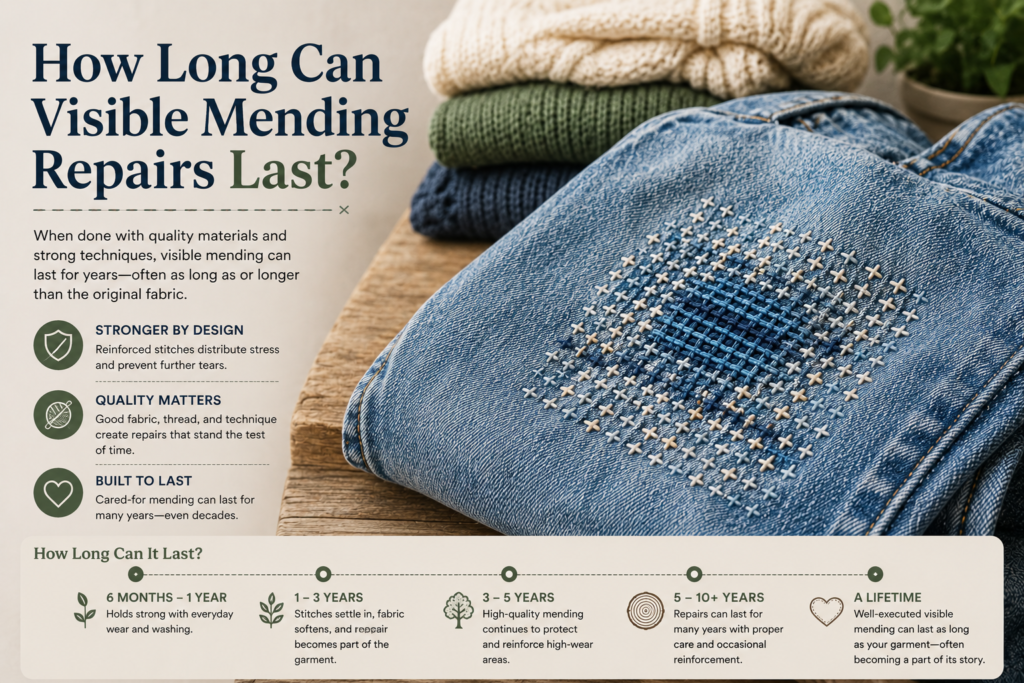
How Long Can Visible Mending Repairs Last?
Well-executed visible mending repairs can last from several months to multiple years depending on fabric type, repair method, friction level, and washing habits.
Repair lifespan varies significantly because different garments experience different stress levels during daily wear. A lightly worn patched jacket elbow may survive for years, while heavily stressed denim inner-thigh repairs may need reinforcement again within months. Fabric quality also matters. Strong natural fibers generally support longer-lasting repairs than ultra-thin synthetic blends.
Sashiko reinforcement and layered patching often provide the longest durability because these methods distribute tension across wider areas instead of concentrating force directly around damaged zones. Repairs also last longer when surrounding fabric remains healthy and flexible.
Here is a realistic repair lifespan estimate:
| Garment Area | Typical Repair Lifespan |
| Denim knees | 1–3 years |
| Inner thigh denim repair | 6–18 months |
| Jacket elbows | Several years |
| Wool sweater darning | Multiple years |
| Canvas patch repairs | 2–5 years |
Several factors affect durability:
- Friction intensity
- Washing frequency
- Thread strength
- Stitch tension
- Patch material quality
- Fabric condition
- Garment flexibility
Many garments can also be repaired repeatedly. Layered reinforcement often becomes part of the garment’s long-term evolution rather than a single temporary fix.
For more information, refer to our Japanese Visible Mending guide to learn how to repair your most cherished articles, the beautiful japanese way.
Does Visible Mending Reduce Textile Waste?
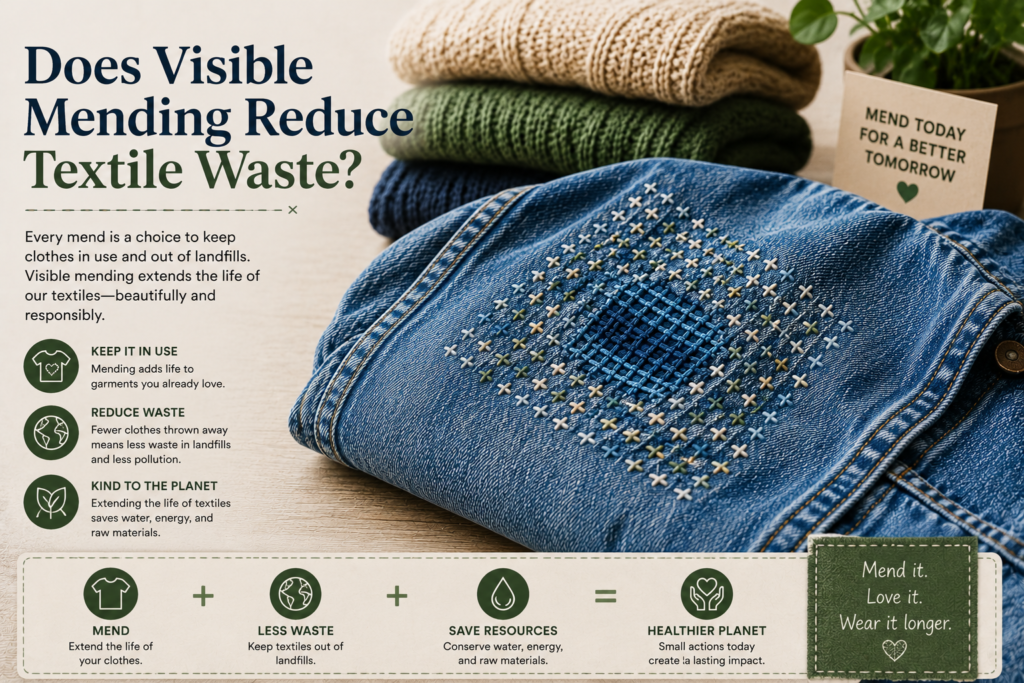
Yes, visible mending reduces textile waste by extending garment lifespan and lowering replacement frequency.
Modern fashion creates enormous textile waste because many garments are discarded after relatively minor damage. Small holes, thinning fabric, broken seams, or worn elbows frequently cause otherwise usable clothing to end up in landfills. Visible mending directly challenges this disposable mindset by encouraging repair before replacement.
The environmental impact becomes significant over time. Extending a garment’s usable life by even one or two years reduces manufacturing demand, transportation impact, textile waste generation, and resource consumption. When multiplied across millions of garments, repair culture can substantially reduce fashion-related waste.
Visible mending supports sustainability through:
- Longer garment lifespan
- Reduced replacement purchases
- Lower textile landfill waste
- Reduced manufacturing demand
- Slower fashion consumption
- Increased emotional garment attachment
- Repeated repair culture
- Better maintenance habits
Traditional Japanese boro textiles reflected this philosophy naturally because fabric scarcity made repeated repair necessary. Garments evolved over generations through layered patching and reinforcement. Modern visible mending reconnects with this long-term ownership mentality in response to fast-fashion waste problems.
Many people also form stronger emotional connections to repaired clothing. Visible repairs often become part of a garment’s story, making owners less likely to discard it casually. This emotional durability helps extend clothing lifespan beyond purely physical durability.
Visible mending therefore functions as both a practical repair method and a broader sustainability practice tied to slow fashion and textile preservation culture.
How Should You Wash Clothes After Visible Mending?

Repaired garments last longer when washed gently because excessive heat, friction, and aggressive machine cycles can weaken stitches and patches over time.
Washing habits strongly affect repair durability. Even well-stitched visible mending can fail early if garments experience repeated high-friction machine cycles, excessive dryer heat, or harsh detergents. Repairs create layered fabric zones that behave differently than untouched material, so gentle care helps preserve stitch integrity and patch stability.
Cold washing usually works best because heat can shrink patch materials unevenly or weaken thread fibers gradually. Turning garments inside out also reduces abrasion against other clothing during washing cycles. For heavily repaired garments, mesh laundry bags provide additional protection by reducing friction and twisting stress inside the machine.
Helpful post-repair washing habits include:
- Washing with cold water
- Avoiding high dryer heat
- Turning garments inside out
- Using gentle wash cycles
- Avoiding overloading machines
- Air drying when possible
- Reducing unnecessary washing frequency
Thread type also affects wash durability. Cotton thread may soften naturally over time, while polyester thread often resists abrasion longer but may reduce repair flexibility slightly.
Good maintenance dramatically increases repair lifespan. Many visible mending repairs fail because garments receive harsh treatment after stitching rather than because the repair itself was weak.
What Mistakes Cause Visible Mending Repairs to Fail?
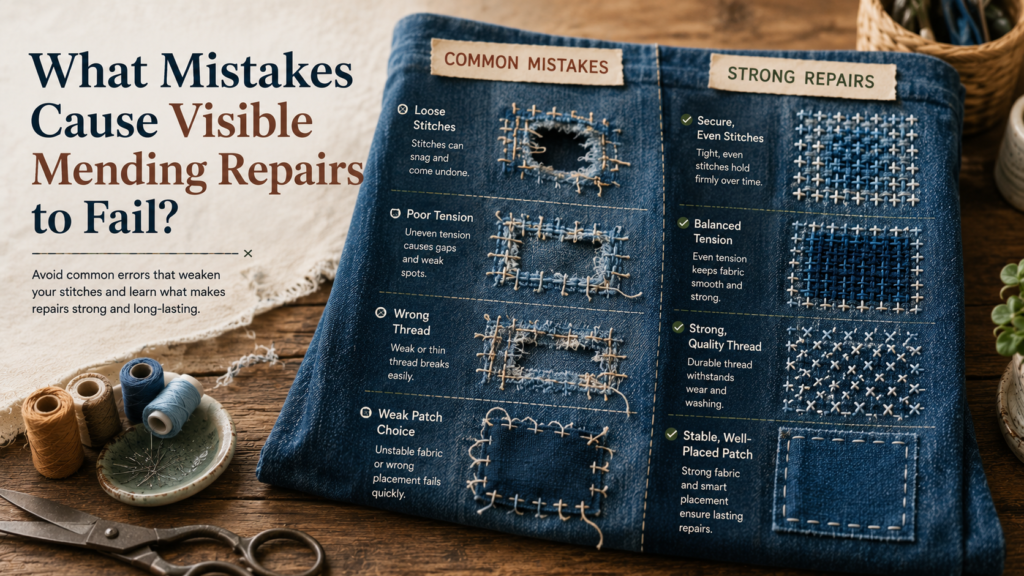
Weak thread, poor tension, unstable patches, and repairing overly degraded fabric commonly cause repair failure.
Not all visible mending repairs succeed long term. Many repairs fail because the stitching only covers the visible hole rather than reinforcing the surrounding weakened fabric. Textile damage usually extends beyond what the eye immediately sees, especially in heavily worn garments.
One common mistake involves using decorative embroidery thread that lacks sufficient strength for repeated movement and friction. Thread selection matters significantly because repair stitching carries mechanical load during wear. Weak thread may fray or snap long before the fabric itself fails again.
Another major issue is excessive stitch tension. Tight stitches create puckering and concentrate force along repair lines. Over time, this tension may cause fresh tearing around the repaired area instead of stabilizing it properly.
Common visible mending mistakes include:
- Using weak decorative thread
- Stitching too tightly
- Repairing rotten fabric
- Using patches thinner than original fabric
- Ignoring surrounding fabric weakness
- Leaving patch edges unsecured
- Washing repaired garments aggressively
- Covering holes without reinforcement underneath
Good repairs function like structural reinforcement rather than cosmetic decoration alone. Strong visible mending spreads force across a wider area while maintaining flexibility during movement.
Fabric compatibility also matters. Extremely degraded fabric sometimes cannot support durable stitching because surrounding fibers continue failing regardless of reinforcement. In those situations, larger support panels or replacement sections may work better than small patches alone.
Successful visible mending combines practical reinforcement logic with thoughtful stitch placement and material selection.
Why Do Some Visible Mending Repairs Tear Again?
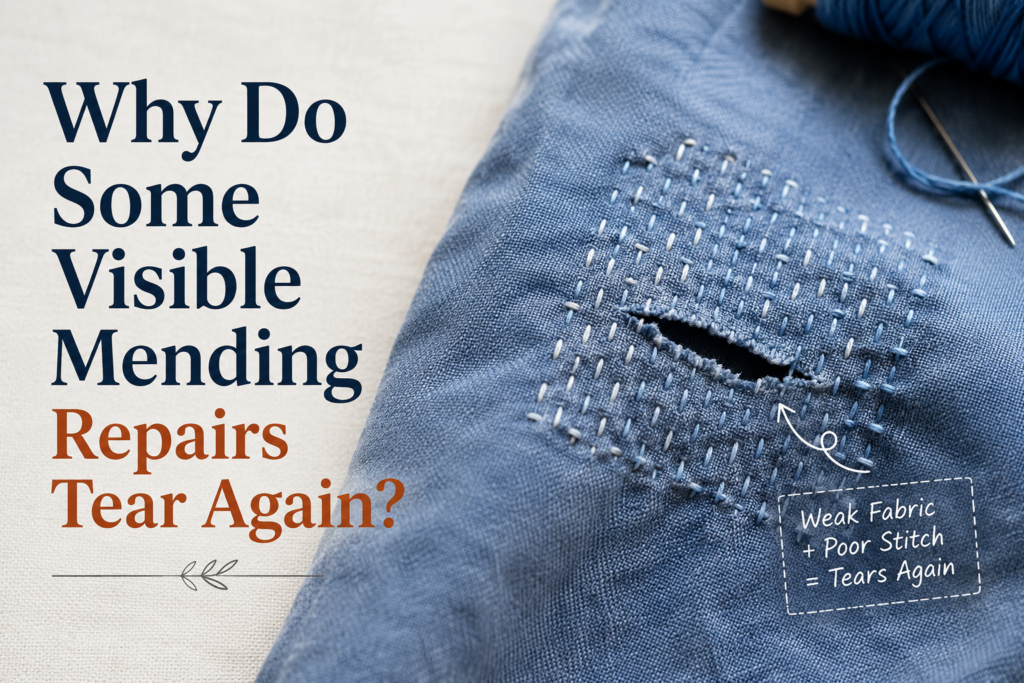
Repairs usually tear again when surrounding fabric remains weak, patch stiffness becomes uneven, or stitching concentrates stress into small areas.
A repair may look strong visually while still failing structurally underneath. This often happens when the visible hole receives stitching but the surrounding weakened fabric continues degrading during wear. Textile damage usually extends beyond the immediately visible tear, especially in denim and heavily worn workwear.
Patch stiffness mismatch is another common issue. Extremely thick patches placed over soft flexible fabric may create rigid stress zones where surrounding material bends unevenly. Eventually, tearing develops around the repair edges instead of directly through the patch itself.
Repair failure also occurs when stitch density becomes unbalanced. Overly tight stitching restricts natural fabric movement and creates concentrated tension lines. Flexible reinforcement generally performs better because garments continue moving naturally during wear.
Common reasons repairs fail again include:
- Weak surrounding fabric
- Excessively tight stitching
- Patch stiffness imbalance
- Poor edge reinforcement
- Low-quality thread
- Repeated friction stress
- Fabric rot or fiber degradation
- Small patch coverage areas
Strong visible mending works best when repairs support the larger stress zone instead of focusing only on the center hole. This broader reinforcement approach improves flexibility while reducing future tearing risk.

Final Thoughts on Whether Visible Mending Makes Clothes Last Long longer
visible mending can significantly extend clothing lifespan when repairs focus on reinforcement, durability, and ongoing maintenance.
Visible mending succeeds because it treats clothing as something worth preserving rather than replacing immediately after damage appears. Reinforcement stitching, layered patches, darning, and sashiko-inspired repair methods strengthen weak areas before holes spread further. This slows fabric failure while making garments more durable over time.
The most effective repairs combine structural support with flexibility. Strong stitching redistributes stress across damaged areas while patches stabilize weakened fabric. In many cases, repaired zones become stronger than the surrounding original garment because the repair intentionally reinforces high-stress areas.
Visible mending also changes clothing ownership habits. People who repair garments often maintain them more carefully, wash them more gently, and continue repairing them over time instead of discarding them after minor wear. This creates a long-term repair cycle closely connected to slow fashion and textile sustainability.
The biggest long-term benefits include:
- Extended garment lifespan
- Reduced textile waste
- Lower clothing replacement costs
- Stronger emotional garment connection
- More sustainable consumption habits
- Improved fabric durability
- Easier future maintenance
Traditional Japanese boro repair culture demonstrated these principles centuries ago through repeated layered reinforcement. Modern visible mending continues that philosophy today by combining practical repair with creative expression and sustainable textile preservation.
For denim, workwear, linen, wool, canvas, and other durable natural fabrics, visible mending can realistically add years of continued wear while transforming damaged clothing into something stronger, more personal, and more sustainable.
FAQs
Can visible mending make jeans last longer?
Yes. Reinforced stitching and layered denim patches strengthen worn areas like knees and thighs, helping jeans survive years longer.
Is visible mending durable enough for daily wear?
Yes. Properly reinforced repairs using strong thread and stable patches can handle repeated washing and regular movement.
What fabrics work best for visible mending?
Denim, cotton, linen, wool, and canvas usually repair best because their woven fibers support strong stitching.
Does decorative visible mending weaken fabric?
No. Decorative visible mending can remain highly durable when structural reinforcement comes before aesthetics.
Why do some visible mending repairs fail?
Repairs often fail because of weak thread, tight stitching tension, unstable patch placement, or ignoring surrounding fabric weakness.
Is visible mending sustainable?
Yes. Extending garment lifespan reduces textile waste, replacement purchases, and overall fashion consumption.
Can beginners learn visible mending easily?
Yes. Simple running stitches and basic patches are enough for beginners to create strong functional repairs.
Is visible mending connected to boro stitching?
Yes. Modern visible mending is heavily influenced by traditional Japanese boro repair culture and sashiko reinforcement techniques.